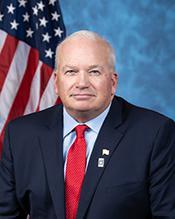
U.S. Representative for Wisconsin’s 5th district
Republican
119th Congress, two-year term
Missed 1.2% of roll calls. Chamber median 1.9%.
The full voting recordCounts roll calls where most Democrats and most Republicans voted differently, leaving out procedural votes.
How we countFrom FEC filings, Voteview roll calls and Congress.gov.
Republican. In Congress since 2021, 3 terms in total.
Following saves Fitzgerald to your list, which Chamber & Street keeps on its server, linked to a cookie on this browser and not to your name or email. Email alerts will come with constituent verification.
Bills and resolutions where Fitzgerald is the primary sponsor. Most bills never leave committee; that is normal for every member. Source: Congress.gov, last updated Oct 29, 2026.
8 of 32 have at least one cosponsor from the other party.
Keeping Violent Offenders Off Our Streets Act of 2025
Introduced Nov 21, 2025. 5 cosponsors. H.R. 6260 on Congress.gov
Passed the House
Keeping Violent Offenders Off Our Streets Act of 2025
This bill broadens the definition of the term business of insurance, for the purposes of federal crimes related to insurance fraud, to include the posting of monetary bail, criminal bail bonds, and federal immigration bail bonds.
Under the bill, entities and organizations that pay cash bond or bail for defendants (e.g., charitable bail funds) are engaged in the business of insurance under federal law and subject to federal criminal provisions related to insurance fraud, as well as state licensing requirements and regulation by state insurance commissions.
NDO Fairness Act of 2025
Introduced Nov 17, 2025. 1 cosponsor, 1 from the other party. H.R. 6048 on Congress.gov(opens in a new tab)
Passed the House
NDO Fairness Act
This bill increases the requirements the government must meet to obtain a nondisclosure order (NDO) under the Stored Communications Act (SCA).
The SCA generally prohibits providers of remote computing services or electronic communication services (providers) from disclosing stored electronic communications or records (e.g., emails) or information pertaining to customers or subscribers. However, the SCA authorizes the government seek a warrant, order, or subpoena to compel providers to disclose electronic communications or records or information pertaining to customers or subscribers during an investigation. Providers may notify customers and subscribers of the warrant, order, or subpoena unless the government obtains a court order—an NDO—that delays the notification.
This bill raises the standard the government must meet to obtain (or extend) an NDO. The bill also requires the court, before issuing an NDO, to issue a written determination that the standard was met based on specific and articulable facts, and to review the underlying warrant, order, or subpoena.
The bill requires NDOs to be narrowly tailored. It also limits their duration to 90 days for most investigations, though it permits a duration of up to one year for investigations pertaining to an offense involving child pornography or sexual exploitation of children.
Finally, the bill requires the Department of Justice to report annually on data related to NDOs, including the number of customers or subscribers targeted; applications for orders; orders granted, extended, or denied; and orders targeting members of the media or conduct related to certain protected activities.
To modernize Federal firearms laws to account for advancements in technology and less-than-lethal weapons, and for other purposes.
Introduced Mar 18, 2025. 95 cosponsors, 23 from the other party. H.R. 2189 on Congress.gov(opens in a new tab)
Passed the House
Law-Enforcement Innovate to De-Escalate Act
This bill removes less-than-lethal projectile devices (e.g., certain TASERs) from regulation under the Gun Control Act.
The term less-than-lethal projectile device means a device that (1) is not designed or intended to expel (and may not be readily converted to discharge) commonly used ammunition or projectiles exceeding a velocity of 500 feet per second; (2) is designed and intended to be used in a manner not likely to cause death or serious bodily injury; and (3) does not accept (and cannot be readily modified to accept) an ammunition feeding device.
The bill also requires the Bureau of Alcohol, Tobacco, Firearms and Explosives to determine whether a device satisfies the definition of a less-than-lethal projectile device within 90 days of a request.