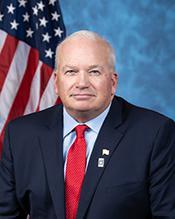
U.S. Representative for Wisconsin’s 5th district
Republican
119th Congress, two-year term
Missed 1.2% of roll calls. Chamber median 1.9%.
The full voting recordCounts roll calls where most Democrats and most Republicans voted differently, leaving out procedural votes.
How we countFrom FEC filings, Voteview roll calls and Congress.gov.
Republican. In Congress since 2021, 3 terms in total.
Following saves Fitzgerald to your list, which Chamber & Street keeps on its server, linked to a cookie on this browser and not to your name or email. Email alerts will come with constituent verification.
Bills and resolutions where Fitzgerald is the primary sponsor. Most bills never leave committee; that is normal for every member. Source: Congress.gov, last updated Oct 29, 2026.
8 of 32 have at least one cosponsor from the other party.
Judicial Conduct and Disability Reform Act of 2026
Introduced Sep 15, 2026. 0 cosponsors. H.R. 10390 on Congress.gov
Introduced
Sustainable Homeownership Act
Introduced Jun 25, 2026. 0 cosponsors. H.R. 9460 on Congress.gov(opens in a new tab)
Introduced
Working Families Home Construction Act of 2026
Introduced Jun 25, 2026. 1 cosponsor. H.R. 9461 on Congress.gov(opens in a new tab)
Introduced
Home Affordability Through Mortgage Simplification Act
Introduced Jun 25, 2026. 0 cosponsors. H.R. 9459 on Congress.gov(opens in a new tab)
Introduced
Foreign Adversary Patent Disclosure Act
Introduced Jun 4, 2026. 0 cosponsors. H.R. 9143 on Congress.gov(opens in a new tab)
Introduced
Prohibiting Adversarial Patents Act of 2026
Introduced Jun 4, 2026. 3 cosponsors, 1 from the other party. H.R. 9142 on Congress.gov(opens in a new tab)
Introduced
BRIDGE Act
Introduced Jun 2, 2026. 1 cosponsor. H.R. 9093 on Congress.gov(opens in a new tab)
Introduced
Thwarting Regional Adversary Investments Now Act
Introduced Jun 2, 2026. 1 cosponsor. H.R. 9092 on Congress.gov(opens in a new tab)
Introduced
Promoting Innovation in Blockchain Development Act
Introduced Feb 26, 2026. 19 cosponsors, 7 from the other party. H.R. 7732 on Congress.gov(opens in a new tab)
Introduced
To authorize the establishment of memorials to the Wisconsin infantry officers and enlisted men who fought in the Battle of Antietam and the Second Battle of Bull Run, and for other purposes.
Introduced Feb 11, 2026. 7 cosponsors, 2 from the other party. H.R. 7495 on Congress.gov(opens in a new tab)
Introduced
Middle Class Home Tax Elimination Act
Introduced Jan 16, 2026. 0 cosponsors. H.R. 7131 on Congress.gov(opens in a new tab)
Introduced
Merger Agreement Approvals Clarity and Predictability Act
Introduced Dec 10, 2025. 1 cosponsor. H.R. 6570 on Congress.gov(opens in a new tab)
Introduced
Honoring the victims of the devastating attack that took place at the Waukesha, Wisconsin, Christmas parade on November 21, 2021.
Introduced Nov 21, 2025. 7 cosponsors, 2 from the other party. H.Res. 907 on Congress.gov(opens in a new tab)
Introduced
This resolution honors the victims of an attack during a Christmas parade in Waukesha, Wisconsin, on November 21, 2021.
Combatting Money Laundering in Cyber Crime Act of 2025
Introduced Oct 31, 2025. 3 cosponsors, 2 from the other party. H.R. 5877 on Congress.gov(opens in a new tab)
Introduced
Combatting Money Laundering in Cyber Crime Act of 2025
This bill expands the investigative authority of the U.S. Secret Service, extends reporting requirements related to public-private information sharing, and requires the Government Accountability Office (GAO) to evaluate existing requirements to combat money laundering and related crimes.
Specifically, the bill authorizes the Secret Service to investigate money laundering and structured transactions (i.e., structuring currency transactions to evade currency reporting requirements).
Additionally, the bill extends the requirement for the Financial Crimes Enforcement Network (FinCEN) to report on the efforts of the FinCEN Exchange. The FinCEN Exchange is a voluntary public-private information sharing partnership among law enforcement agencies, national security agencies, financial institutions, and FinCEN to combat money laundering and related crimes, including the financing of terrorism.
The bill also extends the requirement for the U.S. executive director at the International Monetary Fund to support the increased use of the fund's administrative budget to help members prevent money laundering and the financing of terrorism. The requirement expires on December 20, 2025.
Finally, the bill directs the GAO to report on implementation of provisions of the Anti-Money Laundering Act of 2020 that expanded information sharing with tribal authorities and expanded reporting requirements related to money laundering and terrorist financing. The GAO must focus on evaluating the ability of law enforcement to identify and deter money laundering in cybercrimes.
Bank Competition Modernization Act
Introduced Sep 10, 2025. 0 cosponsors. H.R. 5262 on Congress.gov(opens in a new tab)
Introduced
Bank Competition Modernization Act
This bill allows financial regulators to approve certain bank mergers without considering if the merger is noncompetitive or monopolistic.
Currently, regulators are prohibited from approving a bank acquisition, merger, or consolidation that would result in a monopoly, that would be in furtherance of a conspiracy or attempt to create a monopoly, the approval of which would substantially lessen competition, or that would otherwise restrain trade.
The bill prohibits regulators from considering these factors for mergers that would result in an entity with less than $10 billion in assets. This threshold must be adjusted annually to reflect increases in the U.S. nominal gross domestic product.
STUDENT Act
Introduced Jul 23, 2025. 10 cosponsors. H.R. 4658 on Congress.gov(opens in a new tab)
Introduced
Stopping Teachers Unions from Damaging Education Needs Today Act or the STUDENT Act
This bill revises the federal charter for the National Education Association.
The bill specifies that the corporation and its state and local affiliates may only accept payment of membership dues or fees from a state or local government employee if the employee (1) has been notified of the employee's right under the First Amendment to refrain from membership and payment of associated dues or fees, (2) has clearly and affirmatively consented to membership and payment of associated dues or fees, and (3) has authorized the transmittal of membership dues or fees without the use of payroll deduction.
Further, the corporation and its state or local affiliates must process and honor cancellation requests for membership or payment of dues as soon as practicable following receipt of the request.
The bill also outlines requirements for the corporation, such as
• prohibiting the corporation or its directors or officers from contributing to, supporting, or participating in political activities;
• requiring each officer of the corporation to be a U.S. citizen;
• requiring the corporation to submit annual reports to Congress;
• prohibiting the corporation and its affiliates from requiring staff, officers, affiliates, or members to affirm, adopt, or adhere to certain principles related to race or sex; and
• prohibiting the corporation and its affiliates from calling or participating in a strike, work stoppage, or slowdown affecting a state or local government.
The bill repeals the corporation's exemption from District of Columbia property taxes.
Protect U.S. Companies from Foreign Regulatory Taxation Act
Introduced Jul 2, 2025. 0 cosponsors. H.R. 4278 on Congress.gov(opens in a new tab)
Introduced
PROTECT USA Act of 2025
Introduced Jul 2, 2025. 0 cosponsors. H.R. 4279 on Congress.gov(opens in a new tab)
Introduced
Expanding Access to Lending Options Act
Introduced Jun 26, 2025. 47 cosponsors, 26 from the other party. H.R. 4167 on Congress.gov(opens in a new tab)
Introduced
Stopping Proxy Advisor Racketeering Act
Introduced Jun 24, 2025. 1 cosponsor. H.R. 4098 on Congress.gov(opens in a new tab)
Introduced
Insurance Data Protection Act
Introduced May 15, 2025. 25 cosponsors. H.R. 3437 on Congress.gov(opens in a new tab)
Introduced
Insurance Data Protection Act
This bill limits the ability of federal entities to compel insurance companies to share information.
Specifically, the bill eliminates the subpoena power of the Federal Insurance Office. Under current law, the office has the power to subpoena information from insurers to, among other purposes, identify issues that could contribute to a systemic crisis in the insurance industry or the U.S. financial system.
The bill also eliminates the ability of the Office of Financial Research to subpoena insurance companies.
When seeking to collect insurance company data under specified consumer protection laws, a financial regulator must obtain the data from other regulators or from publicly available sources if possible. Otherwise, the financial regulator may only collect this data directly from the insurance company if the regulator complies with the Paperwork Reduction Act.
HUMPS Act of 2025
Introduced May 14, 2025. 0 cosponsors. H.R. 3379 on Congress.gov(opens in a new tab)
Introduced
Restoring Court Authority Over Litigation Act of 2025
Introduced May 6, 2025. 3 cosponsors. H.R. 3213 on Congress.gov(opens in a new tab)
Introduced
Making the CFPB Accountable to Small Businesses Act of 2025
Introduced Feb 26, 2025. 3 cosponsors. H.R. 1606 on Congress.gov(opens in a new tab)
Introduced
Making the CFPB Accountable to Small Businesses Act of 2025
This bill requires the Consumer Financial Protection Bureau (CFPB) to consider the impact of proposed rules on small entities.
In addition, the CFPB, the Environmental Protection Agency, and the Occupational Safety and Health Administration must justify decisions to not adopt certain alternatives to regulations that are applicable to small entities.
Providing for congressional disapproval under chapter 8 of title 5, United States Code, of the rule submitted by the Federal Trade Commission relating to "Premerger Notification; Reporting and Waiting Period Requirements".
Introduced Feb 11, 2025. 3 cosponsors. H.J.Res. 39 on Congress.gov(opens in a new tab)
Introduced