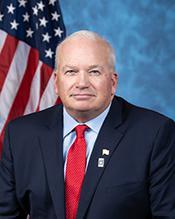
U.S. Representative for Wisconsin’s 5th district
Republican
119th Congress, two-year term
Missed 1.2% of roll calls. Chamber median 1.9%.
The full voting recordCounts roll calls where most Democrats and most Republicans voted differently, leaving out procedural votes.
How we countFrom FEC filings, Voteview roll calls and Congress.gov.
Republican. In Congress since 2021, 3 terms in total.
Following saves Fitzgerald to your list, which Chamber & Street keeps on its server, linked to a cookie on this browser and not to your name or email. Email alerts will come with constituent verification.
Bills and resolutions where Fitzgerald is the primary sponsor. Most bills never leave committee; that is normal for every member. Source: Congress.gov, last updated Oct 29, 2026.
8 of 32 have at least one cosponsor from the other party.
Restoring Court Authority Over Litigation Act of 2025
Introduced May 6, 2025. 3 cosponsors. H.R. 3213 on Congress.gov
Introduced
To modernize Federal firearms laws to account for advancements in technology and less-than-lethal weapons, and for other purposes.
Introduced Mar 18, 2025. 95 cosponsors, 23 from the other party. H.R. 2189 on Congress.gov(opens in a new tab)
Passed the House
Law-Enforcement Innovate to De-Escalate Act
This bill removes less-than-lethal projectile devices (e.g., certain TASERs) from regulation under the Gun Control Act.
The term less-than-lethal projectile device means a device that (1) is not designed or intended to expel (and may not be readily converted to discharge) commonly used ammunition or projectiles exceeding a velocity of 500 feet per second; (2) is designed and intended to be used in a manner not likely to cause death or serious bodily injury; and (3) does not accept (and cannot be readily modified to accept) an ammunition feeding device.
The bill also requires the Bureau of Alcohol, Tobacco, Firearms and Explosives to determine whether a device satisfies the definition of a less-than-lethal projectile device within 90 days of a request.
Making the CFPB Accountable to Small Businesses Act of 2025
Introduced Feb 26, 2025. 3 cosponsors. H.R. 1606 on Congress.gov(opens in a new tab)
Introduced
Making the CFPB Accountable to Small Businesses Act of 2025
This bill requires the Consumer Financial Protection Bureau (CFPB) to consider the impact of proposed rules on small entities.
In addition, the CFPB, the Environmental Protection Agency, and the Occupational Safety and Health Administration must justify decisions to not adopt certain alternatives to regulations that are applicable to small entities.
Separation of Powers Restoration Act of 2025
Introduced Feb 26, 2025. 3 cosponsors. H.R. 1605 on Congress.gov(opens in a new tab)
Passed committee
Separation of Powers Restoration Act of 2025 or the SOPRA
This bill modifies the scope of judicial review of agency actions to authorize courts reviewing agency actions to decide de novo (i.e., without giving deference to the agency's interpretation) all relevant questions of law, including the interpretation of (1) constitutional and statutory provisions, and (2) rules made by agencies.
No law may exempt a civil action from the standard of review required by this bill except by specific reference to such provision.
Providing for congressional disapproval under chapter 8 of title 5, United States Code, of the rule submitted by the Federal Trade Commission relating to "Premerger Notification; Reporting and Waiting Period Requirements".
Introduced Feb 11, 2025. 3 cosponsors. H.J.Res. 39 on Congress.gov(opens in a new tab)
Introduced
Stopping Overdoses of Fentanyl Analogues Act
Introduced Feb 6, 2025. 0 cosponsors. H.R. 1064 on Congress.gov(opens in a new tab)
Introduced
Stopping Overdoses of Fentanyl Analogues Act
This bill permanently adds fentanyl-related substances to schedule I of the Controlled Substances Act. (A schedule I controlled substance is a drug, substance, or chemical that has a high potential for abuse; has no currently accepted medical value; and is subject to regulatory controls and administrative, civil, and criminal penalties under the Controlled Substances Act.)
Fentanyl-related substances are currently regulated under schedule I through a temporary order issued by the Drug Enforcement Administration. The temporary order expires March 31, 2025.
Interstate Commerce Simplification Act of 2025
Introduced Jan 15, 2025. 3 cosponsors. H.R. 427 on Congress.gov(opens in a new tab)
Introduced
Interstate Commerce Simplification Act of 2025
This bill expands the definition of solicitation of orders to include business activities that serve an independently valuable business function apart from the solicitation of orders for purposes of the limitation on a state’s authority to impose a net income tax on an out-of-state seller.
Under current law, a state is prohibited from imposing a net income tax on income derived from within the state from interstate commerce if the only business activity within the state is the solicitation of orders for the sale of tangible personal property, provided that the orders are approved (or rejected) and filled by shipment or delivery from outside of the state. Further, the Supreme Court has held that the term solicitation of orders includes (1) activities that are strictly essential to making requests for purchases, and (2) ancillary activities that serve no independent business function apart from their connection to requests for purchases.
Under the bill, the definition of solicitation of orders is expanded to include business activities that facilitate the solicitation of orders even if such business activities serve an independently valuable business function apart from the solicitation.