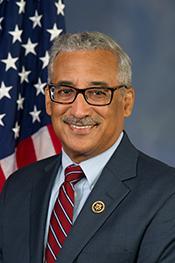
U.S. Representative for Virginia’s 3rd district
Democrat
119th Congress, two-year term
Missed 0.6% of roll calls. Chamber median 1.9%.
The full voting recordCounts roll calls where most Democrats and most Republicans voted differently, leaving out procedural votes.
How we countFrom FEC filings, Voteview roll calls and Congress.gov.
Democrat. In Congress since 1993, 17 terms in total.
Following saves Scott to your list, which Chamber & Street keeps on its server, linked to a cookie on this browser and not to your name or email. Email alerts will come with constituent verification.
Bills and resolutions where Scott is the primary sponsor. Most bills never leave committee; that is normal for every member. Source: Congress.gov, last updated Oct 29, 2026.
5 of 21 have at least one cosponsor from the other party.
Workers’ Retirement Savings Protection Act of 2026
Introduced Oct 1, 2026. 0 cosponsors. H.R. 10702 on Congress.gov
Introduced
Protecting Workers’ Benefits Act
Introduced Oct 1, 2026. 0 cosponsors. H.R. 10703 on Congress.gov(opens in a new tab)
Introduced
Direct CARE Opportunity Act of 2026
Introduced Oct 1, 2026. 3 cosponsors. H.R. 10704 on Congress.gov(opens in a new tab)
Introduced
Protecting Workers' Wages from Medical Debt Act
Introduced Sep 14, 2026. 5 cosponsors. H.R. 10373 on Congress.gov(opens in a new tab)
Introduced
Rebuild America’s Schools Act of 2026
Introduced Feb 4, 2026. 98 cosponsors. H.R. 7340 on Congress.gov(opens in a new tab)
Introduced
Rebuild America's Schools Act of 2026
This bill provides support for long-term improvements to public elementary and secondary school facilities.
First, the bill sets forth allocations to states and establishes a need-based grant program for local educational agencies (LEAs) to improve school facilities. Further, the bill specifies allowable uses of grant funds, including carrying out major repairs, improving indoor air quality, and making facilities accessible to individuals with disabilities.
Additionally, the bill requires LEAs that receive funds for new construction, modernization, or renovation projects to comply with hazard-resistance building codes and performance criteria under the WaterSense program of the Environmental Protection Agency. Further, the bill requires such LEAs to adopt certain green practices (environmental standards) and requires the use of iron, steel, and manufactured products that are made in the United States (Buy America).
The bill restores school infrastructure tax credit bonds.
The bill also sets forth reporting requirements, including annual reports on grant program projects and a report by the Government Accountability Office that requires a study of the geographic distribution of projects, the impact of selected projects on student and staff health and safety, and the accessibility of projects to high-needs schools.
The bill also establishes the Office of School Infrastructure and Sustainability within the Department of Education.
Next, the bill extends through FY2031 the Impact Aid Construction program.
Finally, the bill establishes a grant program to assist LEAs with repairing or replacing concrete foundations affected by pyrrhotite (an iron sulfide material linked to crumbling foundations).
LET’S Protect Workers Act
Introduced Dec 10, 2025. 80 cosponsors. H.R. 6597 on Congress.gov(opens in a new tab)
Introduced
WIC Benefits Protection Act
Introduced Oct 10, 2025. 99 cosponsors. H.R. 5740 on Congress.gov(opens in a new tab)
Introduced
LOAN Act
Introduced Aug 1, 2025. 27 cosponsors. H.R. 4862 on Congress.gov(opens in a new tab)
Introduced
Lowering Obstacles to Achievement Now Act or the LOAN Act
This bill revises federal student aid programs, including the Federal Pell Grant program and the Public Service Loan Forgiveness (PSLF) program. It also repeals the education provisions that were enacted under P.L. 119-21 (commonly known as the One Big Beautiful Bill Act).
Among other provisions, the bill revises the Federal Pell Grant program by (1) providing funding to increase the maximum award for each eligible student, and (2) allowing income-eligible graduate students to utilize their remaining Pell Grant eligibility toward their first graduate degree.
Changes to the PSLF program include (1) reducing the number of monthly loan payments required for loan forgiveness, and (2) removing the requirement that a borrower must be employed in a public service job at the time of forgiveness.
The bill makes Dreamer students (i.e., students who have been granted Deferred Action for Childhood Arrivals status and who entered the United States before the age of 18) who meet certain educational criteria eligible for federal financial aid.
The bill also (1) establishes refinancing programs for federal and private student loans; (2) creates a new income-driven repayment plan; and (3) repeals origination fees for Direct Subsidized Loans, Direct Unsubsidized Loans, and Direct PLUS Loans.
The bill repeals the education provisions that were enacted under P.L. 119-21. For example, the act addressed the amount of federal financial aid available to students by changing the mix and availability of student loans. (For more information, see CRS Report R48727.)
Transformation to Competitive Integrated Employment Act
Introduced Jul 25, 2025. 9 cosponsors, 2 from the other party. H.R. 4771 on Congress.gov(opens in a new tab)
Introduced
Child Care for Working Families Act
Introduced Jul 15, 2025. 107 cosponsors. H.R. 4418 on Congress.gov(opens in a new tab)
Introduced
Protecting Children Act
Introduced Jun 12, 2025. 8 cosponsors. H.R. 3997 on Congress.gov(opens in a new tab)
Introduced
Strength in Diversity Act of 2025
Introduced May 23, 2025. 28 cosponsors. H.R. 3605 on Congress.gov(opens in a new tab)
Introduced
Strength in Diversity Act of 2025
This bill establishes a program through which the Department of Education must award planning and implementation grants to specified educational agencies (e.g., local educational agencies) to improve diversity and reduce or eliminate racial or socioeconomic isolation in publicly funded early childhood education programs, public elementary schools, or public secondary schools.
Equity and Inclusion Enforcement Act of 2025
Introduced May 23, 2025. 14 cosponsors. H.R. 3606 on Congress.gov(opens in a new tab)
Introduced
Protecting Older Workers Against Discrimination Act of 2025
Introduced May 20, 2025. 8 cosponsors, 3 from the other party. H.R. 3522 on Congress.gov(opens in a new tab)
Introduced
Raise the Wage Act of 2025
Introduced Apr 8, 2025. 177 cosponsors. H.R. 2743 on Congress.gov(opens in a new tab)
Introduced
Of inquiry requesting the President and directing the Secretary of Education to transmit, respectively, certain documents to the House of Representatives relating to the reduction in force and other downsizing measures at the Department of Education.
Introduced Mar 21, 2025. 15 cosponsors. H.Res. 237 on Congress.gov(opens in a new tab)
Introduced
This resolution requests that the President provide, and directs the Department of Education (ED) to provide, to the House of Representatives all documents and materials related to
• the closure of ED;
• any reduction in force or other downsizing measures at ED;
• any actions taken pursuant to a specified March 3, 2025, communication to ED staff;
• any actions taken pursuant to any executive order directing the closure of ED; and
• any determinations made by the President, the Secretary of ED, or other ED staff that the staff remaining at ED after any reduction in force, other downsizing measure, or closure are sufficient to faithfully execute specified federal laws, including the Individuals with Disabilities Education Act, the Elementary and Secondary Education Act of 1965, and the Higher Education Act of 1965.
Do No Harm Act
Introduced Mar 6, 2025. 125 cosponsors. H.R. 1954 on Congress.gov(opens in a new tab)
Introduced
Do No Harm Act
This bill prohibits the application of the Religious Freedom Restoration Act of 1993 (RFRA) to specified federal laws or the implementation of such laws. Currently, RFRA prohibits the government from substantially burdening a person's exercise of religion even if the burden results from a rule of general applicability, except in furtherance of a compelling governmental interest when using the least restrictive means.
Under the bill, RFRA is inapplicable to laws or the implementation of laws that
• protect against discrimination or require the promotion of equal opportunity (e.g., the Civil Rights Act of 1964);
• require employers to provide wages, other compensation, or benefits, including leave;
• protect collective activity in the workplace;
• protect against child labor, abuse, or exploitation; or
• provide for access to, information about, referrals for, provision of, or coverage for any health care item or service.
The bill prevents RFRA from being used to deny (1) goods or services the government has agreed to provide to a beneficiary of or participant in a program or activity funded by a government contract, grant, agreement, or other award; or (2) a person's full and equal enjoyment of a government-provided good, service, benefit, facility, privilege, advantage, or accommodation.
In order for a person to assert a RFRA claim or defense in a judicial proceeding, the government must be a party to the proceeding.
Richard L. Trumka Protecting the Right to Organize Act of 2025
Introduced Mar 5, 2025. 217 cosponsors, 2 from the other party. H.R. 20 on Congress.gov(opens in a new tab)
Introduced
Fort Monroe National Historical Park Establishment Act
Introduced Feb 25, 2025. 9 cosponsors, 5 from the other party. H.R. 1581 on Congress.gov(opens in a new tab)
Introduced