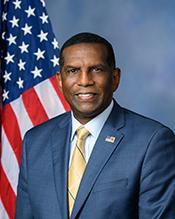
U.S. Representative for Utah’s 4th district
Republican
119th Congress, two-year term
Missed 2.2% of roll calls. Chamber median 1.9%.
The full voting recordCounts roll calls where most Democrats and most Republicans voted differently, leaving out procedural votes.
How we countFrom FEC filings, Voteview roll calls and Congress.gov.
Republican. In Congress since 2021, 3 terms in total.
Following saves Owens to your list, which Chamber & Street keeps on its server, linked to a cookie on this browser and not to your name or email. Email alerts will come with constituent verification.
Bills and resolutions where Owens is the primary sponsor. Most bills never leave committee; that is normal for every member. Source: Congress.gov, last updated Oct 29, 2026.
5 of 28 have at least one cosponsor from the other party.
No Aid for Ghost Students Act of 2026
Introduced Mar 12, 2026. 4 cosponsors. H.R. 7892 on Congress.gov
Passed the House
No Aid for Ghost Students Act of 2026
This bill requires the Department of Education (ED) to establish an identity fraud detection system for the Free Application for Federal Student Aid (FAFSA).
Beginning on October 1, 2026, ED must use an identity fraud detection system to review each submitted application to determine whether the applicant presents a reasonable suspicion of identity fraud. If ED makes such a determination, it must notify the applicant and each institution of higher education (IHE) designated on the application that the applicant is subject to additional identity verification.
An IHE may not disburse federal financial aid to an applicant that presents a reasonable suspicion of fraud unless the IHE verifies the applicant's identity in person or by live video. If the applicant's identity is confirmed, the IHE must notify ED that the applicant's identity has been verified.
ED must establish guidelines for the identity verification procedures conducted by IHEs.
(On April 26, 2026, ED began implementing a real-time identity fraud detection process within the FAFSA form that places applicants into one of four risk categories. High-risk applicants must confirm their identity by presenting documentation during the online application process, including via a live camera process. Applicants who are rejected via this automated process must then have their identity verified in person by IHEs.)