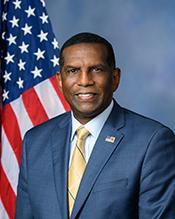
U.S. Representative for Utah’s 4th district
Republican
119th Congress, two-year term
Missed 2.2% of roll calls. Chamber median 1.9%.
The full voting recordCounts roll calls where most Democrats and most Republicans voted differently, leaving out procedural votes.
How we countFrom FEC filings, Voteview roll calls and Congress.gov.
Republican. In Congress since 2021, 3 terms in total.
Following saves Owens to your list, which Chamber & Street keeps on its server, linked to a cookie on this browser and not to your name or email. Email alerts will come with constituent verification.
Bills and resolutions where Owens is the primary sponsor. Most bills never leave committee; that is normal for every member. Source: Congress.gov, last updated Oct 29, 2026.
5 of 28 have at least one cosponsor from the other party.
PATH Act
Introduced Jul 23, 2026. 3 cosponsors, 2 from the other party. H.R. 9926 on Congress.gov
Introduced
STRONG Act
Introduced Jun 29, 2026. 2 cosponsors. H.R. 9527 on Congress.gov(opens in a new tab)
Introduced
To provide for the conveyance of certain property to the Utah National Guard located in Lehi, Utah, and for other purposes.
Introduced Apr 20, 2026. 3 cosponsors. H.R. 8384 on Congress.gov(opens in a new tab)
Introduced
To classify qualified locum tenens professionals and advanced care practitioners as independent contractors for the purposes of the Fair Labor Standards Act of 1938 and the National Labor Relations Act.
Introduced Apr 14, 2026. 1 cosponsor. H.R. 8272 on Congress.gov(opens in a new tab)
Introduced
Kids in Classes Act
Introduced Mar 12, 2026. 0 cosponsors. H.R. 7918 on Congress.gov(opens in a new tab)
Introduced
Closing the Provider Fraud Gap Act
Introduced Feb 25, 2026. 1 cosponsor. H.R. 7677 on Congress.gov(opens in a new tab)
Introduced
Alyssa’s Act of 2025
Introduced Dec 17, 2025. 25 cosponsors, 13 from the other party. H.R. 6809 on Congress.gov(opens in a new tab)
Introduced
Preventing Child Trafficking Act of 2025
Introduced Dec 4, 2025. 10 cosponsors, 3 from the other party. H.R. 6475 on Congress.gov(opens in a new tab)
Introduced
To transfer administrative jurisdiction of certain Federal land in Saratoga Springs, Utah, from the Secretary of the Interior to the United States Postal Service for construction of a post office, and for other purposes.
Introduced Jul 23, 2025. 3 cosponsors. H.R. 4716 on Congress.gov(opens in a new tab)
Introduced
Recognizing June 24th as Public Safety Awareness Day to promote citizen empowerment, effective law enforcement, community-based crime prevention, and prudent public policy in support of safer neighborhoods nationwide.
Introduced Jun 23, 2025. 1 cosponsor. H.Res. 535 on Congress.gov(opens in a new tab)
Introduced
Water Quality Criteria Development and Transparency Act
Introduced Jun 10, 2025. 0 cosponsors. H.R. 3888 on Congress.gov(opens in a new tab)
Introduced
Expressing the sense of the House of Representatives that fatherhood is essential to the development of all children, and that the increased involvement of fathers in the home will lead to economic prosperity, educational excellence, and improved social mobility for children across all racial and ethnic groups.
Introduced Jun 6, 2025. 2 cosponsors. H.Res. 487 on Congress.gov(opens in a new tab)
Introduced
Universal School Choice Act
Introduced May 20, 2025. 2 cosponsors. H.R. 3519 on Congress.gov(opens in a new tab)
Introduced
Outdoor Recreational Outfitting and Guiding Act
Introduced May 19, 2025. 5 cosponsors. H.R. 3499 on Congress.gov(opens in a new tab)
Introduced
Expressing support for recognizing the month of May as "Excellence in Education: Merit Day Celebration".
Introduced May 15, 2025. 0 cosponsors. H.Res. 422 on Congress.gov(opens in a new tab)
Introduced
SALT Act
Introduced Apr 17, 2025. 2 cosponsors. H.R. 2952 on Congress.gov(opens in a new tab)
Introduced
One Door to Work Act
Introduced Apr 3, 2025. 1 cosponsor. H.R. 2651 on Congress.gov(opens in a new tab)
Introduced
Say No to Indoctrination Act
Introduced Apr 3, 2025. 4 cosponsors. H.R. 2617 on Congress.gov(opens in a new tab)
Introduced
Say No to Indoctrination Act
This bill prohibits the use of federal elementary and secondary education funds to teach or advance concepts related to gender ideology as defined by Executive Order 14168. This executive order, titled Defending Women From Gender Ideology Extremism and Restoring Biological Truth to the Federal Government, was published on January 20, 2025.
Accreditation for College Excellence Act of 2025
Introduced Mar 31, 2025. 12 cosponsors. H.R. 2516 on Congress.gov(opens in a new tab)
Introduced
Mining Schools Act of 2025
Introduced Mar 27, 2025. 16 cosponsors, 2 from the other party. H.R. 2457 on Congress.gov(opens in a new tab)
Introduced
Change of Ownership and Conversion Improvement Act
Introduced Mar 21, 2025. 0 cosponsors. H.R. 2271 on Congress.gov(opens in a new tab)
Introduced
Change of Ownership and Conversion Improvement Act
This bill revises the application and review process for institutions of higher education (IHEs) to change ownership or for a proprietary (i.e., for-profit) IHE to convert to public or other nonprofit status.
Specifically, the bill (1) establishes a pretransaction review application, and (2) requires an IHE to pay an administrative fee to the Department of Education (ED) for change in ownership or conversion transactions or pretransaction reviews. In the case of a for-profit IHE seeking conversion or a pretransaction review for conversion, ED must remit 50% of the administrative fee to the Internal Revenue Service (IRS) to determine whether the IHE is exempt from tax and is otherwise in compliance with the applicable requirements of the Internal Revenue Code of 1986 (IRC).
The bill establishes time frames for ED to approve or deny applications. The bill also includes various reporting requirements.
An IHE that has been approved for conversion by ED must be subject to a five-year monitoring period and must also pay an annual fee for this monitoring. ED must remit 50% of the annual fee to the IRS for monitoring the IHE's compliance with the IRC.
The Government Accountability Office must report on the implementation of this bill's provisions.
Ensuring Distance Education Act
Introduced Feb 10, 2025. 0 cosponsors. H.R. 1174 on Congress.gov(opens in a new tab)
Introduced
Ensuring Distance Education Act
This bill treats revenue from distance education programs as nonfederal revenue for purposes of the 90/10 rule.
Generally, the 90/10 rule requires a for-profit institution of higher education (IHE) to derive at least 10% of its revenue from sources other than federal financial aid. Under current Department of Education regulations, for-profit IHEs are prohibited from including revenue from distance education programs (including hybrid distance education programs) as nonfederal revenue that meets this 10% requirement. The bill removes the prohibition and allows for distance education programs to be counted as nonfederal revenue for purposes of the rule.
RIFA Act
Introduced Feb 5, 2025. 1 cosponsor. H.R. 1023 on Congress.gov(opens in a new tab)
Introduced
Reporting on Investments in Foreign Adversaries Act or the RIFA Act
This bill requires private institutions of higher education (IHEs) with specified assets or investments involving foreign countries or entities of concern to file annual investment disclosure reports. The bill applies to a private IHE with (1) assets in excess of $6 billion, or (2) investments of concern in excess of $250 million.
Specifically, the bill requires such a private IHE to file a disclosure report with the Department of Education (ED) for a year in which the IHE purchases, sells, or holds one or more investments of concern. Investment of concern means any specified interest (e.g., stock or debt) with respect to a foreign country of concern (e.g., North Korea, China, Russia, or Iran) or a foreign entity of concern (e.g., a foreign entity that is designated as a foreign terrorist organization).
Additionally, the bill requires ED to establish and maintain a publicly available and searchable database with these disclosure reports.
The bill requires ED to investigate possible violations of this bill and outlines the various penalties for each violation. Penalties may include losing eligibility for federal student financial aid.