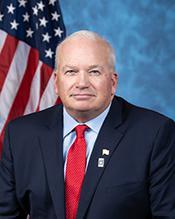
U.S. Representative for Wisconsin’s 5th district
Republican
119th Congress, two-year term
Missed 1.2% of roll calls. Chamber median 1.9%.
The full voting recordCounts roll calls where most Democrats and most Republicans voted differently, leaving out procedural votes.
How we countFrom FEC filings, Voteview roll calls and Congress.gov.
Republican. In Congress since 2021, 3 terms in total.
Following saves Fitzgerald to your list, which Chamber & Street keeps on its server, linked to a cookie on this browser and not to your name or email. Email alerts will come with constituent verification.
Bills and resolutions Fitzgerald signed on to as a cosponsor. An original cosponsor signed on the day the bill was introduced. Source: govinfo bill status files, last updated Nov 6, 2026.
Fitzgerald also withdrew as a cosponsor from 1 bill, not listed here.
Middle Class Mortgage Insurance Premium Act of 2025
Sponsor Vern Buchanan (R). Original cosponsor. 12 cosponsors. H.R. 2760 on Congress.gov
Introduced
FIRM Act
Sponsor Andy Barr (R). Original cosponsor. 19 cosponsors. H.R. 2702 on Congress.gov(opens in a new tab)
Introduced
Financial Integrity and Regulation Management Act or the FIRM Act
This bill prohibits the consideration of reputational risk by federal banking agencies when regulating, examining, or supervising a depository institution or credit union. The bill defines reputational risk as the potential for negative publicity or public attention to decrease confidence in the institution, lead to litigation, reduce revenues, or result in other adverse impacts to the institution.
Agencies must report on the implementation of this bill.
Maximum Pressure Act
Sponsor Zachary Nunn (R). Original cosponsor. 55 cosponsors. H.R. 2570 on Congress.gov(opens in a new tab)
Introduced
Respect State Housing Laws Act
Sponsor Barry Loudermilk (R). Joined Mar 27, 2025. 58 cosponsors. H.R. 1078 on Congress.gov(opens in a new tab)
Introduced
Respect State Housing Laws Act
This bill eliminates a provision that requires a 30-day notice period before a landlord may begin eviction proceedings against a tenant in federally assisted or federally backed housing.
Nancy Gardner Sewell Medicare Multi-Cancer Early Detection Screening Coverage Act
Sponsor Jodey Arrington (R). Joined Mar 24, 2025. 338 cosponsors. H.R. 842 on Congress.gov(opens in a new tab)
Introduced
Nancy Gardner Sewell Medicare Multi-Cancer Early Detection Screening Coverage Act
This bill allows, beginning in 2028, for Medicare coverage and payment for multi-cancer early detection screening tests that are approved by the Food and Drug Administration and that are used to screen for cancer across many cancer types, if the Centers for Medicare & Medicaid Services determines such coverage is appropriate. Coverage is limited to those under a certain age (age 68 in 2028, increased by one year every year thereafter) and to one test every 11 months.
ACRE Act of 2025
Sponsor Randy Feenstra (R). Joined Mar 24, 2025. 63 cosponsors. H.R. 1822 on Congress.gov(opens in a new tab)
Introduced
American CANS Act
Sponsor Josh Harder (D). Joined Mar 18, 2025. 14 cosponsors. H.R. 914 on Congress.gov(opens in a new tab)
Introduced
American Consumer Awareness of National Source Act or the American CANS Act
This bill revises country-of-origin labeling requirements for canned goods.
Under current country-of-origin labeling requirements, every article of foreign origin entering the United States must be legibly marked with the English name of the country of origin of the article (with certain exemptions). This bill requires country-of-origin labeling for any agricultural product packaged in a can to (1) appear on the front label of the can; or (2) be stamped, embossed, or printed on the top of the can.
Protecting Privacy in Purchases Act
Sponsor Riley Moore (R). Joined Mar 18, 2025. 132 cosponsors. H.R. 1181 on Congress.gov(opens in a new tab)
Passed the House
Protecting Privacy in Purchases Act
This bill prohibits payment card networks from using merchant codes that distinguish firearms retailers from general-merchandise retailers or sporting-goods retailers.
The Department of Justice must enforce this bill and report annually on the resulting investigations and cases.
To amend the Internal Revenue Code of 1986 to provide refunds with respect to certain dyed fuels that are exempt from tax and with respect to which tax was previously paid.
Sponsor Gwen Moore (D). Original cosponsor. 8 cosponsors. H.R. 2146 on Congress.gov(opens in a new tab)
Introduced
FOCA Act of 2025
Sponsor Clay Higgins (R). Original cosponsor. 107 cosponsors. H.R. 2126 on Congress.gov(opens in a new tab)
Introduced
Fair and Open Competition Act of 2025 or the FOCA Act of 2025
This bill requires that federal contracts for construction projects neither require nor prohibit a bidder, offeror, contractor, or subcontractor from entering into agreements with one or more labor organizations with respect to such projects or related projects.
Under the bill, the controlling documents for federal construction contracts (such as bid specifications and project agreements) may not require or prohibit a bidder, offeror, contractor, or subcontractor from entering into or adhering to such labor agreements. Additionally, the controlling documents may not discriminate against or give preference to a bidder, offeror, contractor, or subcontractor who signs or refuses to sign such a labor agreement.
These requirements also apply to any (1) construction manager acting on behalf of the federal government with respect to such contract, (2) recipient of a federal grant or financial assistance for construction projects or construction manager acting on the recipient's behalf, and (3) party to a federal cooperative agreement for construction projects or construction managers acting on the party's behalf.
An agency may exempt a project from this prohibition to avert an imminent threat to public health or safety or to serve the national security.
AM Radio for Every Vehicle Act of 2025
Sponsor Gus Bilirakis (R). Joined Mar 6, 2025. 317 cosponsors. H.R. 979 on Congress.gov(opens in a new tab)
Passed the House
AM Radio for Every Vehicle Act of 2025
This bill requires the Department of Transportation (DOT) to issue a rule requiring AM radio capabilities to be standard in all new passenger vehicles. (AM radio is often used to deliver emergency alerts and news and entertainment programming; some newer vehicles do not include AM equipment.)
Specifically, this bill applies to passenger vehicles (1) manufactured in the United States for sale in the United States, imported into the United States, or shipped in interstate commerce; and (2) manufactured after the rule's effective date. The rule must require all such vehicles to have devices that can receive signals and play content transmitted by AM stations or digital audio AM stations installed as standard equipment and made easily accessible to drivers.
Prior to the rule's effective date, manufacturers that do not include devices that can access AM radio as standard equipment (1) must inform purchasers of this fact through clear and conspicuous labeling, and (2) may not charge an additional or separate fee for AM radio access.
DOT may assess civil penalties for any violation of the rule. The Department of Justice may also bring a civil action to enjoin a violation.
The rule, including DOT’s authority to enforce it, must expire 10 years after the bill’s enactment.
Further, the Government Accountability Office must study and report on the dissemination of emergency alerts to the public, including by conducting an assessment of AM radio relative to other Integrated Public Alert and Warning System communication technologies.
Anti-CBDC Surveillance State Act
Sponsor Tom Emmer (R). Original cosponsor. 135 cosponsors. H.R. 1919 on Congress.gov(opens in a new tab)
Passed the House
Anti-CBDC Surveillance State Act
This bill prohibits a Federal Reserve bank from offering products or services directly to an individual, maintaining an account on behalf of an individual, or issuing a central bank digital currency (i.e., a digital dollar). Further, the Board of Governors of the Federal Reserve System is prohibited from using a central bank digital currency to implement monetary policy or from testing, studying, creating, or implementing a central bank digital currency, with exceptions as provided by the bill.
Bank Failure Prevention Act of 2025
Sponsor Andy Barr (R). Original cosponsor. 3 cosponsors. H.R. 1900 on Congress.gov(opens in a new tab)
Introduced
Bank Failure Prevention Act of 2025
This bill revises the Federal Reserve Board’s review process of merger and acquisition applications for bank holding companies.
Specifically, the board must notify the applicant within a certain time period regarding whether the application is complete or if additional information is required. The board must grant or deny such an application no later than 90 days after submission, regardless of whether the application was deemed complete. (Currently, the board must grant or deny an application no later than 90 days after receipt of a complete application.)
In addition, the board is prohibited from basing such application determinations on information provided by third parties.
Disapproving the rule submitted by the Bureau of Consumer Financial Protection relating to "Prohibition on Creditors and Consumer Reporting Agencies Concerning Medical Information (Regulation V)".
Sponsor Ralph Norman (R). Original cosponsor. 13 cosponsors. H.J.Res. 74 on Congress.gov(opens in a new tab)
Introduced
This joint resolution nullifies the final rule issued by the Consumer Financial Protection Bureau titled Prohibition on Creditors and Consumer Reporting Agencies Concerning Medical Information (Regulation V) and published on January 14, 2025. This rule prohibits the inclusion of medical debt on credit reports and prohibits creditors from considering medical debt when making credit eligibility determinations.
Censuring Representative Al Green of Texas.
Sponsor Troy Nehls (R). Original cosponsor. 37 cosponsors. H.Res. 197 on Congress.gov(opens in a new tab)
Introduced
This resolution censures Representative Al Green.
Disaster Mitigation and Tax Parity Act of 2025
Original cosponsor. 32 cosponsors. H.R. 1849 on Congress.gov(opens in a new tab)
Progress not on file
Disaster Mitigation and Tax Parity Act of 2025
This bill excludes from gross income, for federal income tax purposes, payments received from a state catastrophe loss mitigation program by an individual for the purpose of making improvements to the individual’s property that mitigate the impact of certain disasters.
Under current law, individuals may exclude from gross income, for federal income tax purposes, payments received under the Robert T. Stafford Disaster Relief and Emergency Assistance Act or the National Flood Insurance Act (as in effect on April 15, 2005) for hazard mitigation. (Some exceptions apply.) Further, under current law, such payments do not increase the basis of the property for which the payments are made.
The bill allows a similar exclusion from gross income for certain payments received by an individual from a program established by
• a state (or any political subdivision or instrumentality of the state),
• a joint powers authority, or
• an entity that was established by the state to provide essential or basic property insurance and is regulated by the state.
Under the bill, such payments must be for making improvements to the individual’s property for the sole purpose of reducing damage that would be done to the property by a windstorm, earthquake, flood, or wildfire.
Finally, the bill provides that such payments from a state catastrophe loss mitigation program do not increase the basis of the property for which the payments are made.
Expressing support for the Iranian people's desires for a democratic, secular, and nonnuclear Republic of Iran, and condemning the Iranian regime's terrorism, regional proxy war, internal suppression, and for other purposes.
Sponsor Tom McClintock (R). Original cosponsor. 230 cosponsors. H.Res. 166 on Congress.gov(opens in a new tab)
Introduced
Safe Access to Cash Act of 2025
Sponsor John Rose (R). Original cosponsor. 13 cosponsors. H.R. 1631 on Congress.gov(opens in a new tab)
Introduced
Safe Access to Cash Act of 2025
This bill specifies that robbery offenses involving ATMs and related cash constitute crimes under the federal bank robbery statute.
Currently, the federal bank robbery statute makes it a federal crime to take or attempt to take, by force and violence or by intimidation, money or other property belonging to or in the care, custody, control, management, or possession of any bank, credit union, or savings and loan association.
However, federal circuit courts have split on whether forcing someone to withdraw money from an ATM constitutes an offense under the federal bank robbery statute. The Fifth Circuit Court of Appeals has held that directly forcing a bank customer to withdraw money from an ATM does not constitute a federal bank robbery because the funds were in the possession of the customer, not the bank. In contrast, the Tenth and Seventh Circuits have held that directly forcing a bank customer to withdraw money from an ATM constitutes a federal bank robbery because the funds belonged to the bank when the withdrawal occurred.
This bill specifies that for purposes of the federal bank robbery statute, an ATM and any cash in transit to, being loaded into, or being unloaded from an ATM is in the care, custody, control, management, or possession of, any bank, credit union, or any savings and loan association, regardless of whether the ATM is located on the physical premises of such an institution or owned or operated by such an institution.
Protect and Serve Act of 2025
Sponsor John Rutherford (R). Original cosponsor. 120 cosponsors. H.R. 1551 on Congress.gov(opens in a new tab)
Introduced
CURD Act
Sponsor Bryan Steil (R). Joined Feb 24, 2025. 30 cosponsors. H.R. 1394 on Congress.gov(opens in a new tab)
Introduced
Codifying Useful Regulatory Definitions Act or the CURD Act
This bill establishes a statutory definition for natural cheese. Under the bill, natural cheese is defined as cheese (ripened or unripened soft, semi-soft, or hard) that is produced from animal milk or certain dairy ingredients and is produced in accordance with established cheese-making standards. The definition excludes pasteurized process cheeses, cheese foods, and cheese spreads.
A food that does not meet this definition is deemed misbranded and may not be sold if its label includes the term natural cheese as a factual descriptor of a category of cheese.
Death Tax Repeal Act
Sponsor Randy Feenstra (R). Original cosponsor. 182 cosponsors. H.R. 1301 on Congress.gov(opens in a new tab)
Introduced
SPEAR Act of 2025
Sponsor Tony Wied (R). Joined Feb 13, 2025. 5 cosponsors. H.R. 1150 on Congress.gov(opens in a new tab)
Introduced
Clear Communication for Veterans Claims Act
Sponsor Tom Barrett (R). Joined Feb 13, 2025. 9 cosponsors. H.R. 1039 on Congress.gov(opens in a new tab)
Passed the House
Clear Communication for Veterans Claims Act
This bill requires the Department of Veterans Affairs (VA) to seek to enter into an agreement with a federally funded research and development center to assess notices that the VA sends to claimants applying for or submitting claims for VA benefits. The VA must report on the findings of the assessment and implement recommendations in the assessment.
The bill also extends certain loan fee rates through June 23, 2034, under the VA's home loan program.
Combating Illicit Xylazine Act
Sponsor Jimmy Panetta (D). Original cosponsor. 114 cosponsors. H.R. 1266 on Congress.gov(opens in a new tab)
Passed the House
Combating Illicit Xylazine Act
This bill regulates xylazine under the Controlled Substances Act (CSA).
Xylazine, also known as tranq, is a nonopioid sedative and pain reliever that is approved for use in animals. Recently, the Drug Enforcement Administration (DEA) has reported an increase in trafficking of fentanyl mixed with xylazine.
This bill adds xylazine, including its salts, isomers, and salts of isomers, to schedule III of the CSA. Schedule III controlled substances, including anabolic steroids, buprenorphine, and ketamine, have less potential for abuse than a schedule I or II substance, have a currently accepted medical use, and have low or moderate risk of dependence if abused.
Under the bill, manufacturing, distributing, or dispensing xylazine, or possessing with intent to manufacture, distribute, or dispense xylazine for illicit use is subject to criminal penalties under the CSA. The bill also requires xylazine transactions to be tracked in the drug reporting system maintained by the DEA.
The bill exempts from registration under the CSA persons and entities that possess xylazine (1) lawfully dispensed by a veterinarian or pharmacy and (2) for an animal or for use in certain animal-control or wildlife programs.
The bill also exempts xylazine manufacturers from the CSA's physical security requirements.
Finally, the bill requires the DEA, in coordination with the Food and Drug Administration, to report on (1) the prevalence and impact of illicit xylazine use in the United States, and (2) updated information on the prevalence and proliferation of xylazine trafficking and misuse in the United States.
National Right-to-Work Act
Sponsor Joe Wilson (R). Original cosponsor. 129 cosponsors. H.R. 1232 on Congress.gov(opens in a new tab)
Introduced