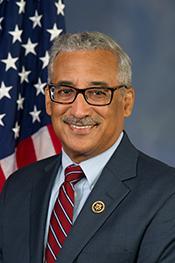
U.S. Representative for Virginia’s 3rd district
Democrat
119th Congress, two-year term
Missed 0.6% of roll calls. Chamber median 1.9%.
The full voting recordCounts roll calls where most Democrats and most Republicans voted differently, leaving out procedural votes.
How we countFrom FEC filings, Voteview roll calls and Congress.gov.
Democrat. In Congress since 1993, 17 terms in total.
Following saves Scott to your list, which Chamber & Street keeps on its server, linked to a cookie on this browser and not to your name or email. Email alerts will come with constituent verification.
Bills and resolutions Scott signed on to as a cosponsor. An original cosponsor signed on the day the bill was introduced. Source: govinfo bill status files, last updated Nov 6, 2026.
Cheroenhaka (Nottoway) Indian Tribe of Southampton County, Virginia, Federal Recognition Act
Sponsor Jennifer Kiggans (R). Joined Oct 17, 2025. 4 cosponsors. H.R. 5144 on Congress.gov
Introduced
Cheroenhaka (Nottoway) Indian Tribe of Southampton County, Virginia, Federal Recognition Act
This bill extends federal recognition to the Cheroenhaka (Nottoway) Indian Tribe of Southampton County, Virginia.
Specifically, the bill makes the tribe and its members eligible for services and benefits provided to federally recognized tribes, without regard to the existence of a reservation for the tribe. The delivery area for services and benefits shall be determined in coordination and consultation with the Department of the Interior.
Next, the bill sets forth requirements for the tribe regarding its membership roll, governing documents, and governing body.
Upon request of the tribe, Interior must take into trust any land held in fee by the tribe that was acquired on or before January 1, 2007, if such lands are located within the boundaries of Southampton County, Virginia. Land taken into trust shall be considered part of the tribe's reservation.
Further, the bill prohibits the tribe from conducting gaming activities.
No Secret Police Act of 2025
Sponsor Daniel Goldman (D). Joined Oct 17, 2025. 130 cosponsors. H.R. 4176 on Congress.gov(opens in a new tab)
Introduced
Federal Employees Civil Relief Act
Sponsor Brendan Boyle (D). Joined Oct 14, 2025. 15 cosponsors. H.R. 5708 on Congress.gov(opens in a new tab)
Introduced
Federal Employees Civil Relief Act
This bill establishes a framework to temporarily suspend certain judicial and administrative proceedings against a federal employee or contractor during a shutdown.
Under the bill, a shutdown is a period in which (1) there is more than a 24-hour lapse in appropriations for any federal agency or department because a regular appropriations bill or a continuing resolution has not been enacted, or (2) the debt of the federal government is greater than the statutory limit.
A federal worker (i.e., an employee of a government agency or contractor) who is furloughed or required to work without pay during a shutdown may apply to a court for a temporary stay, postponement, or suspension with respect to any payment of rent, mortgage, tax, fine, penalty, insurance premium, student loan repayment, or other civil obligation or liability that the worker owes or would owe during the duration of the shutdown.
The bill includes related provisions that restrict evictions, foreclosures, the enforcement of liens, and the termination of insurance policies during a shutdown. It also provides for the deferral of federal income taxes and student loan payments during a shutdown.
The Department of Justice may commence a civil action against any person who engages in (1) a pattern or practice of violating the requirements of this bill, or (2) a violation that raises an issue of significant public importance. A person aggrieved by a violation of this bill's requirements may also bring a private right of action.
Fair Pay for Federal Contractors Act of 2025
Sponsor Ayanna Pressley (D). Joined Oct 3, 2025. 138 cosponsors. H.R. 5657 on Congress.gov(opens in a new tab)
Introduced
Fair Pay for Federal Contractors Act of 2025
This bill provides back pay to employees of federal contractors who lost pay due to a lapse in appropriations (i.e., government shutdown) in FY2026.
Specifically, the bill provides appropriations for federal agencies that are subject to a lapse in appropriations in FY2026 to adjust the price of contracts to compensate federal contractors for providing back pay to employees who were affected by the lapse in appropriations.
The agencies must adjust the price of any contract for which the contractor stopped, suspended, delayed, or interrupted all or part of the work under the contract due to the lapse in appropriations. The price adjustment must compensate the contractor for reasonable costs incurred to (1) compensate employees who were furloughed or laid off, were not working, or experienced a reduction of hours or compensation due to the lapse in appropriations; or (2) restore paid leave taken by employees during the lapse in appropriations if the contractor required or permitted employees to use paid leave as a result of the lapse in appropriations.
The maximum amount of weekly compensation of an employee for which an adjustment may be made under this bill may not exceed the lesser of (1) the employee's actual weekly compensation, or (2) $1,442 (or a lesser amount pro-rated for an employee who works less than 40 hours per week).
The bill also requires the Office of Federal Procurement Policy to submit a report to Congress on the adjustments made under this bill.
Pay Our Coast Guard Parity Act of 2025
Sponsor Hillary Scholten (D). Joined Oct 3, 2025. 67 cosponsors. H.R. 1542 on Congress.gov(opens in a new tab)
Introduced
Pay Our Coast Guard Parity Act of 2025
This bill provides continuing appropriations to the Coast Guard for pay and benefits when there is a Coast Guard-specific funding lapse.
Under the bill, a Coast Guard-specific funding lapse occurs when (1) a bill providing appropriations for the Coast Guard for a fiscal year has not been enacted before the beginning of that fiscal year, and no joint resolution providing continuing appropriations for the Coast Guard is in effect; and (2) a bill providing appropriations for the Department of Defense (DOD) for the fiscal year has been enacted before the beginning of the fiscal year, or a joint resolution providing continuing appropriation for DOD is in effect.
If a Coast Guard-specific funding lapse occurs, the bill provides appropriations to the Coast Guard for
• pay and allowances for military members of the Coast Guard who perform active service or inactive-duty training;
• pay and benefits for certain civilian employees and contract employees;
• the payment of a death gratuity;
• payments for travel related to funerals, the dignified transfer of remains, and unit memorial services; and
• the temporary continuation of the basic allowance for housing for dependents of members of the Coast Guard dying on active duty.
The bill generally provides the appropriations to the Coast Guard until the earlier of
• the enactment of specified Coast Guard appropriations legislation,
• the termination of the availability of appropriations for DOD, or
• two weeks after the beginning of the Coast Guard-specific funding lapse.
Expressing support for the recognition of the month of October 2025 as Filipino American History Month and celebrating the history and culture of Filipino Americans and their immense contributions to the United States.
Sponsor Ed Case (D). Original cosponsor. 19 cosponsors. H.Res. 774 on Congress.gov(opens in a new tab)
Introduced
Protecting Health Care and Lowering Costs Act of 2025
Sponsor Adam Gray (D). Joined Sep 30, 2025. 142 cosponsors. H.R. 4849 on Congress.gov(opens in a new tab)
Introduced
Protecting Health Care and Lowering Costs Act 2025
This bill makes permanent temporary provisions that generally expand eligibility for and increase the amount of the premium tax credit. This bill also repeals multiple Medicaid, Medicare, and health-related tax provisions enacted by the One Big Beautiful Bill Act (OBBBA).
Currently, eligible taxpayers may claim the premium tax credit, which applies toward the cost of obtaining health insurance through health insurance exchanges. To qualify, a taxpayer’s household income must meet or exceed 100% of the federal poverty level (FPL) and, after 2025, may not exceed 400% of the FPL (maximum income limit). For 2021-2025, the maximum income limit is eliminated, which generally expands eligibility for the premium tax credit.
Further, under current law, the amount of the premium tax credit is partially based on the taxpayer’s household income multiplied by the applicable percentage. The applicable percentage varies depending on which of six income ranges (adjusted for inflation after 2025) the taxpayer’s household income falls within. For 2021-2025, the applicable percentages are lowered and the adjustment of the applicable percentages for inflation is eliminated, which generally increases the amount of the premium tax credit.
The bill permanently eliminates the 400% maximum income limit, lowers the applicable percentages, and eliminates the inflation adjustment for the applicable percentages.
Finally, the bill repeals multiple Medicaid, Medicare, and health-related tax provisions enacted by the OBBBA, including
• certain Medicare and Medicare eligibility and verification requirements,
• the reduced window for retroactive Medicaid coverage, and
• premium tax credit verification requirements.
Original Resolution Honoring Alpha Phi Alpha
Sponsor Al Green (D). Original cosponsor. 7 cosponsors. H.Res. 768 on Congress.gov(opens in a new tab)
Introduced
Honor and Remember Flag Recognition Act
Sponsor Donald Davis (D). Joined Sep 23, 2025. 19 cosponsors. H.R. 1363 on Congress.gov(opens in a new tab)
Introduced
Honor and Remember Flag Recognition Act
This bill designates the Honor and Remember Flag, created by Honor and Remember, Inc., as a national symbol to honor service members who died in the line of duty and specifies federal locations and dates for its display.
Supporting the designation of September 2025 as "National Voting Rights Month".
Sponsor Marc Veasey (D). Original cosponsor. 22 cosponsors. H.Res. 756 on Congress.gov(opens in a new tab)
Introduced
This resolution
• expresses support for a National Voting Rights Month,
• encourages people to uphold the right to vote,
• encourages Congress to pass certain voting rights legislation,
• recommends the development of a curriculum in public schools and universities regarding voting,
• expresses appreciation for the U.S. Postal Service for issuing a special Representative John R. Lewis stamp, and
• invites Congress to allocate funds for public service announcements regarding elections.
Condemning attempts to use Federal regulatory power or litigation to suppress lawful speech, particularly speech critical of a political party or the President of the United States, and warning against the rise of authoritarianism.
Sponsor Yassamin Ansari (D). Original cosponsor. 124 cosponsors. H.Res. 748 on Congress.gov(opens in a new tab)
Introduced
POJA Act of 2025
Sponsor Sylvia Garcia (D). Original cosponsor. 23 cosponsors. H.R. 5514 on Congress.gov(opens in a new tab)
Introduced
Protect Older Job Applicants Act of 2025 or the POJA Act of 2025
This bill prohibits employers from limiting, segregating, or classifying job applicants based on an applicant's age. It also requires the Equal Employment Opportunity Commission to study and report on claims received from job applicants involving age discrimination.
Expressing the sense of the House of Representatives condemning all forms of political violence and rejecting rhetoric that dehumanizes or demonizes political opponents.
Sponsor Marc Veasey (D). Original cosponsor. 167 cosponsors. H.Res. 746 on Congress.gov(opens in a new tab)
Introduced
Protecting Free Vaccines Act
Sponsor Frank Pallone (D). Original cosponsor. 83 cosponsors. H.R. 5448 on Congress.gov(opens in a new tab)
Introduced
Protecting Free Vaccines Act
This bill requires Medicare, Medicaid, the Children's Health Insurance Program (CHIP), and private health insurers to cover, without cost-sharing, vaccines that were recommended by the Centers for Disease Control and Prevention's Advisory Committee on Immunization Practices as of October 25, 2024. The requirement ends on January 1, 2030.
Expressing support for the designation of September 2025 as "African Diaspora Heritage Month".
Sponsor Jennifer McClellan (D). Joined Sep 17, 2025. 17 cosponsors. H.Res. 720 on Congress.gov(opens in a new tab)
Introduced
Pay Our Troops Act of 2026
Sponsor Jennifer Kiggans (R). Joined Sep 17, 2025. 210 cosponsors. H.R. 5401 on Congress.gov(opens in a new tab)
Introduced
Pay Our Troops Act of 2026
This bill provides continuing appropriations for military pay for any period during which interim or full-year appropriations for FY2026 are not in effect (i.e., a government shutdown).
Specifically, the bill provides FY2026 continuing appropriations for the pay and allowances of (1) members of the Armed Forces, including reserve components, who perform active service during the period; and (2) civilian personnel and contractors of the Department of Defense (and the Department of Homeland Security in the case of the Coast Guard) who are providing support to such members of the Armed Forces.
If a government shutdown occurs, the bill provides the continuing appropriations until the earlier of (1) the enactment into law of specified appropriations legislation, or (2) January 1, 2027.
Health Care Affordability Act of 2025
Sponsor Lauren Underwood (D). Joined Sep 15, 2025. 165 cosponsors. H.R. 247 on Congress.gov(opens in a new tab)
Introduced
Health Care Affordability Act of 2025
This bill makes permanent temporary changes enacted by the American Rescue Plan Act of 2021 (ARPA) and the Inflation Reduction Act of 2022 (IRA) that generally expand eligibility for and increase the amount of the premium tax credit.
Currently, eligible taxpayers may be able to claim the premium tax credit, which applies toward the cost of obtaining health insurance through health insurance exchanges. To be eligible for the premium tax credit, a taxpayer’s household income must meet or exceed 100% of the federal poverty level (FPL) and, after 2025, may not exceed 400% of the FPL (maximum income limit). For 2021-2025, the ARPA and IRA eliminated the maximum income limit, which generally expands eligibility for the premium tax credit.
Further, under current law, the amount of the premium tax credit is (1) generally the plan premium (conditions apply), minus (2) the taxpayer’s household income multiplied by the applicable percentage. The applicable percentage is a specific percentage that varies depending on which of six income ranges (adjusted for inflation after 2025) the taxpayer’s household income falls within. For 2021-2025, the ARPA and IRA lowered the applicable percentages and eliminated the adjustment of the applicable percentages for inflation, which generally increases the amount of the premium tax credit.
The bill makes permanent the elimination of the 400% maximum income limit, the lower applicable percentages, and the elimination of the inflation adjustment for the applicable percentages.
Susan E. Lukas 9/11 Servicemember Fairness Act
Sponsor Suhas Subramanyam (D). Original cosponsor. 8 cosponsors. H.R. 5339 on Congress.gov(opens in a new tab)
Introduced
25th Anniversary of 9/11 Commemorative Coin Act
Sponsor Daniel Goldman (D). Joined Sep 11, 2025. 302 cosponsors. H.R. 1993 on Congress.gov(opens in a new tab)
Passed the House
25th Anniversary of 9/11 Commemorative Coin Act
This bill directs the Department of the Treasury to mint and issue coins to commemorate the 25th anniversary of the September 11, 2001, terrorist attacks on the United States and the establishment of the National September 11 Memorial and Museum at the World Trade Center.
The sale of all coins issued under this bill must include a surcharge to be paid to the National September 11 Memorial and Museum at the World Trade Center to support operations and maintenance. However, if the issuance of this commemorative coin exceeds certain annual limits, no surcharge may be included.
Congressional Power of the Purse Act
Sponsor Brendan Boyle (D). Original cosponsor. 23 cosponsors. H.R. 5220 on Congress.gov(opens in a new tab)
Introduced
Preventing HEAT Illness and Deaths Act of 2025
Sponsor Suzanne Bonamici (D). Original cosponsor. 13 cosponsors. H.R. 5104 on Congress.gov(opens in a new tab)
Introduced
To designate the facility of the United States Postal Service located at 46164 Westlake Drive in Sterling, Virginia, as the "Firefighter Trevor Brown Post Office Building".
Sponsor Suhas Subramanyam (D). Original cosponsor. 10 cosponsors. H.R. 5058 on Congress.gov(opens in a new tab)
Passed the House
This bill designates the facility of the United States Postal Service located at 46164 Westlake Drive in Sterling, Virginia, as the "Firefighter Trevor Brown Post Office Building".
EACH Act of 2025
Sponsor Ayanna Pressley (D). Joined Aug 26, 2025. 202 cosponsors. H.R. 4611 on Congress.gov(opens in a new tab)
Introduced
Terminating the emergency determined by the President on August 11, 2025, in the Executive Order titled "Declaring a crime emergency in the District of Columbia".
Sponsor Jamie Raskin (D). Joined Aug 26, 2025. 103 cosponsors. H.J.Res. 115 on Congress.gov(opens in a new tab)
Introduced
Expanding the VOTE Act
Sponsor Nikema Williams (D). Original cosponsor. 72 cosponsors. H.R. 4917 on Congress.gov(opens in a new tab)
Introduced
Expanding the Voluntary Opportunities for Translations in Elections Act or the Expanding the VOTE Act
This bill expands access to voting materials for individuals with limited proficiency in the English language.
Section 203 of the Voting Rights Act of 1965 (VRA) requires covered states and political subdivisions to provide voting materials and other language assistance to persons who are American Indian, Asian American, Alaskan Natives, or of Spanish heritage and whose ability to speak or understand English limits electoral participation. A state or political subdivision that is subject to Section 203 is prohibited from providing English-only voting materials in an election. Among other requirements, this bill (1) requires the Department of Justice to issue a notice of prohibition, including the trigger threshold at which the prohibition applies, to certain states and political subdivisions; and (2) requires covered states and political subdivisions to provide written translations of all voting materials, with the consent of any applicable tribal government, to election workers.
Additionally, the bill requires the Election Assistance Commission to make incentive grants for states and political subdivisions to provide translated voting materials.
The bill also directs the Government Accountability Office to study and report on the impact of (1) reducing the threshold requirement under Section 203 of the VRA, and (2) expanding the definition of language minorities to include native speakers of additional languages.