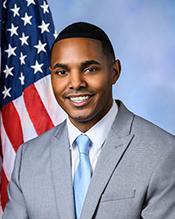
U.S. Representative for New York’s 15th district
Democrat
119th Congress, two-year term
Missed 3.3% of roll calls. Chamber median 1.9%.
The full voting recordCounts roll calls where most Democrats and most Republicans voted differently, leaving out procedural votes.
How we countFrom FEC filings, Voteview roll calls and Congress.gov.
Democrat. In Congress since 2021, 3 terms in total.
Following saves Torres to your list, which Chamber & Street keeps on its server, linked to a cookie on this browser and not to your name or email. Email alerts will come with constituent verification.
Bills and resolutions Torres signed on to as a cosponsor. An original cosponsor signed on the day the bill was introduced. Source: govinfo bill status files, last updated Nov 6, 2026.
Condemning the Hamas attacks of October 7, 2023, and calling for Hamas and its leaders to immediately and unconditionally surrender and to release the hostages, including Americans.
Sponsor Josh Gottheimer (D). Original cosponsor. 68 cosponsors. H.Res. 795 on Congress.gov
Introduced
To authorize the reimbursement by the Federal Government of State funds used to maintain participation in the Special Supplemental Nutrition Program for Women, Infants, and Children in the event of a Government shutdown.
Sponsor Gabe Amo (D). Original cosponsor. 87 cosponsors. H.R. 5705 on Congress.gov(opens in a new tab)
Introduced
This bill requires the federal government to reimburse state agencies that use state funds to carry out operations necessary to maintain participation in the Special Supplemental Nutrition Program for Women, Infants, and Children (WIC) during a lapse in discretionary appropriations (i.e., government shutdown). WIC provides nutrition-rich foods, nutrition education, and health care and social services referrals to eligible low-income women, infants, and children.
Puerto Rico Nutrition Assistance Fairness Act
Sponsor Pablo Hernández (D). Joined Oct 8, 2025. 89 cosponsors. H.R. 5168 on Congress.gov(opens in a new tab)
Introduced
Puerto Rico Nutrition Assistance Fairness Act
This bill establishes a process to enable Puerto Rico to participate as a state in the Supplemental Nutrition Assistance Program (SNAP). Under current law, a state receives SNAP funding based on the number of participating households in the state whereas Puerto Rico receives a block grant to fund its nutrition assistance program.
The bill requires Puerto Rico to submit to the Department of Agriculture (USDA) a plan of operation to transition from the consolidated block grant program to SNAP. USDA must provide appropriate training and technical assistance to enable Puerto Rico to formulate such plan.
Expressing support for "National Public Lands Day" and encouraging the people of the United States to visit public lands on this fee-free day and recognize their spiritual and cultural value, as well as their contribution to the economy of the United States.
Sponsor Dina Titus (D). Original cosponsor. 34 cosponsors. H.Res. 772 on Congress.gov(opens in a new tab)
Introduced
Protecting Free Vaccines Act
Sponsor Frank Pallone (D). Joined Sep 26, 2025. 83 cosponsors. H.R. 5448 on Congress.gov(opens in a new tab)
Introduced
Protecting Free Vaccines Act
This bill requires Medicare, Medicaid, the Children's Health Insurance Program (CHIP), and private health insurers to cover, without cost-sharing, vaccines that were recommended by the Centers for Disease Control and Prevention's Advisory Committee on Immunization Practices as of October 25, 2024. The requirement ends on January 1, 2030.
Family Vaccine Protection Act
Sponsor Frank Pallone (D). Joined Sep 26, 2025. 80 cosponsors. H.R. 3701 on Congress.gov(opens in a new tab)
Introduced
Mental Health Services for Students Act of 2025
Sponsor Andrea Salinas (D). Original cosponsor. 68 cosponsors. H.R. 5557 on Congress.gov(opens in a new tab)
Introduced
Expressing the sense of the House of Representatives condemning all forms of political violence and rejecting rhetoric that dehumanizes or demonizes political opponents.
Sponsor Marc Veasey (D). Joined Sep 19, 2025. 167 cosponsors. H.Res. 746 on Congress.gov(opens in a new tab)
Introduced
Stop NOAA Closures Act
Sponsor Gabe Amo (D). Joined Sep 18, 2025. 83 cosponsors. H.R. 4482 on Congress.gov(opens in a new tab)
Introduced
Recognizing the eighth anniversary of Hurricane Maria's destruction of Puerto Rico and the United States Virgin Islands.
Sponsor Pablo Hernández (D). Original cosponsor. 17 cosponsors. H.Res. 724 on Congress.gov(opens in a new tab)
Introduced
FAMILY Act
Sponsor Rosa DeLauro (D). Original cosponsor. 208 cosponsors. H.R. 5390 on Congress.gov(opens in a new tab)
Introduced
Stronger Communities through Better Transit Act
Sponsor Henry Johnson (D). Joined Sep 16, 2025. 150 cosponsors. H.R. 3449 on Congress.gov(opens in a new tab)
Introduced
Stronger Communities through Better Transit Act
This bill requires the Department of Transportation (DOT) to establish a grant program to support operating projects for public transportation and related service improvements, particularly in underserved communities and areas of persistent poverty.
Specifically, the bill requires DOT to allocate funding under the program for urbanized areas, states, and Indian tribes that are recipients of funds under either the Federal Transit Administration's (FTA's) Urbanized Area Formula Funding program or Formula Grants for Rural Areas program. Eligible recipients may use funding for operating costs associated with projects that improve public transportation service for transit-dependent populations and support increased transit ridership (e.g., service expansion, information technology enhancements, and workforce development). DOT must apportion the funding so that recipients receive funds that are proportional to their share of operating costs.
The bill also provides for an increased federal cost share for operating assistance for projects or programs carried out in areas of persistent poverty or underserved communities.
DOT must set up a multimodal access measurement interface for public agencies to aid transit agencies in determining and reporting on access to jobs and essential services.
A grant recipient must (1) report specific information to the FTA for inclusion in the National Transit Database, and (2) survey transit riders and non-riding residents regarding transit service improvements.
Further, the bill expands the purposes of the public transportation programs to include supporting public transportation's role in combating climate change through growing/retaining transit ridership.
George Floyd Justice in Policing Act of 2025
Sponsor Glenn Ivey (D). Original cosponsor. 136 cosponsors. H.R. 5361 on Congress.gov(opens in a new tab)
Introduced
George Floyd Justice in Policing Act of 2025
This bill addresses a wide range of policies and issues regarding policing practices and law enforcement accountability. It increases accountability for law enforcement misconduct, restricts the use of certain policing practices, enhances transparency and data collection, and establishes best practices and training requirements.
The bill enhances existing enforcement mechanisms to remedy violations by law enforcement. Among other things, it does the following:
• lowers the criminal intent standard—from willful to knowing or reckless—to convict a law enforcement officer for misconduct in a federal prosecution,
• limits qualified immunity as a defense to liability in a private civil action against a law enforcement officer, and
• grants administrative subpoena power to the Department of Justice (DOJ) in pattern-or-practice investigations.
It establishes a framework to prevent and remedy racial profiling by law enforcement at the federal, state, and local levels. It also limits the unnecessary use of force and restricts the use of no-knock warrants, chokeholds, and carotid holds.
The bill creates a national registry—the National Police Misconduct Registry—to compile data on complaints and records of police misconduct. It also establishes new reporting requirements, including on the use of force, officer misconduct, and routine policing practices (e.g., stops and searches).
Finally, it directs DOJ to create uniform accreditation standards for law enforcement agencies and requires law enforcement officers to complete training on racial profiling, implicit bias, and the duty to intervene when another officer uses excessive force.
National Infrastructure Bank Act of 2025
Sponsor Danny Davis (D). Original cosponsor. 65 cosponsors. H.R. 5356 on Congress.gov(opens in a new tab)
Introduced
9/11 Immigrant Worker Freedom Act
Sponsor Alexandria Ocasio-Cortez (D). Original cosponsor. 33 cosponsors. H.R. 5333 on Congress.gov(opens in a new tab)
Introduced
Congressional Tribute to Constance Baker Motley Act of 2025
Sponsor Rosa DeLauro (D). Original cosponsor. 209 cosponsors. H.R. 5309 on Congress.gov(opens in a new tab)
Introduced
Recognizing suicide as a serious public health problem and expressing support for the designation of September as "National Suicide Prevention Month" as well as September 10, 2025, as "World Suicide Prevention Day".
Sponsor Shri Thanedar (D). Original cosponsor. 54 cosponsors. H.Res. 697 on Congress.gov(opens in a new tab)
Introduced
This resolution expresses support for the designation of National Suicide Prevention Month and World Suicide Prevention Day.
Home Health Stabilization Act of 2025
Sponsor Kevin Hern (R). Joined Sep 10, 2025. 21 cosponsors. H.R. 5142 on Congress.gov(opens in a new tab)
Introduced
Restore Trust in Congress Act
Sponsor Chip Roy (R). Joined Sep 4, 2025. 145 cosponsors. H.R. 5106 on Congress.gov(opens in a new tab)
Introduced
To exempt Federal actions related to the construction of infill housing from the requirements of the National Environmental Policy Act of 1969, and for other purposes.
Sponsor Laura Friedman (D). Original cosponsor. 10 cosponsors. H.R. 5085 on Congress.gov(opens in a new tab)
Introduced
Accelerating Access to Dementia and Alzheimer’s Provider Training Act
Sponsor Troy Balderson (R). Joined Sep 2, 2025. 97 cosponsors. H.R. 3747 on Congress.gov(opens in a new tab)
Passed the House
Accelerating Access to Dementia and Alzheimer’s Provider Training Act or the AADAPT Act
This bill reauthorizes through FY2031 and revises the Technology-enabled Collaborative Learning Program, which is administered by the Health Resources and Services Administration. This program provides grants to support the use of technology that connects different health care professionals to improve access to health care, including specialty care, for certain rural and medically underserved populations.
The bill explicitly adds dementia care to the types of specialty care that the program may address.
Health Care Affordability Act of 2025
Sponsor Lauren Underwood (D). Joined Sep 2, 2025. 165 cosponsors. H.R. 247 on Congress.gov(opens in a new tab)
Introduced
Health Care Affordability Act of 2025
This bill makes permanent temporary changes enacted by the American Rescue Plan Act of 2021 (ARPA) and the Inflation Reduction Act of 2022 (IRA) that generally expand eligibility for and increase the amount of the premium tax credit.
Currently, eligible taxpayers may be able to claim the premium tax credit, which applies toward the cost of obtaining health insurance through health insurance exchanges. To be eligible for the premium tax credit, a taxpayer’s household income must meet or exceed 100% of the federal poverty level (FPL) and, after 2025, may not exceed 400% of the FPL (maximum income limit). For 2021-2025, the ARPA and IRA eliminated the maximum income limit, which generally expands eligibility for the premium tax credit.
Further, under current law, the amount of the premium tax credit is (1) generally the plan premium (conditions apply), minus (2) the taxpayer’s household income multiplied by the applicable percentage. The applicable percentage is a specific percentage that varies depending on which of six income ranges (adjusted for inflation after 2025) the taxpayer’s household income falls within. For 2021-2025, the ARPA and IRA lowered the applicable percentages and eliminated the adjustment of the applicable percentages for inflation, which generally increases the amount of the premium tax credit.
The bill makes permanent the elimination of the 400% maximum income limit, the lower applicable percentages, and the elimination of the inflation adjustment for the applicable percentages.
Providing for consideration of the bill (H.R. 185) to advance responsible policies.
Sponsor Thomas Massie (R). Joined Aug 26, 2025. 50 cosponsors. H.Res. 581 on Congress.gov(opens in a new tab)
Introduced
This resolution provides a special rule for consideration of H.R. 185 and amends that bill to direct the Department of Justice (DOJ) to make publicly available certain records related to Jeffrey Epstein or Ghislaine Maxwell.
Under H.R. 185, as amended by the resolution, DOJ must publicly disclose all unclassified records, documents, communications, and investigative materials in its possession that relate to Epstein or Maxwell. The records include unclassified records referring or relating to Epstein's detention and death; flight logs of aircraft owned or used by Epstein; individuals named in connection with Epstein’s criminal activities, civil settlements, or immunity or plea agreements; immunity deals, sealed settlements, or plea bargains of Epstein or his associates; entities with ties to Epstein’s trafficking or financial networks; and internal Department of Justice communications concerning decisions to investigate or charge Epstein or his associates.
However, under the amended bill, DOJ may withhold or redact portions of records with written justification that such portions contain (1) victims' personally identifiable information; (2) child sexual abuse materials; (3) images of death, physical abuse, or injury; (4) information which would jeopardize an active federal investigation or prosecution; or (5) classified information. DOJ may not withhold or redact records on the basis of embarrassment, reputational harm, or political sensitivity.
Further, within 15 days of completing the required disclosures, DOJ must provide Congress with a report listing all categories of records released and withheld, all redactions made and their legal basis, and all government officials and politically exposed persons named or referenced in the released materials.
Protecting Health Care and Lowering Costs Act of 2025
Sponsor Adam Gray (D). Joined Aug 22, 2025. 142 cosponsors. H.R. 4849 on Congress.gov(opens in a new tab)
Introduced
Protecting Health Care and Lowering Costs Act 2025
This bill makes permanent temporary provisions that generally expand eligibility for and increase the amount of the premium tax credit. This bill also repeals multiple Medicaid, Medicare, and health-related tax provisions enacted by the One Big Beautiful Bill Act (OBBBA).
Currently, eligible taxpayers may claim the premium tax credit, which applies toward the cost of obtaining health insurance through health insurance exchanges. To qualify, a taxpayer’s household income must meet or exceed 100% of the federal poverty level (FPL) and, after 2025, may not exceed 400% of the FPL (maximum income limit). For 2021-2025, the maximum income limit is eliminated, which generally expands eligibility for the premium tax credit.
Further, under current law, the amount of the premium tax credit is partially based on the taxpayer’s household income multiplied by the applicable percentage. The applicable percentage varies depending on which of six income ranges (adjusted for inflation after 2025) the taxpayer’s household income falls within. For 2021-2025, the applicable percentages are lowered and the adjustment of the applicable percentages for inflation is eliminated, which generally increases the amount of the premium tax credit.
The bill permanently eliminates the 400% maximum income limit, lowers the applicable percentages, and eliminates the inflation adjustment for the applicable percentages.
Finally, the bill repeals multiple Medicaid, Medicare, and health-related tax provisions enacted by the OBBBA, including
• certain Medicare and Medicare eligibility and verification requirements,
• the reduced window for retroactive Medicaid coverage, and
• premium tax credit verification requirements.
CONNECT for Health Act of 2025
Sponsor Mike Thompson (D). Joined Aug 22, 2025. 248 cosponsors. H.R. 4206 on Congress.gov(opens in a new tab)
Introduced