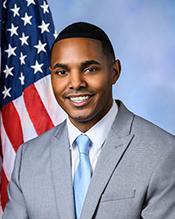
U.S. Representative for New York’s 15th district
Democrat
119th Congress, two-year term
Missed 3.3% of roll calls. Chamber median 1.9%.
The full voting recordCounts roll calls where most Democrats and most Republicans voted differently, leaving out procedural votes.
How we countFrom FEC filings, Voteview roll calls and Congress.gov.
Democrat. In Congress since 2021, 3 terms in total.
Following saves Torres to your list, which Chamber & Street keeps on its server, linked to a cookie on this browser and not to your name or email. Email alerts will come with constituent verification.
Bills and resolutions Torres signed on to as a cosponsor. An original cosponsor signed on the day the bill was introduced. Source: govinfo bill status files, last updated Nov 6, 2026.
Empowering Striking Workers Act of 2025
Sponsor Donald Norcross (D). Joined Apr 15, 2026. 52 cosponsors. H.R. 5206 on Congress.gov
Introduced
Farmers Feeding America Act of 2025
Sponsor Andrea Salinas (D). Joined Apr 15, 2026. 28 cosponsors. H.R. 3784 on Congress.gov(opens in a new tab)
Introduced
Farmers Feeding America Act of 2025
This bill reauthorizes The Emergency Food Assistance Program (TEFAP), increases funding for the program, and provides additional delivery options for geographically isolated states (i.e., Hawaii, Alaska, Puerto Rico, the Northern Mariana Islands, the U.S. Virgin Islands, and Guam).
TEFAP is a federal program that helps supplement the diets of people with low income by providing them with emergency food assistance at no cost. Through TEFAP, the Department of Agriculture (USDA) purchases a variety of commodities and makes those food products (e.g., canned, frozen, dried, and fresh fruits and vegetables, eggs, meat, dairy, and whole-grain and enriched grain products) available to state distributing agencies.
The bill increases funding for purchasing commodities under the program.
Further, the bill directs USDA to coordinate with geographically isolated states to (1) establish alternative delivery options for allocated commodities, and (2) allow for the states to order commodities through the USDA Department of Defense Fresh Fruit and Vegetable Program.
USDA may also provide geographically isolated states the ability to directly purchase domestically grown food in lieu of receiving a portion of the commodities. Under this option, USDA may distribute as cash to the state up to 20% of the cash value of the commodities that are allocated to the state under TEFAP.
Further, USDA may consider additional factors beyond lowest price in determining winning bids for contracts for fresh produce packages (including product variety and transportation distance).
Workplace Violence Prevention for Health Care and Social Service Workers Act
Sponsor Joe Courtney (D). Joined Apr 15, 2026. 134 cosponsors. H.R. 2531 on Congress.gov(opens in a new tab)
Introduced
Workplace Violence Prevention for Health Care and Social Service Workers Act
This bill requires the Department of Labor to address workplace violence in health care, social service, and similar sectors.
Specifically, Labor must issue an occupational safety and health standard that requires certain employers to take actions to protect workers and other personnel from workplace violence. The standard applies to employers in the health care sector, in the social service sector, and in sectors that conduct activities similar to those in the health care and social service sectors. Among other elements, the standard must require each employer to (1) develop a workplace violence prevention plan, (2) promptly investigate incidents of workplace violence, and (3) provide relevant training and education to employees.
The bill requires certain hospitals and skilled nursing facilities to comply with this standard as a condition of Medicare participation.
TREATS Act
Sponsor Donald Norcross (D). Joined Apr 15, 2026. 31 cosponsors. H.R. 1627 on Congress.gov(opens in a new tab)
Introduced
Telehealth Response for E-prescribing Addiction Therapy Services Act or the TREATS Act
This bill permanently allows health care practitioners to prescribe certain controlled substances for treating substance use disorders via telehealth without evaluating the patient in person.
Generally, a health care practitioner may not prescribe a controlled substance via telehealth unless they first conduct an in-person medical evaluation. Federal regulations currently provide a temporary exception to this requirement, allowing practitioners to prescribe schedule II-V controlled substances for legitimate medical purposes (such as treating substance use disorders) via telehealth without an in-person evaluation. However, this temporary regulatory flexibility expires on December 31, 2025.
The bill permanently allows practitioners to prescribe schedule III-V controlled substances for the treatment of a substance use disorder via telehealth without conducting an in-person evaluation. In such instances, a practitioner may conduct a telehealth evaluation using audio-only or audio and video equipment.
Providing for congressional disapproval under chapter 8 of title 5, United States Code, of the rule submitted by the Department of Veterans Affairs relating to "Reproductive Health Services".
Sponsor Julia Brownley (D). Joined Apr 15, 2026. 155 cosponsors. H.J.Res. 144 on Congress.gov(opens in a new tab)
Introduced
Supporting the designation of April 10 as "Dolores Huerta Day", in honor of the accomplishments and legacy of the trailblazing labor and civil rights leader Dolores Huerta.
Sponsor Sylvia Garcia (D). Original cosponsor. 29 cosponsors. H.Res. 1170 on Congress.gov(opens in a new tab)
Introduced
Veteran Burial Timeliness and Death Certificate Accountability Act
Sponsor Tom Emmer (R). Joined Apr 14, 2026. 158 cosponsors. H.R. 4398 on Congress.gov(opens in a new tab)
Introduced
Therapeutic Fraud Prevention Act of 2025
Sponsor Ted Lieu (D). Joined Apr 13, 2026. 204 cosponsors. H.R. 3243 on Congress.gov(opens in a new tab)
Introduced
FLEX Act
Sponsor Ryan Mackenzie (R). Joined Apr 9, 2026. 6 cosponsors. H.R. 7082 on Congress.gov(opens in a new tab)
Passed committee
Fostering Learning and Excellence in Charter Schools Act or the FLEX Act
This bill expands and revises the Charter Schools Program (CSP), including by expanding the allowable uses of CSP funds.
Current law authorizes competitive grants to state entities (e.g., state educational agencies and state charter school boards) and, through them, subgrants to eligible applicants (i.e., charter school developers) to enable them to open and prepare for the operation of a new charter school or replicate or expand an existing high-quality charter school.
The bill allows subgrants to also be used for adding or expanding programs or other offerings at these schools, such as through the adoption of new academic programs or delivery models, personalized learning, or a new curricular approach. New offerings must enable additional students to enroll in and benefit from the school.
Eligible applicants may also use CSP funds for activities such as
• hiring and compensating teachers and other school staff (currently, this may only occur during the planning period);
• carrying out necessary renovations, upgrades, or facility repairs, or acquiring portable classrooms; and
• providing transportation to students (currently, only one-time, start-up transportation costs are permitted).
Eligible applicants may request and receive advance payments of subgrants.
Among other requirements, the Department of Education must (1) use CSP funds for additional activities (e.g., increasing the number of available seats in charter schools that serve rural students and students with disabilities), and (2) consult with charter school operators prior to issuing a notice of proposed rulemaking relevant to charter schools.
340B PATIENTS Act of 2025
Sponsor Doris Matsui (D). Joined Apr 9, 2026. 21 cosponsors. H.R. 4581 on Congress.gov(opens in a new tab)
Introduced
Prohibition of Medicaid Funding for Conversion Therapy Act
Sponsor Shri Thanedar (D). Joined Apr 9, 2026. 41 cosponsors. H.R. 4244 on Congress.gov(opens in a new tab)
Introduced
Prohibition of Medicaid Funding for Conversion Therapy Act
This bill prohibits state Medicaid programs from covering conversion therapy. The bill defines conversion therapy as any practice or treatment that seeks to change a person's sexual orientation or gender identity in exchange for monetary compensation.
Nurse Staffing Standards for Hospital Patient Safety and Quality Care Act of 2025
Sponsor Janice Schakowsky (D). Joined Apr 9, 2026. 49 cosponsors. H.R. 3415 on Congress.gov(opens in a new tab)
Introduced
Nurse Staffing Standards for Hospital Patient Safety and Quality Care Act of 2025
This bill requires hospitals to implement and submit to the Department of Health and Human Services (HHS) a staffing plan that complies with specified minimum nurse-to-patient ratios by unit. Hospitals must post a notice regarding nurse-to-patient ratios in each unit and maintain records of actual ratios for each shift in each unit. The bill also requires hospitals to follow certain procedures regarding how ratios are determined, and other staff are prohibited from performing nurse functions unless specifically authorized within a state's scope of practice rules.
HHS must adjust Medicare payments to hospitals to cover additional costs attributable to compliance with these ratios.
Nurses may object to, or refuse to participate in, an assignment if it would violate minimum ratios or if they are not prepared by education or experience to fulfill the assignment without compromising the safety of a patient or jeopardizing their nurse's license. Hospitals may not (1) take adverse actions against a nurse based on the nurse's reasonable refusal to accept an assignment; or (2) discriminate against individuals for good faith complaints relating to the care, services, or conditions of the hospital or related facilities. HHS may impose civil monetary penalties on hospitals violating the ratio requirements and must publish the names of such hospitals.
The bill provides stipends to the nurse workforce loan repayment and scholarship program and expands the nurse retention grant program to include nurse preceptorship and mentorship projects.
Military Spouse Hiring Act
Sponsor Donald Beyer (D). Joined Apr 9, 2026. 130 cosponsors. H.R. 2033 on Congress.gov(opens in a new tab)
Introduced
Military Spouse Hiring Act
This bill allows employers to claim a tax credit for a percentage of qualified wages paid to an employee who is a military spouse by expanding the federal Work Opportunity Tax Credit (WOTC) to add qualified military spouses as a targeted group. (The WOTC applies to employers who hire members of specific targeted groups, such as veterans, ex-felons, and long-term unemployment recipients, and is generally equal to a percentage of the wages paid to such individuals in the first year of employment, up to a maximum amount. Under current law, the wages must be paid before 2026.)
The bill defines a qualified military spouse as any individual who is certified by a state workforce agency as being (as of the hiring date) a spouse of a member of the Armed Forces.
Equitable Access to School Facilities Act
Sponsor Juan Ciscomani (R). Joined Mar 27, 2026. 10 cosponsors. H.R. 7086 on Congress.gov(opens in a new tab)
Passed committee
Equitable Access to School Facilities Act
This bill expands and revises certain grant programs under the Charter Schools Program (CSP).
Currently, the CSP's State Charter School Facilities Incentive Grant (SFIG) program provides competitive grants to help states establish and enhance or administer per-pupil facilities aid for charter schools.
The bill replaces the SFIG program with a new grant program, which requires the Department of Education to (1) award competitive grants to state entities with the highest-quality applications for paying the federal share of acquiring and maintaining charter school facilities; and (2) give priority to certain state entities, such as those located in a state that has tax-exempt financing for charter schools. Further, the bill outlines program requirements (e.g., cost-sharing) and allowable uses of grants.
Currently, the CSP's State Entities (SE) program authorizes competitive grants to state entities and, through them, subgrants to eligible applicants to enable them to open and prepare for the operation of a new charter school or replicate or expand a charter school.
The bill revises the SE program by allowing grants to be used for (1) providing assistance to charter schools with locating and accessing a facility, and (2) providing one-time assistance to ensure the facility complies with building codes. Further, state entities may reserve up to 10% of grant funds for a revolving loan fund.
The bill (1) specifies that no funds made available under the CSP create a federal interest in associated property, and (2) revises reporting requirements for the CSP's Credit Enhancement grants.
Supporting the goals and ideals of International Transgender Day of Visibility.
Sponsor Sara Jacobs (D). Original cosponsor. 59 cosponsors. H.Con.Res. 82 on Congress.gov(opens in a new tab)
Introduced
H–1Bs for Physicians and the Healthcare Workforce Act
Sponsor Michael Lawler (R). Joined Mar 26, 2026. 68 cosponsors. H.R. 7961 on Congress.gov(opens in a new tab)
Introduced
Recognizing the significance of equal pay and the disparity between wages paid to men and women.
Sponsor Lois Frankel (D). Original cosponsor. 140 cosponsors. H.Con.Res. 81 on Congress.gov(opens in a new tab)
Introduced
Extending WIC for New Moms Act
Sponsor Lucy McBath (D). Original cosponsor. 90 cosponsors. H.R. 8055 on Congress.gov(opens in a new tab)
Introduced
Extending WIC for New Moms Act
This bill amends the Special Supplemental Nutrition Program for Women, Infants, and Children (WIC) to extend the eligibility periods for breastfeeding and postpartum women.
Specifically, a state program may elect to certify a breastfeeding woman for up to 24 months (currently 1 year) postpartum. The bill also expands the eligibility period for postpartum women to up to 24 months after termination of pregnancy (currently 6 months).
The Department of Agriculture must submit a report to Congress evaluating the effect of these changes to the program on (1) maternal and infant health outcomes, (2) breastfeeding rates, and (3) qualitative evaluations of family experiences under WIC.
To designate the facility of the United States Postal Service located at 15422 NY 104 in Martville, New York, as the "Sergeant Staret J. Engleston Memorial Post Office Building".
Sponsor Claudia Tenney (R). Joined Mar 24, 2026. 17 cosponsors. H.R. 7410 on Congress.gov(opens in a new tab)
Introduced
This bill designates the facility of the United States Postal Service located at 15422 NY 104 in Martville, New York, as the "Sergeant Staret J. Engleston Memorial Post Office Building".
MODERN WIC Act of 2025
Sponsor Brian Fitzpatrick (R). Joined Mar 24, 2026. 80 cosponsors. H.R. 1464 on Congress.gov(opens in a new tab)
Introduced
More Options to Develop and Enhance Remote Nutrition in WIC Act of 2025 or the MODERN WIC Act of 2025
This bill permanently allows individuals to remotely certify their eligibility for, and receive benefits through, the Special Supplemental Nutrition Program for Women, Infants, and Children (WIC).
Specifically, the bill requires that a state agency allow an individual seeking a WIC certification, recertification, or a nutritional risk evaluation to do so by phone or through video teleconference, in addition to the in-person option.
A state agency has 90 days to collect data for a nutritional risk evaluation for a remotely certified individual. Further, a state agency may consider an applicant who meets the income eligibility standards to be temporarily eligible on an interim basis to participate in the program and may certify the individual for immediate participation without waiting for a nutritional risk evaluation.
The bill also allows states to provide benefits on WIC electronic benefit transfer cards through mail or remote issuance instead of requiring participants to pick up or reload benefits in person at a WIC office.
Further, the Department of Agriculture must report to Congress about the use of remote technologies and other digital tools in the WIC program.
Currently, individuals are generally required to be physically present to certify their WIC eligibility and receive benefits, with exceptions. The Food and Nutrition Service has temporarily waived these requirements and allowed remote certification and benefits using authorities that were provided by laws that were enacted to address COVID-19.
Energy Bills Relief Act
Sponsor Sean Casten (D). Original cosponsor. 163 cosponsors. H.R. 7977 on Congress.gov(opens in a new tab)
Introduced
Momnibus Act
Sponsor Lauren Underwood (D). Original cosponsor. 214 cosponsors. H.R. 7973 on Congress.gov(opens in a new tab)
Introduced
Essential Caregivers Act of 2025
Sponsor Claudia Tenney (R). Joined Mar 18, 2026. 160 cosponsors. H.R. 6766 on Congress.gov(opens in a new tab)
Introduced
Essential Caregivers Act of 2025
This bill prohibits certain health care facilities from limiting the access of essential caregivers to residents of those facilities, including during designated emergency periods.
Specifically, the bill generally prohibits Medicare skilled nursing facilities, Medicaid nursing facilities, Medicaid intermediate care facilities, and associated inpatient rehabilitation facilities from restricting the access of essential caregivers to residents of the facilities, including during emergency periods in which visitation rights are otherwise restricted. During emergency periods, facilities may restrict access for an initial period of up to seven days and for one additional maximum seven-day period (if the additional period is approved by the state health department). Facilities may restrict access for a total of 7 days (or 14 days with the approval of the state health department) during an emergency period.
Essential caregivers must agree to comply with any safety protocols set by the facility, which may be no more stringent for caregivers compared to those for staff. Caregivers who fail to comply with these requirements may be denied access, subject to an appeals process.
Fair Wages for Home Care Workers Act
Sponsor Alexandria Ocasio-Cortez (D). Original cosponsor. 85 cosponsors. H.R. 7917 on Congress.gov(opens in a new tab)
Introduced
Memorializing Rev. Jesse Jackson by flying the flag of the United States at halfstaff.
Sponsor Joyce Beatty (D). Original cosponsor. 168 cosponsors. H.Res. 1107 on Congress.gov(opens in a new tab)
Introduced