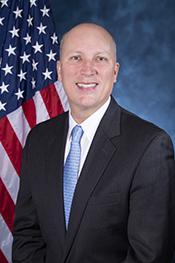
U.S. Representative for Texas’s 21st district
Republican
119th Congress, two-year term
Missed 5.6% of roll calls. Chamber median 1.9%.
The full voting recordCounts roll calls where most Democrats and most Republicans voted differently, leaving out procedural votes.
How we countFrom FEC filings, Voteview roll calls and Congress.gov.
Republican. In Congress since 2019, 4 terms in total.
Following saves Roy to your list, which Chamber & Street keeps on its server, linked to a cookie on this browser and not to your name or email. Email alerts will come with constituent verification.
Bills and resolutions where Roy is the primary sponsor. Most bills never leave committee; that is normal for every member. Source: Congress.gov, last updated Oct 29, 2026.
6 of 68 have at least one cosponsor from the other party.
Gas Can Freedom Act of 2025
Introduced Feb 13, 2025. 10 cosponsors. H.R. 1345 on Congress.gov
Introduced
Direct Medical Care Freedom Act of 2025
Introduced Feb 7, 2025. 3 cosponsors. H.R. 1140 on Congress.gov(opens in a new tab)
Introduced
Passport Sanity Act
Introduced Feb 7, 2025. 1 cosponsor. H.R. 1139 on Congress.gov(opens in a new tab)
Introduced
Passport Sanity Act
This bill prohibits the Department of State from issuing a passport, passport card, or Consular Report of Birth Abroad with an unspecified (X) gender designation. The State Department must also ensure that applications for such documents include only male and female gender designations.
Restoring Military Focus Act
Introduced Feb 6, 2025. 4 cosponsors. H.R. 1095 on Congress.gov(opens in a new tab)
Introduced
Restoring Military Focus Act
This bill eliminates the position of Chief Diversity Officer within the Department of Defense (DOD), as well as the position of Senior Advisor for Diversity and Inclusion within the military departments. Additionally, the bill prohibits the use of federal funds to establish similar positions to that of Chief Diversity Officer or Senior Advisor for Diversity and Inclusion within DOD.
On January 20, 2025, President Trump signed an executive order titled Ending Radical and Wasteful Government DEI Programs and Preferencing, which directed the termination of all federal diversity, equity, inclusion, and accessibility programs, offices, and positions, including Chief Diversity Officer positions. On January 27, 2025, President Trump signed an executive order titled Restoring America's Fighting Force, which specifically directed the abolishment of every diversity, equity and inclusion office within DOD and the Department of Homeland Security with regard to the Coast Guard.
Veterans Access to Direct Primary Care Act
Introduced Feb 4, 2025. 3 cosponsors. H.R. 961 on Congress.gov(opens in a new tab)
Introduced
Veterans Access to Direct Primary Care Act
This bill requires the Department of Veterans Affairs (VA) to implement a five-year pilot program to provide veterans who are enrolled in the VA health care system with the option to receive primary care services from a non-VA health care provider under a direct primary care service arrangement and pay using a veteran health savings account.
Defending Veterans’ Second Amendment Rights Act
Introduced Feb 4, 2025. 1 cosponsor. H.R. 962 on Congress.gov(opens in a new tab)
Introduced
Defending Veterans' Second Amendment Rights Act
This bill prohibits the Department of Veterans Affairs from transmitting personally identifiable information of veterans or their beneficiaries to the national instant criminal background check system utilized by licensed importers or dealers of firearms solely on the basis that a veteran has a service-connected disability.
Drug Cartel Terrorist Designation Act
Introduced Jan 31, 2025. 29 cosponsors. H.R. 885 on Congress.gov(opens in a new tab)
Introduced
Drug Cartel Terrorist Designation Act
This bill directs the Department of State to designate four specified drug cartels as foreign terrorist organizations. (Among other things, such a designation allows the Department of the Treasury to require U.S. financial institutions to block transactions involving the organization.)
The four specified cartels in the bill are the Gulf Cartel, the Cartel Del Noreste, the Cartel de Sinaloa, and the Cartel de Jalisco Nueva Generacion.
The bill also requires the State Department to submit a detailed report on those four cartels and any other cartels it may identify. Based on this report, the State Department must designate as a foreign terrorist organization any such identified cartel (or faction thereof) that meets certain criteria for designation as a foreign terrorist organization.
The bill specifies that it may not be construed to expand eligibility for asylum.
Personalized Care Act of 2025
Introduced Jan 28, 2025. 12 cosponsors. H.R. 810 on Congress.gov(opens in a new tab)
Introduced
Personalized Care Act of 2025
This bill expands health saving account (HSA) eligibility, increases HSA contribution limits, and makes other HSA-related changes. The bill also expands the definition of medical care for purposes of the itemized tax deduction for unreimbursed medical expenses.
The bill eliminates the requirement that an individual must be covered by a high-deductible health plan to establish and contribute to an HSA. Under the bill, an eligible individual is defined as (1) a health care sharing ministry participant, or (2) individual covered under
• a group or individual health plan;
• health insurance (including a short-term limited duration and medical indemnity plan); or
• a government plan (including Medicare Part A and B, Medicaid, the Children’s Health Insurance Program, certain military and government employee health benefit programs, and the Indian Health Service and tribal organization programs).
The bill increases annual HSA contribution limits to $10,800 (from $4,300 in 2025) for self-only coverage and $29,500 (from $8,550 in 2025) for family coverage, adjusted annually for inflation.
The bill expands the qualified medical expenses that may be paid for with HSA distributions to include health insurance payments (e.g., premiums), direct care fees, and certain amounts paid by health care sharing ministry participants.
The bill decreases the penalty to 10% (from 20%) for nonqualified HSA distributions.
Finally, under the bill, direct care fees and fees paid for membership in a health care sharing ministry qualify as medical care for purposes of the itemized tax deduction for unreimbursed medical expenses.
Securing America’s Land from Foreign Interference Act
Introduced Jan 28, 2025. 14 cosponsors. H.R. 809 on Congress.gov(opens in a new tab)
Introduced
Securing America's Land from Foreign Interference Act
This bill requires the President to take actions as necessary to prohibit members of the Chinese Communist Party (and entities owned, controlled, or influenced by the party) from purchasing real estate located in the United States, U.S. territories, or U.S. possessions.
No Taxpayer Funding for the U.N. Population Fund
Introduced Jan 23, 2025. 11 cosponsors. H.R. 699 on Congress.gov(opens in a new tab)
Introduced
No Taxpayer Funding for the U.N. Population Fund Act
This bill prohibits the use of funds to provide contributions directly or indirectly to the United Nations Population Fund (UNFPA). The UNFPA is the United Nations sexual and reproductive health agency.
Protecting Life on College Campus Act of 2025
Introduced Jan 22, 2025. 31 cosponsors. H.R. 632 on Congress.gov(opens in a new tab)
Introduced
Protecting Life on College Campus Act of 2025
This bill prohibits the award of federal funds to an institution of higher education (IHE) that hosts or is affiliated with a school-based service site that provides abortion drugs or abortions to its students or to employees of the IHE or the site. An IHE that hosts or is affiliated with a site must, in order to remain eligible for federal funds, annually certify that the site does not provide abortion drugs or abortions to students or employees.
FACE Act Repeal Act of 2025
Introduced Jan 21, 2025. 44 cosponsors. H.R. 589 on Congress.gov(opens in a new tab)
Passed committee
FACE Act Repeal Act of 2025
This bill repeals provisions of federal criminal law that prohibit conduct intended to injure, intimidate, or interfere with persons who are seeking to (1) obtain or provide reproductive health services, or (2) exercise their right of religious freedom at a place of religious worship.
No taxpayer funding for United Nations Human Rights Council Act
Introduced Jan 14, 2025. 10 cosponsors. H.R. 400 on Congress.gov(opens in a new tab)
Introduced
No taxpayer funding for United Nations Human Rights Council Act
This bill requires the Department of State to withhold from the U.S. contribution to the United Nations (U.N.) the amount that would be allocated to the U.N. Human Rights Council. Such withheld funds must be rescinded and must not be considered arrears to be repaid to any U.N. entity.
The bill also prohibits the State Department from making voluntary contributions to the U.N. Human Rights Council.
No Taxpayer Funding for the World Health Organization Act
Introduced Jan 14, 2025. 17 cosponsors. H.R. 401 on Congress.gov(opens in a new tab)
Introduced
No Taxpayer Funding for the World Health Organization Act
This bill prohibits the United States from providing any assessed or voluntary contributions to the World Health Organization.
Border Safety and Security Act of 2025
Introduced Jan 9, 2025. 47 cosponsors. H.R. 318 on Congress.gov(opens in a new tab)
Introduced
Border Safety and Security Act of 2025
This bill requires the Department of Homeland Security (DHS) to suspend the entry of any non-U.S. nationals (aliens under federal law) without valid entry documents during any period when DHS cannot detain such an individual or return the individual to a foreign country contiguous to the United States. A state may sue DHS to enforce this requirement.
(Under current law, non-U.S. nationals who arrive at the border without entry documents are generally subject to expedited removal. However, if such an individual is found to have a credible fear of persecution, they are typically subject to detention while their asylum claim is being considered.)
The bill also authorizes DHS to suspend the entry of non-U.S. nationals without entry documents at the border if DHS determines that such a suspension is necessary to achieve operational control over such a border.
Healthcare Freedom Act of 2025
Introduced Jan 9, 2025. 9 cosponsors. H.R. 317 on Congress.gov(opens in a new tab)
Introduced
Healthcare Freedom Act of 2025
This bill renames health savings accounts (HSAs) as health freedom accounts (HFAs), modifies the eligibility requirements and contribution limits for such accounts, and expands the definition of qualified medical expenses. The bill also eliminates the exclusion from income of employer contributions to a health plan for certain individuals.
Under current law, individuals may establish and contribute to an HSA if covered under an HSA-eligible high-deductible health plan (HDHP). For 2025, HSA contributions are limited to $4,300 for self-only coverage or $8,550 for family coverage (adjusted annually). Individuals 55 or older may make an additional HSA contribution of up to $1,000 per year. Further, HSA distributions are tax-free if used to pay for qualified medical expenses.
The bill allows individuals to
• establish and contribute to an HFA without being enrolled in an HDHP,
• contribute up to $12,000 ($24,000 for joint filers) per year to an HFA (adjusted annually), and
• contribute an additional $5,000 per year to an HFA if 55 or older.
The bill also expands the definition of qualified medical expenses to include expenses related to direct primary care, health care sharing ministries, and medical cost sharing organizations.
For individuals hired at least five years after the bill's enactment (1) employer contributions to an HFA may be excluded from the employee's income, and (2) the bill eliminates the exclusion from income of employer contributions to other health plans. (Under current law, employer contributions to a health plan generally are not included in the individual’s income.)
Illegitimate Court Counteraction Act
Introduced Jan 3, 2025. 38 cosponsors. H.R. 23 on Congress.gov(opens in a new tab)
Passed the House
Illegitimate Court Counteraction Act
This bill imposes sanctions against foreign persons (individuals and entities) who assist the International Criminal Court (ICC) in investigating, arresting, detaining, or prosecuting certain individuals.
The bill categorizes as protected persons (1) any U.S. individual, U.S. entity, or person in the United States, unless the United States is a state party to the Rome Statute of the ICC and provides formal consent to ICC jurisdiction; and (2) any foreign person that is a citizen or lawful resident of a U.S. ally that is not a state party to the Rome Statute or has not consented to ICC jurisdiction.
If the ICC attempts to investigate, arrest, detain or prosecute a protected person, the President must impose visa- and property-blocking sanctions against the foreign persons that engaged in or materially assisted in such actions, as well as against foreign persons owned by, controlled by, or acting on behalf of such foreign persons. The President must also apply visa-blocking sanctions to the immediate family members of those sanctioned.
Upon enactment, the bill rescinds all funds appropriated for the ICC and prohibits the subsequent use of appropriated funds for the ICC.
SAVE Act
Introduced Jan 3, 2025. 110 cosponsors. H.R. 22 on Congress.gov(opens in a new tab)
Passed the House
Safeguard American Voter Eligibility Act or the SAVE Act
This bill requires individuals to provide documentary proof of U.S. citizenship when registering to vote in federal elections.
Specifically, the bill prohibits states from accepting and processing an application to register to vote in a federal election unless the applicant presents documentary proof of U.S. citizenship. The bill specifies what documents are considered acceptable proof of U.S. citizenship, such as identification that complies with the REAL ID Act of 2005 that indicates U.S. citizenship.
Further, the bill (1) prohibits states from registering an individual to vote in a federal election unless, at the time the individual applies to register to vote, the individual provides documentary proof of U.S. citizenship; and (2) requires states to establish an alternative process under which an applicant may submit other evidence to demonstrate U.S. citizenship.
Each state must take affirmative steps on an ongoing basis to ensure that only U.S. citizens are registered to vote, which shall include establishing a program to identify individuals who are not U.S. citizens using information supplied by certain sources.
Additionally, states must remove noncitizens from their official lists of eligible voters.
The bill allows for a private right of action against an election official who registers an applicant to vote in a federal election who fails to present documentary proof of U.S. citizenship.
The bill establishes criminal penalties for certain offenses, including registering an applicant to vote in a federal election who fails to present documentary proof of U.S. citizenship.