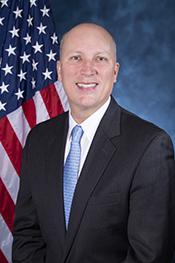
U.S. Representative for Texas’s 21st district
Republican
119th Congress, two-year term
Missed 5.6% of roll calls. Chamber median 1.9%.
The full voting recordCounts roll calls where most Democrats and most Republicans voted differently, leaving out procedural votes.
How we countFrom FEC filings, Voteview roll calls and Congress.gov.
Republican. In Congress since 2019, 4 terms in total.
Following saves Roy to your list, which Chamber & Street keeps on its server, linked to a cookie on this browser and not to your name or email. Email alerts will come with constituent verification.
Bills and resolutions where Roy is the primary sponsor. Most bills never leave committee; that is normal for every member. Source: Congress.gov, last updated Oct 29, 2026.
6 of 68 have at least one cosponsor from the other party.
No Tax Exemptions For Terror Act
Introduced Oct 31, 2025. 20 cosponsors. H.R. 5890 on Congress.gov
Introduced
Impeaching Deborah Boardman, Judge of the United States District Court for the District of Maryland, for high crimes and misdemeanors.
Introduced Oct 17, 2025. 17 cosponsors. H.Res. 818 on Congress.gov(opens in a new tab)
Introduced
Preserving a Sharia-Free America Act
Introduced Oct 8, 2025. 28 cosponsors. H.R. 5722 on Congress.gov(opens in a new tab)
Introduced
Expressing condolences and support for the victims of the July 4 flooding in Texas, honoring acts of heroism, and committing to stand with those impacted by these floods.
Introduced Sep 30, 2025. 29 cosponsors, 5 from the other party. H.Res. 782 on Congress.gov(opens in a new tab)
Passed the House
This resolution expresses that the House of Representatives mourns the loss of the victims of the flooding in central Texas on July 4, 2025, honors the individuals who responded, and supports rebuilding infrastructure and providing assistance for those affected by the flooding.
Restore Trust in Congress Act
Introduced Sep 3, 2025. 145 cosponsors, 109 from the other party. H.R. 5106 on Congress.gov(opens in a new tab)
Introduced
Sanctuary Penalty and Public Protection Act of 2025
Introduced Aug 19, 2025. 29 cosponsors. H.R. 5005 on Congress.gov(opens in a new tab)
Introduced
TPS Reform Act of 2025
Introduced Jun 26, 2025. 10 cosponsors. H.R. 4201 on Congress.gov(opens in a new tab)
Introduced
TPS Reform Act of 2025
This bill changes the procedures for designating a country with temporary protected status (TPS) and places restrictions on who is allowed to benefit from this status. (Qualified nationals of a TPS-designated country are eligible for work authorization and may not be removed from the United States while the status is in effect.)
Specifically, the bill requires an act of Congress to designate a TPS country, whereas currently the Department of Homeland Security has such authority. The initial act of designating a TPS country must include a time period for the designation of up to 18 months and also contain certain information, including an estimate of the number of individuals who would benefit from the status. Congress may also pass an act to terminate or extend a designation.
The bill also establishes that a non-U.S. national (alien under federal law) who lacks lawful immigration status may not receive the benefits of temporary protected status.
End DED Act
Introduced Jun 26, 2025. 6 cosponsors. H.R. 4200 on Congress.gov(opens in a new tab)
Introduced
Make DOGE Permanent Act
Introduced Jun 4, 2025. 17 cosponsors. H.R. 3733 on Congress.gov(opens in a new tab)
Introduced
State Border Security Assistance Act
Introduced May 15, 2025. 7 cosponsors, 1 from the other party. H.R. 3464 on Congress.gov(opens in a new tab)
Introduced
Providing for consideration of the bill (H.R. 2240) to require the Attorney General to develop reports relating to violent attacks against law enforcement officers, and for other purposes; providing for consideration of the bill (H.R. 2243) to amend title 18, United States Code, to improve the Law Enforcement Officer Safety Act and provisions relating to the carrying of concealed weapons by law enforcement officers, and for other purposes; and providing for consideration of the bill (H.R. 2255) to allow Federal law enforcement officers to purchase retired service weapons, and for other purposes.
Introduced May 13, 2025. 0 cosponsors. H.Res. 405 on Congress.gov(opens in a new tab)
Passed the House
Ending Medicaid Discrimination Against the Most Vulnerable Act
Introduced May 9, 2025. 18 cosponsors. H.R. 3321 on Congress.gov(opens in a new tab)
Introduced
Providing for consideration of the joint resolution (H.J. Res. 60) providing for congressional disapproval under chapter 8 of title 5, United States Code, of the rule submitted by the National Park Service relating to "Glen Canyon National Recreation Area: Motor Vehicles"; providing for consideration of the joint resolution (H.J. Res. 78) providing for congressional disapproval under chapter 8 of title 5, United States Code, of the rule submitted by the United States Fish and Wildlife Service relating to "Endangered and Threatened Wildlife and Plants; Endangered Species Status for the San Francisco Bay-Delta Distinct Population Segment of the Longfin Smelt"; providing for consideration of the joint resolution (H.J. Res. 87) providing congressional disapproval under chapter 8 of title 5, United States Code, of the rule submitted by the Environmental Protection Agency relating to "California State Motor Vehicle and Engine Pollution Control Standards; Heavy-Duty Vehicle and Engine Emission Warranty and Maintenance Provisions; Advanced Clean Trucks; Zero Emission Airport Shuttle; Zero-Emission Power Train Certification; Waiver of Preemption; Notice of Decision"; providing for consideration of the joint resolution (H.J. Res. 88) providing congressional disapproval under chapter 8 of title 5, United States Code, of the rule submitted by the Environmental Protection Agency relating to "California State Motor Vehicle and Engine Pollution Control Standards; Advanced Clean Cars II; Waiver of Preemption; Notice of Decision"; providing for consideration of the joint resolution (H.J. Res. 89) providing congressional disapproval under chapter 8 of title 5, United States Code, of the rule submitted by the Environmental Protection Agency relating to "California State Motor Vehicle and Engine and Nonroad Engine Pollution Control Standards; The "Omnibus" Low NOX Regulation; Waiver of Preemption; Notice of Decision"; and for other purposes.
Introduced Apr 28, 2025. 0 cosponsors. H.Res. 354 on Congress.gov(opens in a new tab)
Passed the House
Bring Entrepreneurial Advancements To Consumers Here In North America Act
Introduced Apr 3, 2025. 1 cosponsor. H.R. 2652 on Congress.gov(opens in a new tab)
Introduced
To remove certain species from the lists of threatened species and endangered species published pursuant to the Endangered Species Act of 1973.
Introduced Apr 2, 2025. 2 cosponsors. H.R. 2608 on Congress.gov(opens in a new tab)
Introduced
CRT Act
Introduced Mar 21, 2025. 0 cosponsors. H.R. 2276 on Congress.gov(opens in a new tab)
Introduced
Combating Racist Teaching in Schools Act or the CRT Act
This bill prohibits federal funds from being awarded to elementary or secondary schools or institutions of higher education that promote certain race-based theories or compel teachers or students to affirm belief in such theories in a manner that discriminates on the basis of race, color, or national origin.
SCHOOL Act of 2025
Introduced Mar 21, 2025. 0 cosponsors. H.R. 2275 on Congress.gov(opens in a new tab)
Introduced
Support Children Having Open Opportunities for Learning Act of 2025 or the SCHOOL Act of 2025
This bill allows certain federal funds for elementary and secondary education to follow the student to the school that they attend (i.e., public, private, or home school), regardless of whether the student is learning in person or remotely. These funds may be used for educational and instructional materials, tutoring, tuition for private school, and extracurricular activities.
Count the Crimes to Cut Act
Introduced Mar 14, 2025. 4 cosponsors, 2 from the other party. H.R. 2159 on Congress.gov(opens in a new tab)
Passed the House
Count the Crimes to Cut Act of 2025
This bill establishes public databases of federal criminal offenses.
Specifically, the bill requires the Department of Justice to report on and create a public database of all criminal statutory offenses. Additionally, the bill requires federal agencies to report on and create public databases of criminal regulatory offenses that they enforce.
Deportation Compliance Act
Introduced Mar 6, 2025. 14 cosponsors. H.R. 1953 on Congress.gov(opens in a new tab)
Introduced
Move the ICC Out of NYC Act of 2025
Introduced Mar 4, 2025. 0 cosponsors. H.R. 1839 on Congress.gov(opens in a new tab)
Introduced
Higher Education Reform and Opportunity Act
Introduced Feb 27, 2025. 0 cosponsors. H.R. 1739 on Congress.gov(opens in a new tab)
Introduced
Higher Education Reform and Opportunity Act
This bill revises requirements governing student loans and the accreditation of institutions of higher education (IHEs).
Specifically, the bill consolidates federal student loans into one student loan program and phases out loan forgiveness for borrowers.
Additionally, the bill makes postsecondary education courses and programs (e.g., apprenticeship programs) that provide credits toward a postsecondary certification, credential, or degree eligible for federal student aid funding if the courses and programs are accredited by a state that has an alternative accreditation agreement with the Department of Education (ED).
The bill requires IHEs to publish certain enrollment and financial aid information, including (1) the percentage of former financial aid recipients who are employed at various intervals following graduation, and (2) the average amount of total federal student loan debt accrued upon graduation. The Government Accountability Office must compile, study, and report on all such information published by IHEs. Further, the bill prohibits the disclosure of personally identifiable information and directs ED to establish penalties for violations.
Lastly, the bill requires an IHE to pay a default rate fine for a fiscal year in an amount that is equal to the applicable percentage of outstanding federal student loans (i.e., the total amount of loans issued to students for attendance at the IHE for which regular on-time payments are not being made). An IHE shall receive a $400 credit for each graduate of the IHE who received a Federal Pell Grant while enrolled at the IHE during the fiscal year.
Reciprocity Ensures Streamlined Use of Lifesaving Treatments Act of 2025
Introduced Feb 26, 2025. 1 cosponsor. H.R. 1632 on Congress.gov(opens in a new tab)
Introduced
Reciprocity Ensures Streamlined Use of Lifesaving Treatments Act of 2025
This bill establishes a reciprocal marketing approval process that allows for the sale of a drug, biological product, or medical device that has not been approved by the Food and Drug Administration (FDA) if the product is approved for sale in another country and there is an unmet need for the product.
Specifically, in order to receive reciprocal approval, the bill requires the product's sponsor to demonstrate, among other things, that (1) the product has been approved in one of the countries specified in the bill, (2) neither the FDA nor any of the specified countries have withdrawn approval for the product because of safety or effectiveness concerns, and (3) there is a public health or unmet medical need for the product.
The FDA may decline approval if it determines that the product is not safe or effective. The FDA may condition reciprocal approval on the conduct of postmarket studies.
The FDA must issue a decision on whether to grant a request for reciprocal marketing approval within 30 days of receiving the request.
Congress may pass a joint resolution to grant reciprocal marketing approval of a product that the FDA declines to approve through the reciprocal process.
NIH Reform Act
Introduced Feb 21, 2025. 6 cosponsors. H.R. 1497 on Congress.gov(opens in a new tab)
Introduced
NIH Reform Act
This bill separates the National Institute of Allergy and Infectious Diseases (NIAID) into three separate institutes: the National Institute of Allergic Diseases, the National Institute of Infectious Diseases, and the National Institute of Immunologic Diseases.
The bill also requires that the President appoint the directors of the new institutes (under current law, the Director of NIAID is appointed by the Director of the National Institutes of Health). It further requires that the Senate confirm the appointment of the directors of the new institutes and the National Cancer Institute.
DEFUND Act of 2025
Introduced Feb 21, 2025. 17 cosponsors. H.R. 1498 on Congress.gov(opens in a new tab)
Introduced
Disengaging Entirely From the United Nations Debacle Act of 2025 or the DEFUND Act of 2025
This bill directs the President to terminate U.S. membership in the United Nations (U.N.) and all formally affiliated bodies. It also ends U.S. participation in all U.N. conventions and agreements.
Funds may be appropriated to facilitate U.S. withdrawal from the U.N. No funds may be made available for contributions or payments to any U.N. body.
The bill prohibits U.S. participation in any U.N. peacekeeping operation.
The bill also repeals diplomatic immunity for officers and employees of the U.N. and for officers and employees of foreign government missions to the U.N.
The bill repeals various acts related to the U.N., including the United Nations Participation Act of 1945, the United Nations Headquarters Agreement Act, and a joint resolution establishing U.S. membership in the World Health Organization.
The United States may not rejoin the U.N. or any formally affiliated body without the advice and consent of the Senate. Any agreement to rejoin the U.N. or a formally affiliated body must include the right of the United States to withdraw from the agreement.
LIABLE Act
Introduced Feb 18, 2025. 11 cosponsors. H.R. 1432 on Congress.gov(opens in a new tab)
Introduced
Let Injured Americans Be Legally Empowered Act or the LIABLE Act
This bill prohibits COVID-19 vaccine manufacturers from being immune under federal law from lawsuits relating to their vaccines.
Specifically, the bill prohibits any federal law from providing immunity for COVID-19 vaccine manufacturers from civil suits or liability, or limiting liability, with respect to the administration or use of their vaccines. Additionally, individuals may not be precluded from bringing a civil suit against a COVID-19 vaccine manufacturer because the individual sought or received compensation through specified federal vaccine injury compensation programs, nor does the bill preclude individuals from seeking compensation through these programs.
The bill applies to vaccine administrations that occur before, on, or after the bill's date of enactment.