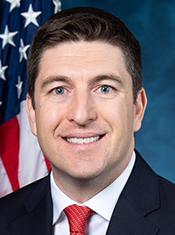
U.S. Representative for Wisconsin’s 1st district
Republican
119th Congress, two-year term
Missed 0.7% of roll calls. Chamber median 1.9%.
The full voting recordCounts roll calls where most Democrats and most Republicans voted differently, leaving out procedural votes.
How we countFrom FEC filings, Voteview roll calls and Congress.gov.
Republican. In Congress since 2019, 4 terms in total.
Following saves Steil to your list, which Chamber & Street keeps on its server, linked to a cookie on this browser and not to your name or email. Email alerts will come with constituent verification.
Bills and resolutions Steil signed on to as a cosponsor. An original cosponsor signed on the day the bill was introduced. Source: govinfo bill status files, last updated Nov 6, 2026.
Shutdown Fairness Act
Sponsor Dusty Johnson (R). Joined Oct 24, 2025. 17 cosponsors. H.R. 5801 on Congress.gov
Introduced
Shutdown Fairness Act
This bill provides appropriations to pay federal employees who work during a government shutdown.
Specifically, the bill provides appropriations for federal agencies to provide standard rates of pay, allowances, pay differentials, benefits, and other payments to excepted employees for work performed during any period in which interim continuing appropriations or full-year appropriations are not in effect for a fiscal year (i.e., a government shutdown). An excepted employee is an employee who is required to work during a government shutdown.
Under current law, excepted employees are not paid until the government shutdown is over. This bill provides appropriations to pay excepted employees during a government shutdown. The bill also specifies that the term excepted employee includes certain contractors who support federal employees during a government shutdown and members of the Armed Forces who are on active duty.
A federal agency may not use the funds provided by this bill during any period in which continuing appropriations are in effect for the purpose of paying excepted employees of the agency.
The bill must take effect as if it had been enacted on September 30, 2025.
Energy Choice Act
Sponsor Nicholas Langworthy (R). Joined Oct 17, 2025. 157 cosponsors. H.R. 3699 on Congress.gov(opens in a new tab)
Introduced
Energy Choice Act
This bill prohibits a state or local government from banning or limiting the connection, reconnection, modification, installation, transportation, distribution, expansion, or access to an energy service based on the type or source of energy (e.g., natural gas) that is sold.
CHOICE for Veterans Act of 2025
Sponsor Jack Bergman (R). Joined Oct 17, 2025. 60 cosponsors. H.R. 3132 on Congress.gov(opens in a new tab)
Passed committee
PEACE Act
Sponsor Darrell Issa (R). Joined Oct 10, 2025. 2 cosponsors. H.R. 5632 on Congress.gov(opens in a new tab)
Introduced
Pay Our Troops Act of 2026
Sponsor Jennifer Kiggans (R). Joined Oct 6, 2025. 210 cosponsors. H.R. 5401 on Congress.gov(opens in a new tab)
Introduced
Pay Our Troops Act of 2026
This bill provides continuing appropriations for military pay for any period during which interim or full-year appropriations for FY2026 are not in effect (i.e., a government shutdown).
Specifically, the bill provides FY2026 continuing appropriations for the pay and allowances of (1) members of the Armed Forces, including reserve components, who perform active service during the period; and (2) civilian personnel and contractors of the Department of Defense (and the Department of Homeland Security in the case of the Coast Guard) who are providing support to such members of the Armed Forces.
If a government shutdown occurs, the bill provides the continuing appropriations until the earlier of (1) the enactment into law of specified appropriations legislation, or (2) January 1, 2027.
Combating Organized Retail Crime Act of 2025
Sponsor David Joyce (R). Joined Oct 6, 2025. 206 cosponsors. H.R. 2853 on Congress.gov(opens in a new tab)
Passed the House
Combating Organized Retail Crime Act of 2025
This bill expands federal enforcement of criminal offenses related to organized retail and supply chain crime. The term organized retail and supply chain crime includes criminal offenses involving the interstate transportation of stolen property, the sale or receipt of stolen goods, or theft from an interstate or foreign shipment that is committed by, in coordination with, or at the instruction of an organization.
First, with respect to criminal offenses involving the interstate transportation of stolen property or the sale or receipt of stolen goods, the bill broadens the scope of conduct that qualifies as offenses by allowing prosecutions to be based on the aggregate value of stolen items over a 12-month period. Additionally, the bill makes the offenses predicate offenses (i.e., underlying offenses) for prosecutions under the federal money laundering statute and authorizes the criminal forfeiture of any property obtained from the proceeds of an offense.
Second, with respect to criminal offenses involving theft from an interstate or foreign shipment, the bill also makes an offense an underlying offense for prosecution under the federal money laundering statute and authorizes the criminal forfeiture of any associated property.
Third, the bill expands the federal money laundering statute to include offenses involving general-use prepaid cards, gift certificates, or store gift cards.
Finally, the bill temporarily establishes a center within the Department of Homeland Security to coordinate federal law enforcement activities related to organized retail and supply chain crime.
Eliminate Shutdowns Act
Sponsor Dusty Johnson (R). Original cosponsor. 13 cosponsors. H.R. 5552 on Congress.gov(opens in a new tab)
Introduced
Eliminate Shutdowns Act
This bill provides continuing appropriations to prevent a government shutdown if the appropriations bills for a fiscal year have not been enacted before the fiscal year begins and continuing appropriations are not in effect.
Specifically, the bill provides appropriations at the rate of operations that was provided for the prior fiscal year to continue programs, projects, and activities that were funded in the preceding fiscal year.
Apostle Islands National Park and Preserve Act
Sponsor Thomas Tiffany (R). Original cosponsor. 5 cosponsors. H.R. 5497 on Congress.gov(opens in a new tab)
Passed committee
Honoring the life and legacy of Charles Charlie James Kirk.
Sponsor Mike Johnson (R). Original cosponsor. 196 cosponsors. H.Res. 719 on Congress.gov(opens in a new tab)
Passed the House
This resolution (1) condemns the assassination of Charles "Charlie" James Kirk and all forms of political violence; and (2) honors the life, leadership, and legacy of Charlie Kirk.
Condemning in the strongest possible terms the September 10, 2025, assassination of Charlie Kirk.
Sponsor Mary Miller (R). Joined Sep 15, 2025. 73 cosponsors. H.Res. 702 on Congress.gov(opens in a new tab)
Introduced
Condemning the assassination of Charlie Kirk and honoring his life and legacy.
Sponsor Mike Kennedy (R). Joined Sep 15, 2025. 48 cosponsors. H.Res. 700 on Congress.gov(opens in a new tab)
Introduced
This resolution condemns the assassination of Charlie Kirk, extends condolences and sympathies to his family, and honors his commitment to civil discussion and debate.
Honoring Charlie Kirk following his assassination on September 10, 2025, in Orem, Utah.
Sponsor Cory Mills (R). Joined Sep 11, 2025. 61 cosponsors. H.Res. 695 on Congress.gov(opens in a new tab)
Introduced
Unleashing AI Innovation in Financial Services Act
Sponsor J. Hill (R). Original cosponsor. 3 cosponsors. H.R. 4801 on Congress.gov(opens in a new tab)
Introduced
Unleashing AI Innovation in Financial Services Act
This bill allows regulated financial entities to test artificial intelligence (AI) projects under waived or modified regulations upon the approval of an application by the appropriate federal financial regulatory agency. These agencies must establish AI innovation labs to enable such projects.
Under the bill, regulated entities may engage in AI test projects associated with financial products, services, or activities. Regulated entities must apply to the appropriate agency with a description and proposed duration of the AI test project, propose an alternative compliance strategy, and explain how the AI test project serves the public interest and does not present certain risks.
The alternative compliance strategy must include several elements, such as (1) identifying a regulation issued by an agency that the regulated entity requests to be waived or modified and (2) proposing an alternative method of compliance with the regulation's underlying statute. Upon approval, the agency may only enforce such a regulation according to the agreement.
The bill also provides for agency review of such applications, establishes procedures for entities that are subject to regulation by multiple agencies, and allows agencies to file for injunctive relief if an AI test project presents certain risks or dangers.
Supporting the Local Radio Freedom Act.
Sponsor Steve Womack (R). Joined Jul 23, 2025. 233 cosponsors. H.Con.Res. 12 on Congress.gov(opens in a new tab)
Introduced
This concurrent resolution declares that Congress should not impose any new performance fee, tax, royalty, or other charge relating to the public performance of sound recordings on a local radio station for broadcasting sound recordings over the air, or on any business for such public performance of sound recordings.
Plain Prescription Prices Act
Sponsor Nikema Williams (D). Original cosponsor. 4 cosponsors. H.R. 4623 on Congress.gov(opens in a new tab)
Introduced
Plain Prescription Prices Act
This bill requires the Centers for Medicare & Medicaid Services to issue a rule requiring direct-to-consumer television advertisements for prescription drugs that are covered by Medicare or Medicaid to include a textual statement of the drug's list price.
Dillon’s Law
Sponsor Glenn Grothman (R). Original cosponsor. 14 cosponsors. H.R. 4564 on Congress.gov(opens in a new tab)
Introduced
Veteran Burial Timeliness and Death Certificate Accountability Act
Sponsor Tom Emmer (R). Original cosponsor. 158 cosponsors. H.R. 4398 on Congress.gov(opens in a new tab)
Introduced
Abraham Accords Defense Against Terror Act
Sponsor Michael Lawler (R). Original cosponsor. 35 cosponsors. H.R. 4335 on Congress.gov(opens in a new tab)
Passed committee
Insurance Data Protection Act
Sponsor Scott Fitzgerald (R). Joined Jul 2, 2025. 25 cosponsors. H.R. 3437 on Congress.gov(opens in a new tab)
Introduced
Insurance Data Protection Act
This bill limits the ability of federal entities to compel insurance companies to share information.
Specifically, the bill eliminates the subpoena power of the Federal Insurance Office. Under current law, the office has the power to subpoena information from insurers to, among other purposes, identify issues that could contribute to a systemic crisis in the insurance industry or the U.S. financial system.
The bill also eliminates the ability of the Office of Financial Research to subpoena insurance companies.
When seeking to collect insurance company data under specified consumer protection laws, a financial regulator must obtain the data from other regulators or from publicly available sources if possible. Otherwise, the financial regulator may only collect this data directly from the insurance company if the regulator complies with the Paperwork Reduction Act.
Certified Nursing Assistant Workforce Improvement Act
Sponsor Derrick Van Orden (R). Joined Jun 23, 2025. 1 cosponsor. H.R. 3471 on Congress.gov(opens in a new tab)
Introduced
Mikaela Naylon Give Kids a Chance Act
Sponsor Michael McCaul (R). Joined Jun 23, 2025. 313 cosponsors. H.R. 1262 on Congress.gov(opens in a new tab)
Passed the House
Give Kids a Chance Act of 2025
This bill expands the Food and Drug Administration’s (FDA’s) authority with respect to research on rare pediatric diseases, including by permitting the FDA to take enforcement action against drug sponsors that fail to satisfy pediatric study requirements and by reauthorizing programs that support pediatric research.
Specifically, the bill
• modifies requirements relating to molecularly targeted pediatric cancer investigations to permit research on new drugs in combination with active ingredients that have already been approved, provided certain conditions are met;
• permits the FDA to take enforcement action against drug sponsors that fail to comply with pediatric study requirements, if such sponsors demonstrated a lack of due diligence in satisfying the requirement;
• renews the FDA’s authority to award priority review vouchers to sponsors of new products intended to treat rare pediatric diseases through September 30, 2029; and
• reauthorizes through FY2027 certain funding for the National Institutes of Health to support priority pediatric research.
The bill also provides statutory authority for the FDA’s interpretation of the orphan drug exclusivity period. The bill specifies, consistent with FDA regulations, that the seven-year market exclusivity period for drugs for rare diseases or conditions (i.e., orphan drugs) prohibits the approval of the same drug for the same approved use or indication with respect to the disease or condition. (In Catalyst Pharmaceuticals, Inc. v. Becerra, a court rejected the FDA’s interpretation and held that orphan drug exclusivity extends to all uses or indications for the disease or condition.)
To name the Department of Veterans Affairs women's health clinic in Milwaukee, Wisconsin, as the Anna Mae Robertson VA Well Woman Clinic.
Sponsor Gwen Moore (D). Original cosponsor. 7 cosponsors. H.R. 3820 on Congress.gov(opens in a new tab)
Introduced
This bill designates the women’s health clinic of the Clement J. Zablocki Veterans' Administration Medical Center in Milwaukee, Wisconsin, as the Anna Mae Robertson VA Well Woman Clinic.
Digital Asset Market Clarity Act
Sponsor J. Hill (R). Original cosponsor. 21 cosponsors. H.R. 3633 on Congress.gov(opens in a new tab)
Passed the House
Digital Asset Market Clarity Act of 2025 or the CLARITY Act of 2025
This bill establishes a regulatory framework for digital commodities, defined by the bill as digital assets that rely upon a blockchain for their value.
The Commodity Futures Trading Commission must generally regulate digital commodities transactions, including digital commodity exchanges, brokers, and dealers. To qualify for trade on an exchange (1) a digital commodity’s blockchain must be mature, or on a blockchain system that has achieved decentralized control as defined by the bill; or (2) the issuer of the digital commodity must file certain reports. The bill establishes requirements for trade monitoring, recordkeeping, and the commingling of customer assets.
The bill exempts digital commodities on mature blockchains (and digital commodities on blockchains expected to mature within certain timeframes) from Securities and Exchange Commission (SEC) registration requirements if annual sales fall under a certain amount and other requirements are met. The bill provides the SEC with jurisdiction over digital commodity activities and transactions engaged in by certain brokers and dealers on alternative trading systems and by national securities exchanges.
Digital commodity exchanges, brokers, and dealers are subject to the Bank Secrecy Act for anti-money laundering and related purposes.
The bill also sets forth requirements for alternative trading systems, previously issued digital commodities, and provisional registration until the bill is implemented.
For more information on this bill, see CRS Insight IN12583, Crypto Legislation: An Overview of H.R. 3633, the CLARITY Act.
Congratulating His Holiness Pope Leo XIV on his historic election as the 267th pontiff of the Holy Roman Catholic Church and the first American pontiff.
Sponsor Riley Moore (R). Original cosponsor. 30 cosponsors. H.Res. 412 on Congress.gov(opens in a new tab)
Introduced
To direct the United States Postal Service to designate single, unique ZIP Codes for certain communities, and for other purposes.
Sponsor Lauren Boebert (R). Original cosponsor. 33 cosponsors. H.R. 3095 on Congress.gov(opens in a new tab)
Passed the House
This bill requires the U.S Postal Service to designate a single, unique ZIP Code for each of the following 74 communities:
• Canyon Lake, California
• Eastvale, California
• Hidden Hills, California
• Industry, California
• North Tustin, California
• Tehachapi, California
• Castle Pines, Colorado
• Centennial, Colorado
• Cherry Hills Village, Colorado
• Greenwood Village, Colorado
• Highlands Ranch, Colorado
• Keystone, Colorado
• Lone Tree, Colorado
• Mountain Village, Colorado
• Mt Crested Butte, Colorado
• Severance, Colorado
• Silver Cliff, Colorado
• Sterling Ranch, Colorado
• Superior, Colorado
• Telluride, Colorado
• Scotland, Connecticut
• Estero, Florida
• Ft Myers, Florida
• Hollywood, Florida
• Oakland Park, Florida
• Lighthouse Point, Florida
• Coconut Creek, Florida
• Parkland, Florida
• Deerfield Beach, Florida
• Wilton Manors, Florida
• Burr Ridge, Illinois
• Carmel, Indiana
• Noblesville, Indiana
• Westfield, Indiana
• Zionsville, Indiana
• Urbandale, Iowa
• Louisiana State University, Baton Rouge, Louisiana
• Montz, Louisiana
• Springwater Township, Minnesota
• Grass Valley, Nevada
• Swanzey, New Hampshire
• Kinnelon, New Jersey
• Mendham Township, New Jersey
• Flanders, New York
• Glendale, New York
• Riverside, New York
• Pendelton, New York
• Northampton, New York
• Harnett County, North Carolina
• Weddington, North Carolina
• Goose Creek, South Carolina
• Fairview, Texas
• Fate, Texas
• Heath, Texas
• Murphy, Texas
• Northlake, Texas
• Parker, Texas
• Sargent, Texas
• Fairlawn, Virginia
• Caledonia, Wisconsin
• Franklin, Wisconsin
• Glendale, Wisconsin
• Greenfield, Wisconsin
• Village of Mount Pleasant, Wisconsin
• Village of Somers, Wisconsin
• Village of Harrison, Wisconsin
• Mills, Wyoming
• Hochatown, Oklahoma
• North Enid, Oklahoma
• Green, Ohio
• Rochester, Wisconsin
• Quartzite Township, Minnesota
• Frederick, Colorado
• Camargo, Kentucky