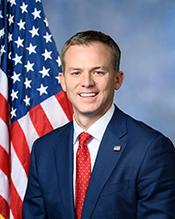
U.S. Representative for Utah’s 1st district
Republican
119th Congress, two-year term
Missed 0.3% of roll calls. Chamber median 1.9%.
The full voting recordCounts roll calls where most Democrats and most Republicans voted differently, leaving out procedural votes.
How we countFrom FEC filings, Voteview roll calls and Congress.gov.
Republican. In Congress since 2021, 3 terms in total.
Following saves Moore to your list, which Chamber & Street keeps on its server, linked to a cookie on this browser and not to your name or email. Email alerts will come with constituent verification.
Bills and resolutions Moore signed on to as a cosponsor. An original cosponsor signed on the day the bill was introduced. Source: govinfo bill status files, last updated Nov 6, 2026.
Moore also withdrew as a cosponsor from 1 bill, not listed here.
Military Spouse Hiring Act
Sponsor Donald Beyer (D). Joined Mar 18, 2025. 130 cosponsors. H.R. 2033 on Congress.gov
Introduced
Military Spouse Hiring Act
This bill allows employers to claim a tax credit for a percentage of qualified wages paid to an employee who is a military spouse by expanding the federal Work Opportunity Tax Credit (WOTC) to add qualified military spouses as a targeted group. (The WOTC applies to employers who hire members of specific targeted groups, such as veterans, ex-felons, and long-term unemployment recipients, and is generally equal to a percentage of the wages paid to such individuals in the first year of employment, up to a maximum amount. Under current law, the wages must be paid before 2026.)
The bill defines a qualified military spouse as any individual who is certified by a state workforce agency as being (as of the hiring date) a spouse of a member of the Armed Forces.
To provide that members of the Armed Forces performing services in Kenya, Mali, Burkina Faso, and Chad shall be entitled to tax benefits in the same manner as if such services were performed in a combat zone.
Sponsor Jimmy Panetta (D). Original cosponsor. 17 cosponsors. H.R. 2157 on Congress.gov(opens in a new tab)
Introduced
This bill treats Kenya, Mali, Burkina Faso, and Chad as combat zones for purposes of determining eligibility for certain federal tax benefits available to members of the U.S. Armed Forces. (Conditions apply.)
Specifically, under the bill, a qualified hazardous duty area is treated as a combat zone for purposes of
• determining the filing status of an individual whose spouse is missing in action;
• excluding compensation received by a member of the Armed Forces serving in a combat zone from gross income and wages subject to withholding;
• forgiving the income tax liability of a member of the Armed Forces who dies in a combat zone;
• certain estate tax rules applicable to a member of the Armed Forces who dies in a combat zone or as a result of an injury, wound, or disease suffered while in a combat zone;
• the exemption from the federal excise tax imposed on certain telephone services for telephone calls originating from a combat zone by a member of the Armed Forces; and
• postponing certain federal tax deadlines (e.g., filing a tax return, paying taxes, and claiming a tax refund) for a member of the Armed Forces serving in a combat zone.
The bill defines a qualified hazardous duty area as Kenya, Mali, Burkina Faso, and Chad if any member of the U.S. Armed Forces is entitled to special pay (e.g., hostile fire pay and imminent danger pay) for services performed in such locations.
American Innovation and R&D Competitiveness Act of 2025
Sponsor Ron Estes (R). Original cosponsor. 81 cosponsors. H.R. 1990 on Congress.gov(opens in a new tab)
Introduced
Expressing the sense of the House of Representatives that the United Nations Security Council should immediately impose an arms embargo against the military of Burma.
Sponsor Claudia Tenney (R). Joined Mar 5, 2025. 16 cosponsors. H.Res. 106 on Congress.gov(opens in a new tab)
Introduced
This resolution states that the United Nations Security Council should immediately impose an arms embargo against the military of Burma (Myanmar) and hold it accountable for its ongoing violations of human rights.
Saving Gig Economy Taxpayers Act
Sponsor Carol Miller (R). Original cosponsor. 31 cosponsors. H.R. 1882 on Congress.gov(opens in a new tab)
Introduced
Water Conservation Rebate Tax Parity Act
Sponsor Jared Huffman (D). Original cosponsor. 12 cosponsors. H.R. 1871 on Congress.gov(opens in a new tab)
Introduced
Water Conservation Rebate Tax Parity Act
This bill excludes from gross income (for federal tax purposes) certain subsidies for the purchase or installation of measures to conserve water or manage stormwater or wastewater.
Under current law, subsidies received from public utilities for the purchase or installation of measures to reduce electricity or natural gas consumption or improve the management of energy demand in a dwelling are not included in gross income and, therefore, not subject to federal income tax.
Under the bill, the exclusion from gross income for such subsidies is expanded to include subsidies provided (directly or indirectly) after 2021
• by a public utility to a customer or by a state or local government to a resident for the purchase or installation of measures that evaluate water use, reduce water consumption, or improve water management in one or more dwelling units;
• by a stormwater management company to a customer or by a state or local government to a resident for the purchase or installation of measures to reduce or manage stormwater, including measures to improve or reduce the impact of flooding caused by stormwater, for one or more dwelling units; or
• by a state or local government to a resident for the purchase or installation of measures that manage wastewater, including septic tanks and cesspools, with respect to a principal residence.
UNITED Act
Sponsor Adrian Smith (R). Joined Mar 5, 2025. 7 cosponsors. H.R. 1743 on Congress.gov(opens in a new tab)
Introduced
Undertaking Negotiations on Investment and Trade for Economic Dynamism Act or the UNITED Act
This bill grants certain authorities to the President for entering into a comprehensive trade agreement between the United States and the United Kingdom (UK).
Specifically, the bill directs the President to seek to initiate negotiations with the UK regarding tariff and nontariff barriers affecting any industry, product, or service sector.
The bill authorizes the President to enter into a comprehensive trade agreement with the UK, with such authority expiring on March 1, 2029. Further, the President may proclaim a modification or continuance of any existing duty or a continuance of existing excise or duty-free treatment to carry out an agreement, with certain limitations.
The bill also requires the President to consult with and notify Congress regarding the intention of the President to enter into an agreement or make a proclamation.
Enhanced Iran Sanctions Act of 2025
Sponsor Michael Lawler (R). Joined Mar 5, 2025. 295 cosponsors. H.R. 1422 on Congress.gov(opens in a new tab)
Passed the House
Enhanced Iran Sanctions Act of 2025
This bill imposes sanctions on certain foreign persons (individuals and entities) that are involved in Iran's petroleum sector as well as certain associated persons. The bill also requires or authorizes actions to facilitate the enforcement of sanctions on Iran.
Specifically, the bill requires the President to impose visa- and property-blocking sanctions on any foreign person that, after the bill's enactment, knowingly engages in any transaction related to the processing, export, or sale of oil, condensates, gas, liquefied natural gas, or other petrochemical products in whole or in part from Iran. The President must also impose sanctions on certain foreign persons associated with a sanctioned individual or entity. For example, the President must sanction the subsidiaries and corporate officers of a sanctioned business.
The bill provides certain exceptions to these sanctions, including specifying that sanctions do not apply to the importation of goods or to conducting or facilitating transactions for humanitarian assistance.
The Department of State must establish an interagency working group that shall seek to establish a multilateral contact group to coordinate international efforts to enforce sanctions on Iran.
The bill expands the State Department rewards program to authorize a reward payment to any individual who furnishes information leading to the identification of a person (1) subject to sanctions under this bill, or (2) that has attempted or is attempting to evade sanctions under this bill.
Frederick Douglass Trafficking Victims Prevention and Protection Reauthorization Act of 2025
Sponsor Christopher Smith (R). Joined Mar 5, 2025. 25 cosponsors. H.R. 1144 on Congress.gov(opens in a new tab)
Passed committee
Frederick Douglass Trafficking Victims Prevention and Protection Reauthorization Act of 2025
This bill reauthorizes programs and activities that combat international trafficking; establishes a new program to help victims of trafficking; and updates various elements of the federal framework to combat international trafficking.
Specifically, this bill reauthorizes through FY2029 programs and activities at various federal departments and agencies to combat international trafficking and reduce the prevalence of modern slavery. The bill also reauthorizes International Megan’s Law through FY2029. Among its provisions, the law requires sex offenders to provide certain information about their intended travel outside of the United States.
Additionally, the bill authorizes the Department of Health and Human Services to carry out a new program to help victims of trafficking integrate or reintegrate into society.
The bill requires the Department of State's Trafficking in Persons Report to include information about trafficking in persons for the purposes of organ removal.
With respect to country rankings for anti-trafficking efforts, the bill narrows the types of countries that are listed on the Tier 2 Watch List and increases the length of time a country may remain on the Tier 2 Watch List after being downgraded to the lowest ranking and then reinstated to the watch list. (The Tier 2 Watch List refers to countries that are making efforts to meet international standards for combatting human trafficking but still have a significant number of severe trafficking cases.)
Finally, the bill requires counter-trafficking strategies, activities, and efforts to be further incorporated into U.S. foreign assistance.
Federal Firearms Licensee Protection Act of 2025
Sponsor John Rutherford (R). Original cosponsor. 145 cosponsors. H.R. 1773 on Congress.gov(opens in a new tab)
Introduced
Federal Firearms Licensee Protection Act of 2025
This bill modifies criminal penalties for an offense involving the theft of a firearm from a licensed importer, manufacturer, or dealer, or from their business premises.
Specifically, the bill does the following:
• increases from 10 to 20 years the maximum prison term, and
• creates a 3- or 5-year mandatory minimum prison term for an offense that occurs during the commission of a burglary or robbery.
An attempt to commit an offense is subject to the same penalties as a substantive offense.
Protecting Privacy in Purchases Act
Sponsor Riley Moore (R). Joined Mar 3, 2025. 132 cosponsors. H.R. 1181 on Congress.gov(opens in a new tab)
Passed the House
Protecting Privacy in Purchases Act
This bill prohibits payment card networks from using merchant codes that distinguish firearms retailers from general-merchandise retailers or sporting-goods retailers.
The Department of Justice must enforce this bill and report annually on the resulting investigations and cases.
Maintaining Investments in New Innovation Act
Sponsor Donald Davis (D). Original cosponsor. 51 cosponsors. H.R. 1672 on Congress.gov(opens in a new tab)
Introduced
Maintaining Investments in New Innovation Act
This bill requires drug products with genetically targeted technology to have had market approval for at least 11 years in order to qualify for the Medicare Drug Price Negotiation Program. (The program requires the Centers for Medicare & Medicaid Services to negotiate the prices of certain prescription drugs under Medicare beginning in 2026. Among other requirements, drugs must have had market approval for at least 7 years (for drug products) or 11 years (for biologics) to qualify for negotiation.)
US-Kazakhstan Trade Modernization Act
Sponsor Jimmy Panetta (D). Joined Feb 25, 2025. 35 cosponsors. H.R. 1024 on Congress.gov(opens in a new tab)
Introduced
US-Kazakhstan Trade Modernization Act
This bill addresses trade between the United States and Kazakhstan.
Specifically, the bill authorizes the President to determine that Section 402 of the Trade Act of 1974 (commonly known as the Jackson-Vanik amendment) does not apply to Kazakhstan. The Jackson-Vanik amendment denies normal trade relations (NTR) status to some current and former nonmarket economy countries unless they comply with certain freedom-of-emigration requirements. Under a provision of this amendment, the President may extend NTR status to a country affected by the amendment by waiving the freedom-of-emigration requirements or determining that the country is not in violation of those requirements, subject to an annual review. Kazakhstan has received temporary NTR status since 1992.
Additionally, the bill authorizes the President to extend permanent NTR status to Kazakhstan.
Expressing condolences to the families, friends, and loved ones of the victims of the crash of American Eagle Flight 5342 and PAT 25, and for other purposes.
Sponsor Ron Estes (R). Original cosponsor. 93 cosponsors. H.Res. 153 on Congress.gov(opens in a new tab)
Passed the House
This resolution expresses condolences to the families, friends, and loved ones of the victims of the crash of American Eagle Flight 5342 and the U.S. Army helicopter flying under the call sign PAT 25 near Ronald Reagan Washington National Airport on January 29, 2025.
The resolution also commends the heroic actions of the first responders, emergency services personnel, and all those who aided in the recovery efforts.
Protecting Domestic Mining Act of 2025
Sponsor Jefferson Shreve (R). Original cosponsor. 2 cosponsors. H.R. 1501 on Congress.gov(opens in a new tab)
Passed the House
Protecting Domestic Mining Act of 2025
This bill provides statutory authority for federal agencies to expedite the environmental review of certain mining infrastructure projects.
Specifically, the bill permanently makes certain mining infrastructure projects eligible for expedited environmental review under the Fixing America's Surface Transportation Act (FAST Act). This provides statutory authority for similar authorities that were included in the rule titled Adding Mining as a Sector of Projects Eligible for Coverage Under Title 41 of the Fixing America's Surface Transportation Act and issued by the Federal Permitting Improvement Steering Council (Permitting Council) on January 8, 2021.
The bill also prohibits the Permitting Council from finalizing its proposed rule titled Revising Scope of the Mining Sector of Projects That Are Eligible for Coverage Under Title 41 of the Fixing America’s Surface Transportation Act and issued on September 22, 2023. Among other modifications, the rule proposes to limit the types of mining projects that are eligible for the expedited environmental review process. Specifically, the proposed rule limits the expedited process to critical minerals mining projects.
Sporting Goods Excise Tax Modernization Act
Sponsor Jimmy Panetta (D). Original cosponsor. 24 cosponsors. H.R. 1494 on Congress.gov(opens in a new tab)
Introduced
No Deductions for Marijuana Businesses Act
Sponsor Jodey Arrington (R). Original cosponsor. 12 cosponsors. H.R. 1447 on Congress.gov(opens in a new tab)
Introduced
Downwinders Parity Act of 2025
Sponsor Paul Gosar (R). Original cosponsor. 9 cosponsors. H.R. 1362 on Congress.gov(opens in a new tab)
Introduced
Freedom to Invest in Tomorrow’s Workforce Act
Sponsor Robert Wittman (R). Joined Feb 14, 2025. 203 cosponsors. H.R. 1151 on Congress.gov(opens in a new tab)
Introduced
Freedom to Invest in Tomorrow’s Workforce Act
This bill expands the expenses eligible for tax-free withdrawals from a qualified tuition program (known as a 529 plan) to include tuition, fees (including test fees), books, supplies, equipment, and other expenses related to the enrollment or attendance in a recognized postsecondary credentialing program.
Under the bill, a recognized postsecondary credentialing program includes certain programs identified by a state as providing training services, a program listed in the Web Enabled Approval Management System (WEAMS) maintained by the Department of Veterans Affairs, certain examinations required to obtain or maintain a credential, and other reputable credentialing programs.
Further, under the bill, such programs must be designed for an individual to obtain
• an industry-recognized postsecondary employment credential (e.g., project management professional certificate, advanced emergency medical technician certificate, and welding supervisor certificate),
• a certificate of completion of a registered and certified apprenticeship,
• an occupational or professional license issued or recognized by a state or the federal government (and any certification required for obtaining such license), or
• an associate or baccalaureate degree.
To amend the Clean Air Act with respect to the ethanol waiver for Reid Vapor Pressure under that Act, and for other purposes.
Sponsor Adrian Smith (R). Original cosponsor. 55 cosponsors. H.R. 1346 on Congress.gov(opens in a new tab)
Passed the House
Nationwide Consumer and Fuel Retailer Choice Act of 2025
This bill amends the Clean Air Act to address the limitations on Reid Vapor Pressure (a measure of gasoline's volatility) that are placed on gasoline during the summer ozone season. Specifically, the bill applies the waiver for Reid Vapor Pressure requirements that is applicable to gasoline blended with 10% ethanol (E10) to gasoline blended with up to 15% ethanol (E15). This change allows gasoline that is blended with 10% to 15% ethanol to be sold year-round.
Currently, states may be excluded from the waiver for Reid Vapor Pressure requirements by submitting documentation supporting that the waiver would increase air pollution. The bill nullifies existing state exclusions, but states may submit documentation after enactment of the bill to be excluded going forward.
The bill also modifies the Renewable Fuel Standard Program, which requires transportation fuel sold or introduced into commerce in the United States to contain minimum volumes of renewable fuel. Under the existing program, obligated parties, such as small refineries, must satisfy the volume obligations by either blending renewable fuels into their gasoline or diesel fuel products or by acquiring credits that represent the required renewable fuel volume. The bill directs the Environmental Protection Agency to return compliance credits to small refineries under certain circumstances.
Death Tax Repeal Act
Sponsor Randy Feenstra (R). Original cosponsor. 182 cosponsors. H.R. 1301 on Congress.gov(opens in a new tab)
Introduced
To amend the Internal Revenue Code of 1986 to modify the railroad track maintenance credit.
Sponsor Mike Kelly (R). Joined Feb 12, 2025. 183 cosponsors. H.R. 516 on Congress.gov(opens in a new tab)
Introduced
This bill increases the annual limit on the tax credit for qualified railroad track maintenance expenses (also referred to as the short line railroad tax credit) and expands eligibility for claiming the credit.
Under current law, the tax credit is limited each tax year to $3,500 multiplied by the sum of the number of miles of railroad track owned or leased by the taxpayer (miles owned or leased) and the number of railroad track miles assigned to the taxpayer by a Class II or III railroad (miles assigned). This bill increases the annual limit to $6,100 multiplied by the sum of miles owned or leased and miles assigned. The $6,100 amount used in the calculation of the tax credit limit is adjusted for inflation for tax years beginning after 2025.
The bill also expands eligibility for the tax credit to include gross expenses for maintaining railroad tracks owned or leased as of January 1, 2024. Under current law, the tax credit is limited to gross expenses for maintaining railroad tracks owned or leased as of January 1, 2015.
Pandemic Unemployment Fraud Enforcement Act
Sponsor Jason Smith (R). Original cosponsor. 25 cosponsors. H.R. 1156 on Congress.gov(opens in a new tab)
Passed the House
Pandemic Unemployment Fraud Enforcement Act
This bill extends from 5 to 10 years the statute of limitations for federal criminal charges or civil enforcement actions for fraud related to several unemployment insurance programs that were established during the COVID-19 pandemic.
The extension applies to Pandemic Unemployment Assistance, Federal Pandemic Unemployment Compensation, Mixed Earners Unemployment Compensation, and Pandemic Emergency Unemployment Compensation. The bill extends the statute of limitations for (1) criminal charges related to fraud, including aggravated identity theft, wire fraud, and conspiracy to commit fraud; and (2) civil actions involving false claims. However, the bill does not apply to a criminal prosecution or civil enforcement action if the applicable statute of limitations expired before the date of the bill's enactment.
Additionally, the bill rescinds specified unobligated funds that were provided in the American Rescue Plan Act of 2021 to the Department of Labor for anti-fraud and program integrity activities.
Crime Victims Fund Stabilization Act of 2025
Sponsor Ann Wagner (R). Joined Feb 7, 2025. 327 cosponsors. H.R. 909 on Congress.gov(opens in a new tab)
Passed the House
Crime Victims Fund Stabilization Act of 2025
This bill adds a new source of revenue for the Crime Victims Fund (CVF). Specifically, the bill requires certain civil monetary penalties collected from settlements and judgments in cases involving fraud and false claims against the federal government to be deposited into the CVF through FY2029.
The CVF supports federal, state, and local programs and activities to compensate and assist victims of crimes. Currently, the CVF is funded by deposits from a variety of sources, including federal criminal fines, penalties, and assessments; forfeited bail bonds; and certain other gifts, donations, and bequests.
No DeepSeek on Government Devices Act
Sponsor Josh Gottheimer (D). Original cosponsor. 32 cosponsors. H.R. 1121 on Congress.gov(opens in a new tab)
Introduced
No DeepSeek on Government Devices Act
This bill directs the Office of Management and Budget to develop standards and guidance requiring removal of the DeepSeek application from federal agency information technology. Such standards and guidance also apply to any successor application developed or provided by High Flyer or entities owned by High Flyer.
DeepSeek is an artificial intelligence start-up founded in 2023 and based in Hangzhou, China. DeepSeek's chief executive officer also created High Flyer, a hedge fund that is reportedly the sole funder of DeepSeek.