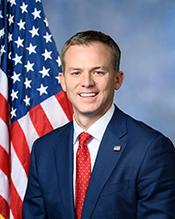
U.S. Representative for Utah’s 1st district
Republican
119th Congress, two-year term
Missed 0.3% of roll calls. Chamber median 1.9%.
The full voting recordCounts roll calls where most Democrats and most Republicans voted differently, leaving out procedural votes.
How we countFrom FEC filings, Voteview roll calls and Congress.gov.
Republican. In Congress since 2021, 3 terms in total.
Following saves Moore to your list, which Chamber & Street keeps on its server, linked to a cookie on this browser and not to your name or email. Email alerts will come with constituent verification.
Bills and resolutions Moore signed on to as a cosponsor. An original cosponsor signed on the day the bill was introduced. Source: govinfo bill status files, last updated Nov 6, 2026.
Moore also withdrew as a cosponsor from 1 bill, not listed here.
Defense Workforce Integration Act of 2025
Sponsor Jennifer Kiggans (R). Joined Sep 4, 2025. 23 cosponsors. H.R. 3241 on Congress.gov
Introduced
Protection of Women in Olympic and Amateur Sports Act of 2026
Sponsor W. Steube (R). Joined Sep 4, 2025. 73 cosponsors. H.R. 1028 on Congress.gov(opens in a new tab)
Introduced
Protection of Women in Olympic and Amateur Sports Act
This bill requires certified national governing bodies (NGBs) of amateur sports (e.g., USA Gymnastics) to prohibit a person whose sex is male from participating in an amateur athletic competition that is designated for females, women, or girls.
Under the bill, male means an individual who has, had, will have—or would have, but for a developmental or genetic anomaly or historical accident—the reproductive system that at some point produces, transports, and utilizes sperm for fertilization.
Repealing Big Brother Overreach Act
Sponsor Warren Davidson (R). Joined Aug 19, 2025. 193 cosponsors. H.R. 425 on Congress.gov(opens in a new tab)
Passed committee
Repealing Big Brother Overreach Act
This bill repeals the Corporate Transparency Act. The act requires existing companies and newly created companies to report beneficial ownership information to the Department of the Treasury’s Financial Crimes Enforcement Network for purposes of addressing the financing of terrorism and money laundering.
Direct Seller and Real Estate Agent Harmonization Act
Sponsor Kevin Kiley (I). Joined Aug 19, 2025. 31 cosponsors. H.R. 3495 on Congress.gov(opens in a new tab)
Introduced
Direct Seller and Real Estate Agent Harmonization Act
This bill excludes a real estate agent or a direct seller of consumer products from the definition of an employee for the purpose of applying the Fair Labor Standards Act of 1938 (FLSA). Workers who are considered employees under the FLSA must be paid the minimum wage and are generally eligible to receive overtime compensation for hours worked in excess of a 40-hour workweek.
Preventive Health Savings Act
Sponsor Jay Obernolte (R). Joined Jul 29, 2025. 24 cosponsors. H.R. 4464 on Congress.gov(opens in a new tab)
Passed committee
Preventive Health Savings Act
This bill requires the Congressional Budget Office (CBO), upon receiving a request from Congress, to determine if proposed legislation would reduce spending outside of the 10-year budget window through the use of preventive health care.
Under the bill, the term preventive health care generally refers to an action that focuses on the health of the public, individuals, and defined populations in order to protect, promote, and maintain health and wellness and prevent disease, disability, and premature death.
If CBO determines that the proposed legislation would result in net reductions in budget outlays from the use of preventive health care, any CBO projection regarding the legislation must include (1) a description and estimate of the reductions in outlays, and (2) a description of the basis for these conclusions.
Any estimate provided by CBO pursuant to this bill must be used as a supplementary estimate and may not be used to determine compliance with the Congressional Budget Act of 1974 or any other budgetary enforcement controls.
PRIME Act
Sponsor Thomas Massie (R). Original cosponsor. 48 cosponsors. H.R. 4700 on Congress.gov(opens in a new tab)
Introduced
Processing Revival and Intrastate Meat Exemption Act or the PRIME Act
This bill exempts from federal inspection requirements animals and meats that are slaughtered and prepared at custom animal slaughter facilities for distribution within the state. Under current law, a custom slaughter exemption applies if the meat is slaughtered exclusively for personal, household, guest, or employee uses.
Specifically, the bill expands the federal inspection exemption to include the slaughter of animals or the preparation of carcasses, meat, and meat food products that are
• slaughtered and prepared at a custom slaughter facility in accordance with the laws of the state where the facility is located; and
• prepared exclusively for distribution to household consumers in the state or restaurants, hotels, boarding houses, grocery stores, or other establishments in the state that either prepare meals served directly to consumers or offer meat and food products for sale directly to consumers in the state.
The bill does not preempt any state law concerning (1) the slaughter of animals or the preparation of carcasses, meat, and meat food products at a custom slaughter facility; or (2) the sale of meat or meat food products.
Build More Housing Near Transit Act of 2025
Sponsor Scott Peters (D). Original cosponsor. 14 cosponsors. H.R. 4576 on Congress.gov(opens in a new tab)
Introduced
Small Nonprofit Retirement Security Act of 2025
Sponsor Vern Buchanan (R). Original cosponsor. 13 cosponsors. H.R. 4548 on Congress.gov(opens in a new tab)
Introduced
SHIELD Act
Sponsor Rudy Yakym (R). Original cosponsor. 14 cosponsors. H.R. 4424 on Congress.gov(opens in a new tab)
Introduced
America’s Olympic and Paralympic Games Commemorative Coins Act
Sponsor Brad Sherman (D). Original cosponsor. 313 cosponsors. H.R. 4382 on Congress.gov(opens in a new tab)
Introduced
Building Civic Bridges Act
Sponsor Chrissy Houlahan (D). Original cosponsor. 22 cosponsors. H.R. 4329 on Congress.gov(opens in a new tab)
Introduced
Delivering On Government Efficiency in Spending Act
Sponsor Aaron Bean (R). Original cosponsor. 20 cosponsors. H.R. 4311 on Congress.gov(opens in a new tab)
Introduced
Energy Choice Act
Sponsor Nicholas Langworthy (R). Joined Jul 10, 2025. 157 cosponsors. H.R. 3699 on Congress.gov(opens in a new tab)
Introduced
Energy Choice Act
This bill prohibits a state or local government from banning or limiting the connection, reconnection, modification, installation, transportation, distribution, expansion, or access to an energy service based on the type or source of energy (e.g., natural gas) that is sold.
SHIPS for America Act of 2025
Sponsor Trent Kelly (R). Joined Jul 2, 2025. 146 cosponsors. H.R. 3151 on Congress.gov(opens in a new tab)
Introduced
Chiropractic Medicare Coverage Modernization Act of 2025
Sponsor W. Steube (R). Joined Jun 23, 2025. 174 cosponsors. H.R. 539 on Congress.gov(opens in a new tab)
Introduced
Chiropractic Medicare Coverage Modernization Act of 2025
This bill expands Medicare coverage of chiropractic services to include all services provided by chiropractors, rather than only subluxation corrections through manual manipulation of the spine.
To amend the Convention on Cultural Property Implementation Act to make certain technical corrections to facilitate the lawful trade and collecting of numismatic materials.
Sponsor Beth Van Duyne (R). Joined Jun 10, 2025. 15 cosponsors. H.R. 595 on Congress.gov(opens in a new tab)
Introduced
This bill revises the standard for providing satisfactory evidence to U.S. Customs and Border Protection (CBP) regarding the importation of numismatic material (i.e., coins, tokens, paper money, medals, and related objects) into the United States.
Current law generally prohibits the importation of designated archaeological or ethnological material that is exported from certain countries that are a party to the 1970 UNESCO Convention on the Means of Prohibiting and Preventing the Illicit Import, Export and Transfer of Ownership of Cultural Property. Importation is allowed if the country issues a certification or other documentation certifying the exportation was not in violation of the country's laws. The United States implements its obligations through the Convention on Cultural Property Implementation Act.
Under current law, CBP must seize imports of designated archaeological or ethnological material unless the importer establishes by certain documentation or satisfactory evidence that the material is admissible into the United States.
This bill specifies the standard for satisfactory evidence with respect to numismatic material. Specifically, the bill allows for the import of numismatic material with evidence that the numismatic material was acquired and exported lawfully, is of a known type, and is not known to be the direct product of illicit excavations within certain countries after the effective date for any import restrictions on such material.
The bill prohibits CBP, when reviewing satisfactory evidence, from requiring other documentation unless there is probable cause to believe the presented evidence is false or fraudulent.
Rescissions Act of 2025
Sponsor Steve Scalise (R). Joined Jun 9, 2025. 5 cosponsors. H.R. 4 on Congress.gov(opens in a new tab)
Became law
Rescissions Act of 2025
This act rescinds specified unobligated funds that were provided to the Department of State, the U.S. Agency for International Development (USAID), various independent and related agencies, and the Corporation for Public Broadcasting.
The rescissions were proposed by the President under procedures included in the Congressional Budget and Impoundment Control Act of 1974. Under current law, the President may propose rescissions to Congress using specified procedures, and the rescissions must be enacted into law to take effect.
Specifically, the act rescinds funds that were provided to the State Department or the President for
• Contributions to International Organizations;
• Contributions for International Peacekeeping Activities;
• Global Health Programs (excluding funds for programs addressing HIV/AIDS, tuberculosis, malaria, nutrition, or maternal and child health);
• Migration and Refugee Assistance;
• the Complex Crises Fund;
• the Democracy Fund;
• the Economic Support Fund (excluding funds for assistance to Jordan, Egypt, or the Countering PRC Influence Fund);
• Contributions to the Clean Technology Fund;
• International Organization and Programs;
• Development Assistance (excluding funds for Feed the Future Innovation Labs, the Countering PRC Influence Fund, or commodity-based food aid);
• Assistance for Europe, Eurasia, and Central Asia;
• International Disaster Assistance (excluding funds for commodity-based food aid); and
• Transition Initiatives.
The act also rescinds funds that were provided for
• USAID Operating Expenses,
• the Inter-American Foundation,
• the U.S. African Development Foundation,
• the U.S. Institute of Peace, and
• the Corporation for Public Broadcasting.
Fair Access to Banking Act
Sponsor Andy Barr (R). Joined Jun 5, 2025. 151 cosponsors. H.R. 987 on Congress.gov(opens in a new tab)
Introduced
Fair Access to Banking Act
This bill places restrictions on certain banks, credit unions, and payment card networks if they refuse to do business with a person who complies with the law. Restrictions include prohibiting the use of electronic funds transfer systems and lending programs, termination of an institution's depository insurance, and specified civil penalties.
Banks and other specified financial institutions are allowed to deny financial services to a person only if the denial is justified by a documented failure of that person to meet quantitative, impartial, risk-based standards established in advance by the institution. This justification may not be based upon reputational risks to the institution.
The bill establishes the right for a person to bring a civil action for a violation of this bill.
Public Land Search and Rescue Act
Sponsor Celeste Maloy (R). Original cosponsor. 7 cosponsors. H.R. 3777 on Congress.gov(opens in a new tab)
Introduced
Ensuring Community Access to Pharmacist Services Act
Sponsor Adrian Smith (R). Joined Jun 3, 2025. 144 cosponsors. H.R. 3164 on Congress.gov(opens in a new tab)
Passed committee
Ensuring Community Access to Pharmacist Services Act
This bill provides for permanent coverage under Medicare of certain pharmacist services.
Specifically, the bill provides for permanent coverage of testing and treatment services provided by pharmacists relating to (1) COVID-19, influenza, respiratory syncytial virus (RSV), and streptococcal pharyngitis (strep throat); and (2) other public health needs in relation to a declared public health emergency. (Similar authorities were temporarily granted during the COVID-19 public health emergency.) Such services must be provided in accordance with the applicable state laws governing pharmacists' scope of practice.
Sanctioning Russia Act of 2025
Sponsor Brian Fitzpatrick (R). Joined Jun 3, 2025. 155 cosponsors. H.R. 2548 on Congress.gov(opens in a new tab)
Introduced
Sanctioning Russia Act of 2025
This bill imposes penalties on certain persons (individuals and entities) if the President determines that the Russian government or a person acting at Russia's direction is involved with (1) refusing to negotiate a peace agreement with Ukraine; (2) violating a negotiated peace agreement; (3) initiating another invasion of Ukraine; or (4) overthrowing, dismantling, or seeking to subvert the Ukrainian government.
If the President makes such a determination, the bill requires certain actions including
• the President must impose visa- and property-blocking sanctions on specified persons such as the Russian president, certain Russian military commanders, and any foreign person that knowingly provides defense items to the Russian armed forces;
• the President must increase the rate of duty on all goods and services imported from Russia into the United States to at least 500% relative to the value of such goods and services;
• the President must increase the rate of duty on all goods and services imported into the United States from countries that knowingly engage in the exchange of Russian-origin uranium and petroleum products to at least 500% relative to the value of such goods and services;
• the Department of the Treasury must impose property-blocking sanctions on any financial institution organized under Russian law and owned wholly or partly by Russia, and any financial institution that engages in transactions with those entities; and
• the Department of Commerce must prohibit the export, reexport, or in-country transfer to or in Russia of any U.S.-produced energy or energy product.
Guarding Readiness Resources Act
Sponsor Pat Harrigan (R). Joined Jun 3, 2025. 24 cosponsors. H.R. 1695 on Congress.gov(opens in a new tab)
Introduced
Guarding Readiness Resources Act
This bill modifies the treatment of funds received by the National Guard Bureau as a reimbursement from a state or other U.S. territory (e.g., Guam) for the use of military property.
Specifically, the funds must be credited to (1) the appropriation, fund, or account used in incurring the obligation; or (2) an appropriation, fund, or account currently available for the purposes of which the expenditures were made. Further, the funds may only be used by the Department of Defense for the repair, maintenance, replacement, or other similar functions related directly to assets used by National Guard units while operating under state active duty status.
FIND Act
Sponsor Jack Bergman (R). Joined Jun 2, 2025. 154 cosponsors. H.R. 45 on Congress.gov(opens in a new tab)
Introduced
Firearm Industry Non-Discrimination Act or the FIND Act
This bill prohibits the federal government from entering into contracts with an entity that discriminates against firearm trade associations or businesses that deal in firearms, ammunition, or related products.
Specifically, the bill requires a federal agency to include in each contract for the procurement of goods or services awarded by the agency a clause requiring the prime contractor to certify that it (1) has no policy, practice, guidance, or directive that discriminates against a firearm entity or firearm trade association; and (2) will not adopt a policy, practice, guidance, or directive that discriminates against a firearm entity or firearm trade association during the term of the contract.
The bill establishes (1) a similar requirement with respect to subcontracts, and (2) penalties for violations.
The bill makes such prohibition inapplicable to a contract for the procurement of goods or services that is a sole-source contract.
PHIT Act of 2025
Sponsor Mike Kelly (R). Joined Jun 2, 2025. 30 cosponsors. H.R. 2369 on Congress.gov(opens in a new tab)
Introduced
Personal Health Investment Today Act of 2025 or the PHIT Act of 2025
This bill allows a federal tax deduction of up to $1,000 ($2,000 for married individuals who file a joint federal tax return or a head of a household) for qualified sports and fitness expenses. (Conditions apply.)
Under current law, an individual may deduct unreimbursed expenses paid for medical care for themselves, their spouse, or a qualified dependent to the extent that such expenses exceed 7.5% of adjusted gross income.
Under the bill, the definition of medical care (for purposes of the tax deduction) is expanded to include qualified sports and fitness expenses. The bill defines qualified sports and fitness expenses as amounts paid exclusively for the sole purpose of participating in a physical activity, including
• fitness facility memberships,
• participation or instruction in physical exercise or activity, or
• equipment for a physical exercise or activity program.
Improving Seniors’ Timely Access to Care Act of 2025
Sponsor Mike Kelly (R). Joined May 29, 2025. 308 cosponsors. H.R. 3514 on Congress.gov(opens in a new tab)
Passed committee
Improving Seniors' Timely Access to Care Act of 2025
This bill establishes several requirements and standards relating to prior authorization processes under Medicare Advantage (MA) plans.
Specifically, MA plans must (1) establish an electronic prior authorization program that meets specified standards; (2) annually submit to the CMS for publication specified prior authorization information, including the percentage of requests approved and the average response time; and (3) meet other standards, as set by the Centers for Medicare & Medicaid Services (CMS), relating to the quality and timeliness of prior authorization determinations.
The CMS and the Office of the National Coordinator for Health Information Technology must publish on the CMS' website a report that analyzes the information received from MA plans, the feasibility of implementing real-time decision making with respect to prior authorization requests, and the impact of decisions that are made using artificial intelligence on patient access.