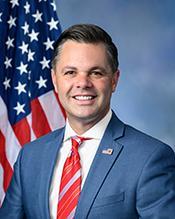
U.S. Representative for Iowa’s 3rd district
Republican
119th Congress, two-year term
Missed 4.6% of roll calls. Chamber median 1.9%.
The full voting recordCounts roll calls where most Democrats and most Republicans voted differently, leaving out procedural votes.
How we countFrom FEC filings, Voteview roll calls and Congress.gov.
Republican. In Congress since 2023, 2 terms in total.
Following saves Nunn to your list, which Chamber & Street keeps on its server, linked to a cookie on this browser and not to your name or email. Email alerts will come with constituent verification.
Bills and resolutions Nunn signed on to as a cosponsor. An original cosponsor signed on the day the bill was introduced. Source: govinfo bill status files, last updated Nov 6, 2026.
Credit for Caring Act of 2025
Sponsor Mike Carey (R). Joined Apr 3, 2025. 145 cosponsors. H.R. 2036 on Congress.gov
Introduced
Bonus Tax Relief for America’s Seniors Act
Sponsor Nicole Malliotakis (R). Joined Apr 2, 2025. 7 cosponsors. H.R. 1130 on Congress.gov(opens in a new tab)
Introduced
Bonus Tax Relief for America’s Seniors Act
This bill increases to $5,000 (adjusted for inflation) the amount of the additional standard deduction allowed for individual taxpayers who are 65 years old or older.
Under the bill, the additional standard deduction amount of $5,000 applies to each individual taxpayer who is 65 years or older, regardless of filing status. Thus, married spouses who are both 65 years old or older and who file a joint income tax return may claim an additional standard deduction amount of $10,000 (adjusted for inflation).
As background, the basic standard deduction amount may be increased for taxpayers who attain the age of 65 before the end of the tax year (generally referred to as the additional standard deduction). Under current law, for 2025, the additional standard deduction amount is (1) $1,600 for individuals who are 65 years old or older, or (2) $2,000 if the individual is also unmarried and not a surviving spouse.
To provide for the rescission of certain waivers and licenses relating to Iran, and for other purposes.
Sponsor August Pfluger (R). Original cosponsor. 22 cosponsors. H.R. 2575 on Congress.gov(opens in a new tab)
Introduced
No Iranian Energy Act
Sponsor August Pfluger (R). Original cosponsor. 21 cosponsors. H.R. 2574 on Congress.gov(opens in a new tab)
Introduced
New Producer Economic Security Act
Sponsor Nikki Budzinski (D). Original cosponsor. 11 cosponsors. H.R. 2536 on Congress.gov(opens in a new tab)
Introduced
New Producer Economic Security Act
This bill establishes the New Producer Economic Security Program within the Farm Service Agency (FSA) to provide funding and grants to help new farmers, ranchers, and forest owners.
Specifically, the FSA must make competitive grants to, enter into cooperative agreements with, or provide other capital support to eligible entities (e.g., state or local governments, Indian tribes, nonprofit organizations, and institutions of higher education). These entities must provide direct assistance to qualified farmers, ranchers, and forest owners (e.g., those who have not operated a farm or ranch for more than 10 consecutive years or are economically disadvantaged). The bill specifically excludes from assistance any foreign-based or foreign-owned corporation.
The direct assistance may include payments to qualified beneficiaries to acquire real property (including air rights and water rights), secure clear title on heirs' property, and improve or remediate land, water, and soil. Eligible entities may also use grants (1) to provide direct assistance to qualified beneficiaries in assessing, purchasing, acquiring, or retaining eligible land; (2) for activities designed to support farm establishment and long-term viability; and (3) to provide technical assistance.
The FSA must establish a stakeholder committee, and in collaboration with the committee, develop a process for evaluating and selecting applications submitted by eligible entities. The stakeholder committee must include perspectives reflecting the complexity of the rural and urban U.S. agricultural landscapes and the wide variety of agricultural production models.
Smithsonian American Women’s History Museum Act
Sponsor Nicole Malliotakis (R). Joined Apr 1, 2025. 231 cosponsors. H.R. 1329 on Congress.gov(opens in a new tab)
Introduced
Smithsonian American Women’s History Museum Act
This bill authorizes the Smithsonian American Women's History Museum to be located on a particular site within the Reserve of the National Mall in Washington, DC.
Specifically, the bill designates the South Monument site as the location for the museum; however, the President may designate an alternative site within 180 days of the bill's enactment. (The site is the undeveloped land across the National Mall from the National Museum of African American History and Culture.) Administrative jurisdiction of the site must be transferred to the Smithsonian Institution.
The Board of Regents of the Smithsonian Institution must have the approval of specified federal entities (e.g., the Commission of Fine Arts) to plan, design, and construct a museum building. The bill (1) outlines the criteria for considering site and design proposals, and (2) requires the Smithsonian Institution to reimburse for costs resulting from the building approval process.
The bill directs the museum to be dedicated to preserving, researching, and presenting the history, achievements, and lived experiences of biological women in the United States. Under this bill, the museum may not identify, present, describe, or depict any biological male as a female.
In carrying out its duties, the museum's advisory council must (1) seek and utilize guidance from a broad array of knowledgeable and respected sources reflecting the diversity of the political viewpoints and authentic experiences held by women in the United States, and (2) seek guidance for the creation and substantial revision of exhibits and programs.
Hot Foods Act of 2025
Sponsor Grace Meng (D). Original cosponsor. 120 cosponsors. H.R. 2512 on Congress.gov(opens in a new tab)
Introduced
Hot Foods Act of 2025
This bill expands the Supplemental Nutrition Assistance Program (SNAP) to permit the use of SNAP benefits to purchase hot foods or hot food products ready for immediate consumption.
STABLE Act of 2025
Sponsor Bryan Steil (R). Joined Mar 31, 2025. 17 cosponsors. H.R. 2392 on Congress.gov(opens in a new tab)
Introduced
Stablecoin Transparency and Accountability for a Better Ledger Economy Act of 2025 or the STABLE Act of 2025
This bill establishes a regulatory framework for payment stablecoins (digital assets which an issuer must redeem for a fixed value).
Under the bill, only permitted issuers may issue a payment stablecoin in the United States, subject to certain exceptions. Permitted issuers must be a subsidiary of an insured depository institution, a federal-qualified nonbank payment stablecoin issuer, or a state-qualified payment stablecoin issuer. Permitted issuers must be regulated by the appropriate federal or state regulator. A state regulator must certify that the state regulatory regime meets or exceeds federal requirements as established by the bill.
Permitted issuers must maintain reserves backing the stablecoin on a one-to-one basis using U.S. currency or other similarly liquid assets, as specified. Permitted issuers must also publicly disclose their redemption policy and publish monthly the details of their reserves.
The bill specifies requirements for (1) reusing reserves; (2) providing safekeeping services for stablecoins; and (3) supervisory, examination, and enforcement authority over federal-qualified issuers.
The bill places a two-year moratorium on new endogenously collateralized stablecoins (i.e., stablecoins that rely on the value of another digital asset created or maintained by the same originator to maintain the fixed price).
Under the bill, permitted payment stablecoins are not considered securities under securities law. However, permitted issuers are subject to the Bank Secrecy Act for anti-money laundering and related purposes.
Major Richard Star Act
Sponsor Gus Bilirakis (R). Joined Mar 31, 2025. 340 cosponsors. H.R. 2102 on Congress.gov(opens in a new tab)
Introduced
Major Richard Star Act
This bill allows a veteran with a combat-related disability to receive retirement pay, without reduction, concurrently with their disability compensation. This includes veterans with a combat-related disability and fewer than 20 years of creditable service. (Currently, veterans who receive combat-related special compensation and retirement pay are subject to an offset in retirement pay for concurrent receipt of such benefits.)
Designating March 27, 2025, as "National Women in Agriculture Day".
Sponsor Kat Cammack (R). Original cosponsor. 18 cosponsors. H.Res. 260 on Congress.gov(opens in a new tab)
Introduced
This resolution recognizes the important role of women in agriculture as producers, educators, leaders, mentors, and more.
PLUS for Veterans Act of 2025
Sponsor Jack Bergman (R). Joined Mar 27, 2025. 20 cosponsors. H.R. 1656 on Congress.gov(opens in a new tab)
Introduced
Strengthening Supply Chains Through Truck Driver Incentives Act of 2025
Sponsor Patrick Ryan (D). Original cosponsor. 3 cosponsors. H.R. 2391 on Congress.gov(opens in a new tab)
Introduced
To establish new ZIP Codes for certain communities, and for other purposes.
Sponsor Mario Diaz-Balart (R). Joined Mar 25, 2025. 13 cosponsors. H.R. 672 on Congress.gov(opens in a new tab)
Passed the House
This bill requires the U.S Postal Service to designate a single, unique ZIP Code for each of the following 14 communities:
• Eastvale, California
• Scotland, Connecticut
• Castle Pines, Colorado
• Silver Cliff, Colorado
• Hollywood, Florida
• Miami Lakes, Florida
• Ocoee, Florida
• Urbandale, Iowa
• Franklin, Wisconsin
• Greenfield, Wisconsin
• Village of Caledonia, Wisconsin
• Village of Mount Pleasant, Wisconsin
• Village of Somers, Wisconsin
• Mills, Wyoming
Uyghur Human Rights Protection Act
Sponsor Suhas Subramanyam (D). Original cosponsor. 19 cosponsors. H.R. 2349 on Congress.gov(opens in a new tab)
Introduced
Nancy Gardner Sewell Medicare Multi-Cancer Early Detection Screening Coverage Act
Sponsor Jodey Arrington (R). Joined Mar 24, 2025. 338 cosponsors. H.R. 842 on Congress.gov(opens in a new tab)
Introduced
Nancy Gardner Sewell Medicare Multi-Cancer Early Detection Screening Coverage Act
This bill allows, beginning in 2028, for Medicare coverage and payment for multi-cancer early detection screening tests that are approved by the Food and Drug Administration and that are used to screen for cancer across many cancer types, if the Centers for Medicare & Medicaid Services determines such coverage is appropriate. Coverage is limited to those under a certain age (age 68 in 2028, increased by one year every year thereafter) and to one test every 11 months.
Tyler’s Law
Sponsor Ted Lieu (D). Joined Mar 24, 2025. 65 cosponsors. H.R. 2004 on Congress.gov(opens in a new tab)
Passed the House
Tyler’s Law
This bill requires the Department of Health and Human Services (HHS) to complete, within one year after the bill’s enactment, a study on how frequently Medicare-participating hospital emergency departments test for fentanyl in patients experiencing an overdose, the costs associated with such testing, and how such testing may impact patients.
Within six months after the study’s completion and based on its results, HHS must issue guidance regarding (1) whether hospital emergency departments should implement fentanyl testing as a routine procedure for patients experiencing an overdose, (2) how to ensure clinicians know which substances they are testing for in routine drug tests, and (3) how fentanyl testing may affect the future risk of overdose and other health outcomes.
DELIVER Act of 2025
Sponsor Joseph Morelle (D). Joined Mar 24, 2025. 4 cosponsors. H.R. 1942 on Congress.gov(opens in a new tab)
Introduced
ACRE Act of 2025
Sponsor Randy Feenstra (R). Joined Mar 24, 2025. 63 cosponsors. H.R. 1822 on Congress.gov(opens in a new tab)
Introduced
Tax Fairness for Survivors Act
Sponsor Lois Frankel (D). Joined Mar 24, 2025. 5 cosponsors. H.R. 1306 on Congress.gov(opens in a new tab)
Introduced
Tax Fairness for Survivors Act
This bill excludes certain payments related to sexual assault or sexual harassment claims from gross income for federal tax purposes.
Specifically, the bill excludes from gross income amounts received by an individual from a judgment, award, or settlement of a claim (including backpay, frontpay, punitive damages, attorney’s fees, or any payments made to release, resolve, or settle a claim) related to sexual harassment or a nonconsensual sexual act or sexual contact. Further, under the bill, such amounts are not wages or compensation and, thus, not subject to certain payroll taxes (Social Security, railroad retirement, and unemployment insurance).
Under current law, amounts received from a judgment, award or settlement of a claim may be excluded from gross income if attributable to a personal physical injury or physical sickness. However, under current law, compensatory and other amounts received from a judgment, award or settlement unrelated to a personal physical injury or physical sickness generally are included in gross income. (Some exceptions apply.)
Improving Law Enforcement Officer Safety and Wellness Through Data Act
Sponsor Tim Moore (R). Original cosponsor. 22 cosponsors. H.R. 2240 on Congress.gov(opens in a new tab)
Passed the House
Improving Law Enforcement Officer Safety and Wellness Through Data Act of 2025
This bill requires the Department of Justice to report on (1) targeted attacks on law enforcement officers, (2) the feasibility of incorporating such attacks into existing crime reporting systems, and (3) the mental health resources that are available to law enforcement officers.
LIONs Act of 2025
Sponsor Shri Thanedar (D). Joined Mar 21, 2025. 9 cosponsors. H.R. 1893 on Congress.gov(opens in a new tab)
Introduced
Freedom to Invest in Tomorrow’s Workforce Act
Sponsor Robert Wittman (R). Joined Mar 21, 2025. 203 cosponsors. H.R. 1151 on Congress.gov(opens in a new tab)
Introduced
Freedom to Invest in Tomorrow’s Workforce Act
This bill expands the expenses eligible for tax-free withdrawals from a qualified tuition program (known as a 529 plan) to include tuition, fees (including test fees), books, supplies, equipment, and other expenses related to the enrollment or attendance in a recognized postsecondary credentialing program.
Under the bill, a recognized postsecondary credentialing program includes certain programs identified by a state as providing training services, a program listed in the Web Enabled Approval Management System (WEAMS) maintained by the Department of Veterans Affairs, certain examinations required to obtain or maintain a credential, and other reputable credentialing programs.
Further, under the bill, such programs must be designed for an individual to obtain
• an industry-recognized postsecondary employment credential (e.g., project management professional certificate, advanced emergency medical technician certificate, and welding supervisor certificate),
• a certificate of completion of a registered and certified apprenticeship,
• an occupational or professional license issued or recognized by a state or the federal government (and any certification required for obtaining such license), or
• an associate or baccalaureate degree.
Expressing support for the designation of March 18, 2025, as "National Agriculture Day" and celebrating the importance of agriculture as one of the most impactful industries in the United States.
Sponsor Mark Alford (R). Original cosponsor. 44 cosponsors. H.Res. 227 on Congress.gov(opens in a new tab)
Introduced
This resolution supports the designation of National Agriculture Day.
Innovative FEED Act of 2025
Sponsor Nicholas Langworthy (R). Original cosponsor. 53 cosponsors. H.R. 2203 on Congress.gov(opens in a new tab)
Introduced
Innovative Feed Enhancement and Economic Development Act of 2025 or the Innovative FEED Act of 2025
This bill provides for the regulation of zootechnical animal food substances as food additives.
The bill defines zootechnical animal food substance as a substance that is added to the food or drinking water of animals and that affects only the animal's gastrointestinal tract, with the intended purpose of affecting the byproducts of the animal's digestion, reducing foodborne pathogens, or altering the animal's gastrointestinal biome.
The definition does not include substances that are used to treat or prevent diseases in animals, hormones, or active ingredients of animal drugs. Labels for zootechnical animal food substances must include a disclaimer that the substance may not be used to treat or prevent diseases in animals.
Air America Act of 2025
Sponsor Glenn Grothman (R). Original cosponsor. 178 cosponsors. H.R. 2192 on Congress.gov(opens in a new tab)
Introduced