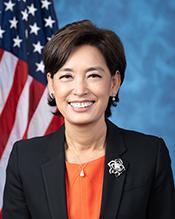
U.S. Representative for California’s 40th district
Republican
119th Congress, two-year term
Missed 0.7% of roll calls. Chamber median 1.9%.
The full voting recordCounts roll calls where most Democrats and most Republicans voted differently, leaving out procedural votes.
How we countFrom FEC filings, Voteview roll calls and Congress.gov.
Republican. In Congress since 2021, 3 terms in total.
Following saves Kim to your list, which Chamber & Street keeps on its server, linked to a cookie on this browser and not to your name or email. Email alerts will come with constituent verification.
Bills and resolutions where Kim is the primary sponsor. Most bills never leave committee; that is normal for every member. Source: Congress.gov, last updated Oct 29, 2026.
43 of 58 have at least one cosponsor from the other party.
Expressing support for the recognition of September 2025 as "National Children's Emotional Wellness Month" and for increased public awareness regarding children's emotional health and wellness.
Introduced Sep 23, 2025. 2 cosponsors, 2 from the other party. H.Res. 759 on Congress.gov
Introduced
This resolution expresses support for the designation of National Children's Emotional Wellness Month.
SHINE for Autumn Act of 2025
Introduced Sep 18, 2025. 109 cosponsors, 77 from the other party. H.R. 5469 on Congress.gov(opens in a new tab)
Introduced
Credit Access and Inclusion Act of 2026
Introduced Sep 16, 2025. 2 cosponsors, 2 from the other party. H.R. 5402 on Congress.gov(opens in a new tab)
Introduced
Credit Access and Inclusion Act of 2025
This bill allows for the reporting of certain positive consumer-credit information (such as the on-time payment of rent or utilities) to consumer reporting agencies.
Specifically, a person or the Department of Housing and Urban Development may report information related to a consumer's performance in making payments either under a lease agreement for a dwelling or pursuant to a contract for a utility or telecommunications service. However, information about a consumer's usage of any utility or telecommunications service may be reported only to the extent that the information relates to payment by the consumer for such service or other terms of the provision of that service. Furthermore, an energy utility firm may not report a consumer's outstanding balance as late if the firm and the consumer have entered into a payment plan and the consumer is meeting the obligations of that plan.
Specified provisions that establish civil liability with respect to furnishers of information to consumer reporting agencies shall not apply to any violation of the bill.
The Government Accountability Office must report on the consumer impact of such reporting and the effect of reporting consumer cash flow data to consumer credit agencies.
Community Bank LIFT Act
Introduced Sep 10, 2025. 0 cosponsors. H.R. 5276 on Congress.gov(opens in a new tab)
Introduced
Community Bank Leverage Improvement and Flexibility for Transparency Act or the Community Bank LIFT Act
This bill relaxes requirements related to the community bank leverage ratio, which is a simplified capital standard applicable to qualified community banks. Community banks qualify by having less than $10 billion in assets, along with meeting other criteria.
Specifically, the bill increases this asset limit to $15 billion. Additionally, it reduces the statutory range of the leverage ratio from 8%-10% to 6%-8%. (The specific rate is set by regulation. A reduction in the leverage ratio eases capital requirements.)
The Federal Reserve Board, the Office of the Comptroller of the Currency, and the Federal Deposit Insurance Corporation must review and report on the leverage ratio and the rules issued to carry out its implementation. The report must include a consideration of how to modify the leverage ratio to encourage more participation in the community bank leverage ratio framework, with a focus on community banks with fewer assets and providing relief from regulatory compliance burdens.
After this report is issued, the participating agencies must propose and finalize rules to implement this bill and the recommendations contained in the report.
Partner with Korea Act
Introduced Jul 23, 2025. 14 cosponsors, 9 from the other party. H.R. 4687 on Congress.gov(opens in a new tab)
Introduced
National Nursing Workforce Center Act of 2025
Introduced Jul 15, 2025. 11 cosponsors, 8 from the other party. H.R. 4407 on Congress.gov(opens in a new tab)
Introduced
Recognizing World Misophonia Awareness Day.
Introduced Jul 10, 2025. 1 cosponsor, 1 from the other party. H.Res. 573 on Congress.gov(opens in a new tab)
Introduced
Wildfire Response and Preparedness Act of 2025
Introduced Jun 17, 2025. 2 cosponsors, 2 from the other party. H.R. 4038 on Congress.gov(opens in a new tab)
Introduced
Condemning the violent June 2025 riots in Los Angeles, California.
Introduced Jun 10, 2025. 8 cosponsors. H.Res. 496 on Congress.gov(opens in a new tab)
Introduced
This resolution expresses gratitude to law enforcement agencies with respect to recent demonstrations in Los Angeles, California.
REPORT Act
Introduced May 8, 2025. 2 cosponsors. H.R. 3292 on Congress.gov(opens in a new tab)
Introduced
Reviewing Economic and Protection Objectives for Reciprocal Tariffs Act or the REPORT Act
This bill requires public and congressional notification of certain increases or decreases in a duty (i.e., tariff) imposed by the President on articles imported into the United States.
Specifically, the President must publish information in the Federal Register within 48 hours of increasing or decreasing a duty on articles imported into the United States pursuant to a law or regulation authorizing modifications to duties on an emergency or discretionary basis. This publication must include (1) notice of such determination, and (2) a detailed justification for such increase or decrease.
Additionally, the Office of the U.S. Trade Representative must brief specified congressional committees within seven days of the President making a determination to modify a duty. The briefing must include the justification for the President's determination.
Understanding the True Cost of College Act of 2025
Introduced May 1, 2025. 3 cosponsors, 3 from the other party. H.R. 3153 on Congress.gov(opens in a new tab)
Introduced
Understanding the True Cost of College Act of 2025
This bill requires standardized financial aid terminology and offer forms.
Specifically, the Department of Education (ED) must develop standard terminology and a format for financial aid offer forms based on recommendations from representatives of certain groups, including students, veterans, and institutions of higher education (IHEs).
The consumer-friendly form must include specified details and disclosures, including the estimated cost of attendance, the net price that a student or family is estimated to pay, and the terms and conditions of financial aid.
In addition, ED must (1) test the form with representatives of students, students' families, IHEs, secondary school and postsecondary counselors, and nonprofit consumer groups; and (2) use the results to develop the final form.
Each IHE that participates in federal student aid programs must (1) use the standard form when offering financial aid to students, and (2) use the standard terminology and definitions developed by ED for all communications related to financial aid offers.
Supporting the goals and ideals of Mathematics and Statistics Awareness Month.
Introduced Apr 24, 2025. 4 cosponsors, 2 from the other party. H.Res. 349 on Congress.gov(opens in a new tab)
Introduced
Accounting STEM Pursuit Act of 2025
Introduced Apr 14, 2025. 57 cosponsors, 28 from the other party. H.R. 2911 on Congress.gov(opens in a new tab)
Introduced
Fair College Admissions for Students Act
Introduced Apr 10, 2025. 3 cosponsors, 3 from the other party. H.R. 2809 on Congress.gov(opens in a new tab)
Introduced
Fair College Admissions for Students Act
This bill prohibits an institution of higher education (IHE) that participates in federal student aid programs from giving preferential treatment in the admissions process to applicants based on their relationships to donors or alumni of the IHE.
Taiwan Travel and Tourism Coordination Act
Introduced Mar 26, 2025. 5 cosponsors, 3 from the other party. H.R. 2370 on Congress.gov(opens in a new tab)
Introduced
Recognizing Girl Scouts of the United States of America on its 113th birthday and celebrating its founder Juliette Gordon Low and the legacy of providing girls with a secure and inclusive space where they can explore their world, build meaningful relationships, and have access to experiences that prepare them for a life of leadership.
Introduced Mar 11, 2025. 8 cosponsors, 5 from the other party. H.Res. 217 on Congress.gov(opens in a new tab)
Introduced
This resolution recognizes Girl Scouts of the United States of America for 113 years of building girls of courage, confidence, and character who make the world a better place. The resolution also congratulates all Girl Scouts who earned the Gold Award in 2024.
Strengthening Exports Against China Act
Introduced Feb 26, 2025. 2 cosponsors, 1 from the other party. H.R. 1615 on Congress.gov(opens in a new tab)
Introduced
Strengthening Exports Against China Act
This bill allows the Export-Import Bank of the United States (EXIM) to exclude financing provided to certain U.S. exporters from its default rate cap calculations.
EXIM, the official export credit agency of the United States, provides financing for U.S. exports of goods and services. EXIM monitors credit and other transaction risks, reserves against losses, and submits quarterly reports to Congress on its default rate. If its default rate reaches 2%, EXIM faces an immediate lending cap freeze.
This bill exempts certain transactions from EXIM's default rate calculation, thereby allowing EXIM to provide financing to these U.S. exporters without the risk of reaching the default rate cap.
Specifically, the bill allows EXIM to exclude from the default rate cap any financing provided to U.S. exporters under the China and Transformational Exports Program. (This program allows EXIM to extend loans, guarantees, and insurance to advance the comparative leadership of the United States with respect to China in specified export areas, such as artificial intelligence, biotechnology, and wireless communications equipment.)
Additionally, the bill allows EXIM to exclude from the default rate cap any financing provided to U.S. exporters that are competing with products or services provided by (1) a foreign entity included on the Entity List maintained by the Department of Commerce's Bureau of Industry and Security (e.g., entities involved in activities contrary to U.S. national security or foreign policy interests), or (2) a foreign individual or entity sanctioned by the Department of the Treasury's Office of Foreign Assets Control.
Expressing the sense of the House of Representatives regarding United Nations General Assembly Resolution 2758 (XXVI) and the harmful conflation of China's "One China Principle" and the United States "One China Policy".
Introduced Feb 21, 2025. 29 cosponsors, 16 from the other party. H.Res. 148 on Congress.gov(opens in a new tab)
Introduced
To provide for a review of sanctions with respect to Hong Kong.
Introduced Jan 24, 2025. 7 cosponsors, 2 from the other party. H.R. 733 on Congress.gov(opens in a new tab)
Introduced
This bill requires the President to submit to Congress a determination, including a detailed justification, of whether specified Hong Kong officials meet the criteria for the imposition of sanctions under certain U.S. laws or executive orders, including the Global Magnitsky Human Rights Accountability Act.
Combat Veterans Pre-Enrollment Act of 2025
Introduced Jan 23, 2025. 12 cosponsors, 8 from the other party. H.R. 683 on Congress.gov(opens in a new tab)
Introduced
Combat Veterans Pre-Enrollment Act of 2025
This bill requires the Department of Veterans Affairs (VA) to establish a program to carry out all activities necessary to permit certain members of the Armed Forces to elect to enroll in the VA health care system on the date of separation of such members from active service. Specifically, the program is for those who served on active duty in a theater of combat operations during a period of war after the Persian Gulf War or in combat against a hostile force during a period of hostilities after November 11, 1998.
The VA must, in conjunction with the Department of Defense (DOD) and Department of Homeland Security, establish a mechanism to permit a member of the Armed Forces to elect to pre-enroll in the VA health care system during the 180-day period preceding the date of separation of the member from active service.
The VA-DOD Joint Executive Committee must brief Congress on the efforts to implement such a mechanism under the program.
The Government Accountability Office must report on the program and include recommendations with respect to methods to improve the program.