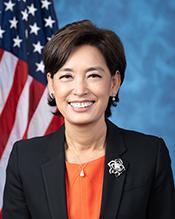
U.S. Representative for California’s 40th district
Republican
119th Congress, two-year term
Missed 0.7% of roll calls. Chamber median 1.9%.
The full voting recordCounts roll calls where most Democrats and most Republicans voted differently, leaving out procedural votes.
How we countFrom FEC filings, Voteview roll calls and Congress.gov.
Republican. In Congress since 2021, 3 terms in total.
Following saves Kim to your list, which Chamber & Street keeps on its server, linked to a cookie on this browser and not to your name or email. Email alerts will come with constituent verification.
Bills and resolutions Kim signed on to as a cosponsor. An original cosponsor signed on the day the bill was introduced. Source: govinfo bill status files, last updated Nov 6, 2026.
Federal Retirement Fairness Act
Original cosponsor. 158 cosponsors. H.R. 1522 on Congress.gov
Progress not on file
Smithsonian National Museum of the American Latino Act
Sponsor Nicole Malliotakis (R). Original cosponsor. 130 cosponsors. H.R. 1330 on Congress.gov(opens in a new tab)
Introduced
Smithsonian American Women’s History Museum Act
Sponsor Nicole Malliotakis (R). Original cosponsor. 231 cosponsors. H.R. 1329 on Congress.gov(opens in a new tab)
Introduced
Smithsonian American Women’s History Museum Act
This bill authorizes the Smithsonian American Women's History Museum to be located on a particular site within the Reserve of the National Mall in Washington, DC.
Specifically, the bill designates the South Monument site as the location for the museum; however, the President may designate an alternative site within 180 days of the bill's enactment. (The site is the undeveloped land across the National Mall from the National Museum of African American History and Culture.) Administrative jurisdiction of the site must be transferred to the Smithsonian Institution.
The Board of Regents of the Smithsonian Institution must have the approval of specified federal entities (e.g., the Commission of Fine Arts) to plan, design, and construct a museum building. The bill (1) outlines the criteria for considering site and design proposals, and (2) requires the Smithsonian Institution to reimburse for costs resulting from the building approval process.
The bill directs the museum to be dedicated to preserving, researching, and presenting the history, achievements, and lived experiences of biological women in the United States. Under this bill, the museum may not identify, present, describe, or depict any biological male as a female.
In carrying out its duties, the museum's advisory council must (1) seek and utilize guidance from a broad array of knowledgeable and respected sources reflecting the diversity of the political viewpoints and authentic experiences held by women in the United States, and (2) seek guidance for the creation and substantial revision of exhibits and programs.
Korean American Divided Families National Registry Act
Sponsor Suhas Subramanyam (D). Original cosponsor. 16 cosponsors. H.R. 1273 on Congress.gov(opens in a new tab)
Introduced
Korean American Divided Families National Registry Act
This bill establishes a national registry of Korean American families who wish to be reunited with family members living in North Korea. The bill also requires the Department of State to include reunions of such families in any direct dialogue with North Korea.
Specifically, the bill requires the State Department to (1) collect information on Korean American families, divided from North Korean family members after the Korean War armistice, who wish to be reunited with such family members; and (2) establish a national registry of information on those families to facilitate future reunions. The State Department must ensure that any direct dialogue with North Korea includes progress towards holding such reunions.
The State Department must report to Congress periodically on the registry, previous reunions, and on certain North Korean actions related to reunions.
Strengthening the Quad Act
Sponsor Gregory Meeks (D). Original cosponsor. 5 cosponsors. H.R. 1263 on Congress.gov(opens in a new tab)
Passed the House
Strengthening the Quad Act
This bill directs the Department of State to seek to establish a working group with Japan, Australia, and India to facilitate closer cooperation on shared interests and values. (The Quadrilateral Security Dialogue, also known as the Quad, is a coalition comprised of the United States and these three countries.)
The bill also requires the State Department to report to Congress a strategy for bolstering engagement and cooperation with the Quad. The strategy shall summarize current and past Quad initiatives, including those to promote broad-based and inclusive economic growth, technology cooperation, energy innovation, and resilient supply chains. The strategy shall also recommend (1) how Congress can help address certain barriers to implementing and expanding Quad cooperation, (2) new authorities needed to strengthen U.S. leadership in and contributions to Quad initiatives, and (3) additional resources needed to expand successful initiatives.
Rural Obstetrics Readiness Act
Sponsor Robin Kelly (D). Original cosponsor. 50 cosponsors. H.R. 1254 on Congress.gov(opens in a new tab)
Introduced
Rural Obstetrics Readiness Act
This bill creates and expands federal grant programs within the Health Resources and Services Administration (HRSA) to increase capacity to provide emergency obstetric health services in rural areas or areas without practitioners or facilities specializing in obstetric services.
Specifically, HRSA must establish a program for providing grants to certain hospitals or consortiums that include hospitals in rural areas or areas with maternal health care professional shortages for training, developing a workforce, and purchasing equipment relating to obstetric emergencies. In addition, the bill requires HRSA’s Alliance for Innovation on Maternal Health Capacity program to provide grants for training on emergency obstetric services for practitioners in rural health care facilities without dedicated obstetric units. HRSA must also establish a pilot program to provide grants to government entities for developing or improving telehealth access programs to support urgent maternal health care in rural facilities without a dedicated obstetric unit.
Prohibiting the distribution of Chinese Communist Party-controlled publications within House facilities, and for other purposes.
Sponsor Abraham Hamadeh (R). Joined Feb 7, 2025. 21 cosponsors. H.Res. 110 on Congress.gov(opens in a new tab)
Introduced
This resolution prohibits the Office of the Chief Administrative Officer of the House of Representatives from accepting, distributing, or delivering Chinese Communist Party-controlled publications (e.g., China Daily).
Credit Union Board Modernization Act
Sponsor Juan Vargas (D). Joined Feb 7, 2025. 22 cosponsors. H.R. 975 on Congress.gov(opens in a new tab)
Passed the House
Credit Union Board Modernization Act
This bill reduces the required frequency of meetings held by the board of directors of certain credit unions. Under the bill, new credit unions and credit unions with a low soundness rating must meet monthly, as required under current law. All other credit unions must hold at least six meetings annually, with at least one meeting held during each fiscal quarter.
Condemning the treatment of Dr. Gubad Ibadoghlu by the Government of Azerbaijan and urging his immediate release, and for other purposes.
Sponsor David Rouzer (R). Original cosponsor. 61 cosponsors. H.Res. 120 on Congress.gov(opens in a new tab)
Introduced
This resolution condemns Azerbaijan for its treatment of Dr. Gubad Ibadoghlu, practice of wrongful detention, and suppression of academic freedom. The resolution also calls for Dr. Ibadoghlu's immediate and unconditional release and for the Department of State to prioritize his well-being and release in all engagements with Azerbaijan.
Disaster Resiliency and Coverage Act of 2025
Sponsor Mike Thompson (D). Original cosponsor. 63 cosponsors. H.R. 1105 on Congress.gov(opens in a new tab)
Introduced
Disaster Resiliency and Coverage Act of 2025
This bill establishes a grant program for certain hazard mitigation measures for homes in disaster risk areas and provides a tax credit for up to 30% of expenditures on such mitigation measures. It also excludes from taxable income certain payments for residential hazard mitigation and federal emergency agricultural assistance.
The bill requires the Federal Emergency Management Agency (FEMA) to award grants to states and Indian tribal governments for specified hazard mitigation activities on residential properties at a high risk of experiencing a major disaster. FEMA must establish and periodically update disaster risk areas in which homes are eligible for the grant funding. Individual residential households, subject to certain income limitations, may receive up to $10,000 (adjusted for inflation) for eligible hazard mitigation activities, such as reinforcing a roof, installing a flood control system, or reducing flammable vegetation near the home. The bill also provides an income tax credit to individuals and businesses for up to 30% of expenditures on the specified residential mitigation activities eligible under the grant program.
Additionally, under current law, payments for disaster relief and payments under federal hazard mitigation programs are excluded from taxable income. The bill specifically excludes from taxable income payments to an individual for hazard mitigation improvements to their residence under any program established or administered by a state or local government. The bill also excludes certain federal emergency and disaster agricultural assistance from taxable income as a type of disaster relief payment.
CARGO Act of 2025
Sponsor Troy Nehls (R). Original cosponsor. 29 cosponsors. H.R. 1085 on Congress.gov(opens in a new tab)
Introduced
Cease Animal Research Grants Overseas Act of 2025 or the CARGO Act of 2025
This bill prohibits the National Institutes of Health from awarding support for any research that uses live animals unless the research occurs in the United States (including U.S. territories and possessions).
Proposing an amendment to the Constitution of the United States to limit the number of terms that a Member of Congress may serve.
Sponsor Ralph Norman (R). Joined Feb 6, 2025. 116 cosponsors. H.J.Res. 12 on Congress.gov(opens in a new tab)
Introduced
This joint resolution proposes an amendment to the Constitution establishing term limits for individuals serving in the Senate and the House of Representatives.
The proposed amendment makes an individual who has served two terms in the Senate ineligible for appointment or election to the Senate and an individual who has served three terms as a Member of the House of Representatives ineligible for election to the House of Representatives.
The joint resolution provides that the amendment shall be valid when ratified by the legislatures of three-fourths of the states within seven years after the date of its submission for ratification.
Under Article V of the Constitution, both chambers of Congress may propose an amendment by a vote of two-thirds of all Members present for such vote. A proposed amendment must be ratified by the states as prescribed in Article V and as specified by Congress.
Spent Fuel Prioritization Act of 2025
Sponsor Mike Levin (D). Original cosponsor. 6 cosponsors. H.R. 1012 on Congress.gov(opens in a new tab)
Introduced
Antisemitism Awareness Act of 2025
Sponsor Michael Lawler (R). Original cosponsor. 89 cosponsors. H.R. 1007 on Congress.gov(opens in a new tab)
Introduced
Antisemitism Awareness Act of 2025
This bill provides statutory authority for the requirement that the Department of Education’s Office for Civil Rights take into consideration the International Holocaust Remembrance Alliance's (IHRA's) working definition of antisemitism when reviewing or investigating complaints of discrimination based on race, color, or national origin in programs or activities that receive federal financial assistance. According to the IHRA's working definition, antisemitism is a certain perception of Jews, which may be expressed as hatred toward Jews.
Banning SPR Oil Exports to Foreign Adversaries Act
Sponsor Chrissy Houlahan (D). Original cosponsor. 37 cosponsors. H.R. 942 on Congress.gov(opens in a new tab)
Introduced
Recognizing the cultural and historical significance of Lunar New Year in 2025.
Sponsor Grace Meng (D). Original cosponsor. 51 cosponsors. H.Res. 75 on Congress.gov(opens in a new tab)
Introduced
This resolution recognizes the cultural and historical significance of the Lunar New Year.
The resolution expresses, in observance of this Lunar New Year, the Year of the Snake, the deepest respect of the House of Representatives for Asian Americans and all individuals throughout the world who celebrate this significant occasion.
The resolution wishes Asian Americans and all individuals who observe this holiday a happy and prosperous new year.
Fred Korematsu Congressional Gold Medal Act of 2025
Sponsor Mark Takano (D). Original cosponsor. 29 cosponsors. H.R. 821 on Congress.gov(opens in a new tab)
Introduced
Fred Korematsu Congressional Gold Medal Act of 2025
This bill provides for the award of a Congressional Gold Medal posthumously to Fred Korematsu in recognition of his contributions to civil rights, his loyalty and patriotism to the nation, and his dedication to justice and equality.
Colonel Young Oak Kim Congressional Gold Medal Act
Sponsor Marilyn Strickland (D). Original cosponsor. 7 cosponsors. H.R. 819 on Congress.gov(opens in a new tab)
Introduced
Colonel Young Oak Kim Congressional Gold Medal Act
This bill provides for the posthumous award of a Congressional Gold Medal to Colonel Young Oak Kim in recognition of his achievements and contributions to heroism, leadership, and humanitarianism.
Holocaust Education and Antisemitism Lessons Act
Sponsor Josh Gottheimer (D). Original cosponsor. 112 cosponsors. H.R. 768 on Congress.gov(opens in a new tab)
Introduced
Holocaust Education and Antisemitism Lessons Act
This bill directs the U.S. Holocaust Memorial Museum to study and report on Holocaust education efforts in states, local educational agencies (LEAs), and public elementary and secondary schools. Among other elements, the study must (1) determine whether states and LEAs require Holocaust education as part of the curriculum taught in public elementary and secondary schools, (2) identify the standards and requirements relating to Holocaust education, and (3) identify the types of instructional material used to teach students about the Holocaust.
FIRE Act of 2025
Sponsor Judy Chu (D). Original cosponsor. 18 cosponsors. H.R. 753 on Congress.gov(opens in a new tab)
Introduced
Fire Information and Reaction Enhancement Act of 2025 or the FIRE Act of 2025
This bill establishes certain programs to improve wildfire forecasting and detection within the National Oceanic and Atmospheric Administration (NOAA).
Specifically, NOAA is directed to establish one or more weather research testbeds with industry and academic partners. (Testbeds are collaborative spaces where researchers and forecasters work together to integrate new observation systems into models, test and streamline data assimilation methods, and otherwise improve weather products and services for the benefit of the public.)
Further, NOAA is directed to establish an additional program to develop and extend accurate wildfire forecasts and warnings in order to reduce injury, loss of life, and property damage. Through this program, NOAA may develop, test, and deploy satellite detection, fuel moisture and danger assessments, and atmosphere and fire modeling, among other tools.
Expressing the sense of Congress that tax-exempt fraternal benefit societies have historically provided and continue to provide critical benefits to the people and communities of the United States.
Sponsor Darin LaHood (R). Original cosponsor. 122 cosponsors. H.Con.Res. 4 on Congress.gov(opens in a new tab)
Introduced
This concurrent resolution expresses the sense of Congress that tax-exempt fraternal benefit societies serve as a private economic and social support system, providing benefits to their members is necessary to support the charitable and fraternal activities of the volunteer chapters, and their work should continue to be promoted.
Celebrating Hindu Americans, condemning attacks on Hindu places of worship, Hinduphobia, and anti-Hindu bigotry, and for other purposes.
Sponsor Shri Thanedar (D). Original cosponsor. 36 cosponsors. H.Res. 69 on Congress.gov(opens in a new tab)
Introduced
This resolution celebrates the historical and ongoing contributions of Hindus and Hinduism to the United States and condemns anti-Hindu sentiment.
Main Street Tax Certainty Act
Sponsor Lloyd Smucker (R). Original cosponsor. 192 cosponsors. H.R. 703 on Congress.gov(opens in a new tab)
Introduced
Main Street Tax Certainty Act
This bill makes permanent the qualified business income (QBI) tax deduction.
Under current law, individuals, estates, and trusts may deduct the lower of (1) 20% of QBI from a qualified business, qualified real estate investment trust dividends, and qualified publicly traded partnership income; or (2) 20% of taxable income less net capital gain. (Some limitations apply.)
However, under current law, the QBI tax deduction expires after December 31, 2025.
Fire Department Repayment Act of 2025
Sponsor Josh Harder (D). Joined Jan 22, 2025. 10 cosponsors. H.R. 345 on Congress.gov(opens in a new tab)
Passed committee
Fire Department Repayment Act of 2025
This bill requires standard operating procedures for reciprocal fire suppression cost share agreements, which are agreements between federal, state, and local governments to share the costs of suppressing wildfires that occur across multiple jurisdictions.
The Departments of Agriculture, the Interior, Homeland Security, and Defense must establish standard operating procedures relating to payment timelines for fire suppression cost share agreements established under the Reciprocal Fire Protection Act. The departments must also review each agreement that is in operation within a year of this bill's enactment and modify an agreement as necessary to comply with the standard operating procedures.
The standard operating procedures must require that (1) each fire suppression cost share agreement be aligned with each of the cooperative fire protection agreements applicable to the entity subject to such fire suppression cost share agreement, and (2) the federal paying entity reimburse a local fire department if the fire department submits an invoice in accordance with cost settlement procedures.
Security First Act
Original cosponsor. 15 cosponsors. H.R. 506 on Congress.gov(opens in a new tab)
Progress not on file
Security First Act
This bill reauthorizes the Operation Stonegarden program from FY2025 through FY2028 and addresses other border security issues. (Operation Stonegarden provides grants to enhance the border security capabilities of state, local, and tribal governments.)
From FY2025 through FY2028, the money from unreported monetary instruments seized from individuals crossing the U.S.-Mexico border and transferred into the Department of the Treasury general fund shall be made available without further appropriation to the Department of Homeland Security (DHS) to fund Operation Stonegarden.
DHS must report to Congress on (1) DHS hiring practices from 2018 to 2024, and (2) whether certain criminal gangs and Mexican drug cartels meet the criteria to be designated as foreign terrorist organizations. DHS must also periodically report to Congress about the technology needed to secure the U.S.-Mexico land border.