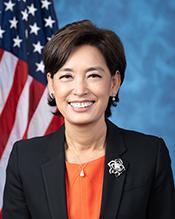
U.S. Representative for California’s 40th district
Republican
119th Congress, two-year term
Missed 0.7% of roll calls. Chamber median 1.9%.
The full voting recordCounts roll calls where most Democrats and most Republicans voted differently, leaving out procedural votes.
How we countFrom FEC filings, Voteview roll calls and Congress.gov.
Republican. In Congress since 2021, 3 terms in total.
Following saves Kim to your list, which Chamber & Street keeps on its server, linked to a cookie on this browser and not to your name or email. Email alerts will come with constituent verification.
Bills and resolutions Kim signed on to as a cosponsor. An original cosponsor signed on the day the bill was introduced. Source: govinfo bill status files, last updated Nov 6, 2026.
STABLE Act of 2025
Sponsor Bryan Steil (R). Original cosponsor. 17 cosponsors. H.R. 2392 on Congress.gov
Introduced
Stablecoin Transparency and Accountability for a Better Ledger Economy Act of 2025 or the STABLE Act of 2025
This bill establishes a regulatory framework for payment stablecoins (digital assets which an issuer must redeem for a fixed value).
Under the bill, only permitted issuers may issue a payment stablecoin in the United States, subject to certain exceptions. Permitted issuers must be a subsidiary of an insured depository institution, a federal-qualified nonbank payment stablecoin issuer, or a state-qualified payment stablecoin issuer. Permitted issuers must be regulated by the appropriate federal or state regulator. A state regulator must certify that the state regulatory regime meets or exceeds federal requirements as established by the bill.
Permitted issuers must maintain reserves backing the stablecoin on a one-to-one basis using U.S. currency or other similarly liquid assets, as specified. Permitted issuers must also publicly disclose their redemption policy and publish monthly the details of their reserves.
The bill specifies requirements for (1) reusing reserves; (2) providing safekeeping services for stablecoins; and (3) supervisory, examination, and enforcement authority over federal-qualified issuers.
The bill places a two-year moratorium on new endogenously collateralized stablecoins (i.e., stablecoins that rely on the value of another digital asset created or maintained by the same originator to maintain the fixed price).
Under the bill, permitted payment stablecoins are not considered securities under securities law. However, permitted issuers are subject to the Bank Secrecy Act for anti-money laundering and related purposes.
Emphasizing the importance and power of distributed ledger technologies (DLT) to support democratic governance, human rights, internet freedom, and transparency.
Sponsor Gabe Amo (D). Original cosponsor. 1 cosponsor. H.Res. 248 on Congress.gov(opens in a new tab)
Introduced
John W. Walsh Alpha-1 Home Infusion Act of 2025
Sponsor Maria Salazar (R). Original cosponsor. 61 cosponsors. H.R. 2343 on Congress.gov(opens in a new tab)
Introduced
John W. Walsh Alpha-1 Home Infusion Act of 2025
This bill provides for Medicare coverage of treatment for alpha-1 antitrypsin (AAT) deficiency (a protein deficiency that raises the risk of lung and other diseases). Specifically, the bill provides for coverage of at-home augmentation therapy for beneficiaries with emphysema as a result of severe hereditary AAT deficiency. Treatment must be provided through qualified home infusion therapy suppliers; beneficiaries must be under the care of a physician, nurse practitioner, or physician assistant.
Educational Choice for Children Act of 2025
Sponsor Adrian Smith (R). Joined Mar 24, 2025. 91 cosponsors. H.R. 833 on Congress.gov(opens in a new tab)
Introduced
Providing for congressional disapproval under chapter 8 of title 5, United States Code, of the rule submitted by the United States Fish and Wildlife Service relating to "Endangered and Threatened Wildlife and Plants; Endangered Species Status for the San Francisco Bay-Delta Distinct Population Segment of the Longfin Smelt".
Original cosponsor. 8 cosponsors. H.J.Res. 78 on Congress.gov(opens in a new tab)
Progress not on file
This joint resolution nullifies the rule issued by the U.S. Fish and Wildlife Service titled Endangered and Threatened Wildlife and Plants; Endangered Species Status for the San Francisco Bay-Delta Distinct Population Segment of the Longfin Smelt and published on July 30, 2024. The rule lists the San Francisco Bay-Delta distinct population segment of longfin smelt, a fish species of the Pacific Coast, as an endangered species. Thus, the joint resolution removes protection for the species under the Endangered Species Act of 1973.
Major Richard Star Act
Sponsor Gus Bilirakis (R). Original cosponsor. 340 cosponsors. H.R. 2102 on Congress.gov(opens in a new tab)
Introduced
Major Richard Star Act
This bill allows a veteran with a combat-related disability to receive retirement pay, without reduction, concurrently with their disability compensation. This includes veterans with a combat-related disability and fewer than 20 years of creditable service. (Currently, veterans who receive combat-related special compensation and retirement pay are subject to an offset in retirement pay for concurrent receipt of such benefits.)
SPEAK Act of 2025
Sponsor Monica De La Cruz (R). Original cosponsor. 17 cosponsors. H.R. 2092 on Congress.gov(opens in a new tab)
Introduced
Supporting Patient Education And Knowledge Act of 2025 or the SPEAK Act of 2025
This bill requires the Department of Health and Human Services to issue guidance with best practices for improving telehealth services for non-English speakers, including with respect to using interpreters, providing accessible instructions, and enabling multi-person video calls.
Combating Houthi Threats and Aggression Act
Original cosponsor. 4 cosponsors. H.R. 2052 on Congress.gov(opens in a new tab)
Progress not on file
Crime Victims Fund Stabilization Act of 2025
Sponsor Ann Wagner (R). Joined Mar 10, 2025. 327 cosponsors. H.R. 909 on Congress.gov(opens in a new tab)
Passed the House
Crime Victims Fund Stabilization Act of 2025
This bill adds a new source of revenue for the Crime Victims Fund (CVF). Specifically, the bill requires certain civil monetary penalties collected from settlements and judgments in cases involving fraud and false claims against the federal government to be deposited into the CVF through FY2029.
The CVF supports federal, state, and local programs and activities to compensate and assist victims of crimes. Currently, the CVF is funded by deposits from a variety of sources, including federal criminal fines, penalties, and assessments; forfeited bail bonds; and certain other gifts, donations, and bequests.
Nancy Gardner Sewell Medicare Multi-Cancer Early Detection Screening Coverage Act
Sponsor Jodey Arrington (R). Joined Mar 10, 2025. 338 cosponsors. H.R. 842 on Congress.gov(opens in a new tab)
Introduced
Nancy Gardner Sewell Medicare Multi-Cancer Early Detection Screening Coverage Act
This bill allows, beginning in 2028, for Medicare coverage and payment for multi-cancer early detection screening tests that are approved by the Food and Drug Administration and that are used to screen for cancer across many cancer types, if the Centers for Medicare & Medicaid Services determines such coverage is appropriate. Coverage is limited to those under a certain age (age 68 in 2028, increased by one year every year thereafter) and to one test every 11 months.
Goldie’s Act
Sponsor Nicole Malliotakis (R). Joined Mar 6, 2025. 109 cosponsors. H.R. 349 on Congress.gov(opens in a new tab)
Introduced
Goldie's Act
This bill expands enforcement provisions under the Animal Welfare Act (AWA).
Specifically, the bill directs the Department of Agriculture (USDA) to document and record detailed descriptions of violations of the act observed during inspections and investigations. USDA must provide a copy of all records documenting violations to state, local, and municipal animal control or law enforcement officials within 24 hours of such inspections or investigations.
Inspections must be held at least once a year of each research facility, the premises of each animal dealer, and each exhibitor of animals. If violations are found during inspections, then USDA must conduct any necessary follow-up inspections until all the violations are corrected. Inspectors must confiscate or destroy in a humane manner animals found to be suffering physical or psychological harm as a result of failure to comply with the AWA.
Violators are subject to civil penalties as outlined in the bill.
Wildland Firefighter Paycheck Protection Act of 2025
Sponsor Joe Neguse (D). Original cosponsor. 15 cosponsors. H.R. 1943 on Congress.gov(opens in a new tab)
Introduced
Anti-CBDC Surveillance State Act
Sponsor Tom Emmer (R). Original cosponsor. 135 cosponsors. H.R. 1919 on Congress.gov(opens in a new tab)
Passed the House
Anti-CBDC Surveillance State Act
This bill prohibits a Federal Reserve bank from offering products or services directly to an individual, maintaining an account on behalf of an individual, or issuing a central bank digital currency (i.e., a digital dollar). Further, the Board of Governors of the Federal Reserve System is prohibited from using a central bank digital currency to implement monetary policy or from testing, studying, creating, or implementing a central bank digital currency, with exceptions as provided by the bill.
Honoring Our Fallen Heroes Act of 2025
Sponsor Mary Gay Scanlon (D). Joined Mar 6, 2025. 180 cosponsors. H.R. 1269 on Congress.gov(opens in a new tab)
Introduced
Honoring Our Fallen Heroes Act of 2025
This bill extends death and disability benefits under the Public Safety Officers' Benefits Program (PSOB) to certain public safety officers who suffer from exposure-related cancer while on duty and their survivors. The PSOB program provides death, disability, and education benefits to public safety officers who are killed or injured in the line of duty and their survivors.
The bill specifies that exposure to a carcinogen shall be presumed to constitute a personal injury in the line of duty if
• the exposure occurred while the officer was in the line of duty;
• the officer began serving as an officer not fewer than 5 years before the date of the diagnosis of an exposure-related cancer and the diagnosis occurred not more than 15 years after the last date of active service; and
• the exposure-related cancer directly and proximately resulted in the death or permanent and total disability of the officer.
The Department of Justice's Bureau of Justice Assistance must periodically review the definition of exposure-related cancer and update the definition if appropriate based on medical evidence and in accordance with the requirements of a petition process.
Miracle on Ice Congressional Gold Medal Act
Sponsor Pete Stauber (R). Joined Mar 5, 2025. 299 cosponsors. H.R. 452 on Congress.gov(opens in a new tab)
Became law
Miracle on Ice Congressional Gold Medal Act
This act provides for the award of Congressional Gold Medals to the members of the 1980 U.S. Olympic men's ice hockey team in recognition of the team's achievement at the 1980 Winter Olympic Games.
Cutting Red Tape on Child Care Providers Act of 2025
Sponsor Marie Perez (D). Original cosponsor. 8 cosponsors. H.R. 1889 on Congress.gov(opens in a new tab)
Introduced
Enhanced Iran Sanctions Act of 2025
Sponsor Michael Lawler (R). Joined Mar 3, 2025. 295 cosponsors. H.R. 1422 on Congress.gov(opens in a new tab)
Passed the House
Enhanced Iran Sanctions Act of 2025
This bill imposes sanctions on certain foreign persons (individuals and entities) that are involved in Iran's petroleum sector as well as certain associated persons. The bill also requires or authorizes actions to facilitate the enforcement of sanctions on Iran.
Specifically, the bill requires the President to impose visa- and property-blocking sanctions on any foreign person that, after the bill's enactment, knowingly engages in any transaction related to the processing, export, or sale of oil, condensates, gas, liquefied natural gas, or other petrochemical products in whole or in part from Iran. The President must also impose sanctions on certain foreign persons associated with a sanctioned individual or entity. For example, the President must sanction the subsidiaries and corporate officers of a sanctioned business.
The bill provides certain exceptions to these sanctions, including specifying that sanctions do not apply to the importation of goods or to conducting or facilitating transactions for humanitarian assistance.
The Department of State must establish an interagency working group that shall seek to establish a multilateral contact group to coordinate international efforts to enforce sanctions on Iran.
The bill expands the State Department rewards program to authorize a reward payment to any individual who furnishes information leading to the identification of a person (1) subject to sanctions under this bill, or (2) that has attempted or is attempting to evade sanctions under this bill.
Mikaela Naylon Give Kids a Chance Act
Sponsor Michael McCaul (R). Joined Mar 3, 2025. 313 cosponsors. H.R. 1262 on Congress.gov(opens in a new tab)
Passed the House
Give Kids a Chance Act of 2025
This bill expands the Food and Drug Administration’s (FDA’s) authority with respect to research on rare pediatric diseases, including by permitting the FDA to take enforcement action against drug sponsors that fail to satisfy pediatric study requirements and by reauthorizing programs that support pediatric research.
Specifically, the bill
• modifies requirements relating to molecularly targeted pediatric cancer investigations to permit research on new drugs in combination with active ingredients that have already been approved, provided certain conditions are met;
• permits the FDA to take enforcement action against drug sponsors that fail to comply with pediatric study requirements, if such sponsors demonstrated a lack of due diligence in satisfying the requirement;
• renews the FDA’s authority to award priority review vouchers to sponsors of new products intended to treat rare pediatric diseases through September 30, 2029; and
• reauthorizes through FY2027 certain funding for the National Institutes of Health to support priority pediatric research.
The bill also provides statutory authority for the FDA’s interpretation of the orphan drug exclusivity period. The bill specifies, consistent with FDA regulations, that the seven-year market exclusivity period for drugs for rare diseases or conditions (i.e., orphan drugs) prohibits the approval of the same drug for the same approved use or indication with respect to the disease or condition. (In Catalyst Pharmaceuticals, Inc. v. Becerra, a court rejected the FDA’s interpretation and held that orphan drug exclusivity extends to all uses or indications for the disease or condition.)
PAST Act of 2025
Sponsor Brian Fitzpatrick (R). Original cosponsor. 207 cosponsors. H.R. 1684 on Congress.gov(opens in a new tab)
Introduced
Prevent All Soring Tactics Act of 2025 or the PAST Act of 2025
This bill increases protections for horses at shows, exhibitions, sales, or auctions (horse events) to prevent the practice of soring horses. Generally, the soring of horses includes certain actions taken on horses' limbs to produce higher gaits that may cause pain, distress, inflammation, or lameness.
Specifically, the bill expands existing soring prohibitions under the Horse Protection Act, including by banning the use of certain action devices (e.g., nonprotective boots) on specified horse breeds.
The bill also requires soring inspectors at horse events to be assigned by the Animal and Plant Health Inspection Service (APHIS) of the Department of Agriculture rather than appointed by the management of horse events. APHIS must also license, train, and oversee inspectors to detect and diagnose soring at such events.
Additionally, the bill increases penalties for violations of the act. It also directs APHIS to disqualify horses found to be sore from being shown or exhibited for specified periods. Further, APHIS may permanently disqualify violators from participating in horse events after the third or any subsequent violation.
By way of background, APHIS issued a rule in 2024 to increase efforts to protect horses from soring practices. However, in 2025, a court vacated parts of the rule as exceeding APHIS' statutory authority (e.g., prohibiting the use of certain action devices) while deeming other parts acceptable (e.g., establishing APHIS-designated inspectors). APHIS subsequently delayed the effective date of the rule to December 31, 2026.
SAFE Act of 2025
Sponsor Vern Buchanan (R). Original cosponsor. 238 cosponsors. H.R. 1661 on Congress.gov(opens in a new tab)
Introduced
Save America's Forgotten Equines Act of 2025 or the SAFE Act of 2025
This bill permanently prohibits the slaughter of equines (e.g., horses and mules) for human consumption. (Current law prohibits the slaughter of dogs and cats for human consumption. This bill extends the prohibition to equines.)
Specifically, this bill prohibits a person from knowingly (1) slaughtering an equine for human consumption; or (2) shipping, transporting, possessing, purchasing, selling, or donating an equine to be slaughtered for human consumption or equine parts for human consumption.
The bill subjects a violator to a fine.
The bill applies to conduct in or affecting interstate or foreign commerce or within the special maritime and territorial jurisdiction of the United States. However, it does not apply to an activity carried out by an Indian for a religious ceremony.
As background, in recent years, the appropriations acts have prohibited the Department of Agriculture (USDA) from using federal funds to inspect horses before they are slaughtered for human consumption. Therefore, there are currently no USDA-inspected horse slaughter facilities in the United States.
Truck Parking Safety Improvement Act
Sponsor Mike Bost (R). Original cosponsor. 54 cosponsors. H.R. 1659 on Congress.gov(opens in a new tab)
Introduced
Truck Parking Safety Improvement Act
This bill directs the Department of Transportation (DOT) to provide competitive grants for projects that provide public parking for commercial motor vehicles and improve the safety of commercial motor vehicle drivers. States, metropolitan planning organizations, tribal governments, and local governments are eligible for these grants.
The grants must be used for projects on federal-aid highways or a facility with reasonable access to such a highway or a freight facility.
A grant recipient may not charge a fee to a commercial motor vehicle driver to access a public parking facility that is constructed, opened, maintained, or improved with a grant under this program.
In providing grants, DOT must determine that
• there is a shortage of commercial motor vehicle parking capacity in the project's corridor;
• the eligible entity has consulted motor carriers, commercial motor vehicle drivers, public safety officials, and private providers of commercial motor vehicle parking regarding the project;
• the project will likely increase the availability or utilization of commercial motor vehicle parking, facilitate the efficient movement of freight, or improve highway safety, traffic congestion, and air quality; and
• the eligible entity has demonstrated the ability to provide for the facility's maintenance and operation.
To the maximum extent practicable, DOT must select grant projects that maximize the geographic dispersion of new commercial motor vehicle parking capacity across the United States.
Disapproving the rule submitted by the Bureau of Consumer Financial Protection relating to "Defining Larger Participants of a Market for General-Use Digital Consumer Payment Applications".
Sponsor Mike Flood (R). Original cosponsor. 7 cosponsors. H.J.Res. 64 on Congress.gov(opens in a new tab)
Introduced
This joint resolution nullifies the final rule issued by the Consumer Financial Protection Bureau (CFPB) titled Defining Larger Participants of a Market for General-Use Digital Consumer Payment Applications and published on December 10, 2024. The rule defines larger participants in the general-use digital consumer payment application market (i.e., payment apps) that are subject to CFPB supervisory authority. The rule defines larger participants in this market as nonbanks (1) with an annual volume of at least 50 million transactions, and (2) that are not small business concerns.
Expressing support for the Iranian people's desires for a democratic, secular, and nonnuclear Republic of Iran, and condemning the Iranian regime's terrorism, regional proxy war, internal suppression, and for other purposes.
Sponsor Tom McClintock (R). Original cosponsor. 230 cosponsors. H.Res. 166 on Congress.gov(opens in a new tab)
Introduced
Stop Fentanyl Money Laundering Act of 2025
Sponsor Andrew Ogles (R). Original cosponsor. 9 cosponsors. H.R. 1577 on Congress.gov(opens in a new tab)
Introduced
Stop Fentanyl Money Laundering Act of 2025
This bill expands efforts to prevent money laundering related to international fentanyl and narcotics distribution.
The bill allows the Department of the Treasury to impose restrictions on an entity or activity determined to be of primary money-laundering concern in connection with illicit fentanyl and narcotics trafficking. Specifically, if Treasury determines that a foreign financial institution, class of transaction, or type of account is of such concern, Treasury may require domestic financial institutions and agencies to take special measures, such as reporting certain financial transactions involving that entity or activity.
The Financial Crimes Enforcement Network (FinCEN) must issue advisories to financial institutions about how to identify Chinese money laundering that facilitates the trafficking of fentanyl and other synthetic opioids. FinCEN must also issue guidance to financial institutions for filing suspicious transaction reports related to suspected narcotics trafficking by transnational criminal organizations.
Protect Our Letter Carriers Act of 2025
Sponsor Brian Fitzpatrick (R). Joined Feb 25, 2025. 231 cosponsors. H.R. 1065 on Congress.gov(opens in a new tab)
Introduced
Protect Our Letter Carriers Act of 2025
This bill requires or authorizes certain actions related to the U.S. Postal Service (USPS).
The bill requires the Department of Justice to appoint an assistant U.S. attorney in each judicial district to coordinate and supervise the investigation and prosecution of various crimes related to postal services (for example, assault on a postal service employee, breaking into a post office, or obstruction of mails).
The bill also requires the U.S. Sentencing Commission to amend sentencing guidelines to provide that the assault or robbery of a postal employee shall be treated the same as the assault of a law enforcement officer.
Additionally, the bill authorizes appropriations for the USPS to install high security collection boxes and replace older versions of the universal mailbox key with electronic versions.