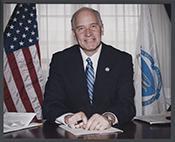
U.S. Representative for Massachusetts’s 9th district
Democrat
119th Congress, two-year term
Missed 4.6% of roll calls. Chamber median 1.9%.
The full voting recordCounts roll calls where most Democrats and most Republicans voted differently, leaving out procedural votes.
How we countFrom FEC filings, Voteview roll calls and Congress.gov.
Democrat. In Congress since 2011, 8 terms in total.
Following saves Keating to your list, which Chamber & Street keeps on its server, linked to a cookie on this browser and not to your name or email. Email alerts will come with constituent verification.
Bills and resolutions Keating signed on to as a cosponsor. An original cosponsor signed on the day the bill was introduced. Source: govinfo bill status files, last updated Nov 6, 2026.
911 SAVES Act
Sponsor Norma Torres (D). Joined Apr 14, 2026. 89 cosponsors. H.R. 637 on Congress.gov
Introduced
Supporting Accurate Views of Emergency Services Act of 2025 or the 911 SAVES Act
This bill requires the Office of Management and Budget to categorize public safety telecommunicators as a protective service occupation under the Standard Occupational Classification system no later than 30 days after the enactment of this bill. (The Standard Occupational Classification system is a federal statistical standard used by federal agencies to classify workers into occupational categories for the purpose of collecting, calculating, or disseminating data.)
Fit to Serve Act
Sponsor Adam Smith (D). Joined Apr 14, 2026. 189 cosponsors. H.R. 3569 on Congress.gov(opens in a new tab)
Introduced
Therapeutic Fraud Prevention Act of 2025
Sponsor Ted Lieu (D). Joined Apr 13, 2026. 204 cosponsors. H.R. 3243 on Congress.gov(opens in a new tab)
Introduced
End Russian Oil Windfalls Act
Sponsor Gregory Meeks (D). Original cosponsor. 7 cosponsors. H.R. 8222 on Congress.gov(opens in a new tab)
Introduced
Ally’s Act
Sponsor Joe Neguse (D). Joined Apr 9, 2026. 111 cosponsors. H.R. 4606 on Congress.gov(opens in a new tab)
Introduced
988 LGBTQ+ Youth Access Act of 2025
Sponsor Raja Krishnamoorthi (D). Joined Apr 6, 2026. 176 cosponsors. H.R. 5434 on Congress.gov(opens in a new tab)
Introduced
To amend title 10, United States Code, and the National Defense Authorization Act for Fiscal Year 1994, to codify and clarify gender neutral standards for members of certain Armed Forces, and for other purposes.
Sponsor Chrissy Houlahan (D). Original cosponsor. 38 cosponsors. H.R. 8175 on Congress.gov(opens in a new tab)
Introduced
Native American Housing Assistance and Self-Determination Modernization Act of 2026
Sponsor Troy Downing (R). Original cosponsor. 50 cosponsors. H.R. 8092 on Congress.gov(opens in a new tab)
Introduced
Equal COLA Act
Joined Mar 26, 2026. 90 cosponsors. H.R. 491 on Congress.gov(opens in a new tab)
Progress not on file
Equal COLA Act
This bill applies a cost-of-living adjustment (COLA) for annuities paid under the Federal Employees Retirement System that is equal to the increase in inflation, regardless of the amount of the increase.
Specifically, for any year in which the Consumer Price Index (CPI) has increased over the previous year, the COLA amount shall be increased by the change in the CPI from the previous year.
Current law applies an adjustment equal to the change in CPI only if the change is 2% or less. If the change is between 2% and 3%, the adjustment is limited to 2%. If the change is more than 3%, the adjustment is limited to 1% less than the change.
Recognizing the significance of equal pay and the disparity between wages paid to men and women.
Sponsor Lois Frankel (D). Original cosponsor. 140 cosponsors. H.Con.Res. 81 on Congress.gov(opens in a new tab)
Introduced
HERO Act
Sponsor Ami Bera (D). Joined Mar 25, 2026. 36 cosponsors. H.R. 1902 on Congress.gov(opens in a new tab)
Introduced
Helping Emergency Responders Overcome Act or the HERO Act
This bill establishes a series of programs relating to the behavioral health of law enforcement officers, first responders, 9-1-1 operators, and other public safety officers and health care providers.
The programs include
• a public safety officer suicide-reporting system at the Centers for Disease Control and Prevention,
• a grant program for peer-support behavioral health and wellness programs within fire departments and emergency medical services agencies, and
• a grant program for behavioral health and wellness programs for health care providers.
FIRE Cancer Act of 2025
Sponsor Josh Gottheimer (D). Joined Mar 20, 2026. 7 cosponsors. H.R. 1610 on Congress.gov(opens in a new tab)
Introduced
Firefighter Investments to Recognize Exposure to Cancer Act of 2025 or the FIRE Cancer Act of 2025
This bill expands the Federal Emergency Management Agency's (FEMA's) Assistance to Firefighters Grant program for fire departments and emergency medical services organizations to include cancer prevention programs (e.g., multi-cancer early detection testing) for firefighting personnel. It also establishes a joint cancer research program between FEMA and the Centers for Disease Control and Prevention (CDC) through which firefighting personnel may voluntarily share the anonymized results of preventative cancer testing so the CDC can study trends or causes of cancer in such personnel.
Momnibus Act
Sponsor Lauren Underwood (D). Original cosponsor. 214 cosponsors. H.R. 7973 on Congress.gov(opens in a new tab)
Introduced
Fair Housing for Survivors Act of 2026
Sponsor Debbie Wasserman Schultz (D). Original cosponsor. 49 cosponsors. H.R. 7856 on Congress.gov(opens in a new tab)
Introduced
Sustainable Cardiopulmonary Rehabilitation Services in the Home Act
Sponsor John Joyce (R). Joined Mar 4, 2026. 37 cosponsors. H.R. 783 on Congress.gov(opens in a new tab)
Introduced
Sustainable Cardiopulmonary Rehabilitation Services in the Home Act
This bill permanently allows services relating to cardiac rehabilitation programs, intensive cardiac rehabilitation programs, and pulmonary rehabilitation programs to be furnished via telehealth at a beneficiary's home under Medicare.
DISCLOSE Act of 2026
Sponsor Chris Pappas (D). Original cosponsor. 189 cosponsors. H.R. 7802 on Congress.gov(opens in a new tab)
Introduced
Democracy Is Strengthened by Casting Light On Spending in Elections Act of 2026 or the DISCLOSE Act of 2026
This bill addresses campaign finance, including by expanding the prohibition on campaign spending by foreign nationals, requiring additional disclosures of campaign expenditures, and requiring additional disclosures regarding certain political advertisements.
Specifically, the bill expands existing foreign money prohibitions to include disbursements for paid web-based or digital communications and federal judicial nomination communications. It also prohibits foreign nationals from contributing to campaigns related to ballot initiatives and referenda.
The Government Accountability Office must, for each four-year election cycle, study and report on the incidence of illicit foreign money in federal elections.
Next, the bill makes it unlawful to establish or use a corporation, company, or other entity with the intent to conceal an election contribution or donation by a foreign national. A violator is subject to criminal penalties—a fine, a prison term of up to five years, or both.
Covered organizations (e.g., corporations, labor organizations, and political organizations) must, within 24 hours, file reports with the Federal Election Commission to disclose campaign expenditures of more than $10,000 during an election cycle.
The bill also requires organizations to provide additional disclosures regarding political advertisements, including the donors who contributed the most money to that organization in the last year.
Protecting Sensitive Locations Act
Sponsor Adriano Espaillat (D). Joined Feb 26, 2026. 157 cosponsors. H.R. 1061 on Congress.gov(opens in a new tab)
Introduced
Protecting Sensitive Locations Act
This bill prohibits immigration enforcement actions within 1,000 feet of a sensitive location except in exigent circumstances, such as the imminent risk of death, violence, or physical harm to any person.
Sensitive locations include
• health care facilities;
• schools and school bus stops;
• places that provide assistance for people such as children, pregnant women, and abuse victims;
• child care facilities;
• places that provide disaster or emergency services;
• places of worship;
• courthouses and lawyers’ offices;
• facilities used as polling places;
• certain labor union facilities; and
• public assistance offices.
The prohibition shall apply to Department of Homeland Security officers and agents, as well as state employees pursuing immigration enforcement actions.
If an enforcement action is carried out in violation of this prohibition (1) no information resulting from the action may be entered into the record in a resulting removal proceeding, and (2) the affected individual may move to immediately terminate such a proceeding.
U.S. Immigration and Customs Enforcement and U.S. Customs and Border Protection shall annually report to Congress about enforcement actions taken at sensitive locations in the preceding year.
Recognizing 250 years of Polish-American friendship and reaffirming the interest of the United States of America in the democracy, sovereignty, prosperity, and security of Poland.
Sponsor Marcy Kaptur (D). Original cosponsor. 11 cosponsors. H.Res. 1082 on Congress.gov(opens in a new tab)
Introduced
United States Foreign Service Commemorative Coin Act
Sponsor Ami Bera (D). Joined Feb 24, 2026. 41 cosponsors. H.R. 6126 on Congress.gov(opens in a new tab)
Introduced
Mental Health Services for Students Act of 2025
Sponsor Andrea Salinas (D). Joined Feb 24, 2026. 68 cosponsors. H.R. 5557 on Congress.gov(opens in a new tab)
Introduced
Biodefense Diplomacy Enhancement Act
Sponsor Keith Self (R). Original cosponsor. 6 cosponsors. H.R. 7653 on Congress.gov(opens in a new tab)
Passed committee
SHADOW Act
Sponsor Keith Self (R). Original cosponsor. 5 cosponsors. H.R. 7632 on Congress.gov(opens in a new tab)
Passed committee
ALERT Act
Sponsor Sam Graves (R). Original cosponsor. 87 cosponsors. H.R. 7613 on Congress.gov(opens in a new tab)
Passed the House
Airspace Location and Enhanced Risk Transparency Act of 2026 or the ALERT Act
This bill addresses aviation safety by increasing requirements for aircraft tracking and communication using Automatic Dependent Surveillance-Broadcast (ADS-B) technology and expanding oversight. As background, ADS-B for broadcasting (Out) and receiving (In) transmits information (e.g., location and weather) among aircraft and air traffic control (ATC).
The bill requires the Department of Defense (DOD) and the Department of Transportation (DOT) to enter into an agreement regarding the use of collision prevention technologies on DOD aircraft. The agreement must require the use of ADS-B Out as the default practice for DOD helicopters operating in the national airspace, unless such use would affect operational security. For DOD helicopters that are carrying out special missions in the Washington, DC, metropolitan area and are exempt from ADS-B Out transmission requirements, DOD must coordinate with DOT to conduct a safety risk assessment and implement appropriate mitigations.
By December 31, 2031, DOD aircraft (other than certain special mission aircraft) must be equipped with and operating integrated ADS-B In technology.
With respect to civil aircraft, by December 31, 2031, the Federal Aviation Administration (FAA) must generally require aircraft that are currently required to be equipped with ADS-B Out to also be equipped with ADS-B In.
Additionally, among other requirements, the FAA must
• establish time-on-position limits for supervisory ATC personnel;
• establish a process to timely notify parties involved in certain near-miss incidents; and
• evaluate and revise, as necessary, helicopter routes around Ronald Reagan Washington National Airport.
Jaime’s Law
Sponsor Debbie Wasserman Schultz (D). Joined Feb 20, 2026. 17 cosponsors. H.R. 7564 on Congress.gov(opens in a new tab)
Introduced
ROTOR Act
Sponsor Robert Onder (R). Joined Feb 20, 2026. 32 cosponsors. H.R. 6222 on Congress.gov(opens in a new tab)
Introduced
Rotorcraft Operations Transparency and Oversight Reform Act or the ROTOR Act
This bill addresses aviation safety by increasing requirements for aircraft tracking and communication using Automatic Dependent Surveillance-Broadcast (ADS-B) technology and expanding oversight.
As background, ADS-B for broadcasting (Out) and receiving (In) transmits information (e.g., location and weather information) between aircraft and air traffic control.
Under the bill, aircraft must generally operate with ADS-B In equipment to provide the aircraft with location information of other aircraft and traffic advisories. Current law does not require this equipment.
Current Federal Aviation Administration (FAA) regulations allow aircraft performing a sensitive government mission to be excepted from requirements for using ADS-B Out equipment. This bill limits which flights may be considered sensitive government missions (e.g., not training flights) and requires additional reporting for the exception.
The Government Accountability Office must review the use of the ADS-B Out exception and the Office of Inspector General (OIG) of the Department of Transportation (DOT) must annually audit FAA oversight of operations that use the exception.
Further, the bill repeals a 2018 law that prohibits DOT from requiring certain military aircraft to install or use ADS-B equipment.
The bill also requires
• the OIG of the Army to audit the Army’s coordination with the FAA,
• the FAA to establish an office to coordinate airspace usage of military aircraft and review the safety of flight operations and routes around airports, and
• the FAA to enter into memoranda of understanding with military agencies for safety information sharing.