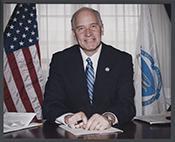
U.S. Representative for Massachusetts’s 9th district
Democrat
119th Congress, two-year term
Missed 4.6% of roll calls. Chamber median 1.9%.
The full voting recordCounts roll calls where most Democrats and most Republicans voted differently, leaving out procedural votes.
How we countFrom FEC filings, Voteview roll calls and Congress.gov.
Democrat. In Congress since 2011, 8 terms in total.
Following saves Keating to your list, which Chamber & Street keeps on its server, linked to a cookie on this browser and not to your name or email. Email alerts will come with constituent verification.
Bills and resolutions Keating signed on to as a cosponsor. An original cosponsor signed on the day the bill was introduced. Source: govinfo bill status files, last updated Nov 6, 2026.
To include the Czech Republic in the list of foreign states whose nationals are eligible for admission into the United States as E1 nonimmigrants if United States nationals are treated similarly by the Government of the Czech Republic.
Sponsor Steve Cohen (D). Original cosponsor. 26 cosponsors. H.R. 1056 on Congress.gov
Introduced
This bill allows a national of the Czech Republic to qualify for E-1 nonimmigrant status if the Czech Republic provides similar nonimmigrant status to U.S. nationals. E-1 classification allows nationals of certain countries (i.e., those with a treaty of commerce and navigation with the United States, those under a qualifying international agreement, or those deemed to qualify through statute) to be admitted solely to engage in international trade, along with their families and employees.
Condemning the pardons for individuals who were found guilty of assaulting Capitol Police Officers.
Sponsor Bonnie Watson Coleman (D). Original cosponsor. 138 cosponsors. H.Res. 116 on Congress.gov(opens in a new tab)
Introduced
This resolution disapproves of pardons for individuals who were found guilty of assaulting U.S. Capitol Police officers.
Right to Contraception Act
Sponsor Lizzie Fletcher (D). Original cosponsor. 211 cosponsors. H.R. 999 on Congress.gov(opens in a new tab)
Introduced
Right to Contraception Act
This bill sets out statutory protections for an individual's right to access and a health care provider's right to provide contraception and related information. Contraception refers to an action taken to prevent pregnancy, including the use of contraceptives (i.e., a device or medication used to prevent pregnancy), fertility-awareness based methods, and sterilization procedures.
Generally, the bill prohibits measures that single out and impede access to contraception and related information. However, a party may defend against a claim that a measure violates the bill's prohibitions by demonstrating, through clear and convincing evidence, that the measure significantly advances the safety of contraception and cannot be achieved through less restrictive means. The bill also specifies that the prohibition preempts inconsistent state and local laws and applies notwithstanding other federal laws, including the Religious Freedom Restoration Act of 1993.
The Department of Justice, individuals, or health care providers may bring a lawsuit to enforce this bill, and states are not immune from suits for violations.
ORPHAN Cures Act
Sponsor John Joyce (R). Original cosponsor. 18 cosponsors. H.R. 946 on Congress.gov(opens in a new tab)
Introduced
Optimizing Research Progress Hope And New Cures Act or the ORPHAN Cures Act
This bill modifies certain provisions under the Medicare Drug Price Negotiation Program with respect to orphan drugs.
The Medicare Drug Price Negotiation Program requires the Centers for Medicare & Medicaid Services to negotiate the prices of certain prescription drugs under Medicare beginning in 2026. Among other requirements, drugs must have had market approval for at least 7 years (for drug products) or 11 years (for biologics) to qualify for negotiation. The program does not apply to orphan drugs that are approved to treat only one rare disease or condition.
The bill modifies these provisions so as to exclude any period in which a drug was an orphan drug from market approval calculations. It also excludes orphan drugs that are approved to treat more than one rare disease or condition from the program.
Expressing the sense of the House of Representatives that Congress should take all appropriate measures to ensure that the United States Postal Service remains an independent establishment of the Federal Government and is not subject to privatization.
Sponsor Stephen Lynch (D). Joined Jan 31, 2025. 238 cosponsors. H.Res. 70 on Congress.gov(opens in a new tab)
Introduced
This resolution expresses the sense of the House of Representatives that Congress should ensure that the U.S. Postal Service is not privatized and remains an independent establishment of the federal government.
MEGOBARI Act
Sponsor Joe Wilson (R). Joined Jan 31, 2025. 18 cosponsors. H.R. 36 on Congress.gov(opens in a new tab)
Passed the House
Mobilizing and Enhancing Georgia’s Options for Building Accountability, Resilience, and Independence Act or the MEGOBARI Act
This bill requires the President to impose sanctions on certain foreign persons, including Georgian government officials, who are undermining Georgia's security or stability.
Specifically, the bill requires the President to impose visa-blocking sanctions and authorizes the President to impose property-blocking sanctions on any foreign person the President determines is involved with actions or policies to undermine Georgia's security or stability. Immediate family members of a sanctioned individual are also subject to these sanctions if they benefited from the sanctioned individual's conduct.
The bill also requires the President to impose visa-blocking sanctions on the following foreign persons if the President determines such persons knowingly engaged in significant acts of corruption or acts of violence or intimidation in relation to the blocking of Euro-Atlantic integration in Georgia:
• any individual who served as a member of the Georgian parliament or as a senior official of a Georgian political party on or after January 1, 2014;
• any individual who is serving as an official in a leadership position on behalf of the Georgian government; and
• any immediate family member of such officials who benefited from their conduct.
Additionally, for the purpose of potential imposition of sanctions under the International Emergency Economic Powers Act, the President must determine whether there are foreign persons who, on or after the bill's enactment, have engaged in (1) significant corruption in Georgia, or (2) acts to undermine Georgia's security or stability.
Expressing strong disapproval of the President's announcement to withdraw the United States from the Paris Agreement.
Sponsor Bradley Schneider (D). Original cosponsor. 162 cosponsors. H.Res. 68 on Congress.gov(opens in a new tab)
Introduced
Build Housing with Care Act of 2025
Sponsor Suzanne Bonamici (D). Original cosponsor. 35 cosponsors. H.R. 646 on Congress.gov(opens in a new tab)
Introduced
Build Housing with Care Act of 2025
This bill establishes a competitive grant program to support co-located childcare and housing facilities. It also requires the Government Accountability Office to study the availability and affordability of childcare for residents of public housing.
Specifically, the Department of Housing and Urban Development must award the grants to eligible entities, which include community development financial institutions, public housing authorities, licensed childcare providers, government entities, housing developers, and consortia of such entities. Entities must use the grants for designing, planning, constructing, acquiring, renovating, or otherwise supporting new or existing housing facilities with childcare providers on the same premises or nearby.
Young Americans Financial Literacy Act
Sponsor André Carson (D). Joined Jan 23, 2025. 50 cosponsors. H.R. 486 on Congress.gov(opens in a new tab)
Introduced
Young Americans Financial Literacy Act
This bill requires the Consumer Financial Protection Bureau to award competitive grants to eligible institutions for the establishment of financial literacy education programs for young people and families.
An eligible institution is a partnership among two or more of the following:
• an institution of higher education;
• a state or local government agency specializing in financial education;
• a nonprofit agency, organization, or association;
• a financial institution; or
• another small organization.
Authorized grant funded activities shall include
• developing and implementing comprehensive, research based, financial-literacy education programs for young people;
• developing and supporting the delivery of professional development programs in financial literacy education;
• developing educational programs to reduce student loan default rates; and
• conducting ongoing research and evaluation of financial literacy education programs.
The grant program shall terminate after FY2029.
Health Care Providers Safety Act of 2025
Sponsor Veronica Escobar (D). Original cosponsor. 72 cosponsors. H.R. 612 on Congress.gov(opens in a new tab)
Introduced
Health Care Providers Safety Act of 2025
This bill authorizes the Department of Health and Human Services to award grants to health care providers for security services and other expenses related to physical security and cybersecurity.
Muhammad Ali Congressional Gold Medal Act
Sponsor André Carson (D). Original cosponsor. 88 cosponsors. H.R. 485 on Congress.gov(opens in a new tab)
Introduced
Muhammad Ali Congressional Gold Medal Act
This bill provides for the posthumous award of a Congressional Gold Medal to Muhammad Ali.
There is authorized to be charged against the U.S. Mint Public Enterprise Fund such amounts as may be necessary to pay for the costs of the medals struck under this bill.
Sums received from the sale of duplicate bronze medals authorized by this bill shall be deposited into that fund.
No Russian Tunnel to Crimea Act
Sponsor Gregory Meeks (D). Original cosponsor. 8 cosponsors. H.R. 476 on Congress.gov(opens in a new tab)
Introduced
No Russian Tunnel to Crimea Act
This bill requires the President to impose visa- and property-blocking sanctions on foreign persons that knowingly participate in the construction, maintenance, or repair of a tunnel or bridge that connects the Russian mainland with the Crimean Peninsula.
The bill provides exceptions to these sanctions in certain circumstances (such as providing humanitarian assistance or to comply with international obligations). The President may also waive such sanctions on the basis of U.S. national security interests.
Sanction Russian Nuclear Safety Violators Act of 2025
Sponsor Gregory Meeks (D). Original cosponsor. 18 cosponsors. H.R. 475 on Congress.gov(opens in a new tab)
Introduced
Sanction Russian Nuclear Safety Violators Act of 2025
This bill requires the President to impose visa- and property-blocking sanctions on foreign persons who endanger the integrity or safety of the Zaporizhzhia nuclear power plant in southeastern Ukraine or who undermine Ukrainian operational control of the power plant. The bill provides certain exceptions to such sanctions (1) to comply with international obligations, (2) to provide humanitarian assistance, or (3) for those seeking to reestablish Ukrainian operational control of the Zaporizhzhia nuclear power plant.
Miracle on Ice Congressional Gold Medal Act
Sponsor Pete Stauber (R). Original cosponsor. 299 cosponsors. H.R. 452 on Congress.gov(opens in a new tab)
Became law
Miracle on Ice Congressional Gold Medal Act
This act provides for the award of Congressional Gold Medals to the members of the 1980 U.S. Olympic men's ice hockey team in recognition of the team's achievement at the 1980 Winter Olympic Games.
Rosie the Riveter Commemorative Coin Act
Sponsor John Garamendi (D). Original cosponsor. 169 cosponsors. H.R. 429 on Congress.gov(opens in a new tab)
Introduced
Rosie the Riveter Commemorative Coin Act
This bill directs the Department of the Treasury to mint and issue coins in recognition and celebration of the women who contributed to the U.S. home front during World War II. All sales of coins issued under this bill must include a surcharge to be paid to the Rosie the Riveter Trust to support the National Park Service in maintaining and repairing the Rosie the Riveter WWII Home Front National Historical Park.
TRUST in Congress Act
Sponsor Seth Magaziner (D). Original cosponsor. 103 cosponsors. H.R. 396 on Congress.gov(opens in a new tab)
Introduced
Transparent Representation Upholding Service and Trust in Congress Act or the TRUST in Congress Act
This bill requires a Member of Congress, as well as any spouse or dependent child of a Member, to place specified investments into a qualified blind trust (i.e., an arrangement in which certain financial holdings are placed in someone else's control to avoid a possible conflict of interest) until 180 days after the end of their tenure as a Member of Congress.
Combating Global Corruption Act of 2025
Sponsor Steve Cohen (D). Original cosponsor. 5 cosponsors. H.R. 385 on Congress.gov(opens in a new tab)
Introduced
Combating Global Corruption Act of 2025
This bill requires the Department of State to address corruption in foreign governments.
The State Department must annually publish a ranking of foreign countries based on their government's efforts to eliminate corruption. Corruption, for the purposes of the bill, is the unlawful exercise of entrusted public power for private gain, including by bribery, nepotism, fraud, or embezzlement.
The bill outlines the minimum standards that the State Department must consider when creating the ranking. These considerations include, for example, whether a country has criminalized corruption, adopted measures to prevent corruption, and complied with the United Nations Convention against Corruption and other relevant international agreements. Tier one countries meet the standards; tier two countries make some efforts to meet the standards; tier three countries make de minimis or no efforts to meet the standards.
If a country is ranked in the second or third tier, the State Department must designate an anti-corruption contact at the U.S. diplomatic post in that country to promote good governance and combat corruption.
The State Department must also evaluate whether there are foreign persons (individuals or entities) engaged in significant corruption in all third-tier countries for the purpose of potential imposition of sanctions under the Global Magnitsky Human Rights Accountability Act. The State Department must annually provide Congress with a list of those persons that the President has sanctioned pursuant to this evaluation, the dates sanctions were imposed, and the reasons for imposing sanctions.
Recognizing Russian actions in Ukraine as a genocide.
Sponsor Steve Cohen (D). Original cosponsor. 18 cosponsors. H.Res. 16 on Congress.gov(opens in a new tab)
Introduced
This resolution condemns Russia for committing acts of genocide against the Ukrainian people. It also calls on the United States, in cooperation with North Atlantic Treaty Organization and European Union allies, to undertake measures to support the Ukrainian government to prevent further acts of Russian genocide against the Ukrainian people.
Dental Care for Veterans Act
Sponsor Julia Brownley (D). Original cosponsor. 114 cosponsors. H.R. 210 on Congress.gov(opens in a new tab)
Introduced
Dental Care for Veterans Act
This bill expands eligibility for veterans for dental care provided by the Department of Veterans Affairs (VA). Specifically, the bill makes all veterans who are enrolled in the VA health care system eligible for VA-provided dental services. Currently, only veterans who have a service-connected dental issue or meet other narrow criteria are eligible for certain dental services.
The bill phases in eligibility over four years based upon existing eligibility, degree of service-connected disability or other disability, prisoner of war status, award of a Purple Heart, financial need, or VA health care eligibility.
Washington, D.C. Admission Act
Sponsor Eleanor Norton (D). Original cosponsor. 209 cosponsors. H.R. 51 on Congress.gov(opens in a new tab)
Introduced
Washington, D.C. Admission Act
This bill provides for the establishment of the State of Washington, Douglass Commonwealth, and its admission into the United States.
The state is composed of most of the territory of the District of Columbia (DC), excluding a specified area that encompasses the U.S. Capitol, the White House, the U.S. Supreme Court building, federal monuments, and federal office buildings adjacent to the National Mall and the U.S. Capitol. The excluded territory shall be known as the Capital and serve as the seat of the government of the United States, as provided for in Article I of the Constitution. The state may not impose taxes on federal property except as Congress permits.
The bill provides for the DC Mayor to issue a proclamation for the first elections to Congress of two Senators and one Representative of the state. The bill eliminates the office of Delegate to the House of Representatives.
The bill applies current DC laws to the state. DC judicial proceedings and contractual obligations shall continue under the state’s authority. The bill also provides for specified federal obligations to transfer to the state upon its certification that it has funds and laws in place to assume the obligations. These include maintaining a retirement fund for judges and operating public defender services.
The bill establishes a commission that is generally comprised of members who are appointed by DC and federal government officials to advise on an orderly transition to statehood.