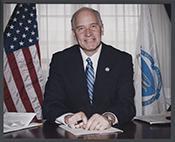
U.S. Representative for Massachusetts’s 9th district
Democrat
119th Congress, two-year term
Missed 4.6% of roll calls. Chamber median 1.9%.
The full voting recordCounts roll calls where most Democrats and most Republicans voted differently, leaving out procedural votes.
How we countFrom FEC filings, Voteview roll calls and Congress.gov.
Democrat. In Congress since 2011, 8 terms in total.
Following saves Keating to your list, which Chamber & Street keeps on its server, linked to a cookie on this browser and not to your name or email. Email alerts will come with constituent verification.
Bills and resolutions Keating signed on to as a cosponsor. An original cosponsor signed on the day the bill was introduced. Source: govinfo bill status files, last updated Nov 6, 2026.
John R. Lewis Voting Rights Advancement Act of 2025
Sponsor Terri Sewell (D). Original cosponsor. 221 cosponsors. H.R. 14 on Congress.gov
Introduced
John R. Lewis Voting Rights Advancement Act of 2025
This bill establishes new criteria for determining which states and political subdivisions must obtain preclearance before changes to voting practices may take effect. Preclearance is the process of receiving preapproval from the Department of Justice (DOJ) or the U.S. District Court for the District of Columbia before making legal changes that would affect voting rights.
A state and all of its political subdivisions shall be subject to preclearance of voting practice changes for a 10-year period if, during the previous 25 years:
• 15 or more voting rights violations occurred in the state;
• 10 or more violations occurred, at least 1 of which was committed by the state itself; or
• 3 or more violations occurred and the state administers the elections.
A political subdivision as a separate unit shall also be subject to preclearance for a 10-year period if three or more voting rights violations occurred there during the previous 25 years.
States and political subdivisions that meet certain thresholds regarding minority groups must preclear covered practices before implementation, such as redistricting.
States and political subdivisions must notify the public of changes to voting practices.
The bill authorizes DOJ to require states or political subdivisions to provide certain documents or answers to questions for enforcing voting rights.
The bill outlines factors courts must consider when hearing challenges to voting practices, such as the extent of any history of official voting discrimination in the state or political subdivision.
TREATS Act
Sponsor Donald Norcross (D). Joined Mar 4, 2025. 31 cosponsors. H.R. 1627 on Congress.gov(opens in a new tab)
Introduced
Telehealth Response for E-prescribing Addiction Therapy Services Act or the TREATS Act
This bill permanently allows health care practitioners to prescribe certain controlled substances for treating substance use disorders via telehealth without evaluating the patient in person.
Generally, a health care practitioner may not prescribe a controlled substance via telehealth unless they first conduct an in-person medical evaluation. Federal regulations currently provide a temporary exception to this requirement, allowing practitioners to prescribe schedule II-V controlled substances for legitimate medical purposes (such as treating substance use disorders) via telehealth without an in-person evaluation. However, this temporary regulatory flexibility expires on December 31, 2025.
The bill permanently allows practitioners to prescribe schedule III-V controlled substances for the treatment of a substance use disorder via telehealth without conducting an in-person evaluation. In such instances, a practitioner may conduct a telehealth evaluation using audio-only or audio and video equipment.
Safe Schools Improvement Act
Sponsor Linda Sánchez (D). Original cosponsor. 218 cosponsors. H.R. 1810 on Congress.gov(opens in a new tab)
Introduced
Safe Schools Improvement Act
This bill requires states to direct their local educational agencies (LEAs) to establish policies that prevent and prohibit bullying and harassment of elementary and secondary school students. In particular, these policies must prohibit bullying and harassment based on race, color, national origin, disability, religion, or sex. Sex includes sexual orientation, gender identity, and sex characteristics (including intersex traits).
Further, LEAs must provide (1) students, parents, and educational professionals with annual notice of the conduct prohibited in their disciplinary policies; (2) students and parents with grievance procedures that target such conduct; and (3) the public with annual data on the incidence and frequency of that conduct at the school and LEA level.
The Department of Education must conduct and report on an independent biennial evaluation of programs and policies to combat bullying and harassment in elementary and secondary schools. The National Center for Education Statistics must collect state data to determine the incidence and frequency of the conduct prohibited by LEA disciplinary policies.
ALYSSA Act
Sponsor Josh Gottheimer (D). Joined Mar 3, 2025. 23 cosponsors. H.R. 1524 on Congress.gov(opens in a new tab)
Introduced
Alyssa's Legacy Youth in Schools Safety Alert Act or the ALYSSA Act
This bill requires each local educational agency (LEA), as a condition of receiving federal elementary and secondary education funds, to ensure that each elementary and secondary school served by the LEA is equipped with at least one silent panic alarm for use in a school security emergency.
GUARD VA Benefits Act
Sponsor Chris Pappas (D). Original cosponsor. 137 cosponsors. H.R. 1732 on Congress.gov(opens in a new tab)
Introduced
Governing Unaccredited Representatives Defrauding VA Benefits Act or the GUARD VA Benefits Act
This bill imposes fines on individuals for soliciting, contracting for, charging, or receiving any unauthorized fee or compensation with respect to the preparation, presentation, or prosecution of any claim for Department of Veterans Affairs benefits. The attempted commission of such offenses is also punishable by fine.
PAST Act of 2025
Sponsor Brian Fitzpatrick (R). Original cosponsor. 207 cosponsors. H.R. 1684 on Congress.gov(opens in a new tab)
Introduced
Prevent All Soring Tactics Act of 2025 or the PAST Act of 2025
This bill increases protections for horses at shows, exhibitions, sales, or auctions (horse events) to prevent the practice of soring horses. Generally, the soring of horses includes certain actions taken on horses' limbs to produce higher gaits that may cause pain, distress, inflammation, or lameness.
Specifically, the bill expands existing soring prohibitions under the Horse Protection Act, including by banning the use of certain action devices (e.g., nonprotective boots) on specified horse breeds.
The bill also requires soring inspectors at horse events to be assigned by the Animal and Plant Health Inspection Service (APHIS) of the Department of Agriculture rather than appointed by the management of horse events. APHIS must also license, train, and oversee inspectors to detect and diagnose soring at such events.
Additionally, the bill increases penalties for violations of the act. It also directs APHIS to disqualify horses found to be sore from being shown or exhibited for specified periods. Further, APHIS may permanently disqualify violators from participating in horse events after the third or any subsequent violation.
By way of background, APHIS issued a rule in 2024 to increase efforts to protect horses from soring practices. However, in 2025, a court vacated parts of the rule as exceeding APHIS' statutory authority (e.g., prohibiting the use of certain action devices) while deeming other parts acceptable (e.g., establishing APHIS-designated inspectors). APHIS subsequently delayed the effective date of the rule to December 31, 2026.
Keep Americans Safe Act
Sponsor Diana DeGette (D). Original cosponsor. 145 cosponsors. H.R. 1674 on Congress.gov(opens in a new tab)
Introduced
Keep Americans Safe Act
This bill establishes a new criminal offense for the import, sale, manufacture, transfer, or possession of a large capacity ammunition feeding device (LCAFD).
The bill does not prohibit certain conduct with respect to an LCAFD, including the following:
• importation, sale, manufacture, transfer, or possession related to certain law enforcement efforts, or authorized tests or experiments;
• importation, sale, transfer, or possession related to securing nuclear materials; and
• possession by a retired law enforcement officer.
The bill permits continued possession of, but prohibits sale or transfer of, a grandfathered LCAFD.
Newly manufactured LCAFDs must display serial number identification and the date of manufacture.
Additionally, the bill allows a state or local government to use Edward Byrne Memorial Justice Assistance Grant Program funds to compensate individuals who surrender an LCAFD under a buy-back program.
Pell Grant Sustainability Act
Sponsor Sean Casten (D). Original cosponsor. 41 cosponsors. H.R. 1666 on Congress.gov(opens in a new tab)
Introduced
Pell Grant Sustainability Act
This bill indexes the maximum award amount for Pell Grants to the rate of inflation. The bill also permanently reauthorizes the discretionary statutory authority for the Pell Grant program.
Reaffirming the deep and steadfast United States-Canada partnership and the ties that bind the two countries in support of economic and national security.
Sponsor Mark Amodei (R). Joined Feb 26, 2025. 13 cosponsors. H.Res. 152 on Congress.gov(opens in a new tab)
Introduced
American Dream and Promise Act of 2025
Sponsor Sylvia Garcia (D). Original cosponsor. 221 cosponsors. H.R. 1589 on Congress.gov(opens in a new tab)
Introduced
American Dream and Promise Act of 2025
This bill provides certain non-U.S. nationals (aliens under federal law) with a path to receive permanent resident status and contains other immigration-related provisions.
The Department of Homeland Security (DHS) or the Department of Justice (DOJ) shall provide conditional permanent resident status for 10 years to a qualifying individual who entered the United States as a minor and (1) is deportable or inadmissible, (2) has deferred enforced departure (DED) status or temporary protected status (TPS), or (3) is the child of certain classes of nonimmigrants. The bill imposes various qualifying requirements, such as the individual being continuously physically present in the United States since January 1, 2021, passing a background check, and being enrolled in or having completed certain educational programs.
DHS shall remove the conditions placed on permanent resident status granted under this bill if the individual applies and meets certain requirements, such as completing certain programs at an educational institution, serving in the military, or being employed.
Furthermore, DHS or DOJ shall provide lawful permanent resident status to certain individuals who had TPS, were eligible for TPS, or were eligible for DED status on certain dates. Such individuals must meet certain requirements and apply for such status within three years of this bill's enactment.
This bill also repeals a restriction that bars a state from providing higher education benefits to undocumented individuals unless those benefits are available to all U.S. nationals without regard to residency in the state.
Ethan's Law
Sponsor Rosa DeLauro (D). Original cosponsor. 202 cosponsors. H.R. 1564 on Congress.gov(opens in a new tab)
Introduced
Ethan's Law
This bill establishes a framework to regulate the storage of firearms on residential premises at the federal, state, and tribal levels.
At the federal level, the bill establishes statutory requirements for firearms on residential premises to be safely stored if a minor is likely to gain access without permission or if a resident is ineligible to possess a firearm.
An individual who violates the requirements is subject to criminal penalties. A firearm stored in violation of the requirements is subject to seizure and forfeiture.
At the state and tribal levels, the bill requires the Department of Justice to award grants to implement functionally identical requirements for the safe storage of firearms.
CLEAR Act
Sponsor Hillary Scholten (D). Joined Feb 25, 2025. 55 cosponsors. H.R. 1099 on Congress.gov(opens in a new tab)
Introduced
Recognizing three years of Ukraine defending its sovereign territory against the Russian Federation's second unprovoked assault and full-scale invasion.
Sponsor Jimmy Panetta (D). Original cosponsor. 5 cosponsors. H.Res. 158 on Congress.gov(opens in a new tab)
Introduced
Reaffirming the United States unwavering support for Ukraine's sovereignty, independence, and territorial integrity as Russia's illegal full-scale invasion of Ukraine hits its third year.
Sponsor Gregory Meeks (D). Original cosponsor. 36 cosponsors. H.Res. 155 on Congress.gov(opens in a new tab)
Introduced
Mikaela Naylon Give Kids a Chance Act
Sponsor Michael McCaul (R). Joined Feb 24, 2025. 313 cosponsors. H.R. 1262 on Congress.gov(opens in a new tab)
Passed the House
Give Kids a Chance Act of 2025
This bill expands the Food and Drug Administration’s (FDA’s) authority with respect to research on rare pediatric diseases, including by permitting the FDA to take enforcement action against drug sponsors that fail to satisfy pediatric study requirements and by reauthorizing programs that support pediatric research.
Specifically, the bill
• modifies requirements relating to molecularly targeted pediatric cancer investigations to permit research on new drugs in combination with active ingredients that have already been approved, provided certain conditions are met;
• permits the FDA to take enforcement action against drug sponsors that fail to comply with pediatric study requirements, if such sponsors demonstrated a lack of due diligence in satisfying the requirement;
• renews the FDA’s authority to award priority review vouchers to sponsors of new products intended to treat rare pediatric diseases through September 30, 2029; and
• reauthorizes through FY2027 certain funding for the National Institutes of Health to support priority pediatric research.
The bill also provides statutory authority for the FDA’s interpretation of the orphan drug exclusivity period. The bill specifies, consistent with FDA regulations, that the seven-year market exclusivity period for drugs for rare diseases or conditions (i.e., orphan drugs) prohibits the approval of the same drug for the same approved use or indication with respect to the disease or condition. (In Catalyst Pharmaceuticals, Inc. v. Becerra, a court rejected the FDA’s interpretation and held that orphan drug exclusivity extends to all uses or indications for the disease or condition.)
Stop Forced Organ Harvesting Act of 2025
Sponsor Christopher Smith (R). Original cosponsor. 1 cosponsor. H.R. 1503 on Congress.gov(opens in a new tab)
Passed the House
Stop Forced Organ Harvesting Act of 2025
This bill requires the President to impose sanctions on persons (individuals and entities) involved in forced organ trafficking and authorizes the Department of State to deny or revoke the passports of individuals convicted of certain crimes related to organ trafficking.
Specifically, the President must report to Congress a list of persons that facilitate (1) forced organ harvesting, or (2) trafficking in persons for organ harvesting. For each person on the list, the President must impose property- and visa-blocking sanctions.
Furthermore, the State Department may deny or revoke the passport of an individual who has been convicted of a federal crime of knowingly transferring any human organ for valuable consideration for use in human transplantation, if the individual (1) is subject to imprisonment or supervised release resulting from that conviction, and (2) used a passport or crossed an international border when committing that crime.
Protect U.S. National Security Act
Sponsor Sara Jacobs (D). Joined Feb 18, 2025. 66 cosponsors. H.R. 1196 on Congress.gov(opens in a new tab)
Introduced
Affirming the nature and importance of the North Atlantic Treaty Organization and Article 5 commitments under the North Atlantic Treaty.
Sponsor Gregory Meeks (D). Original cosponsor. 7 cosponsors. H.Res. 135 on Congress.gov(opens in a new tab)
Introduced
This resolution reaffirms the House of Representatives' full and unwavering commitment to the North Atlantic Treaty Organization (NATO). The resolution also (1) reaffirms NATO's open door policy and the right of every state, including Ukraine, to choose its own security arrangements; and (2) underscores the importance of NATO allies dedicating at least 2% of their gross domestic product to national defense or establishing plans to meet that obligation.
Food Deserts Act
Sponsor André Carson (D). Joined Feb 13, 2025. 68 cosponsors. H.R. 484 on Congress.gov(opens in a new tab)
Introduced
Food Deserts Act
This bill establishes a grant program within the Department of Agriculture to reduce food deserts. Under the program, grants are provided to states for revolving funds that support the establishment and operation of grocery stores in underserved communities. Underserved communities are communities that have (1) limited access to affordable, healthy foods, including fresh fruits and vegetables, in grocery retail stores or farmer-to-consumer direct markets; and (2) a high rate of hunger, a high rate of food insecurity, or a high poverty rate.
The bill requires states to use such funds for loans that support grocery stores in underserved communities, including for opening a store (excluding new construction), or supporting an existing store.
In order to qualify for loans, grocery stores must meet criteria enumerated in the bill. For example, grocery stores must (1) emphasize unprocessed, healthful foods; (2) provide staple foods and a variety of raw fruits and vegetables; and (3) charge affordable prices at or below market values.
Further, states must prioritize loan applications from entities that meet criteria related to
• hiring workers from the underserved community,
• providing classes or educational information about a healthful diet,
• sourcing food from local urban farms and gardens, and
• demonstrating existing supply chain relationships in the grocery industry.
Office of Gun Violence Prevention Act of 2025
Sponsor Maxwell Frost (D). Original cosponsor. 136 cosponsors. H.R. 1307 on Congress.gov(opens in a new tab)
Introduced
Office of Gun Violence Prevention Act of 2025
This bill establishes an Office of Gun Violence Prevention within the Department of Justice's (DOJ's) Office of Legal Policy.
Among its duties, the office must coordinate various gun violence prevention efforts that are administered by DOJ, recommend policy options to promote evidence-based gun violence prevention strategies, and promote related data collection.
Supporting the Local Radio Freedom Act.
Sponsor Steve Womack (R). Original cosponsor. 233 cosponsors. H.Con.Res. 12 on Congress.gov(opens in a new tab)
Introduced
This concurrent resolution declares that Congress should not impose any new performance fee, tax, royalty, or other charge relating to the public performance of sound recordings on a local radio station for broadcasting sound recordings over the air, or on any business for such public performance of sound recordings.
AM Radio for Every Vehicle Act of 2025
Sponsor Gus Bilirakis (R). Joined Feb 12, 2025. 317 cosponsors. H.R. 979 on Congress.gov(opens in a new tab)
Passed the House
AM Radio for Every Vehicle Act of 2025
This bill requires the Department of Transportation (DOT) to issue a rule requiring AM radio capabilities to be standard in all new passenger vehicles. (AM radio is often used to deliver emergency alerts and news and entertainment programming; some newer vehicles do not include AM equipment.)
Specifically, this bill applies to passenger vehicles (1) manufactured in the United States for sale in the United States, imported into the United States, or shipped in interstate commerce; and (2) manufactured after the rule's effective date. The rule must require all such vehicles to have devices that can receive signals and play content transmitted by AM stations or digital audio AM stations installed as standard equipment and made easily accessible to drivers.
Prior to the rule's effective date, manufacturers that do not include devices that can access AM radio as standard equipment (1) must inform purchasers of this fact through clear and conspicuous labeling, and (2) may not charge an additional or separate fee for AM radio access.
DOT may assess civil penalties for any violation of the rule. The Department of Justice may also bring a civil action to enjoin a violation.
The rule, including DOT’s authority to enforce it, must expire 10 years after the bill’s enactment.
Further, the Government Accountability Office must study and report on the dissemination of emergency alerts to the public, including by conducting an assessment of AM radio relative to other Integrated Public Alert and Warning System communication technologies.
Condemning the treatment of Dr. Gubad Ibadoghlu by the Government of Azerbaijan and urging his immediate release, and for other purposes.
Sponsor David Rouzer (R). Joined Feb 11, 2025. 61 cosponsors. H.Res. 120 on Congress.gov(opens in a new tab)
Introduced
This resolution condemns Azerbaijan for its treatment of Dr. Gubad Ibadoghlu, practice of wrongful detention, and suppression of academic freedom. The resolution also calls for Dr. Ibadoghlu's immediate and unconditional release and for the Department of State to prioritize his well-being and release in all engagements with Azerbaijan.
Proxy Voting for New Parents Resolution
Sponsor Brittany Pettersen (D). Joined Feb 6, 2025. 175 cosponsors. H.Res. 23 on Congress.gov(opens in a new tab)
Introduced
Proxy Voting for New Parents Resolution
This resolution authorizes proxy voting in the House of Representatives for a Member who has given birth or whose spouse has given birth and pregnant Members who are unable to travel safely or have a serious medical condition.
Under the resolution, a qualifying Member may designate a proxy to cast a vote in a committee, the Committee of the Whole, or on the House floor; however, proxies will not be counted for purposes of establishing a quorum. The proxy designation is valid for up to 12 weeks.
To designate a proxy for House and Committee of the Whole votes, the Member must submit a signed and dated letter to the Clerk stating the Member’s qualifying circumstances and the name and state of the Member who has agreed to be designated as proxy. A Member who has designated a proxy according to these requirements may also designate a proxy for committee votes. To designate a proxy for committee votes, the Member must provide the committee chair and ranking minority member with a signed and dated letter specifying another member of the committee to cast a proxy vote.
The resolution further provides that a Member may revoke the proxy authorization by (1) casting the Member’s own vote; (2) recording the Member’s own presence in the House or in the Committee of the Whole; or (3) in a committee, by submitting a signed letter to the chair and ranking minority member.
Taxpayer Data Protection Act
Sponsor Haley Stevens (D). Original cosponsor. 205 cosponsors. H.R. 1101 on Congress.gov(opens in a new tab)
Introduced
Taxpayer Data Protection Act
This bill restricts access to any public money receipt or payment system belonging to the Department of the Treasury.
Specifically, access is limited to authorized Treasury officers, employees, or contractors meeting certain performance standards who have held a qualified position for at least a year, or who hold other qualifications as provided by the bill. The bill specifically prohibits special government employees (i.e., temporary appointees hired to perform specific tasks) from having access to such systems. The bill also provides that an individual accessing such systems shall be treated as an executive branch employee for purposes of federal criminal conflict of interest laws.
Treasury's Office of Inspector General must investigate and report on each instance of unauthorized use or other access of such payment systems.