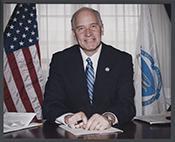
U.S. Representative for Massachusetts’s 9th district
Democrat
119th Congress, two-year term
Missed 4.6% of roll calls. Chamber median 1.9%.
The full voting recordCounts roll calls where most Democrats and most Republicans voted differently, leaving out procedural votes.
How we countFrom FEC filings, Voteview roll calls and Congress.gov.
Democrat. In Congress since 2011, 8 terms in total.
Following saves Keating to your list, which Chamber & Street keeps on its server, linked to a cookie on this browser and not to your name or email. Email alerts will come with constituent verification.
Bills and resolutions Keating signed on to as a cosponsor. An original cosponsor signed on the day the bill was introduced. Source: govinfo bill status files, last updated Nov 6, 2026.
Defending American Diplomacy Act
Sponsor Sydney Kamlager-Dove (D). Original cosponsor. 40 cosponsors. H.R. 2602 on Congress.gov
Introduced
Reentry Act of 2025
Sponsor Paul Tonko (D). Original cosponsor. 86 cosponsors. H.R. 2586 on Congress.gov(opens in a new tab)
Introduced
Reentry Act of 2025
This bill allows for Medicaid payment of medical services furnished to an incarcerated individual during the 30-day period preceding the individual's release. The Medicaid and Children's Health Insurance Program (CHIP) Payment and Access Commission must report on specified information relating to the accessibility and quality of health care for incarcerated individuals, including the impact of the bill's changes.
Hot Foods Act of 2025
Sponsor Grace Meng (D). Original cosponsor. 120 cosponsors. H.R. 2512 on Congress.gov(opens in a new tab)
Introduced
Hot Foods Act of 2025
This bill expands the Supplemental Nutrition Assistance Program (SNAP) to permit the use of SNAP benefits to purchase hot foods or hot food products ready for immediate consumption.
Of inquiry requesting the President and directing the Secretary of State to transmit to the House of Representatives any record created on or after January 20, 2025, under the control of the President or the Secretary, respectively, relating to strikes on the Houthis in Yemen and the disclosure of confidential information to a journalist on the Signal application.
Sponsor Gregory Meeks (D). Original cosponsor. 23 cosponsors. H.Res. 255 on Congress.gov(opens in a new tab)
Introduced
Raise the Age Act of 2025
Sponsor Glenn Ivey (D). Original cosponsor. 176 cosponsors. H.R. 2368 on Congress.gov(opens in a new tab)
Introduced
Raise the Age Act of 2025
This bill establishes new restrictions on the sale or transfer of certain semiautomatic firearms to individuals under 21 years of age.
Specifically, this bill makes it unlawful for a licensed gun dealer, importer, manufacturer, or collector to sell or deliver a semiautomatic center-fire rifle or semiautomatic center-fire shotgun that has (or has the capacity to accept) an ammunition feeding device with a capacity of more than five rounds to an individual who the licensee knows or has reasonable cause to believe is under age 21.
The prohibition does not apply if the individual under age 21 is a full-time law enforcement officer or active-duty member of the Armed Forces.
The bill also requires the Federal Bureau of Investigation to report on the operation of its public access line, including a description of information sharing protocols and recommendations for improving such protocols.
Federal Retirement Fairness Act
Joined Mar 26, 2025. 158 cosponsors. H.R. 1522 on Congress.gov(opens in a new tab)
Progress not on file
United States-Israel Defense Partnership Act of 2025
Sponsor Joe Wilson (R). Joined Mar 26, 2025. 178 cosponsors. H.R. 1229 on Congress.gov(opens in a new tab)
Introduced
United States-Israel Defense Partnership Act of 2025
This bill requires or authorizes certain actions to increase defense-related cooperation between the United States and Israel.
Specifically, the bill requires the Department of Defense (DOD) to
• establish a cooperative program, with the concurrence of Israel's Ministry of Defense (MOD), to develop and deploy advanced technologies for countering unmanned systems that threaten the United States and Israel;
• establish in Israel an office of the Defense Innovation Unit (an organization that focuses on rapidly fielding and scaling commercial technology across the U.S. military); and
• seek to engage Israel's MOD on the ascension of Israel into the national technology and industrial base (currently defined in law as the persons and organizations engaged in research, development, production, integration, services, or information technology activities conducted within the United States, the United Kingdom, Australia, New Zealand, and Canada).
The bill authorizes DOD, upon request of Israel's MOD, to jointly conduct research, development, test, and evaluation (RDT&E) of emerging technologies such as artificial intelligence and robotics to meet defense challenges.
Additionally, the bill extends the authority for DOD to (1) carry out RDT&E on a joint basis with Israel to establish anti-tunnel and counter unmanned aerial systems capabilities through 2028, and (2) transfer defense articles intended for use as reserve stocks for Israel through January 1, 2029.
Department of Education Protection Act
Sponsor Jahana Hayes (D). Joined Mar 25, 2025. 132 cosponsors. H.R. 433 on Congress.gov(opens in a new tab)
Introduced
Department of Education Protection Act
This bill prohibits the use of appropriated funds made available to the Department of Education (ED) to decentralize, reduce the staffing level of, or alter the responsibilities or functionality of ED compared to its organization or operation on January 1, 2025.
Paycheck Fairness Act
Sponsor Rosa DeLauro (D). Original cosponsor. 221 cosponsors. H.R. 17 on Congress.gov(opens in a new tab)
Introduced
Recognizing the significance of equal pay and the disparity between wages paid to men and women.
Sponsor Lois Frankel (D). Original cosponsor. 132 cosponsors. H.Con.Res. 21 on Congress.gov(opens in a new tab)
Introduced
Expressing support for the Nation's local public K-12 schools and condemning any actions that would defund public education or weaken or dismantle the Department of Education.
Sponsor Suzanne Bonamici (D). Joined Mar 24, 2025. 99 cosponsors. H.Res. 94 on Congress.gov(opens in a new tab)
Introduced
This resolution supports federal investment in public K-12 schools, affirms that the Department of Education (ED) plays a vital role in the public education system, and states that public education funding should not be diverted (e.g., through the use of vouchers) to privately run K-12 schools.
The resolution also rejects any claim that the executive branch has the legal authority to (1) dismantle or relocate ED or any of its major offices; or (2) reduce federal funding for public education, block federal grants for education, or transfer funding burdens for education to state and local governments.
HELPER Act of 2025
Sponsor John Rutherford (R). Joined Mar 24, 2025. 154 cosponsors. H.R. 2094 on Congress.gov(opens in a new tab)
Introduced
Homes for Every Local Protector, Educator, and Responder Act of 2025 or the HELPER Act of 2025
This bill establishes a program administered by the Department of Housing and Urban Development to provide mortgage assistance to law enforcement officers, elementary and secondary school teachers, firefighters, or other first responders. Specifically, these individuals may be eligible for a first-time mortgage on a primary family residence with no down payment. Instead, the mortgage is subject to a one-time, up-front mortgage insurance premium.
Protecting Americans’ Social Security Data Act
Sponsor John Larson (D). Joined Mar 24, 2025. 152 cosponsors. H.R. 1877 on Congress.gov(opens in a new tab)
Introduced
Protecting Americans’ Social Security Data Act
This bill prohibits political appointees and special government employees from accessing Social Security data systems that contain personally identifiable information about Social Security beneficiaries.
Specifically, political appointees and special government employees may not access systems maintained by the Social Security Administration (SSA) that issue or record Social Security account numbers, that are used to determine eligibility for or to pay Social Security benefits, or that otherwise contain personally identifiable information about individuals receiving or applying for benefits.
The bill also establishes a civil right of action for an individual whose information was negligently accessed or disclosed in violation of these provisions. The individual may bring suit against the United States if the violator was a U.S. employee or officer, or against the violator if they were not a U.S. employee or officer. Such a claim must be brought within two years of the affected individual’s discovery of the violation. Upon a finding of liability, defendants are liable for specified monetary damages.
If an individual is criminally charged or subject to proposed disciplinary or adverse action by a federal or state agency for having accessed or disclosed information in violation of these provisions, SSA must notify the individual whose information was accessed or disclosed of the violation as soon as practicable.
Finally, the bill requires the SSA Office of the Inspector General to investigate and report to Congress on any unauthorized access to or disclosure of information in a beneficiary data system.
Keeping Our Field Offices Open Act
Sponsor John Larson (D). Joined Mar 24, 2025. 130 cosponsors. H.R. 1876 on Congress.gov(opens in a new tab)
Introduced
Keeping Our Field Offices Open Act
This bill temporarily prohibits the closure or consolidation of, or other limitation of access to, Social Security Administration (SSA) offices and stations, and sets forth procedural requirements for future changes to office and station availability.
Specifically, the bill prohibits through at least January 21, 2029, the closure or consolidation of, or other limitation of access to, SSA field offices, hearing offices, and resident stations. On or after that date, SSA must submit a report to Congress justifying its process for selecting stations and offices to be closed, consolidated, or limited. The prohibition is lifted 180 days after the submission of such report.
The bill also sets forth requirements that must be met before SSA may close, consolidate, or otherwise limit access to an office or station after the initial moratorium expires. At least 120 days before such a change takes effect, SSA must provide public notice to individuals in affected areas, including information on how lost access to SSA services will be replaced. SSA must also conduct at least two public hearings on each such change.
Further, SSA must provide a hearing to any individual who makes a timely showing that a determination to close, consolidate, or limit an office or station is arbitrary, capricious, or deficient in another specified manner.
Finally, a closure, consolidation, or limitation may not result in the total number of SSA offices or stations falling below the number of such offices or stations in operation on January 20, 2025.
Establishing the ratification of the Equal Rights Amendment.
Sponsor Ayanna Pressley (D). Original cosponsor. 221 cosponsors. H.J.Res. 80 on Congress.gov(opens in a new tab)
Introduced
This joint resolution provides that the Equal Rights Amendment, which prohibits discrimination on the basis of sex, was ratified by three-fourths of the states and is therefore a valid constitutional amendment, regardless of any time limit that was in the original proposal.
The Equal Rights Amendment was originally proposed to the states in 1972. The original proposal included a deadline for ratification of March 22, 1979; Congress subsequently extended the deadline to June 30, 1982. Although the requisite 38 states have ratified the amendment, three of these states did so after the deadlines, and five states subsequently rescinded their ratifications. The status of the amendment has been the subject of litigation.
Saving the Civil Service Act
Joined Mar 21, 2025. 112 cosponsors. H.R. 492 on Congress.gov(opens in a new tab)
Progress not on file
Saving the Civil Service Act
This bill generally prohibits changes to the classification of positions in the competitive service and excepted service unless certain conditions are met. (Competitive service positions are subject to competitive examination while excepted service positions are appointed under one of five schedules. Competitive service positions have notice and appeal requirements for adverse actions that are not applicable to most excepted positions, including those of a confidential, policy-determining, policy-making, or policy-advocating character under Schedule C.)
On October 21, 2020, President Donald Trump issued an executive order that placed executive agency positions that are of a confidential, policy-determining, policy-making, or policy-advocating character, and that are not normally subject to change as a result of a presidential transition, under a new Schedule F in the excepted service. The order was subsequently revoked by President Joe Biden.
The bill prohibits executive agency positions in the competitive service from being placed in the excepted service, unless such positions are placed in a schedule in the excepted service as in effect on September 30, 2020. The bill also prohibits positions in the excepted service from being placed in any schedule other than the aforementioned schedules.
Additionally, agencies may not (1) transfer occupied positions from the competitive or excepted service into Schedule C without the consent of the Office of Personnel Management, or (2) transfer employees in the excepted service to another schedule or transfer employees in the competitive service to the excepted service without employee consent.
Air America Act of 2025
Sponsor Glenn Grothman (R). Original cosponsor. 178 cosponsors. H.R. 2192 on Congress.gov(opens in a new tab)
Introduced
Enhanced Iran Sanctions Act of 2025
Sponsor Michael Lawler (R). Joined Mar 18, 2025. 295 cosponsors. H.R. 1422 on Congress.gov(opens in a new tab)
Passed the House
Enhanced Iran Sanctions Act of 2025
This bill imposes sanctions on certain foreign persons (individuals and entities) that are involved in Iran's petroleum sector as well as certain associated persons. The bill also requires or authorizes actions to facilitate the enforcement of sanctions on Iran.
Specifically, the bill requires the President to impose visa- and property-blocking sanctions on any foreign person that, after the bill's enactment, knowingly engages in any transaction related to the processing, export, or sale of oil, condensates, gas, liquefied natural gas, or other petrochemical products in whole or in part from Iran. The President must also impose sanctions on certain foreign persons associated with a sanctioned individual or entity. For example, the President must sanction the subsidiaries and corporate officers of a sanctioned business.
The bill provides certain exceptions to these sanctions, including specifying that sanctions do not apply to the importation of goods or to conducting or facilitating transactions for humanitarian assistance.
The Department of State must establish an interagency working group that shall seek to establish a multilateral contact group to coordinate international efforts to enforce sanctions on Iran.
The bill expands the State Department rewards program to authorize a reward payment to any individual who furnishes information leading to the identification of a person (1) subject to sanctions under this bill, or (2) that has attempted or is attempting to evade sanctions under this bill.
Commission to Study the Creation of a National Museum of Irish American History
Sponsor Brian Fitzpatrick (R). Original cosponsor. 18 cosponsors. H.R. 2121 on Congress.gov(opens in a new tab)
Introduced
Major Richard Star Act
Sponsor Gus Bilirakis (R). Original cosponsor. 340 cosponsors. H.R. 2102 on Congress.gov(opens in a new tab)
Introduced
Major Richard Star Act
This bill allows a veteran with a combat-related disability to receive retirement pay, without reduction, concurrently with their disability compensation. This includes veterans with a combat-related disability and fewer than 20 years of creditable service. (Currently, veterans who receive combat-related special compensation and retirement pay are subject to an offset in retirement pay for concurrent receipt of such benefits.)
Stop Comstock Act
Sponsor Becca Balint (D). Original cosponsor. 146 cosponsors. H.R. 2029 on Congress.gov(opens in a new tab)
Introduced
American Teacher Act
Sponsor Frederica Wilson (D). Original cosponsor. 102 cosponsors. H.R. 2021 on Congress.gov(opens in a new tab)
Introduced
American Teacher Act
This bill establishes grants to increase the minimum salary of public elementary and secondary school teachers. It also authorizes a national campaign regarding the value of the teaching profession.
First, the bill directs the Department of Education (ED) to award four-year grants to state educational agencies (SEAs) and, through them, subgrants to local educational agencies to establish a minimum annual salary of $60,000 (to be adjusted annually for inflation) for these teachers.
Second, the bill directs ED to award grants to eligible SEAs to provide cost-of-living adjustments to the annual base salary of teachers.
Finally, the bill authorizes ED to carry out a national campaign to (1) increase awareness about the importance of teachers and the value of the teaching profession, (2) encourage secondary school and college students to consider teaching as a professional career, and (3) diversify the pool of individuals who enter the teaching profession.
U.S. Engagement in Sudanese Peace Act
Sponsor Gregory Meeks (D). Original cosponsor. 32 cosponsors. H.R. 1939 on Congress.gov(opens in a new tab)
Introduced
U.S. Engagement in Sudanese Peace Act
This bill requires or authorizes certain actions related to the conflict in Sudan, including requiring sanctions on certain foreign persons (individuals or entities) and authorizing U.S. assistance for a multinational force in Sudan.
The bill requires the President to select various sanctions to impose on each foreign person the President determines (1) has knowingly perpetrated, directed, or enabled genocide, war crimes, or crimes against humanity against civilians in Sudan since April 2023; (2) has knowingly engaged in systematic blocking of and interference with the delivery of humanitarian aid to civilians in Sudan since April 2023; or (3) is violating the UN arms embargo on Darfur, a region in western Sudan. Sanctions that may be imposed include blocking of property, blocking of visas, or bans on loans.
The bill also authorizes the Department of State to provide assistance to deploy and sustain a multinational force to advance civilian protection, facilitate humanitarian operations, and monitor any prospective ceasefire in Sudan.
No major defense equipment may be sold, exported, or transferred to any country the President identifies as supporting the Sudanese Armed Forces (Sudan's military) or the Rapid Support Forces (a paramilitary force in conflict with the Sudanese Armed Forces).
The State Department and the U.S. Mission to the United Nations must advocate for and support certain policies in multilateral bodies, such as unimpeded humanitarian access in Sudan and the documentation of atrocities.
The bill extends the position of special envoy for Sudan through December 23, 2029.
Richard L. Trumka Protecting the Right to Organize Act of 2025
Sponsor Robert Scott (D). Original cosponsor. 217 cosponsors. H.R. 20 on Congress.gov(opens in a new tab)
Introduced
Houthi Human Rights Accountability Act
Sponsor Darrell Issa (R). Original cosponsor. 7 cosponsors. H.R. 1848 on Congress.gov(opens in a new tab)
Passed committee