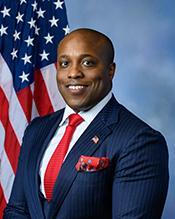
U.S. Representative for Texas’s 38th district
Republican
119th Congress, two-year term
Missed 23.6% of roll calls. Chamber median 1.9%.
The full voting recordCounts roll calls where most Democrats and most Republicans voted differently, leaving out procedural votes.
How we countFrom FEC filings, Voteview roll calls and Congress.gov.
Republican. In Congress since 2023, 2 terms in total.
Following saves Hunt to your list, which Chamber & Street keeps on its server, linked to a cookie on this browser and not to your name or email. Email alerts will come with constituent verification.
Bills and resolutions Hunt signed on to as a cosponsor. An original cosponsor signed on the day the bill was introduced. Source: govinfo bill status files, last updated Nov 6, 2026.
SAVES Act
Sponsor Morgan Luttrell (R). Original cosponsor. 76 cosponsors. H.R. 2605 on Congress.gov
Introduced
SHORT Act
Sponsor Andrew Clyde (R). Original cosponsor. 76 cosponsors. H.R. 2395 on Congress.gov(opens in a new tab)
Introduced
FOCA Act of 2025
Sponsor Clay Higgins (R). Original cosponsor. 107 cosponsors. H.R. 2126 on Congress.gov(opens in a new tab)
Introduced
Fair and Open Competition Act of 2025 or the FOCA Act of 2025
This bill requires that federal contracts for construction projects neither require nor prohibit a bidder, offeror, contractor, or subcontractor from entering into agreements with one or more labor organizations with respect to such projects or related projects.
Under the bill, the controlling documents for federal construction contracts (such as bid specifications and project agreements) may not require or prohibit a bidder, offeror, contractor, or subcontractor from entering into or adhering to such labor agreements. Additionally, the controlling documents may not discriminate against or give preference to a bidder, offeror, contractor, or subcontractor who signs or refuses to sign such a labor agreement.
These requirements also apply to any (1) construction manager acting on behalf of the federal government with respect to such contract, (2) recipient of a federal grant or financial assistance for construction projects or construction manager acting on the recipient's behalf, and (3) party to a federal cooperative agreement for construction projects or construction managers acting on the party's behalf.
An agency may exempt a project from this prohibition to avert an imminent threat to public health or safety or to serve the national security.
Veterans First Act of 2025
Sponsor David Taylor (R). Original cosponsor. 12 cosponsors. H.R. 2083 on Congress.gov(opens in a new tab)
Introduced
Veterans First Act of 2025
This bill rescinds $2 billion of the unobligated funds that were provided to the U.S. Agency for International Development. It also provides $2 billion in appropriations to the Department of Veterans Affairs for grants to assist states to acquire or construct state nursing home and domiciliary facilities and to remodel, modify, or alter existing hospital, nursing home, and domiciliary facilities in state homes for furnishing care to veterans,
Repealing Big Brother Overreach Act
Sponsor Warren Davidson (R). Joined Mar 10, 2025. 193 cosponsors. H.R. 425 on Congress.gov(opens in a new tab)
Passed committee
Repealing Big Brother Overreach Act
This bill repeals the Corporate Transparency Act. The act requires existing companies and newly created companies to report beneficial ownership information to the Department of the Treasury’s Financial Crimes Enforcement Network for purposes of addressing the financing of terrorism and money laundering.
End Congressional Stock Trading Act
Sponsor Tim Burchett (R). Joined Mar 10, 2025. 5 cosponsors. H.R. 1908 on Congress.gov(opens in a new tab)
Introduced
ESA Amendments Act of 2025
Sponsor Bruce Westerman (R). Original cosponsor. 26 cosponsors. H.R. 1897 on Congress.gov(opens in a new tab)
Passed committee
ESA Amendments Act of 2025
This bill reauthorizes through FY2031 the Endangered Species Act and generally narrows protections provided under the act.
The bill directs the Fish and Wildlife Service and the National Marine Fisheries Service to submit a National Listing Work Plan that establishes a five-year schedule and plan for addressing listing of endangered or threatened species and designation of critical habitats for such species. Under the plan, the bill gives the Services flexibility on the timing of acting on listing petitions and eliminates the requirement for the Services to act within 12 months on listing petitions.
The bill limits what land may be designated as critical habitat for an endangered or threatened species.
It also limits protections provided to threatened species and allows a state to regulate the recovery of such species if the Services determine the state's proposed recovery strategy would conserve the species.
The bill provides statutory authority for Conservation Benefit Agreements, which allow private landowners to voluntarily enter agreements to reduce threats to candidate species in exchange for being allowed to continue their operations if the species is later listed.
The bill also modifies the permitting process for certain other voluntary conservation agreements, including by exempting incidental take permits (e.g., permits to harm or kill a species) from environmental review requirements.
The bill also makes a variety of other changes to the act, including limiting consultation requirements, judicial review, and awards for attorneys’ fees in certain cases.
Miracle on Ice Congressional Gold Medal Act
Sponsor Pete Stauber (R). Joined Mar 5, 2025. 299 cosponsors. H.R. 452 on Congress.gov(opens in a new tab)
Became law
Miracle on Ice Congressional Gold Medal Act
This act provides for the award of Congressional Gold Medals to the members of the 1980 U.S. Olympic men's ice hockey team in recognition of the team's achievement at the 1980 Winter Olympic Games.
Enhanced Iran Sanctions Act of 2025
Sponsor Michael Lawler (R). Joined Mar 3, 2025. 295 cosponsors. H.R. 1422 on Congress.gov(opens in a new tab)
Passed the House
Enhanced Iran Sanctions Act of 2025
This bill imposes sanctions on certain foreign persons (individuals and entities) that are involved in Iran's petroleum sector as well as certain associated persons. The bill also requires or authorizes actions to facilitate the enforcement of sanctions on Iran.
Specifically, the bill requires the President to impose visa- and property-blocking sanctions on any foreign person that, after the bill's enactment, knowingly engages in any transaction related to the processing, export, or sale of oil, condensates, gas, liquefied natural gas, or other petrochemical products in whole or in part from Iran. The President must also impose sanctions on certain foreign persons associated with a sanctioned individual or entity. For example, the President must sanction the subsidiaries and corporate officers of a sanctioned business.
The bill provides certain exceptions to these sanctions, including specifying that sanctions do not apply to the importation of goods or to conducting or facilitating transactions for humanitarian assistance.
The Department of State must establish an interagency working group that shall seek to establish a multilateral contact group to coordinate international efforts to enforce sanctions on Iran.
The bill expands the State Department rewards program to authorize a reward payment to any individual who furnishes information leading to the identification of a person (1) subject to sanctions under this bill, or (2) that has attempted or is attempting to evade sanctions under this bill.
United States-Israel Defense Partnership Act of 2025
Sponsor Joe Wilson (R). Joined Mar 3, 2025. 178 cosponsors. H.R. 1229 on Congress.gov(opens in a new tab)
Introduced
United States-Israel Defense Partnership Act of 2025
This bill requires or authorizes certain actions to increase defense-related cooperation between the United States and Israel.
Specifically, the bill requires the Department of Defense (DOD) to
• establish a cooperative program, with the concurrence of Israel's Ministry of Defense (MOD), to develop and deploy advanced technologies for countering unmanned systems that threaten the United States and Israel;
• establish in Israel an office of the Defense Innovation Unit (an organization that focuses on rapidly fielding and scaling commercial technology across the U.S. military); and
• seek to engage Israel's MOD on the ascension of Israel into the national technology and industrial base (currently defined in law as the persons and organizations engaged in research, development, production, integration, services, or information technology activities conducted within the United States, the United Kingdom, Australia, New Zealand, and Canada).
The bill authorizes DOD, upon request of Israel's MOD, to jointly conduct research, development, test, and evaluation (RDT&E) of emerging technologies such as artificial intelligence and robotics to meet defense challenges.
Additionally, the bill extends the authority for DOD to (1) carry out RDT&E on a joint basis with Israel to establish anti-tunnel and counter unmanned aerial systems capabilities through 2028, and (2) transfer defense articles intended for use as reserve stocks for Israel through January 1, 2029.
Expressing support for the Iranian people's desires for a democratic, secular, and nonnuclear Republic of Iran, and condemning the Iranian regime's terrorism, regional proxy war, internal suppression, and for other purposes.
Sponsor Tom McClintock (R). Original cosponsor. 230 cosponsors. H.Res. 166 on Congress.gov(opens in a new tab)
Introduced
AM Radio for Every Vehicle Act of 2025
Sponsor Gus Bilirakis (R). Joined Feb 24, 2025. 317 cosponsors. H.R. 979 on Congress.gov(opens in a new tab)
Passed the House
AM Radio for Every Vehicle Act of 2025
This bill requires the Department of Transportation (DOT) to issue a rule requiring AM radio capabilities to be standard in all new passenger vehicles. (AM radio is often used to deliver emergency alerts and news and entertainment programming; some newer vehicles do not include AM equipment.)
Specifically, this bill applies to passenger vehicles (1) manufactured in the United States for sale in the United States, imported into the United States, or shipped in interstate commerce; and (2) manufactured after the rule's effective date. The rule must require all such vehicles to have devices that can receive signals and play content transmitted by AM stations or digital audio AM stations installed as standard equipment and made easily accessible to drivers.
Prior to the rule's effective date, manufacturers that do not include devices that can access AM radio as standard equipment (1) must inform purchasers of this fact through clear and conspicuous labeling, and (2) may not charge an additional or separate fee for AM radio access.
DOT may assess civil penalties for any violation of the rule. The Department of Justice may also bring a civil action to enjoin a violation.
The rule, including DOT’s authority to enforce it, must expire 10 years after the bill’s enactment.
Further, the Government Accountability Office must study and report on the dissemination of emergency alerts to the public, including by conducting an assessment of AM radio relative to other Integrated Public Alert and Warning System communication technologies.
No Censors on our Shores Act of 2025
Sponsor Darrell Issa (R). Joined Feb 24, 2025. 5 cosponsors. H.R. 1071 on Congress.gov(opens in a new tab)
Introduced
No Censors on our Shores Act
This bill makes certain non-U.S. nationals (aliens under federal law) who were involved in conduct that would have been in violation of the First Amendment to the Constitution if it had occurred in the United States (1) inadmissible for entry into the United States, and (2) deportable.
Specifically, the bill applies to an individual who, while serving as a foreign government official, carried out or was responsible for activity against a U.S. citizen located in the United States that would have violated the First Amendment if committed by a U.S. government official in the United States.
Resolution designating the House Press Gallery (Rooms H-315, H-316, H-317, H-318, and H-319 in the United States Capitol) as the 'Frederick Douglass Press Gallery’
Sponsor Byron Donalds (R). Original cosponsor. 5 cosponsors. H.Res. 137 on Congress.gov(opens in a new tab)
Passed the House
This resolution designates the House of Representatives Press Gallery (rooms H-315, H-316, H-317, H-318, and H-319) as the Frederick Douglass Press Gallery.
One Flag for All Act
Sponsor Diana Harshbarger (R). Original cosponsor. 25 cosponsors. H.R. 1313 on Congress.gov(opens in a new tab)
Introduced
Freight RAILCAR Act of 2025
Sponsor Darin LaHood (R). Original cosponsor. 68 cosponsors. H.R. 1200 on Congress.gov(opens in a new tab)
Introduced
To repeal the Impoundment Control Act of 1974.
Sponsor Andrew Clyde (R). Original cosponsor. 25 cosponsors. H.R. 1180 on Congress.gov(opens in a new tab)
Introduced
This bill repeals the Impoundment Control Act of 1974 (ICA). The ICA generally limits the authority of the President to impound (i.e., withhold from obligation or expenditure) funds that have been appropriated by Congress and establishes related procedures. It also establishes expedited legislative procedures that Congress may use to consider legislation to enact rescissions proposed by the President.
Superior National Forest Restoration Act of 2025
Sponsor Pete Stauber (R). Original cosponsor. 11 cosponsors. H.R. 978 on Congress.gov(opens in a new tab)
Introduced
Promoting Domestic Energy Production Act
Sponsor Mike Carey (R). Original cosponsor. 43 cosponsors. H.R. 662 on Congress.gov(opens in a new tab)
Introduced
Promoting Domestic Energy Production Act
This bill allows corporations to reduce their adjusted financial statement income to account for certain intangible costs related to oil, gas, or geothermal well drilling and development for purposes of calculating the corporate alternative minimum tax.
Under current law, a 15% corporate alternative minimum tax is imposed on a corporation with adjusted financial statement income exceeding an average of $1 billion for a consecutive three-year period (or an average of $100 million for a U.S. corporation that is part of a foreign parent multinational group if the adjusted financial statement income of such group exceeds an average of $1 billion for a consecutive three-year period). Adjusted financial statement income generally is the net income or loss reported on the corporation’s applicable financial statement for a tax year, with adjustments for specific items.
This bill expands the reductions that may be made to a corporation’s adjusted financial statement income to include (1) intangible drilling and development costs incurred by an operator of a domestic oil, gas, or geothermal well that are allowed as a deduction in the current tax year when computing regular taxable income; and (2) any depletion expenses related to the intangible oil, gas, or geothermal well drilling and development costs.
To remove the lesser prairie-chicken from the lists of threatened species and endangered species published pursuant to the Endangered Species Act of 1973 and to amend that Act to exclude the lesser prairie-chicken from the authority of that Act.
Sponsor Tracey Mann (R). Original cosponsor. 17 cosponsors. H.R. 587 on Congress.gov(opens in a new tab)
Introduced
This bill removes the lesser prairie-chicken (Tympanuchus pallidicinctus), including each of its distinct population segments, from the threatened and endangered species lists that are published under the Endangered Species Act of 1973. Further, the bill prohibits the U.S. Fish and Wildlife Service from designating such species as threatened or endangered, and thus, protecting such species under such act.
Fix Our Forests Act
Sponsor Bruce Westerman (R). Joined Jan 21, 2025. 56 cosponsors. H.R. 471 on Congress.gov(opens in a new tab)
Passed the House
Fix Our Forests Act
This bill establishes requirements for managing forests on federal land, including requirements concerning reducing wildfire threats, expediting the review of certain forest management projects, and implementing forest management projects and other activities.
Specifically, the bill (1) designates certain firesheds at high risk for wildfires as fireshed management areas; (2) directs the U.S. Forest Service and U.S. Geological Survey to jointly establish an interagency Fireshed Center that is responsible for duties related to assessing and predicting fire, including maintaining a fireshed registry on a publicly accessible website that provides interactive geospatial data on individual firesheds; and (3) makes other requirements related to reducing wildfire.
Next, the bill expedites the review of certain forest management projects under the National Environmental Policy Act (NEPA) of 1969 and exempts certain activities from NEPA review. It also establishes intra-agency strike teams to accelerate the review and any interagency consultation processes under NEPA, the Endangered Species Act of 1973, and the National Historic Preservation Act. It also limits consultation requirements concerning threatened and endangered species under the Forest and Rangeland Renewable Resources Planning Act of 1974 and the Federal Land Management and Policy Act of 1976. Finally, it limits litigation involving fireshed management projects and limits remedies that courts may provide.
Additionally, the bill supports reducing community wildfire risks, carrying out forest restoration and stewardship activities (including watershed protection and restoration), conducting biochar demonstration projects, advancing technologies to address forest wildfires, and assisting wildland firefighters and their families.
Make the Migrant Protection Protocols Mandatory Act of 2025
Sponsor Roger Williams (R). Original cosponsor. 40 cosponsors. H.R. 551 on Congress.gov(opens in a new tab)
Introduced
Make the Migrant Protection Protocols Mandatory Act of 2025
This bill requires the Department of Justice (DOJ) to remove certain non-U.S. nationals (aliens under federal law) from the United States while such an individual's application for admission is pending.
Specifically, if such an individual arrived by land from a foreign country bordering the United States and the individual is not clearly and beyond a doubt entitled to admission into the United States, DOJ must return that individual to that bordering foreign country while the individual's application for admission is pending. (Currently, DOJ may choose to detain such an individual or return the individual to the bordering foreign country while the application for admission is pending.)
Offshore Lands Authorities Act of 2025
Sponsor Clay Higgins (R). Original cosponsor. 25 cosponsors. H.R. 513 on Congress.gov(opens in a new tab)
Introduced
Offshore Lands Authorities Act of 2025
This bill limits the withdrawal of unleased lands of the Outer Continental Shelf (OCS) from areas that may be leased for mineral development and nullifies certain past withdrawals. The OCS includes the federally managed ocean area extending from the outer boundaries of state-controlled waters (generally 3 nautical miles [nmi] from shore) to 200 nmi from shore, with some exceptions.
Specifically, the bill limits the President's authority to restrict offshore development of minerals, such as oil and gas, on the OCS. For example, the bill (1) caps the number of acres of OCS lands that a President may withdraw from areas that may be leased; (2) prohibits withdrawals from being made for a period longer than 20 years; (3) prohibits the President from making withdrawals of unleased land that conflict with areas included in lease sales scheduled under approved oil and gas leasing programs; and (4) prohibits the President from withdrawing unleased lands unless the Department of the Interior has completed assessments addressing issues such as mineral resources and the national security, economic, and energy value of the identified mineral deposits.
The President must also obtain congressional approval before withdrawing more than 500,000 acres cumulatively. Further, the bill gives Congress the authority to review and disapprove withdrawals by enacting a joint resolution.
In addition, the bill nullifies certain presidential memoranda and executive orders related to withdrawing unleased land from areas that may be leased for the development of oil, gas, or other minerals on the OCS.
Hershel Woody Williams National Medal of Honor Monument Location Act
Sponsor Blake Moore (R). Joined Jan 16, 2025. 8 cosponsors. H.R. 186 on Congress.gov(opens in a new tab)
Passed the House
Hershel "Woody" Williams National Medal of Honor Monument Location Act
This bill requires the authorized monument honoring Medal of Honor recipients to be located within the Reserve (the great cross-axis of the National Mall, which generally extends from the Capitol to the Lincoln Memorial and from the White House to the Jefferson Memorial).
Justice for Jocelyn Act
Sponsor Troy Nehls (R). Original cosponsor. 7 cosponsors. H.R. 355 on Congress.gov(opens in a new tab)
Introduced
Justice for Jocelyn Act
This bill limits Immigration and Customs Enforcement’s (ICE’s) Alternatives to Detention program, which supervises non-U.S. nationals (aliens under federal law) subject to removal who are released from the custody of the Department of Homeland Security (DHS). Specifically, releases under this program are prohibited unless all detention beds are filled and DHS found no alternatives after exercising and exhausting all reasonable options.
The bill requires all individuals on ICE’s nondetained docket to be enrolled in the program and be subject to continuous GPS monitoring and curfew.
Further, the bill requires a non-U.S. national who was arrested and released to be removed in absentia if an immigration officer submits an affidavit to an immigration judge stating that the individual failed to comply with a condition of release.