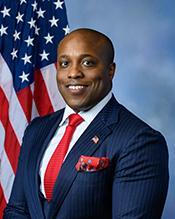
U.S. Representative for Texas’s 38th district
Republican
119th Congress, two-year term
Missed 23.6% of roll calls. Chamber median 1.9%.
The full voting recordCounts roll calls where most Democrats and most Republicans voted differently, leaving out procedural votes.
How we countFrom FEC filings, Voteview roll calls and Congress.gov.
Republican. In Congress since 2023, 2 terms in total.
Following saves Hunt to your list, which Chamber & Street keeps on its server, linked to a cookie on this browser and not to your name or email. Email alerts will come with constituent verification.
Bills and resolutions Hunt signed on to as a cosponsor. An original cosponsor signed on the day the bill was introduced. Source: govinfo bill status files, last updated Nov 6, 2026.
Secure Commercial Driver Licensing Act of 2025
Sponsor Andy Barr (R). Joined Dec 9, 2025. 6 cosponsors. H.R. 5767 on Congress.gov
Introduced
Federal Carjacking Enforcement Act
Sponsor Barry Moore (R). Original cosponsor. 24 cosponsors. H.R. 6155 on Congress.gov(opens in a new tab)
Introduced
Nancy Gardner Sewell Medicare Multi-Cancer Early Detection Screening Coverage Act
Sponsor Jodey Arrington (R). Joined Nov 17, 2025. 338 cosponsors. H.R. 842 on Congress.gov(opens in a new tab)
Introduced
Nancy Gardner Sewell Medicare Multi-Cancer Early Detection Screening Coverage Act
This bill allows, beginning in 2028, for Medicare coverage and payment for multi-cancer early detection screening tests that are approved by the Food and Drug Administration and that are used to screen for cancer across many cancer types, if the Centers for Medicare & Medicaid Services determines such coverage is appropriate. Coverage is limited to those under a certain age (age 68 in 2028, increased by one year every year thereafter) and to one test every 11 months.
Criminal Alien Removal Clarification Act of 2025
Sponsor Paul Gosar (R). Original cosponsor. 23 cosponsors. H.R. 6057 on Congress.gov(opens in a new tab)
Introduced
Justice for ALS Veterans Act of 2025
Sponsor Brian Fitzpatrick (R). Joined Nov 17, 2025. 32 cosponsors. H.R. 1685 on Congress.gov(opens in a new tab)
Introduced
Justice for ALS Veterans Act of 2025
This bill extends increased dependency and indemnity compensation to the surviving spouse of a veteran who dies from amyotrophic lateral sclerosis (ALS or Lou Gehrig's disease) regardless of how long the veteran had such disease prior to death. Under current law, such compensation is paid for a service-connected disability that was rated totally disabling for a continuous period of at least eight years immediately preceding death.
For purposes of compensation for a surviving spouse of a veteran who dies from ALS, the spouse must have been married to the veteran for a continuous period of eight years or longer prior to the death of the veteran.
Additionally, the Department of Veterans Affairs (VA) must report on service-connected disabilities the VA determines should be treated in the same manner as ALS for purposes of dependency and indemnity compensation.
Condemning the persecution of Christians in Nigeria and standing ready to support President Donald J. Trump in taking decisive action to end the existential threat that persecuted Christians face in Nigeria.
Sponsor Riley Moore (R). Original cosponsor. 39 cosponsors. H.Res. 866 on Congress.gov(opens in a new tab)
Introduced
Honoring the service and sacrifice of America's veterans on Veterans Day, 2025.
Sponsor Michael Guest (R). Original cosponsor. 100 cosponsors. H.Res. 864 on Congress.gov(opens in a new tab)
Introduced
This resolution honors the service and sacrifice of America's veterans.
Commending President Trump for Redesignating Nigeria a Country of Particular Concern due to Nigeria's engagement in and tolerating systematic, ongoing, and egregious violations of religious freedom, and for other purposes.
Sponsor Christopher Smith (R). Joined Nov 7, 2025. 29 cosponsors. H.Res. 860 on Congress.gov(opens in a new tab)
Introduced
National Cemetery Access Act
Sponsor Troy Downing (R). Original cosponsor. 17 cosponsors. H.R. 5942 on Congress.gov(opens in a new tab)
Introduced
National Cemetery Access Act
This bill requires that national cemeteries administered by the Department of Defense, Department of Veterans Affairs, or the National Park Service must be open to visitors on the 11 legal public holidays (e.g., Memorial Day).
No Tax Exemptions For Terror Act
Sponsor Chip Roy (R). Joined Nov 7, 2025. 20 cosponsors. H.R. 5890 on Congress.gov(opens in a new tab)
Introduced
Expressing support for the goals of National Adoption Day and National Adoption Month by promoting national awareness of adoption and the children awaiting families, celebrating children and families involved in adoption, and encouraging the people of the United States to secure safety, permanency, and well-being for all children.
Sponsor Robert Aderholt (R). Original cosponsor. 50 cosponsors. H.Res. 855 on Congress.gov(opens in a new tab)
Introduced
Veterans’ ACCESS Act of 2025
Sponsor Mike Bost (R). Joined Oct 31, 2025. 88 cosponsors. H.R. 740 on Congress.gov(opens in a new tab)
Passed committee
Veterans' Assuring Critical Care Expansions to Support Servicemembers Act of 2025 or the Veterans' ACCESS Act of 2025
This bill addresses the administration of the Veterans Community Care Program (VCCP) and other Department of Veterans Affairs (VA) health care matters.
Among other provisions regarding the VCCP, the bill
• establishes in statute access standards that determine when a veteran is eligible to receive non-VA care through the VCCP,
• requires the VA to notify veterans regarding their eligibility for care within two business days after the VA is aware the veteran is seeking care, and
• extends the deadline for the submittal of claims under the VCCP by health care entities and providers.
The VA must address its mental health treatment programs by
• establishing a standardized screening process to determine whether a veteran satisfies criteria for priority or routine admission to a mental health residential rehabilitation treatment program or a program for residential care for mental health and substance abuse disorders,
• tracking the performance of medical facilities and Veterans Integrated Service Networks in meeting the requirements for mental health treatment screenings and timely admission to treatment programs under such screenings, and
• establishing an appeal process for when a veteran is denied admission to a covered treatment program or is accepted into a program but not offered bed placement in a timely manner.
Additionally, the VA must establish an online self-service module for veterans to request and manage appointments, track referrals, and appeal and track decisions related to requests for care.
Firearm Access During Shutdowns Act
Sponsor Ben Cline (R). Original cosponsor. 112 cosponsors. H.R. 5874 on Congress.gov(opens in a new tab)
Introduced
Firearm Access During Shutdowns Act
This bill requires various federal agencies to continue certain operations, functions, and services related to firearms during a government shutdown.
The bill applies to
• the Federal Bureau of Investigation's National Instant Criminal Background Check System, including the processing of background checks in support of the operations of the Directorate of Enforcement Programs and Services of the Bureau of Alcohol, Tobacco, Firearms and Explosives (ATF);
• the ATF's Directorate of Enforcement Programs and Services;
• the activities of the Department of Commerce's Bureau of Industry and Security relating to firearms and firearm-related products, including activities related to processing of applications for export licenses; and
• the activities of the Department of State's Directorate of Defense Trade Controls relating to firearms and firearm-related products, including activities related to processing of applications for export licenses.
Under the bill, (1) these operations, functions, and services are deemed to relate to an emergency involving the safety of human life or the protection of property; and (2) employees carrying out the operations, functions, and services are deemed to be excepted employees. (Under an exception in the Antideficiency Act, an employee whose duties involve the safety of human life or the protection of property may be required to work during a government shutdown. Employees who are required to work during a government shutdown because they fall under this or other exceptions are known as excepted employees.)
Skin Substitute Access and Payment Reform Act
Sponsor Earl Carter (R). Joined Oct 28, 2025. 8 cosponsors. H.R. 5768 on Congress.gov(opens in a new tab)
Introduced
Natural Gas Export Expansion Act
Sponsor Michael Cloud (R). Original cosponsor. 10 cosponsors. H.R. 5814 on Congress.gov(opens in a new tab)
Introduced
US-Kazakhstan Trade Modernization Act
Sponsor Jimmy Panetta (D). Joined Oct 24, 2025. 35 cosponsors. H.R. 1024 on Congress.gov(opens in a new tab)
Introduced
US-Kazakhstan Trade Modernization Act
This bill addresses trade between the United States and Kazakhstan.
Specifically, the bill authorizes the President to determine that Section 402 of the Trade Act of 1974 (commonly known as the Jackson-Vanik amendment) does not apply to Kazakhstan. The Jackson-Vanik amendment denies normal trade relations (NTR) status to some current and former nonmarket economy countries unless they comply with certain freedom-of-emigration requirements. Under a provision of this amendment, the President may extend NTR status to a country affected by the amendment by waiving the freedom-of-emigration requirements or determining that the country is not in violation of those requirements, subject to an annual review. Kazakhstan has received temporary NTR status since 1992.
Additionally, the bill authorizes the President to extend permanent NTR status to Kazakhstan.
Cashless Bail Reporting Act
Sponsor Mark Harris (R). Joined Oct 21, 2025. 23 cosponsors. H.R. 5625 on Congress.gov(opens in a new tab)
Passed the House
Cashless Bail Reporting Act
This bill requires the Department of Justice to publish annually a list of state and local governments that permit individuals who are charged with certain criminal offenses that pose a clear threat to public safety and order to be released pending trial on personal recognizance or upon execution of an unsecured appearance bond.
Under the bill, the criminal offenses that pose a threat to public safety and order include criminal offenses involving a violent or sexual act (e.g., burglary, murder, or rape) and offenses that promote public disorder (e.g., looting or vandalism).
On August 25, 2025, President Donald Trump issued an executive order that required the Department of Justice to submit to the Assistant to the President for Homeland Security a list of state and local jurisdictions that have substantially eliminated cash bail as a potential condition for pretrial release for crimes that pose a clear threat to public safety and order, including offenses involving violent, sexual, or indecent acts, or burglary, looting, or vandalism.
No Funding for Lawless Jurisdictions Act
Sponsor Mark Harris (R). Joined Oct 21, 2025. 15 cosponsors. H.R. 5624 on Congress.gov(opens in a new tab)
Introduced
SHUSH Act
Sponsor Michael Cloud (R). Joined Oct 17, 2025. 18 cosponsors. H.R. 850 on Congress.gov(opens in a new tab)
Introduced
Silencers Help Us Save Hearing Act or the SHUSH Act
This bill removes silencers from regulation under certain federal statutes governing the sale, transfer, and possession of firearms.
Specifically, it removes silencers from the list of firearms subject to regulation (i.e., registration and licensing requirements) under the National Firearms Act (NFA). Additionally, it excludes a muffler or silencer from the list of firearms subject to regulation (e.g., background check requirements) under the Gun Control Act of 1968 (GCA).
Finally, the bill does the following:
• preempts state or local laws that tax or regulate firearm silencers,
• specifies that a person who lawfully acquires or possesses a silencer under provisions of the GCA meets the registration and licensing requirements of the NFA,
• eliminates mandatory minimum prison terms for a crime of violence or drug trafficking offense in which a defendant uses or carries a firearm equipped with a silencer or muffler, and
• permits active and retired law enforcement officers to carry a concealed silencer.
Legal Workforce Act
Sponsor Ken Calvert (R). Joined Oct 17, 2025. 45 cosponsors. H.R. 251 on Congress.gov(opens in a new tab)
Introduced
Legal Workforce Act
This bill directs the Department of Homeland Security (DHS) to create an electronic employment eligibility confirmation system modeled after and to replace the E-Verify system, which allows employers and recruiters to verify the immigration status of individuals. The bill also mandates the use of such a system, where currently only some employers, such as those with federal contracts, are required to use E-Verify.
The bill specifies documents that can establish an individual's identity and employment authorization. During the period starting when a job offer is made until three business days after hiring, the individual must attest to his or her employment authorization, and the employer or recruiter must attest that it has examined the individual's required documents.
Employers shall reverify certain types of employees who were not previously verified using E-Verify.
The Social Security Administration shall notify employees if their Social Security number has been used multiple times in an unusual manner. DHS shall establish programs for blocking and suspending misused numbers.
Employers that are required to use the verification system shall not be liable for any employment-related action based on a good-faith reliance on the system.
The bill establishes a phased-in participation deadline for different sizes and categories of employers, including agricultural employers.
The bill increases civil penalties related to hiring individuals without work authorization. It also preempts state laws relating to hiring and employment eligibility verification, but states may use their authority of business licensing to penalize employers for failing to comply with the bill's provisions.
Hearing Protection Act
Sponsor Ben Cline (R). Joined Oct 14, 2025. 151 cosponsors. H.R. 404 on Congress.gov(opens in a new tab)
Introduced
SAFE for America Act of 2025
Sponsor Mike Collins (R). Joined Oct 14, 2025. 59 cosponsors. H.R. 1241 on Congress.gov(opens in a new tab)
Introduced
Security And Fairness Enhancement for America Act of 2025 or SAFE for America Act of 2025
This bill eliminates the diversity visa program. This program provides up to 55,000 visas annually to individuals from countries with low rates of immigration to the United States.
Stopping Border Surges Act
Sponsor Andy Biggs (R). Joined Oct 14, 2025. 41 cosponsors. H.R. 116 on Congress.gov(opens in a new tab)
Introduced
Stopping Border Surges Act
This bill modifies immigration law provisions relating to unaccompanied alien minors and to asylum seekers.
The bill requires the Department of Homeland Security (DHS) to repatriate certain unaccompanied, inadmissible alien children, generally those not at risk of being trafficking victims nor having a fear of persecution. Currently, only inadmissible unaccompanied aliens from neighboring countries are subject to repatriation, and DHS has discretion whether to repatriate.
When the Department of Health and Human Services releases an unaccompanied child to an individual, it shall provide DHS with certain information about that individual, including Social Security number and immigration status.
The bill requires a stricter standard to find a credible fear of persecution and imposes additional rules on credible fear interviews.
If an alien is granted asylum because of fear of persecution in a country, the alien shall be deemed to have renounced asylum status by returning to that country, if there has been no change in the country's conditions.
The bill also (1) expands the definition of what constitutes a frivolous asylum application, (2) imposes additional limitations on eligibility for asylum, (3) shortens the deadline for applying for asylum, and (4) extends the time period an alien seeking asylum must wait before receiving employment authorization.
Any individual who knowingly and willfully makes materially false statements or uses fraudulent documents in asylum-related proceedings shall be fined or imprisoned up to 10 years, or both.
Birthright Citizenship Act of 2025
Sponsor Brian Babin (R). Joined Oct 10, 2025. 95 cosponsors. H.R. 569 on Congress.gov(opens in a new tab)
Introduced
Birthright Citizenship Act of 2025
This bill limits birthright citizenship by redefining what it means to be subject to the jurisdiction of the United States.
Currently, a person born in the United States and subject to U.S. jurisdiction is entitled to citizenship. Under the bill, a person is subject to U.S. jurisdiction if he or she is born to a parent who is (1) a U.S. citizen or national, (2) a lawful permanent resident residing in the United States, or (3) a non-U.S. national (alien under federal law) with a lawful immigration status who is performing active service in the Armed Forces.
The bill does not affect the citizenship or nationality status of any person born before the bill's enactment date.
Nuclear Family Priority Act
Sponsor Elijah Crane (R). Joined Oct 10, 2025. 48 cosponsors. H.R. 2705 on Congress.gov(opens in a new tab)
Introduced
Nuclear Family Priority Act
This bill imposes limits on various types of family-sponsored immigration visas.
The non-U.S. national (alien under federal law) parents of U.S. citizens shall not qualify for visas for immediate relatives, which are not subject to any direct numerical limits. Currently, the spouses, unmarried children under 21, and parents of citizens are considered immediate relatives.
The bill also creates a nonimmigrant visa for such parents of citizens. Such non-U.S. nationals shall not be eligible for employment or any public benefits.
The bill also reduces the baseline annual cap for family-sponsored visas from 480,000 to 88,000, and revises the methods for calculating the cap. Currently, the 480,000 cap may be adjusted depending on various factors but shall not be less than 226,000.
The bill eliminates preference allocations (visa categories subject to various annual caps) for various family-sponsored visas, including those for the siblings and married children of citizens. The bill provides for a preference allocation for the unmarried children under 21 and spouses of permanent residents, subject to the 88,000 annual cap.