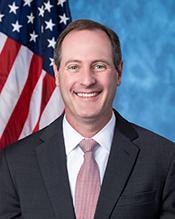
U.S. Representative for Kansas’s 1st district
Republican
119th Congress, two-year term
Missed 0.3% of roll calls. Chamber median 1.9%.
The full voting recordCounts roll calls where most Democrats and most Republicans voted differently, leaving out procedural votes.
How we countFrom FEC filings, Voteview roll calls and Congress.gov.
Republican. In Congress since 2021, 3 terms in total.
Following saves Mann to your list, which Chamber & Street keeps on its server, linked to a cookie on this browser and not to your name or email. Email alerts will come with constituent verification.
Bills and resolutions Mann signed on to as a cosponsor. An original cosponsor signed on the day the bill was introduced. Source: govinfo bill status files, last updated Nov 6, 2026.
Death Tax Repeal Act
Sponsor Randy Feenstra (R). Original cosponsor. 182 cosponsors. H.R. 1301 on Congress.gov
Introduced
Fair SHARE Act of 2025
Sponsor Dusty Johnson (R). Joined Feb 13, 2025. 4 cosponsors. H.R. 1253 on Congress.gov(opens in a new tab)
Introduced
Fair Sharing of Highways and Roads for Electric Vehicles Act of 2025
This bill imposes a new excise tax in the amount of $1,000 on the sale of an electric vehicle and a new excise tax in the amount of $550 on the sale of a battery module weighing over 1,000 pounds for use in an electric vehicle. The bill also requires the Department of the Treasury to transfer amounts collected from the new excise taxes to the Highway Trust Fund. (The Highway Trust Fund, which supports surface transportation programs and projects, is funded by transportation-related excise taxes.)
The bill defines electric vehicle as a light-duty vehicle (a motor vehicle weighing less than 8,500 pounds that is manufactured for use on public roads) that is powered by a battery with a capacity of at least seven kilowatt hours and is recharged through an external source of electricity. Under the bill, the excise tax does not apply to hybrid vehicles, which are powered by a combination of fuel and a rechargeable energy storage system.
The bill defines battery module as a module with two or more battery cells configured to create voltage or current (or no battery cells) and with an aggregate capacity of at least seven kilowatt hours (or one kilowatt hour for a hydrogen fuel cell vehicle).
WARN Act
Sponsor Nicholas Langworthy (R). Joined Feb 13, 2025. 41 cosponsors. H.R. 1076 on Congress.gov(opens in a new tab)
Introduced
Supporting the Local Radio Freedom Act.
Sponsor Steve Womack (R). Original cosponsor. 233 cosponsors. H.Con.Res. 12 on Congress.gov(opens in a new tab)
Introduced
This concurrent resolution declares that Congress should not impose any new performance fee, tax, royalty, or other charge relating to the public performance of sound recordings on a local radio station for broadcasting sound recordings over the air, or on any business for such public performance of sound recordings.
National Right-to-Work Act
Sponsor Joe Wilson (R). Original cosponsor. 129 cosponsors. H.R. 1232 on Congress.gov(opens in a new tab)
Introduced
1071 Repeal to Protect Small Business Lending Act
Sponsor Roger Williams (R). Joined Feb 11, 2025. 52 cosponsors. H.R. 976 on Congress.gov(opens in a new tab)
Introduced
1071 Repeal to Protect Small Business Lending Act
This bill repeals the statute that requires financial institutions to collect data regarding applications for women-owned, minority-owned, or small business loans. Currently, financial institutions must collect and report to the Consumer Financial Protection Bureau information on (1) how many applications were received; (2) the disposition of each application; (3) the type of loan; (4) the amount applied for; (5) the amount approved; and (6) each applicant’s census tract, revenue, race, sex, and ethnicity.
Freight RAILCAR Act of 2025
Sponsor Darin LaHood (R). Original cosponsor. 68 cosponsors. H.R. 1200 on Congress.gov(opens in a new tab)
Introduced
Protecting Access for Hunters and Anglers Act
Sponsor Robert Wittman (R). Joined Feb 7, 2025. 83 cosponsors. H.R. 556 on Congress.gov(opens in a new tab)
Passed the House
Protecting Access for Hunters and Anglers Act of 2025
This bill bars the Fish and Wildlife Service (FWS), the Bureau of Land Management (BLM), and the Forest Service from prohibiting or regulating the use of lead ammunition or tackle on federal land or water. The bill makes exceptions for specified existing regulations and where the FWS, the BLM, or the Forest Service determines that a decline in wildlife population at the specific unit of federal land or water is primarily caused by the use of lead in ammunition or tackle, based on the field data from such unit, and the state approves the regulations.
Supporting the goals and ideals of "Career and Technical Education Month".
Sponsor Glenn Thompson (R). Joined Feb 6, 2025. 44 cosponsors. H.Res. 115 on Congress.gov(opens in a new tab)
Introduced
This resolution supports the designation of Career and Technical Education Month to celebrate career and technical education across the United States.
Educational Choice for Children Act of 2025
Sponsor Adrian Smith (R). Joined Feb 6, 2025. 91 cosponsors. H.R. 833 on Congress.gov(opens in a new tab)
Introduced
Teleabortion Prevention Act of 2025
Sponsor Mark Harris (R). Joined Feb 6, 2025. 18 cosponsors. H.R. 729 on Congress.gov(opens in a new tab)
Introduced
Teleabortion Prevention Act of 2025
This bill restricts the use of telehealth for chemical abortions (also known as medication abortions).
Specifically, it requires a provider who dispenses or prescribes medication for a chemical abortion to physically examine the patient, be physically present at the location of the chemical abortion, and schedule a follow-up visit for the patient. The bill provides an exception for a chemical abortion that is necessary to save the life of a mother whose life is endangered by a physical disorder, illness, injury, or condition.
The bill establishes criminal penalties—a fine, a prison term of up to two years, or both—for a provider who does not comply with the requirements.
A patient who undergoes a chemical abortion may not be prosecuted.
Chiropractic Medicare Coverage Modernization Act of 2025
Sponsor W. Steube (R). Joined Feb 6, 2025. 174 cosponsors. H.R. 539 on Congress.gov(opens in a new tab)
Introduced
Chiropractic Medicare Coverage Modernization Act of 2025
This bill expands Medicare coverage of chiropractic services to include all services provided by chiropractors, rather than only subluxation corrections through manual manipulation of the spine.
Agriculture Export Promotion Act of 2025
Sponsor Dan Newhouse (R). Original cosponsor. 30 cosponsors. H.R. 1086 on Congress.gov(opens in a new tab)
Introduced
Agriculture Export Promotion Act of 2025
This bill extends the Market Access Program (MAP) and the Foreign Market Development (FMD) Program of the Foreign Agricultural Service (FAS) through FY2029 and increases funding for the programs.
Under MAP, FAS provides funds to eligible participants to share the cost of marketing and promotion activities to encourage the development, maintenance, and expansion of commercial export markets for U.S. agricultural commodities. Eligible participants include nonprofit U.S. agricultural trade organizations, state regional trade groups, U.S. agricultural cooperatives, state government agencies, and small businesses.
Under the FMD Program, FAS provides funds to nonprofit U.S. agricultural trade organizations to share the cost of overseas marketing and promotion activities. The FMD program focuses on the generic promotion of U.S. commodities, rather than the promotion of branded products.
Respect State Housing Laws Act
Sponsor Barry Loudermilk (R). Original cosponsor. 58 cosponsors. H.R. 1078 on Congress.gov(opens in a new tab)
Introduced
Respect State Housing Laws Act
This bill eliminates a provision that requires a 30-day notice period before a landlord may begin eviction proceedings against a tenant in federally assisted or federally backed housing.
Antisemitism Awareness Act of 2025
Sponsor Michael Lawler (R). Original cosponsor. 89 cosponsors. H.R. 1007 on Congress.gov(opens in a new tab)
Introduced
Antisemitism Awareness Act of 2025
This bill provides statutory authority for the requirement that the Department of Education’s Office for Civil Rights take into consideration the International Holocaust Remembrance Alliance's (IHRA's) working definition of antisemitism when reviewing or investigating complaints of discrimination based on race, color, or national origin in programs or activities that receive federal financial assistance. According to the IHRA's working definition, antisemitism is a certain perception of Jews, which may be expressed as hatred toward Jews.
ACE Act
Sponsor Eric Burlison (R). Original cosponsor. 5 cosponsors. H.R. 750 on Congress.gov(opens in a new tab)
Introduced
Achieving Choice in Education Act or the ACE Act
This bill expands the expenses that may be paid for with tax-free distributions from a qualified tuition program (known as a 529 plan) to include certain elementary, secondary, and homeschool education expenses and makes other changes related to 529 plans. The bill also limits the tax exclusion for interest on state or local bonds.
Under current law, 529 plan distributions are excluded from gross income if they are used to pay for qualified higher education expenses, which includes up to $10,000 (per year and per beneficiary) for tuition at an elementary or secondary public, private, or religious school.
The bill expands the expenses that may be paid for with tax-free 529 plan distributions to include homeschooling tuition and the following expenses related to elementary, secondary, and homeschool education:
• curriculum,
• books,
• instructional and online educational materials,
• tutoring or educational classes outside the home,
• testing fees,
• fees for dual enrollment in a higher education institution, and
• educational therapies for disabled students.
The bill also increases the amount of tax-free 529 plan distributions that may be used to pay for elementary, secondary, and homeschool education expenses to $20,000.
The bill increases the annual gift tax exclusion by $20,000 for contributions made to a 529 plan. (Under current law, up to $19,000 may be excluded from taxable gifts in 2025.)
Finally, the bill limits the tax exclusion for interest on state or local bonds to bonds issued by states that meet minimum school choice requirements or political subdivisions of such states.
Protect American Election Administration Act of 2025
Sponsor Tom Cole (R). Original cosponsor. 10 cosponsors. H.R. 723 on Congress.gov(opens in a new tab)
Introduced
Protect American Election Administration Act of 2025
This bill generally prohibits a state from soliciting, receiving, or expending any payment or donation of funds, property, or personal services from a private entity for the purpose of administering a federal election. For example, the bill prohibits the use of these payments or donations for programs related to voter education, outreach, and registration.
The prohibition shall not apply to a state's acceptance and use of a private entity's donation of space to be used for a polling place or an early voting site.
MERIT Act of 2025
Sponsor Barry Loudermilk (R). Original cosponsor. 24 cosponsors. H.R. 687 on Congress.gov(opens in a new tab)
Introduced
SAVE Moms and Babies Act of 2025
Sponsor Robert Latta (R). Original cosponsor. 85 cosponsors. H.R. 685 on Congress.gov(opens in a new tab)
Introduced
Support And Value Expectant Moms and Babies Act of 2025 or the SAVE Moms and Babies Act of 2025
This bill prohibits the Food and Drug Administration (FDA) from approving any new drug (either as a brand-name drug or a generic) intended to terminate a pregnancy and imposes additional restrictions on such drugs that are already approved.
Under the bill, an already-approved drug intended to terminate a pregnancy may be dispensed to a patient only with a prescription. Furthermore, the FDA may not approve any labeling change that would authorize (1) using the drug after 70 days of gestation, or (2) dispensing the drug by any means other than in-person administration by the prescribing health care practitioner.
The FDA must also impose additional restrictions on such already-approved drugs, including by (1) requiring the prescribing health care practitioner to receive a special certification, (2) prohibiting the practitioner from also acting as the dispensing pharmacist, and (3) requiring the practitioner to have the ability to provide surgical intervention to the patient.
The bill also rescinds any investigational use exemption already granted to such a drug if the bill would have prohibited the FDA from granting the exemption. (Currently, the FDA may grant an exemption to certain market approval requirements if a drug is intended solely for use in safety and effectiveness investigations.)
Heartbeat Protection Act of 2025
Sponsor Mike Kelly (R). Original cosponsor. 42 cosponsors. H.R. 682 on Congress.gov(opens in a new tab)
Introduced
Heartbeat Protection Act of 2025
This bill makes it a crime for a physician to knowingly perform an abortion (1) without determining whether the unborn child has a detectable heartbeat, (2) without informing the mother of the results, or (3) after determining that an unborn child has a detectable heartbeat.
A physician who performs a prohibited abortion is subject to criminal penalties—a fine, up to five years in prison, or both.
The bill provides an exception for an abortion that is necessary to save the life of a mother whose life is endangered by a physical (but not psychological or emotional) disorder, illness, or condition. It also provides exceptions for certain pregnancies that are the result of rape or incest. A physician who performs or attempts to perform an abortion under an exception must comply with specified requirements.
A woman who undergoes a prohibited abortion may not be prosecuted for violating or conspiring to violate the provisions of this bill.
Promoting Domestic Energy Production Act
Sponsor Mike Carey (R). Original cosponsor. 43 cosponsors. H.R. 662 on Congress.gov(opens in a new tab)
Introduced
Promoting Domestic Energy Production Act
This bill allows corporations to reduce their adjusted financial statement income to account for certain intangible costs related to oil, gas, or geothermal well drilling and development for purposes of calculating the corporate alternative minimum tax.
Under current law, a 15% corporate alternative minimum tax is imposed on a corporation with adjusted financial statement income exceeding an average of $1 billion for a consecutive three-year period (or an average of $100 million for a U.S. corporation that is part of a foreign parent multinational group if the adjusted financial statement income of such group exceeds an average of $1 billion for a consecutive three-year period). Adjusted financial statement income generally is the net income or loss reported on the corporation’s applicable financial statement for a tax year, with adjustments for specific items.
This bill expands the reductions that may be made to a corporation’s adjusted financial statement income to include (1) intangible drilling and development costs incurred by an operator of a domestic oil, gas, or geothermal well that are allowed as a deduction in the current tax year when computing regular taxable income; and (2) any depletion expenses related to the intangible oil, gas, or geothermal well drilling and development costs.
Whole Milk for Healthy Kids Act of 2025
Sponsor Glenn Thompson (R). Original cosponsor. 118 cosponsors. H.R. 649 on Congress.gov(opens in a new tab)
Introduced
Whole Milk for Healthy Kids Act of 2025
This bill revises requirements for milk provided by the National School Lunch Program of the Department of Agriculture (USDA).
Currently, schools participating in the program must provide milk that is consistent with the most recent Dietary Guidelines for Americans; USDA regulations require milk to be fat-free or low-fat and allow milk to be flavored or unflavored. The bill modifies these restrictions and instead permits schools to offer students whole, reduced-fat, low-fat, and fat-free flavored and unflavored milk. The milk that is offered may be organic or nonorganic. Further, USDA may not prohibit a participating school from offering students any of these milk choices.
Further, schools currently must provide a substitute for fluid milk, on receipt of a written statement from a licensed physician, for students whose disability restricts their diet. Under the bill, a parent or legal guardian may also provide the written statement.
In addition, schools currently participating in the program must provide meals that meet certain nutrition requirements; USDA regulations require that the average saturated fat content of the meals offered must be less than 10% of the total calories. Under the bill, fluid milk is excluded from the saturated fat content calculation; milk fat included in any fluid milk provided by the program must not be considered saturated fat for the purposes of measuring compliance with USDA regulations.
Finally, the bill prohibits schools participating in the program from purchasing or offering milk produced by Chinese state-owned enterprises.
Protecting Life on College Campus Act of 2025
Sponsor Chip Roy (R). Joined Jan 23, 2025. 31 cosponsors. H.R. 632 on Congress.gov(opens in a new tab)
Introduced
Protecting Life on College Campus Act of 2025
This bill prohibits the award of federal funds to an institution of higher education (IHE) that hosts or is affiliated with a school-based service site that provides abortion drugs or abortions to its students or to employees of the IHE or the site. An IHE that hosts or is affiliated with a site must, in order to remain eligible for federal funds, annually certify that the site does not provide abortion drugs or abortions to students or employees.
Studying NEPA’s Impact on Projects Act
Sponsor Rudy Yakym (R). Joined Jan 23, 2025. 6 cosponsors. H.R. 573 on Congress.gov(opens in a new tab)
Passed the House
Studying NEPA’s Impact on Projects Act
This bill directs the Council on Environmental Quality (CEQ) to annually report on the impact of the National Environmental Policy Act of 1969 (NEPA) on projects that require NEPA review. CEQ must publish the report on its website and submit it to certain congressional committees. The report must include
• specified information about NEPA litigation, such as the number of cases, the status of cases, and their outcomes;
• the length and costs of the environmental impact statements and environmental assessments prepared; and
• the time it takes to complete environmental reviews under NEPA.
No Taxpayer Funding for Abortion and Abortion Insurance Full Disclosure Act of 2025
Sponsor Christopher Smith (R). Original cosponsor. 133 cosponsors. H.R. 7 on Congress.gov(opens in a new tab)
Introduced
No Taxpayer Funding for Abortion and Abortion Insurance Full Disclosure Act of 2025
This bill modifies provisions relating to federal funding for, and health insurance coverage of, abortions.
Specifically, the bill prohibits the use of federal funds for abortions or for health coverage that includes abortions. Such restrictions extend to the use of funds in the budget of the District of Columbia. Additionally, abortions may not be provided in a federal health care facility or by a federal employee.
Historically, language has been included in annual appropriations bills for the Department of Health and Human Services (HHS) that prohibits the use of federal funds for abortions—such language is commonly referred to as the Hyde Amendment. Similar language is also frequently included in appropriations bills for other federal agencies and the District of Columbia. The bill makes these restrictions permanent and extends the restrictions to all federal funds (rather than specific agencies).
The bill's restrictions regarding the use of federal funds do not apply in cases of rape, incest, or where a physical disorder, injury, or illness endangers a woman's life unless an abortion is performed. The Hyde Amendment provides the same exceptions.
The bill also prohibits qualified health plans from including coverage for abortions. Currently, qualified health plans may cover abortion, but the portion of the premium attributable to abortion coverage is not eligible for subsidies.