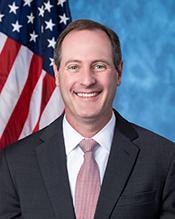
U.S. Representative for Kansas’s 1st district
Republican
119th Congress, two-year term
Missed 0.3% of roll calls. Chamber median 1.9%.
The full voting recordCounts roll calls where most Democrats and most Republicans voted differently, leaving out procedural votes.
How we countFrom FEC filings, Voteview roll calls and Congress.gov.
Republican. In Congress since 2021, 3 terms in total.
Following saves Mann to your list, which Chamber & Street keeps on its server, linked to a cookie on this browser and not to your name or email. Email alerts will come with constituent verification.
Bills and resolutions Mann signed on to as a cosponsor. An original cosponsor signed on the day the bill was introduced. Source: govinfo bill status files, last updated Nov 6, 2026.
Medicare Patient Access and Practice Stabilization Act of 2025
Sponsor Gregory Murphy (R). Joined Mar 10, 2025. 198 cosponsors. H.R. 879 on Congress.gov
Introduced
Medicare Patient Access and Practice Stabilization Act of 2025
This bill increases certain payment adjustments under the Medicare physician fee schedule for services furnished between April 1, 2025, and January 1, 2026.
American Innovation and R&D Competitiveness Act of 2025
Sponsor Ron Estes (R). Original cosponsor. 81 cosponsors. H.R. 1990 on Congress.gov(opens in a new tab)
Introduced
Promoting Precision Agriculture Act
Sponsor Donald Davis (D). Original cosponsor. 2 cosponsors. H.R. 1985 on Congress.gov(opens in a new tab)
Introduced
Promoting Precision Agriculture Act
This bill requires the Department of Agriculture (USDA) to develop voluntary standards for precision agriculture (i.e., managing, tracking, or reducing crop or livestock production inputs, including seed, feed, fertilizer, chemicals, water, and time at a heightened level of spatial and temporal granularity to improve efficiencies, reduce waste, and maintain environmental quality).
USDA, in consultation with the National Institute of Standards and Technology (NIST) and the Federal Communications Commission (FCC), must develop voluntary, consensus-based, private sector-led interconnectivity standards, guidelines, and best practices for precision agriculture to promote economies of scale and ease the burden of adoption. USDA must (1) coordinate with relevant public and trusted private sector stakeholders and relevant industry organizations, and (2) consult with sector-specific agencies and state and local governments.
Further, in developing the standards, USDA must, in consultation with NIST and the FCC, consider the
• connectivity needs of precision agriculture equipment,
• cybersecurity challenges facing precision agriculture, and
• impact of artificial intelligence on this area.
The Government Accountability Office must periodically assess and report to Congress on the standards.
To nullify the final rule issued by the Environmental Protection Agency relating to "New Source Performance Standards for Greenhouse Gas Emissions From New, Modified, and Reconstructed Fossil Fuel-Fired Electric Generating Units; Emission Guidelines for Greenhouse Gas Emissions From Existing Fossil Fuel-Fired Electric Generating Units; and Repeal of the Affordable Clean Energy Rule".
Sponsor Troy Balderson (R). Joined Mar 10, 2025. 37 cosponsors. H.R. 1651 on Congress.gov(opens in a new tab)
Introduced
Enhanced Iran Sanctions Act of 2025
Sponsor Michael Lawler (R). Joined Mar 10, 2025. 295 cosponsors. H.R. 1422 on Congress.gov(opens in a new tab)
Passed the House
Enhanced Iran Sanctions Act of 2025
This bill imposes sanctions on certain foreign persons (individuals and entities) that are involved in Iran's petroleum sector as well as certain associated persons. The bill also requires or authorizes actions to facilitate the enforcement of sanctions on Iran.
Specifically, the bill requires the President to impose visa- and property-blocking sanctions on any foreign person that, after the bill's enactment, knowingly engages in any transaction related to the processing, export, or sale of oil, condensates, gas, liquefied natural gas, or other petrochemical products in whole or in part from Iran. The President must also impose sanctions on certain foreign persons associated with a sanctioned individual or entity. For example, the President must sanction the subsidiaries and corporate officers of a sanctioned business.
The bill provides certain exceptions to these sanctions, including specifying that sanctions do not apply to the importation of goods or to conducting or facilitating transactions for humanitarian assistance.
The Department of State must establish an interagency working group that shall seek to establish a multilateral contact group to coordinate international efforts to enforce sanctions on Iran.
The bill expands the State Department rewards program to authorize a reward payment to any individual who furnishes information leading to the identification of a person (1) subject to sanctions under this bill, or (2) that has attempted or is attempting to evade sanctions under this bill.
Investing in Rural America Act of 2025
Sponsor Michelle Fischbach (R). Joined Mar 10, 2025. 26 cosponsors. H.R. 1246 on Congress.gov(opens in a new tab)
Introduced
Investing in Rural America Act of 2025
This bill allows Farm Credit System (FCS) institutions to make and participate in loans and commitments (and extend other technical and financial assistance) for essential community facility projects as part of the Department of Agriculture's Community Facilities Direct Loan & Grant Program. This program provides funding to develop essential community facilities in rural areas.
The FCS financing and technical assistance may be provided in order to make capital available to develop, build, maintain, improve, or provide related equipment or other support for essential community facilities in rural communities (e.g., certain facilities that provide healthcare, community support, public safety, educational, or utility services).
Under the bill, the financing provided by an FCS institution may not exceed 15% of the total of all outstanding loans of the institution. Further, an FCS institution must (1) offer at least one non-FCS lending institution an interest in the financing under reasonable terms and conditions acceptable to the borrower, and (2) report the offer to the Farm Credit Administration (FCA).
The FCA must submit an annual report to Congress on the activities undertaken by FCS institutions under this bill, including through the partnerships between FCS institutions and other lending institutions. The FCA must post the report on the administration's website.
New Markets Tax Credit Extension Act of 2025
Sponsor Claudia Tenney (R). Joined Mar 10, 2025. 54 cosponsors. H.R. 1103 on Congress.gov(opens in a new tab)
Introduced
Federal Firearms Licensee Protection Act of 2025
Sponsor John Rutherford (R). Original cosponsor. 145 cosponsors. H.R. 1773 on Congress.gov(opens in a new tab)
Introduced
Federal Firearms Licensee Protection Act of 2025
This bill modifies criminal penalties for an offense involving the theft of a firearm from a licensed importer, manufacturer, or dealer, or from their business premises.
Specifically, the bill does the following:
• increases from 10 to 20 years the maximum prison term, and
• creates a 3- or 5-year mandatory minimum prison term for an offense that occurs during the commission of a burglary or robbery.
An attempt to commit an offense is subject to the same penalties as a substantive offense.
Protecting Privacy in Purchases Act
Sponsor Riley Moore (R). Joined Mar 3, 2025. 132 cosponsors. H.R. 1181 on Congress.gov(opens in a new tab)
Passed the House
Protecting Privacy in Purchases Act
This bill prohibits payment card networks from using merchant codes that distinguish firearms retailers from general-merchandise retailers or sporting-goods retailers.
The Department of Justice must enforce this bill and report annually on the resulting investigations and cases.
Recognizing Gold Shield Families and affirming that their sacrifices and difficulties should not be forgotten.
Sponsor Daniel Meuser (R). Joined Feb 27, 2025. 20 cosponsors. H.Res. 76 on Congress.gov(opens in a new tab)
Introduced
This resolution recognizes and honors Gold Shield Families for their sacrifices and support of their loved ones in service to our nation. Gold Shield Families consist of the families of fallen police officers, firefighters, emergency medical technicians (EMTs), correction officers, emergency dispatch officers, and emergency service providers.
Farm to Fly Act of 2025
Sponsor Max Miller (R). Original cosponsor. 17 cosponsors. H.R. 1719 on Congress.gov(opens in a new tab)
Introduced
Farm to Fly Act of 2025
This bill directs the Department of Agriculture (USDA) to integrate the advancement of sustainable aviation fuels into its programs.
Specifically, this bill includes sustainable aviation fuel as an advanced biofuel for the purposes of several USDA bioenergy programs that primarily provide support and incentives for renewable energy projects.
For purposes of these programs, the bill defines sustainable aviation fuel as liquid fuel, the portion of which is not kerosene, which (1) meets specific international standards, (2) is not derived from coprocessing specific materials (e.g., triglycerides) with a non-biomass feedstock, (3) is not derived from palm fatty acid distillates or petroleum, and (4) is certified as having a lifecycle greenhouse gas emissions reduction percentage of at least 50% compared with petroleum-based jet fuel (based on specific standards and agreements).
In addition, the bill specifically includes fostering and advancing sustainable aviation fuels as part of the Biorefinery, Renewable Chemical, and Biobased Product Manufacturing Assistance Program.
Further, USDA must carry out a comprehensive and integrated pursuit of all USDA mission areas for the advancement of sustainable aviation fuels, including through
• the identification of opportunities to maximize the development and commercialization of the fuels,
• supporting rural economic development through improved sustainability for aviation, and
• advancing public-private partnerships.
Truck Parking Safety Improvement Act
Sponsor Mike Bost (R). Original cosponsor. 54 cosponsors. H.R. 1659 on Congress.gov(opens in a new tab)
Introduced
Truck Parking Safety Improvement Act
This bill directs the Department of Transportation (DOT) to provide competitive grants for projects that provide public parking for commercial motor vehicles and improve the safety of commercial motor vehicle drivers. States, metropolitan planning organizations, tribal governments, and local governments are eligible for these grants.
The grants must be used for projects on federal-aid highways or a facility with reasonable access to such a highway or a freight facility.
A grant recipient may not charge a fee to a commercial motor vehicle driver to access a public parking facility that is constructed, opened, maintained, or improved with a grant under this program.
In providing grants, DOT must determine that
• there is a shortage of commercial motor vehicle parking capacity in the project's corridor;
• the eligible entity has consulted motor carriers, commercial motor vehicle drivers, public safety officials, and private providers of commercial motor vehicle parking regarding the project;
• the project will likely increase the availability or utilization of commercial motor vehicle parking, facilitate the efficient movement of freight, or improve highway safety, traffic congestion, and air quality; and
• the eligible entity has demonstrated the ability to provide for the facility's maintenance and operation.
To the maximum extent practicable, DOT must select grant projects that maximize the geographic dispersion of new commercial motor vehicle parking capacity across the United States.
Nancy Gardner Sewell Medicare Multi-Cancer Early Detection Screening Coverage Act
Sponsor Jodey Arrington (R). Joined Feb 26, 2025. 338 cosponsors. H.R. 842 on Congress.gov(opens in a new tab)
Introduced
Nancy Gardner Sewell Medicare Multi-Cancer Early Detection Screening Coverage Act
This bill allows, beginning in 2028, for Medicare coverage and payment for multi-cancer early detection screening tests that are approved by the Food and Drug Administration and that are used to screen for cancer across many cancer types, if the Centers for Medicare & Medicaid Services determines such coverage is appropriate. Coverage is limited to those under a certain age (age 68 in 2028, increased by one year every year thereafter) and to one test every 11 months.
Protecting Life in Foreign Assistance Act
Sponsor Virginia Foxx (R). Joined Feb 26, 2025. 15 cosponsors. H.R. 1465 on Congress.gov(opens in a new tab)
Introduced
Protect America’s Lands Act
Joined Feb 26, 2025. 22 cosponsors. H.R. 1309 on Congress.gov(opens in a new tab)
Progress not on file
Protect America’s Lands Act
This bill prohibits national securities exchanges from allowing the trade of securities issued by natural asset companies. Natural asset companies are companies that oversee land for conservation, restoration, or for the sustainable management of the natural resources and ecosystem services on that land.
Freedom to Invest in Tomorrow’s Workforce Act
Sponsor Robert Wittman (R). Joined Feb 26, 2025. 203 cosponsors. H.R. 1151 on Congress.gov(opens in a new tab)
Introduced
Freedom to Invest in Tomorrow’s Workforce Act
This bill expands the expenses eligible for tax-free withdrawals from a qualified tuition program (known as a 529 plan) to include tuition, fees (including test fees), books, supplies, equipment, and other expenses related to the enrollment or attendance in a recognized postsecondary credentialing program.
Under the bill, a recognized postsecondary credentialing program includes certain programs identified by a state as providing training services, a program listed in the Web Enabled Approval Management System (WEAMS) maintained by the Department of Veterans Affairs, certain examinations required to obtain or maintain a credential, and other reputable credentialing programs.
Further, under the bill, such programs must be designed for an individual to obtain
• an industry-recognized postsecondary employment credential (e.g., project management professional certificate, advanced emergency medical technician certificate, and welding supervisor certificate),
• a certificate of completion of a registered and certified apprenticeship,
• an occupational or professional license issued or recognized by a state or the federal government (and any certification required for obtaining such license), or
• an associate or baccalaureate degree.
Expressing condolences to the families, friends, and loved ones of the victims of the crash of American Eagle Flight 5342 and PAT 25, and for other purposes.
Sponsor Ron Estes (R). Original cosponsor. 93 cosponsors. H.Res. 153 on Congress.gov(opens in a new tab)
Passed the House
This resolution expresses condolences to the families, friends, and loved ones of the victims of the crash of American Eagle Flight 5342 and the U.S. Army helicopter flying under the call sign PAT 25 near Ronald Reagan Washington National Airport on January 29, 2025.
The resolution also commends the heroic actions of the first responders, emergency services personnel, and all those who aided in the recovery efforts.
Fair Access to Banking Act
Sponsor Andy Barr (R). Joined Feb 24, 2025. 151 cosponsors. H.R. 987 on Congress.gov(opens in a new tab)
Introduced
Fair Access to Banking Act
This bill places restrictions on certain banks, credit unions, and payment card networks if they refuse to do business with a person who complies with the law. Restrictions include prohibiting the use of electronic funds transfer systems and lending programs, termination of an institution's depository insurance, and specified civil penalties.
Banks and other specified financial institutions are allowed to deny financial services to a person only if the denial is justified by a documented failure of that person to meet quantitative, impartial, risk-based standards established in advance by the institution. This justification may not be based upon reputational risks to the institution.
The bill establishes the right for a person to bring a civil action for a violation of this bill.
To amend the Internal Revenue Code of 1986 to modify the railroad track maintenance credit.
Sponsor Mike Kelly (R). Joined Feb 24, 2025. 183 cosponsors. H.R. 516 on Congress.gov(opens in a new tab)
Introduced
This bill increases the annual limit on the tax credit for qualified railroad track maintenance expenses (also referred to as the short line railroad tax credit) and expands eligibility for claiming the credit.
Under current law, the tax credit is limited each tax year to $3,500 multiplied by the sum of the number of miles of railroad track owned or leased by the taxpayer (miles owned or leased) and the number of railroad track miles assigned to the taxpayer by a Class II or III railroad (miles assigned). This bill increases the annual limit to $6,100 multiplied by the sum of miles owned or leased and miles assigned. The $6,100 amount used in the calculation of the tax credit limit is adjusted for inflation for tax years beginning after 2025.
The bill also expands eligibility for the tax credit to include gross expenses for maintaining railroad tracks owned or leased as of January 1, 2024. Under current law, the tax credit is limited to gross expenses for maintaining railroad tracks owned or leased as of January 1, 2015.
PURR Act of 2025
Sponsor Steve Womack (R). Joined Feb 21, 2025. 15 cosponsors. H.R. 597 on Congress.gov(opens in a new tab)
Introduced
Pet Food Uniform Regulatory Reform Act of 2025 or the PURR Act of 2025
This bill establishes the Food and Drug Administration's Center for Veterinary Medicine (CVM) as the sole regulatory authority over pet food for dogs and cats. It also provides certain flexibilities for pet food manufacturers with respect to the types of ingredients they may use and the associated labeling and marketing requirements.
The bill specifies that, with exceptions for certain existing oversight activities, no state or local government may establish, implement, or enforce any authority or requirement relating to pet food marketing or labeling and instead provides for oversight by the CVM.
The bill requires the CVM to review and act on pet food ingredient submissions within 90 days. Additionally, the bill provides a presumption that pet food ingredients are generally recognized as safe (GRAS) if they are recognized as acceptable per the Association of American Feed Control Officials and the CVM does not find otherwise. Manufacturers may voluntarily notify the CVM of ingredients that are considered GRAS but that have not yet been specifically recognized as such.
The bill also allows manufacturers to state, without prior approval, that their products (1) sometimes, but not always, have certain ingredients (e.g., flavors); (2) have certain health benefits (e.g., tartar control); or (3) are human grade or natural, if certain conditions are met.
Main Street Tax Certainty Act
Sponsor Lloyd Smucker (R). Joined Feb 14, 2025. 192 cosponsors. H.R. 703 on Congress.gov(opens in a new tab)
Introduced
Main Street Tax Certainty Act
This bill makes permanent the qualified business income (QBI) tax deduction.
Under current law, individuals, estates, and trusts may deduct the lower of (1) 20% of QBI from a qualified business, qualified real estate investment trust dividends, and qualified publicly traded partnership income; or (2) 20% of taxable income less net capital gain. (Some limitations apply.)
However, under current law, the QBI tax deduction expires after December 31, 2025.
Combating Illicit Xylazine Act
Sponsor Jimmy Panetta (D). Joined Feb 14, 2025. 114 cosponsors. H.R. 1266 on Congress.gov(opens in a new tab)
Passed the House
Combating Illicit Xylazine Act
This bill regulates xylazine under the Controlled Substances Act (CSA).
Xylazine, also known as tranq, is a nonopioid sedative and pain reliever that is approved for use in animals. Recently, the Drug Enforcement Administration (DEA) has reported an increase in trafficking of fentanyl mixed with xylazine.
This bill adds xylazine, including its salts, isomers, and salts of isomers, to schedule III of the CSA. Schedule III controlled substances, including anabolic steroids, buprenorphine, and ketamine, have less potential for abuse than a schedule I or II substance, have a currently accepted medical use, and have low or moderate risk of dependence if abused.
Under the bill, manufacturing, distributing, or dispensing xylazine, or possessing with intent to manufacture, distribute, or dispense xylazine for illicit use is subject to criminal penalties under the CSA. The bill also requires xylazine transactions to be tracked in the drug reporting system maintained by the DEA.
The bill exempts from registration under the CSA persons and entities that possess xylazine (1) lawfully dispensed by a veterinarian or pharmacy and (2) for an animal or for use in certain animal-control or wildlife programs.
The bill also exempts xylazine manufacturers from the CSA's physical security requirements.
Finally, the bill requires the DEA, in coordination with the Food and Drug Administration, to report on (1) the prevalence and impact of illicit xylazine use in the United States, and (2) updated information on the prevalence and proliferation of xylazine trafficking and misuse in the United States.
Collision Avoidance Systems Act of 2025
Sponsor Daniel Webster (R). Original cosponsor. 47 cosponsors. H.R. 1361 on Congress.gov(opens in a new tab)
Introduced
Collision Avoidance Systems Act of 2025
This bill allows for the use of a pulsating light system for vehicle braking.
Specifically, Federal Motor Vehicle Safety Standard Number 108 (Standard 108) must be deemed to allow for the use of a pulsating light system on covered vehicles (i.e., passenger cars, multipurpose passenger vehicles, trucks, buses, trailers, and motorcycles). The Department of Transportation must issue regulations to update Standard 108 to (1) include performance-based standards for pulsating light systems, and (2) allow for the use of the systems on motor vehicles.
As background, Standard 108 regulates all automotive lighting, signaling, and reflective devices. Under the bill, a pulsating light system includes a system for a high-mounted stop lamp in which the lamp pulses rapidly no more than four times and for no more than 1.2 seconds when the brake of the vehicle is applied and then converts to a continuous light (as a normal stop lamp) until the brake is released.
To amend the Clean Air Act with respect to the ethanol waiver for Reid Vapor Pressure under that Act, and for other purposes.
Sponsor Adrian Smith (R). Original cosponsor. 55 cosponsors. H.R. 1346 on Congress.gov(opens in a new tab)
Passed the House
Nationwide Consumer and Fuel Retailer Choice Act of 2025
This bill amends the Clean Air Act to address the limitations on Reid Vapor Pressure (a measure of gasoline's volatility) that are placed on gasoline during the summer ozone season. Specifically, the bill applies the waiver for Reid Vapor Pressure requirements that is applicable to gasoline blended with 10% ethanol (E10) to gasoline blended with up to 15% ethanol (E15). This change allows gasoline that is blended with 10% to 15% ethanol to be sold year-round.
Currently, states may be excluded from the waiver for Reid Vapor Pressure requirements by submitting documentation supporting that the waiver would increase air pollution. The bill nullifies existing state exclusions, but states may submit documentation after enactment of the bill to be excluded going forward.
The bill also modifies the Renewable Fuel Standard Program, which requires transportation fuel sold or introduced into commerce in the United States to contain minimum volumes of renewable fuel. Under the existing program, obligated parties, such as small refineries, must satisfy the volume obligations by either blending renewable fuels into their gasoline or diesel fuel products or by acquiring credits that represent the required renewable fuel volume. The bill directs the Environmental Protection Agency to return compliance credits to small refineries under certain circumstances.
One Flag for All Act
Sponsor Diana Harshbarger (R). Original cosponsor. 25 cosponsors. H.R. 1313 on Congress.gov(opens in a new tab)
Introduced