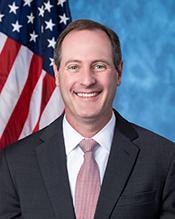
U.S. Representative for Kansas’s 1st district
Republican
119th Congress, two-year term
Missed 0.3% of roll calls. Chamber median 1.9%.
The full voting recordCounts roll calls where most Democrats and most Republicans voted differently, leaving out procedural votes.
How we countFrom FEC filings, Voteview roll calls and Congress.gov.
Republican. In Congress since 2021, 3 terms in total.
Following saves Mann to your list, which Chamber & Street keeps on its server, linked to a cookie on this browser and not to your name or email. Email alerts will come with constituent verification.
Bills and resolutions Mann signed on to as a cosponsor. An original cosponsor signed on the day the bill was introduced. Source: govinfo bill status files, last updated Nov 6, 2026.
RIFLE Act
Sponsor Ashley Hinson (R). Joined Apr 2, 2025. 33 cosponsors. H.R. 2552 on Congress.gov
Introduced
LIZARD Act of 2025
Sponsor August Pfluger (R). Original cosponsor. 1 cosponsor. H.R. 2573 on Congress.gov(opens in a new tab)
Introduced
Southwestern Power Administration Fund Establishment Act
Sponsor Sam Graves (R). Original cosponsor. 4 cosponsors. H.R. 2432 on Congress.gov(opens in a new tab)
Introduced
Safer Skies Act of 2025
Sponsor Nicholas Langworthy (R). Original cosponsor. 52 cosponsors. H.R. 2353 on Congress.gov(opens in a new tab)
Introduced
Safer Skies Act of 2025
This bill directs the Transportation Security Administration (TSA) to require that certain small public charter air carrier operations comply with the Aircraft Operator Standard Security Program (AOSSP).
As background, the TSA has different types of security programs based on the nature of the air carrier’s operations. Currently, the AOSSP requirements apply to all scheduled passenger service with a seating capacity of 61 or more seats that operate into or out of a TSA-controlled sterile area.
The TSA also has other security programs that have less stringent security requirements than the AOSSP. These programs are designed for different types of aircraft operators, including operations under Part 135 (e.g., scheduled commuter flights in smaller aircraft) and Part 380 (e.g., public charter flights) of the Department of Transportation’s regulations.
This bill applies the AOSSP requirements to air carriers operating under Part 135 and Part 380 that (1) operate scheduled public charter service, (2) operate airplanes configured with 10 or more passenger seats, and (3) do not enplane or deplane in a TSA-managed checkpoint.
Dietary Guidelines Reform Act of 2025
Sponsor Ronny Jackson (R). Original cosponsor. 6 cosponsors. H.R. 2326 on Congress.gov(opens in a new tab)
Introduced
Dietary Guidelines Reform Act of 2025
This bill increases the requirements for the Dietary Guidelines for Americans (DGA). The DGA are federally developed recommendations by the Department of Agriculture (USDA) and the Department of Health and Human Services (HHS).
Under the bill, USDA and HHS must jointly publish guidelines at least once every 10 years (currently 5 years), and the final DGA is subject to rulemaking requirements.
The DGA must be based on significant scientific agreement that is determined by evidence-based review. Current law requires that the guidelines be based on a preponderance of current scientific and medical knowledge.
Further, the guidelines must address issues such as (1) high-priority areas to advance health outcomes, (2) achieving nutritional adequacy and promoting health, and (3) common nutrition-related chronic diseases.
In updating the guidelines, USDA and HHS must establish an Independent Advisory Board that must submit a list of scientific questions to be used as the basis for the proposed DGA. Members of the board must (1) have expertise in nutrition science or food science, and (2) disclose all relevant financial and nonfinancial conflicts of interest.
The bill prohibits the DGA from being based on or including topics that are not relevant to dietary guidance (e.g., taxation, social welfare policies, food and agricultural production practices, and race).
The bill provides specified funds through FY2029 to carry out these requirements.
Finally, the bill specifies that the 2020 DGA are the controlling guidelines until new guidelines are published in accordance with these requirements.
FRIDGE Act of 2025
Sponsor Randy Feenstra (R). Original cosponsor. 6 cosponsors. H.R. 2322 on Congress.gov(opens in a new tab)
Introduced
Fortifying Refrigeration Infrastructure and Developing Global Exports Act of 2025 or the FRIDGE Act of 2025
This bill expands the Foreign Market Development Cooperator Program to include funding for technical assistance for infrastructure-related projects to ensure U.S. agricultural commodities are not damaged or lost due to infrastructure deficiencies in new and developing markets. This Foreign Agricultural Service (FAS) program funds projects that address long-term opportunities to reduce foreign import constraints or expand export growth opportunities.
Specifically, the bill directs FAS to enter into contracts or other agreements with trade organizations to enhance the infrastructure capabilities (including cold chain capacity and port improvements) in new and developing foreign markets through needs assessments, training, and other technical assistance.
Firearm Due Process Protection Act of 2025
Sponsor Tom Emmer (R). Joined Mar 25, 2025. 24 cosponsors. H.R. 2184 on Congress.gov(opens in a new tab)
Introduced
Firearm Due Process Protection Act of 2025
This bill expands the grounds for pursuing judicial remedies related to the denial of certain firearm transfers. Additionally, the bill establishes procedural rules applicable to actions for judicial remedies.
Current law authorizes judicial remedies for an individual who is erroneously denied a firearm (e.g., an individual is denied a firearm but the individual is eligible to receive or possess a firearm). This bill authorizes remedies for an individual who experiences an extended delay (i.e., a delay of more than 60 days) on a firearm transfer.
Additionally, the bill requires an expedited hearing on an action for judicial remedies and places the burden of proof on the respondent (i.e., the government) to show that the individual was ineligible to receive or possess a firearm.
Choice in Automobile Retail Sales Act of 2025
Sponsor Tim Walberg (R). Joined Mar 25, 2025. 15 cosponsors. H.R. 2165 on Congress.gov(opens in a new tab)
Introduced
Choice in Automobile Retail Sales Act of 2025
This bill limits the authority of the Environmental Protection Agency (EPA) with regard to regulating emissions standards for new motor vehicles. Specifically, the EPA is prohibited from prescribing a regulation related to new motor vehicle emissions standards that (1) mandates the use of any specific technology, or (2) results in limited availability of new motor vehicles based on the type of new motor vehicle engine.
Aviation Workforce Development Act
Sponsor Mike Collins (R). Joined Mar 25, 2025. 27 cosponsors. H.R. 1818 on Congress.gov(opens in a new tab)
Introduced
Protecting America’s Seniors’ Access to Care Act
Sponsor Michelle Fischbach (R). Joined Mar 25, 2025. 26 cosponsors. H.R. 1303 on Congress.gov(opens in a new tab)
Introduced
Protecting America’s Seniors’ Access to Care Act
This bill prohibits administration, implementation, or enforcement of the rule titled Medicare and Medicaid Programs; Minimum Staffing Standards for Long-Term Care Facilities and Medicaid Institutional Payment Transparency Reporting, which was issued by the Centers for Medicare & Medicaid Services on May 10, 2024.
Specifically, the bill prohibits administration, implementation, or enforcement of provisions that, among other changes, (1) establish minimum staffing standards for nurses in Medicare and Medicaid long-term care facilities, including requiring a nurse to be onsite 24/7 and requiring a minimum of 3.48 total nurse staffing hours per resident per day; and (2) require state Medicaid programs to report on payments to direct care workers and support staff of nursing facilities and intermediate care facilities for individuals with intellectual disabilities.
Pre-Pilot Pathway Act
Sponsor Byron Donalds (R). Joined Mar 24, 2025. 3 cosponsors. H.R. 2182 on Congress.gov(opens in a new tab)
Introduced
Pre-Pilot Pathway Act
This bill directs the Department of Transportation (DOT) to establish an apprenticeship program with flight training providers (e.g., flight schools) in order to establish a commercial pilot pipeline; DOT must issue any necessary regulations to implement the program within one year of the bill's enactment.
Each flight training provider participating in the program may select up to eight applicants (or more applicants based on a determination by DOT) per academic year to serve as apprentices.
DOT must take appropriate actions to develop methods to incentivize pilots, including retired pilots, to become flight school instructors, mentors, or program advisors at participating flight training providers. This includes developing pathway programs for pilots to gain initial qualifications or concurrent qualifications as certified flight instructors.
Further, DOT must conduct an annual review of the apprenticeship program’s effectiveness, including the impact on addressing pilot shortages.
ACRE Act of 2025
Sponsor Randy Feenstra (R). Joined Mar 24, 2025. 63 cosponsors. H.R. 1822 on Congress.gov(opens in a new tab)
Introduced
Expressing the sense that Congress and the administration must work together, with urgency, to pursue effective food and agricultural trade policies.
Sponsor Dusty Johnson (R). Joined Mar 21, 2025. 19 cosponsors. H.Res. 230 on Congress.gov(opens in a new tab)
Introduced
This resolution expresses the sense of Congress that Congress and the Administration must work together to pursue effective food and agricultural trade policies that include specified components. Among others, these components include (1) a renewed commitment to secure market access and maintain global competitiveness for the U.S. food and agriculture industries; and (2) consideration of comprehensive trade agreements, enforcement of existing trade agreements, and elimination of certain nontariff trade barriers.
Airmen Certificate Accessibility Act
Sponsor Tim Burchett (R). Original cosponsor. 1 cosponsor. H.R. 2247 on Congress.gov(opens in a new tab)
Passed the House
Pilot Certificate Accessibility Act
This bill allows a pilot to present a digital copy of certain certificates (e.g., an airman certificate or a medical certificate) when required to present such documentation by a Federal Aviation Administration (FAA) inspector.
Under current FAA regulations, a pilot must present for inspection a physical copy of an airman certificate and other paperwork upon a request from the FAA; a federal, state, or local law enforcement officer; or an authorized representative of the Transportation Security Administration or the National Transportation Safety Board. This bill allows a pilot to present a certificate such as an airman certificate or a medical certificate to an FAA inspector as (1) a physical, original copy; or (2) a digital copy stored on an electronic device or cloud storage platform.
The FAA must update current regulations to implement this change.
Protecting the Right to Keep and Bear Arms Act of 2025
Sponsor Michael Cloud (R). Joined Mar 21, 2025. 36 cosponsors. H.R. 2039 on Congress.gov(opens in a new tab)
Introduced
Protecting the Right to Keep and Bear Arms Act of 2025
This bill prohibits (1) the President or the Department of Health and Human Services from declaring emergencies or disasters for the purpose of imposing gun control; and (2) a federal officer or employee, or person operating under color of federal law or receiving federal funds, from banning the possession, manufacture, sale, or transfer of weapons to which the Second Amendment of the Constitution applies, ammunition, or firearm accessories while acting in support of relief from a major disaster or emergency.
Credit for Caring Act of 2025
Sponsor Mike Carey (R). Joined Mar 21, 2025. 145 cosponsors. H.R. 2036 on Congress.gov(opens in a new tab)
Introduced
Expressing support for the designation of March 18, 2025, as "National Agriculture Day" and celebrating the importance of agriculture as one of the most impactful industries in the United States.
Sponsor Mark Alford (R). Original cosponsor. 44 cosponsors. H.Res. 227 on Congress.gov(opens in a new tab)
Introduced
This resolution supports the designation of National Agriculture Day.
Accelerating Kids’ Access to Care Act of 2025
Sponsor Lori Trahan (D). Joined Mar 18, 2025. 104 cosponsors. H.R. 1509 on Congress.gov(opens in a new tab)
Introduced
Accelerating Kids’ Access to Care Act of 2025
This bill requires states to establish a process through which qualifying out-of-state providers may temporarily treat children under Medicaid and the Children's Health Insurance Program (CHIP) without undergoing additional screening requirements.
Specifically, states must establish a process through which qualifying out-of-state providers may enroll for five years as participating providers to treat individuals under the age of 21 without undergoing additional screening requirements.
A qualifying out-of-state provider (1) must not have been excluded or terminated from participating in a federal health care program or state Medicaid program; and (2) must have been successfully enrolled in Medicare or a state Medicaid program based on a determination that the provider posed a limited risk of fraud, waste, or abuse.
The bill’s changes take effect three years after enactment.
FOCA Act of 2025
Sponsor Clay Higgins (R). Original cosponsor. 107 cosponsors. H.R. 2126 on Congress.gov(opens in a new tab)
Introduced
Fair and Open Competition Act of 2025 or the FOCA Act of 2025
This bill requires that federal contracts for construction projects neither require nor prohibit a bidder, offeror, contractor, or subcontractor from entering into agreements with one or more labor organizations with respect to such projects or related projects.
Under the bill, the controlling documents for federal construction contracts (such as bid specifications and project agreements) may not require or prohibit a bidder, offeror, contractor, or subcontractor from entering into or adhering to such labor agreements. Additionally, the controlling documents may not discriminate against or give preference to a bidder, offeror, contractor, or subcontractor who signs or refuses to sign such a labor agreement.
These requirements also apply to any (1) construction manager acting on behalf of the federal government with respect to such contract, (2) recipient of a federal grant or financial assistance for construction projects or construction manager acting on the recipient's behalf, and (3) party to a federal cooperative agreement for construction projects or construction managers acting on the party's behalf.
An agency may exempt a project from this prohibition to avert an imminent threat to public health or safety or to serve the national security.
AM Radio for Every Vehicle Act of 2025
Sponsor Gus Bilirakis (R). Joined Mar 11, 2025. 317 cosponsors. H.R. 979 on Congress.gov(opens in a new tab)
Passed the House
AM Radio for Every Vehicle Act of 2025
This bill requires the Department of Transportation (DOT) to issue a rule requiring AM radio capabilities to be standard in all new passenger vehicles. (AM radio is often used to deliver emergency alerts and news and entertainment programming; some newer vehicles do not include AM equipment.)
Specifically, this bill applies to passenger vehicles (1) manufactured in the United States for sale in the United States, imported into the United States, or shipped in interstate commerce; and (2) manufactured after the rule's effective date. The rule must require all such vehicles to have devices that can receive signals and play content transmitted by AM stations or digital audio AM stations installed as standard equipment and made easily accessible to drivers.
Prior to the rule's effective date, manufacturers that do not include devices that can access AM radio as standard equipment (1) must inform purchasers of this fact through clear and conspicuous labeling, and (2) may not charge an additional or separate fee for AM radio access.
DOT may assess civil penalties for any violation of the rule. The Department of Justice may also bring a civil action to enjoin a violation.
The rule, including DOT’s authority to enforce it, must expire 10 years after the bill’s enactment.
Further, the Government Accountability Office must study and report on the dissemination of emergency alerts to the public, including by conducting an assessment of AM radio relative to other Integrated Public Alert and Warning System communication technologies.
Charitable Act
Sponsor Blake Moore (R). Joined Mar 11, 2025. 54 cosponsors. H.R. 801 on Congress.gov(opens in a new tab)
Introduced
Charitable Act
This bill allows an individual taxpayer who does not itemize their tax deductions to claim a tax deduction for charitable contributions and eliminates the tax penalty for overstating charitable contributions. (Some limitations apply).
Under the bill, for tax years beginning in 2026 or 2027, an individual taxpayer who does not itemize their tax deductions may deduct charitable contributions of up to one-third of the standard deduction allowed to such individual. (Under current law, an individual taxpayer generally must itemize their tax deductions to deduct charitable contributions.)
The bill also eliminates the tax penalty for an underpayment of taxes attributable to overstated charitable contributions by taxpayers who do not itemize deductions. (Under current law, taxpayers who claim a deduction under this bill may be assessed a tax penalty in the amount of 50% of the portion of an understatement of tax liability attributable to overstated charitable contributions.)
Unlocking our Domestic LNG Potential Act of 2025
Sponsor August Pfluger (R). Joined Mar 11, 2025. 43 cosponsors. H.R. 1949 on Congress.gov(opens in a new tab)
Passed the House
Unlocking our Domestic LNG Potential Act of 2025
This bill repeals certain restrictions on the import and export of natural gas under the Natural Gas Act, including requirements for Department of Energy (DOE) approval and related provisions that address free trade agreements.
In addition, the bill grants the Federal Energy Regulatory Commission (FERC) the exclusive authority to approve or deny applications to authorize the siting, construction, expansion, or operation of facilities (e.g., liquefied natural gas terminals) to export natural gas to foreign countries or import natural gas from foreign countries. (Currently, DOE authorizes the export or import of natural gas, and FERC authorizes related facilities.)
In determining whether to approve or deny an application, FERC must deem the exportation or importation of natural gas to be consistent with the public interest.
Anti-CBDC Surveillance State Act
Sponsor Tom Emmer (R). Joined Mar 11, 2025. 135 cosponsors. H.R. 1919 on Congress.gov(opens in a new tab)
Passed the House
Anti-CBDC Surveillance State Act
This bill prohibits a Federal Reserve bank from offering products or services directly to an individual, maintaining an account on behalf of an individual, or issuing a central bank digital currency (i.e., a digital dollar). Further, the Board of Governors of the Federal Reserve System is prohibited from using a central bank digital currency to implement monetary policy or from testing, studying, creating, or implementing a central bank digital currency, with exceptions as provided by the bill.
Rural Health Care Facility Technical Assistance Program Act
Sponsor Ronny Jackson (R). Joined Mar 11, 2025. 28 cosponsors. H.R. 1417 on Congress.gov(opens in a new tab)
Introduced
Mikaela Naylon Give Kids a Chance Act
Sponsor Michael McCaul (R). Joined Mar 11, 2025. 313 cosponsors. H.R. 1262 on Congress.gov(opens in a new tab)
Passed the House
Give Kids a Chance Act of 2025
This bill expands the Food and Drug Administration’s (FDA’s) authority with respect to research on rare pediatric diseases, including by permitting the FDA to take enforcement action against drug sponsors that fail to satisfy pediatric study requirements and by reauthorizing programs that support pediatric research.
Specifically, the bill
• modifies requirements relating to molecularly targeted pediatric cancer investigations to permit research on new drugs in combination with active ingredients that have already been approved, provided certain conditions are met;
• permits the FDA to take enforcement action against drug sponsors that fail to comply with pediatric study requirements, if such sponsors demonstrated a lack of due diligence in satisfying the requirement;
• renews the FDA’s authority to award priority review vouchers to sponsors of new products intended to treat rare pediatric diseases through September 30, 2029; and
• reauthorizes through FY2027 certain funding for the National Institutes of Health to support priority pediatric research.
The bill also provides statutory authority for the FDA’s interpretation of the orphan drug exclusivity period. The bill specifies, consistent with FDA regulations, that the seven-year market exclusivity period for drugs for rare diseases or conditions (i.e., orphan drugs) prohibits the approval of the same drug for the same approved use or indication with respect to the disease or condition. (In Catalyst Pharmaceuticals, Inc. v. Becerra, a court rejected the FDA’s interpretation and held that orphan drug exclusivity extends to all uses or indications for the disease or condition.)