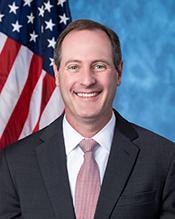
U.S. Representative for Kansas’s 1st district
Republican
119th Congress, two-year term
Missed 0.3% of roll calls. Chamber median 1.9%.
The full voting recordCounts roll calls where most Democrats and most Republicans voted differently, leaving out procedural votes.
How we countFrom FEC filings, Voteview roll calls and Congress.gov.
Republican. In Congress since 2021, 3 terms in total.
Following saves Mann to your list, which Chamber & Street keeps on its server, linked to a cookie on this browser and not to your name or email. Email alerts will come with constituent verification.
Bills and resolutions Mann signed on to as a cosponsor. An original cosponsor signed on the day the bill was introduced. Source: govinfo bill status files, last updated Nov 6, 2026.
Household Goods Shipping Consumer Protection Act
Sponsor Eleanor Norton (D). Joined May 15, 2025. 26 cosponsors. H.R. 880 on Congress.gov
Introduced
Household Goods Shipping Consumer Protection Act
This bill allows the Federal Motor Carrier Safety Administration (FMCSA) to assess civil penalties against motor carriers, brokers, and freight forwarders for violations related to the interstate transportation of household goods and provides states with additional related authorities.
As background, a broker is the “middle person” between a shipper and a motor carrier and arranges for the transportation of household goods. A freight forwarder organizes shipments for individuals or corporations. Unlike a broker, freight forwarders assume responsibility for transportation and may transport the freight itself.
The bill expands the FMCSA registration requirements to require motor carriers, brokers, and freight forwarders to designate a principal place of business (i.e., a single physical location where management officials report to work, a significant portion of the transportation business is conducted, and records are maintained). FMCSA may withhold, suspend, amend, or revoke any part of a registration for failure to designate.
In addition, brokers and freight forwarders must disclose any common ownership, management, control, or familial relationship with any other carrier, freight forwarder, broker, or applicant in the previous three years. Under current law, motor carriers must disclose this information.
Further, states may use certain grant funds to enforce federal household goods statutes and regulations for the interstate transportation of these goods by motor carriers and brokers. This applies to Motor Carrier Safety Assistance Program (MCSAP) grant funds and MCSAP High Priority discretionary grant funds. A state shall retain collected fines that are a result of enforcement.
Maintaining and Enhancing Hydroelectricity and River Restoration Act
Sponsor Adrian Smith (R). Joined May 15, 2025. 19 cosponsors. H.R. 2160 on Congress.gov(opens in a new tab)
Introduced
Maintaining and Enhancing Hydroelectricity and River Restoration Act
This bill establishes a new investment tax credit in the amount of 30% of the basis of any hydropower improvement property.
The bill defines hydropower improvement property as property that
• adds or improves fish passage at a qualified dam;
• maintains or improves the quality of the water retained or released by a qualified dam;
• promotes downstream sediment transport and habitat maintenance;
• upgrades, repairs, or reconstructs a qualified dam to meet safety and security standards;
• improves public uses of, and access to, public waterways impacted by a qualified dam;
• removes an obsolete river obstruction; or
• places into service an approved remote dam.
Further, written approval for hydropower improvement property must be obtained from the Federal Energy Regulatory Commission or state or local officials prior to January 1, 2032.
The bill also allows an election to claim the investment tax credit for qualified progress expenses for some types of hydropower improvement property in advance of such property being placed into service. Any investment tax credit amount claimed for qualified progress expenses reduces the amount of the investment tax credit that may be claimed once the hydropower improvement property is placed into service.
The bill authorizes certain entities, including tax-exempt and governmental entities, to treat the investment tax credit for hydropower improvement property as a payment of tax and receive a refund of any overpayment (also known as elective pay).
Finally, the investment tax credit for hydropower improvement property may be transferred (i.e., sold).
Calling upon local communities to support organizations that provide resources and aid Gold Shield Families in their time of need.
Sponsor Daniel Meuser (R). Joined May 8, 2025. 17 cosponsors. H.Res. 364 on Congress.gov(opens in a new tab)
Passed the House
This resolution encourages local communities throughout the United States to support nonprofit organizations that provide resources to Gold Shield Families during their time of need. Gold Shield Families consist of the families of fallen police officers, firefighters, emergency medical technicians, correction officers, emergency dispatch officers, and emergency service providers.
Air Traffic Control Workforce Development Act of 2025
Sponsor Nicholas Begich (R). Original cosponsor. 31 cosponsors. H.R. 3270 on Congress.gov(opens in a new tab)
Introduced
Air Traffic Control Workforce Development Act of 2025
This bill expands and modifies Air Traffic Control (ATC) workforce training and programs.
The bill provides statutory authority for the Enhanced Air Traffic-Collegiate Training Initiative (AT-CTI) program. As background, standard AT-CTI institutions of higher education offer nonengineering aviation degrees that teach basic courses in ATC and aviation administration, and graduates complete training at the Federal Aviation Administration (FAA) Academy. Students at Enhanced AT-CTI schools are provided with equivalent FAA Academy ATC training and may be placed directly into an ATC facility.
The bill establishes a grant program for schools participating in the Enhanced AT-CTI program and provides for a faculty annuity supplement for ATC instructors at participating institution of higher education.
The FAA must convene an aviation rulemaking committee to review and provide recommendations on the (1) curricula of the FAA Academy, AT-CTI program, and Enhanced AT-CTI program; and (2) Air Traffic Skills Assessment exam. Based on the committee's recommendations, the FAA must initiate a rulemaking or make policy and guidance updates, with an exception.
The bill authorizes funding through FY2031 for the procurement and placement at ATC facilities of Tower Simulator Systems, which are used to train air traffic controllers on airport tower operations.
The bill also requires
• DOT to establish ATC recruitment and retention incentive programs,
• the FAA to support the development of mental health services training related to conditions for ATCs, and
• the FAA to submit a report to Congress on the status of the Airspace Non-cooperative Surveillance Radar program.
Combating Organized Retail Crime Act of 2025
Sponsor David Joyce (R). Joined May 8, 2025. 206 cosponsors. H.R. 2853 on Congress.gov(opens in a new tab)
Passed the House
Combating Organized Retail Crime Act of 2025
This bill expands federal enforcement of criminal offenses related to organized retail and supply chain crime. The term organized retail and supply chain crime includes criminal offenses involving the interstate transportation of stolen property, the sale or receipt of stolen goods, or theft from an interstate or foreign shipment that is committed by, in coordination with, or at the instruction of an organization.
First, with respect to criminal offenses involving the interstate transportation of stolen property or the sale or receipt of stolen goods, the bill broadens the scope of conduct that qualifies as offenses by allowing prosecutions to be based on the aggregate value of stolen items over a 12-month period. Additionally, the bill makes the offenses predicate offenses (i.e., underlying offenses) for prosecutions under the federal money laundering statute and authorizes the criminal forfeiture of any property obtained from the proceeds of an offense.
Second, with respect to criminal offenses involving theft from an interstate or foreign shipment, the bill also makes an offense an underlying offense for prosecution under the federal money laundering statute and authorizes the criminal forfeiture of any associated property.
Third, the bill expands the federal money laundering statute to include offenses involving general-use prepaid cards, gift certificates, or store gift cards.
Finally, the bill temporarily establishes a center within the Department of Homeland Security to coordinate federal law enforcement activities related to organized retail and supply chain crime.
Homebuyers Privacy Protection Act
Sponsor John Rose (R). Joined May 8, 2025. 89 cosponsors. H.R. 2808 on Congress.gov(opens in a new tab)
Became law
Homebuyers Privacy Protection Act
This act limits the circumstances in which credit reporting agencies may provide consumer credit reports to third parties in connection with residential mortgage transactions.
Specifically, the act prohibits a credit reporting agency from providing a consumer's credit report to a third party in connection with a residential mortgage transaction unless the transaction consists of a firm offer of credit or insurance and (1) the third party provides documentation certifying that it has the consumer's consent; or (2) the third party has originated a mortgage on behalf of the consumer, is a current mortgage loan servicer to the consumer, or has a current specified banking relationship with the consumer.
These provisions take effect 180 days after enactment.
The Government Accountability Office must study and report on the value of trigger leads (a marketing tactic facilitated by credit reporting agencies that may result in unsolicited credit offers to a consumer after a consumer applies for a separate type of credit) received by text message.
Military Spouse Hiring Act
Sponsor Donald Beyer (D). Joined May 8, 2025. 130 cosponsors. H.R. 2033 on Congress.gov(opens in a new tab)
Introduced
Military Spouse Hiring Act
This bill allows employers to claim a tax credit for a percentage of qualified wages paid to an employee who is a military spouse by expanding the federal Work Opportunity Tax Credit (WOTC) to add qualified military spouses as a targeted group. (The WOTC applies to employers who hire members of specific targeted groups, such as veterans, ex-felons, and long-term unemployment recipients, and is generally equal to a percentage of the wages paid to such individuals in the first year of employment, up to a maximum amount. Under current law, the wages must be paid before 2026.)
The bill defines a qualified military spouse as any individual who is certified by a state workforce agency as being (as of the hiring date) a spouse of a member of the Armed Forces.
Protecting Access to Ground Ambulance Medical Services Act of 2025
Sponsor Claudia Tenney (R). Joined May 7, 2025. 54 cosponsors. H.R. 2232 on Congress.gov(opens in a new tab)
Introduced
Protecting Access to Ground Ambulance Medical Services Act of 2025
This bill extends the specialized rate increase for Medicare payment of ground ambulance services in rural areas for an additional three years (until January 1, 2028).
Collegiate Housing and Infrastructure Act of 2025
Sponsor Blake Moore (R). Joined May 6, 2025. 24 cosponsors. H.R. 2355 on Congress.gov(opens in a new tab)
Introduced
Expanding Regional Airports Act
Sponsor Gabe Vasquez (D). Original cosponsor. 1 cosponsor. H.R. 3085 on Congress.gov(opens in a new tab)
Introduced
Expanding Regional Airports Act
This bill directs the Department of Transportation (DOT) to establish a grant program for general aviation and nonprimary commercial service airports to improve passenger and flight capacity.
Grants may be used for (1) activities that improve passenger and flight capacity at the airport, including the expansion of passenger and property screening facilities, runway lengthening, construction of hangars and associated infrastructure, and improving passenger facilities; and (2) costs incurred to comply with certain operational and security requirements.
DOT must provide 3 to 10 grants per fiscal year to eligible airports (i.e., general aviation or nonprimary commercial service airports that serve a community with a population of at least 75,000).
Religious Workforce Protection Act
Sponsor Mike Carey (R). Joined Apr 29, 2025. 37 cosponsors. H.R. 2672 on Congress.gov(opens in a new tab)
Introduced
Religious Workforce Protection Act
This bill allows the Department of Homeland Security (DHS) to extend the nonimmigrant visa status of certain religious workers.
Under current law, if specified conditions are met, nonimmigrant religious workers may receive a visa for a period not to exceed five years. The bill allows DHS to grant an extension until the individual’s application for adjustment of status to permanent resident or an immigrant visa has been processed and a decision has been made. To be eligible for the extension, the individual must be (1) the beneficiary of a certain type of immigrant petition, and (2) eligible for such immigrant status absent the application of certain numerical limitations.
Such individuals who have pending adjustment of status applications are also granted certain job flexibilities, such as the ability to change employers. Individuals who have previously departed the U.S. due to the expiration of their visa are exempt from the one-year foreign residence requirement to renew their visa.
Agricultural Risk Review Act of 2025
Sponsor Frank Lucas (R). Joined Apr 24, 2025. 20 cosponsors. H.R. 1713 on Congress.gov(opens in a new tab)
Passed the House
Agricultural Risk Review Act of 2025
This bill makes changes to the Committee on Foreign Investment in the United States (CFIUS), including by requiring CFIUS to determine whether a national security review is necessary for reportable agricultural land transactions that are referred by the Department of Agriculture (USDA). (CFIUS oversees the national security risks of certain foreign investment in the United States. CFIUS has the authority to review covered transactions, which include mergers, acquisitions, and takeovers that could result in foreign control of a U.S. business; certain investments in businesses involved in critical technologies, critical infrastructure, or sensitive personal data; and certain real estate transactions.)
Specifically, the bill directs CFIUS to, after receiving notification from USDA, determine (1) whether a reportable agricultural land transaction is a covered transaction, and (2) whether CFIUS should initiate a national security review or take another action with respect to the transaction.
Reportable agricultural land transaction means a transaction (1) that USDA has reason to believe is a covered transaction, based on information from or in cooperation with the intelligence community; (2) that involves the acquisition of an interest in agricultural land by a foreign person of China, North Korea, Russia, or Iran; and (3) with respect to which a foreign person is required to submit a report to USDA regarding their agricultural land transactions.
The bill also expands CFIUS to include the Secretary of Agriculture for covered transactions that involve agricultural land, agricultural biotechnology, or the agriculture industry (e.g., agricultural transportation, storage, and processing).
Providing congressional disapproval under chapter 8 of title 5, United States Code, of the rule submitted by the Environmental Protection Agency relating to "California State Motor Vehicle and Engine Pollution Control Standards; Advanced Clean Cars II; Waiver of Preemption; Notice of Decision".
Sponsor John Joyce (R). Joined Apr 24, 2025. 41 cosponsors. H.J.Res. 88 on Congress.gov(opens in a new tab)
Became law
This joint resolution revokes the waiver granted to the California Air Resources Board regarding its Advanced Clean Cars II (ACC II) regulations, which include new requirements for low-emission vehicles and zero-emission vehicles. (Under the Clean Air Act, California may seek waivers of the preemption prohibiting states from enacting certain emission standards.)
Specifically, the joint resolution nullifies the Environmental Protection Agency notice titled California State Motor Vehicle and Engine Pollution Control Standards; Advanced Clean Cars II; Waiver of Preemption; Notice of Decision.
Providing congressional disapproval under chapter 8 of title 5, United States Code, of the rule submitted by the Environmental Protection Agency relating to "California State Motor Vehicle and Engine Pollution Control Standards; Heavy-Duty Vehicle and Engine Emission Warranty and Maintenance Provisions; Advanced Clean Trucks; Zero Emission Airport Shuttle; Zero-Emission Power Train Certification; Waiver of Preemption; Notice of Decision".
Sponsor John James (R). Joined Apr 24, 2025. 24 cosponsors. H.J.Res. 87 on Congress.gov(opens in a new tab)
Became law
This joint resolution revokes waivers granted to the California Air Resources Board regarding several of its regulations, including the Heavy-Duty Vehicle and Engine Emission Warranty Regulations and Maintenance Provisions. (Under the Clean Air Act, California may seek waivers of the preemption prohibiting states from enacting certain emission standards.)
Specifically, the joint resolution nullifies the Environmental Protection Agency notice titled California State Motor Vehicle and Engine Pollution Control Standards; Heavy-Duty Vehicle and Engine Emission Warranty and Maintenance Provisions; Advanced Clean Trucks; Zero Emission Airport Shuttle; Zero-Emission Power Train Certification; Waiver of Preemption; Notice of Decision.
Freedom of Association in Higher Education Act of 2026
Sponsor Erin Houchin (R). Joined Apr 17, 2025. 43 cosponsors. H.R. 2555 on Congress.gov(opens in a new tab)
Introduced
Freedom of Association in Higher Education Act of 2025
This bill establishes freedom of association protections for college students in single-sex social organizations.
Specifically, the bill gives students (or groups of students) enrolled at institutions of higher education (IHEs) the right to form or join social organizations, including single-sex social organizations.
Additionally, the bill prohibits IHEs that participate in federal student aid programs from
• taking adverse actions against single-sex social organizations or students who are members or prospective members of such organizations based solely on the practice of limiting membership to only individuals of one sex;
• taking actions that require or coerce members or prospective members of such organizations to waive protections provided under the bill, including as a condition of enrolling in the IHE; or
• imposing a recruitment restriction on a single-sex social organization that is not imposed upon other student organizations, unless the organization and IHE have entered into a written agreement allowing the restriction.
CARE Act of 2025
Sponsor Mike Carey (R). Joined Apr 17, 2025. 48 cosponsors. H.R. 2538 on Congress.gov(opens in a new tab)
Introduced
Comprehensive Alternative Response for Emergencies Act of 2025 or the CARE Act of 2025
This bill requires the Center for Medicare and Medicaid Innovation (CMMI) to test a five-year model that provides for Medicare payment for ground ambulance services that do not result in the transport of the patient.
Under the model, Medicare payment may be furnished for ground ambulance services when an ambulance is dispatched in response to an emergency medical call but the ambulance does not end up transporting the patient. Payment rates under the model must generally align with the payment rates that apply when there is an actual transport.
The Government Accountability Office must report on the general access of Medicare beneficiaries to emergency medical services, including the impact of the model on beneficiary access and outcomes.
Trucker Bathroom Access Act
Sponsor Troy Nehls (R). Joined Apr 17, 2025. 18 cosponsors. H.R. 2514 on Congress.gov(opens in a new tab)
Introduced
Trucker Bathroom Access Act
This bill expands access to restroom facilities for certain commercial truck drivers, including drayage truck operators.
Drayage truck operator means the driver of any in-use on-road vehicle with a gross vehicle weight rating of greater than 33,000 pounds operating on or transgressing through port or intermodal rail yard property for the purpose of loading, unloading, or transporting cargo, including containerized, bulk, or break-bulk goods.
Specifically, the bill requires certain retailers, warehouses, and other establishments to give commercial truck drivers access to existing restroom facilities when they are loading or delivering cargo, or waiting to load or transport cargo.
Further, operators of marine terminals, including port authorities, must provide drayage truck operators with (1) access to existing restrooms, (2) additional restrooms if necessary, and (3) parking while accessing such restrooms.
REDI Act
Sponsor Brian Babin (R). Joined Apr 17, 2025. 133 cosponsors. H.R. 2028 on Congress.gov(opens in a new tab)
Introduced
Resident Education Deferred Interest Act or the REDI Act
This bill allows borrowers in medical or dental internships or residency programs to defer student loan payments until the completion of their programs.
Providing congressional disapproval under chapter 8 of title 5, United States Code, of the rule submitted by the Environmental Protection Agency relating to "California State Motor Vehicle and Engine and Nonroad Engine Pollution Control Standards; The 'Omnibus' Low NOX Regulation; Waiver of Preemption; Notice of Decision".
Sponsor Jay Obernolte (R). Joined Apr 17, 2025. 32 cosponsors. H.J.Res. 89 on Congress.gov(opens in a new tab)
Became law
This joint resolution revokes the waiver granted to the California Air Resources Board regarding new emissions standards for new 2024 and subsequent model year on-road heavy-duty vehicles and engines, off-road diesel engines, and off-road diesel-fueled auxiliary power units. (Under the Clean Air Act, California may seek waivers of the preemption prohibiting states from enacting certain emission standards.)
Specifically, the joint resolution nullifies the Environmental Protection Agency notice titled California State Motor Vehicle and Engine and Nonroad Engine Pollution Control Standards; The ‘Omnibus’ Low NOX Regulation; Waiver of Preemption; Notice of Decision.
Winter Canola Study Act of 2025
Sponsor David Kustoff (R). Original cosponsor. 2 cosponsors. H.R. 2858 on Congress.gov(opens in a new tab)
Introduced
Rural Veterinary Workforce Act
Sponsor Adrian Smith (R). Joined Apr 9, 2025. 65 cosponsors. H.R. 2398 on Congress.gov(opens in a new tab)
Introduced
Rural Veterinary Workforce Act
This bill excludes from gross income, for federal tax purposes, payments received pursuant to the Veterinary Medicine Loan Repayment Program or any state loan repayment or loan forgiveness program that is intended to provide for increased access to veterinary services. (The Veterinary Medicine Loan Repayment Program is a Department of Agriculture program that repays a portion of the student loans of veterinarians who provide short-term services in designated veterinary shortage areas.)
Affordable Housing Credit Improvement Act of 2025
Sponsor Darin LaHood (R). Original cosponsor. 168 cosponsors. H.R. 2725 on Congress.gov(opens in a new tab)
Introduced
Hearing Protection Act
Sponsor Ben Cline (R). Joined Apr 3, 2025. 151 cosponsors. H.R. 404 on Congress.gov(opens in a new tab)
Introduced
Mental Health in Aviation Act of 2025
Sponsor Sean Casten (D). Original cosponsor. 43 cosponsors. H.R. 2591 on Congress.gov(opens in a new tab)
Passed the House
Mental Health in Aviation Act of 2025
This bill requires the Federal Aviation Administration (FAA) to review and update its regulations and policies on mental health for pilots and air traffic controllers.
The FAA must update regulations and take any other actions necessary to implement the recommendations of (1) the Aviation Workforce Mental Health Task Group, and (2) the Mental Health and Aviation Medical Clearances Aviation Rulemaking Committee (the ARC).
The FAA must also annually review and update, as appropriate, the applicable regulations and policies on mental health-related special issuance for pilots and air traffic controllers. As background, an Authorization for Special Issuance of a Medical Certificate is a discretionary document from the FAA which allows an airman with a disqualifying medical condition to fly under a restricted medical certificate.
Among other things, the review and update must
• reclassify and approve additional medications that may be safely prescribed to airmen to treat mental health conditions,
• delegate additional authority to aviation medical examiners (AMEs) consistent with the ARC recommendations, and
• improve the special issuance process for pilots and air traffic controllers.
The bill authorizes the FAA to take actions to recruit and train additional AMEs.
The bill also authorizes an FAA public information campaign or education efforts to (1) destigmatize individuals in (or interested in joining) the aviation industry who seek mental health care, (2) broaden awareness of available supportive services, and (3) establish trust with pilots and air traffic controllers.
Maximum Pressure Act
Sponsor Zachary Nunn (R). Joined Apr 2, 2025. 55 cosponsors. H.R. 2570 on Congress.gov(opens in a new tab)
Introduced