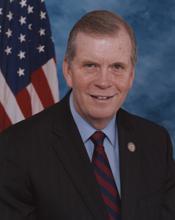
U.S. Representative for Michigan’s 5th district
Republican
119th Congress, two-year term
Missed 0.9% of roll calls. Chamber median 1.9%.
The full voting recordCounts roll calls where most Democrats and most Republicans voted differently, leaving out procedural votes.
How we countFrom FEC filings, Voteview roll calls and Congress.gov.
Republican. In Congress since 2007, 9 terms in total.
Following saves Walberg to your list, which Chamber & Street keeps on its server, linked to a cookie on this browser and not to your name or email. Email alerts will come with constituent verification.
Bills and resolutions Walberg signed on to as a cosponsor. An original cosponsor signed on the day the bill was introduced. Source: govinfo bill status files, last updated Nov 6, 2026.
Accelerating Access to Critical Therapies for ALS Reauthorization Act of 2026
Sponsor Mike Quigley (D). Joined May 12, 2026. 103 cosponsors. H.R. 8205 on Congress.gov
Passed the House
Accelerating Access to Critical Therapies for ALS Reauthorization Act of 2026
This act reauthorizes through FY2031 and revises programs that support research and development of drugs and other therapies to address amyotrophic lateral sclerosis (also known as ALS or Lou Gehrig's disease) and other neurodegenerative diseases.
The act reauthorizes
• grants from the National Institutes of Health (NIH) for scientific research on investigational drugs to prevent or treat ALS for individuals not otherwise eligible for clinical trials,
• grants from the Food and Drug Administration (FDA) for research and development of therapies to prevent and treat ALS and other neurodegenerative diseases, and
• a Public-Private Partnership including the FDA and NIH that supports development and regulatory review of treatments for neurodegenerative diseases.
Also, the NIH, in considering renewal of its grants, must assess available information on the safety and efficacy of the investigational drugs. It must also require grantees to promptly report serious and unexpected adverse events associated with their investigational drugs.
Additionally, the FDA must publish a plan describing actions it will take over a five-year period to foster development of safe and effective drugs, and facilitate access to investigational drugs, that treat ALS and other rare neurodegenerative diseases. The FDA must also publish a report describing the actions it has taken under the plan.
Veterans’ ACCESS Act of 2025
Sponsor Mike Bost (R). Joined May 12, 2026. 88 cosponsors. H.R. 740 on Congress.gov(opens in a new tab)
Passed committee
Veterans' Assuring Critical Care Expansions to Support Servicemembers Act of 2025 or the Veterans' ACCESS Act of 2025
This bill addresses the administration of the Veterans Community Care Program (VCCP) and other Department of Veterans Affairs (VA) health care matters.
Among other provisions regarding the VCCP, the bill
• establishes in statute access standards that determine when a veteran is eligible to receive non-VA care through the VCCP,
• requires the VA to notify veterans regarding their eligibility for care within two business days after the VA is aware the veteran is seeking care, and
• extends the deadline for the submittal of claims under the VCCP by health care entities and providers.
The VA must address its mental health treatment programs by
• establishing a standardized screening process to determine whether a veteran satisfies criteria for priority or routine admission to a mental health residential rehabilitation treatment program or a program for residential care for mental health and substance abuse disorders,
• tracking the performance of medical facilities and Veterans Integrated Service Networks in meeting the requirements for mental health treatment screenings and timely admission to treatment programs under such screenings, and
• establishing an appeal process for when a veteran is denied admission to a covered treatment program or is accepted into a program but not offered bed placement in a timely manner.
Additionally, the VA must establish an online self-service module for veterans to request and manage appointments, track referrals, and appeal and track decisions related to requests for care.
Expressing support for America's law enforcement professionals.
Sponsor Mike Ezell (R). Original cosponsor. 23 cosponsors. H.Con.Res. 98 on Congress.gov(opens in a new tab)
Introduced
Resolution memorializing law enforcement officers killed in the line of duty.
Sponsor Michael Guest (R). Joined May 11, 2026. 126 cosponsors. H.Res. 1252 on Congress.gov(opens in a new tab)
Passed the House
This resolution expresses support for police officers and other law enforcement personnel.
The resolution further recognizes
• law enforcement officers across the United States in the pursuit of preserving safe and secure communities;
• the need to ensure that such officers have the equipment, training, and resources necessary to protect their health and safety while they are protecting the public; and
• the law enforcement community for acts of sacrifice and heroism.
The resolution expresses condolences and appreciation to the loved ones of each law enforcement officer who has made the ultimate sacrifice in the line of duty.
Expunging the December 18, 2019, and January 13, 2021, Impeachments of President Donald Trump.
Sponsor Darrell Issa (R). Original cosponsor. 23 cosponsors. H.Res. 1211 on Congress.gov(opens in a new tab)
Introduced
Essential Caregivers Act of 2025
Sponsor Claudia Tenney (R). Joined Apr 16, 2026. 160 cosponsors. H.R. 6766 on Congress.gov(opens in a new tab)
Introduced
Essential Caregivers Act of 2025
This bill prohibits certain health care facilities from limiting the access of essential caregivers to residents of those facilities, including during designated emergency periods.
Specifically, the bill generally prohibits Medicare skilled nursing facilities, Medicaid nursing facilities, Medicaid intermediate care facilities, and associated inpatient rehabilitation facilities from restricting the access of essential caregivers to residents of the facilities, including during emergency periods in which visitation rights are otherwise restricted. During emergency periods, facilities may restrict access for an initial period of up to seven days and for one additional maximum seven-day period (if the additional period is approved by the state health department). Facilities may restrict access for a total of 7 days (or 14 days with the approval of the state health department) during an emergency period.
Essential caregivers must agree to comply with any safety protocols set by the facility, which may be no more stringent for caregivers compared to those for staff. Caregivers who fail to comply with these requirements may be denied access, subject to an appeals process.
Due Process Continuity of Care Act
Joined Apr 15, 2026. 36 cosponsors. H.R. 1510 on Congress.gov(opens in a new tab)
Progress not on file
Due Process Continuity of Care Act
This bill allows an otherwise eligible individual who is in custody pending disposition of charges (i.e., pretrial detainees) to receive Medicaid benefits at the option of the state. The bill also provides for state planning grants to support the provision of such benefits.
Congratulating the University of Michigan Wolverines men's basketball team on winning the 2026 National Collegiate Athletic Association Division I Men's Basketball Championship.
Sponsor Debbie Dingell (D). Original cosponsor. 16 cosponsors. H.Res. 1165 on Congress.gov(opens in a new tab)
Introduced
Fair Treatment of Religious Organizations Act of 2026
Sponsor Blake Moore (R). Joined Apr 9, 2026. 13 cosponsors. H.R. 8117 on Congress.gov(opens in a new tab)
Introduced
Motorsports Fairness and Permanency Act of 2025
Sponsor Claudia Tenney (R). Joined Apr 9, 2026. 45 cosponsors. H.R. 2231 on Congress.gov(opens in a new tab)
Introduced
New Source Review Permitting Improvement Act
Sponsor H. Griffith (R). Joined Apr 9, 2026. 21 cosponsors. H.R. 161 on Congress.gov(opens in a new tab)
Introduced
New Source Review Permitting Improvement Act
This bill modifies terminology for purposes of the New Source Review (NSR) permitting program of the Environmental Protection Agency (EPA).
In order for a change to a stationary source to be a modification (a change to a stationary source that increases the air pollutant emissions or results in new pollutants) for purposes of the NSR permitting program, the maximum hourly emission rate achievable by such source must be higher than the maximum hourly rate achievable by such source during any hour in the 10-year period preceding the change.
A change at a stationary source is not considered to be a modification under the bill if it is designed to (1) reduce the amount of any air pollutant emitted; or (2) restore, maintain, or improve the reliability of operations at, or safety of, the source. However, such changes are not excepted if the EPA determines the increase in the maximum achievable hourly emission rate from such change would cause an adverse effect on human health or the environment.
Construction, in connection with a major emitting facility (a type of stationary source), does not include a change at such a facility that does not result in a significant emissions increase or a significant net emissions increase.
In relation to major emitting facilities in nonattainment areas, the terms modifications and modified do not include changes at such facilities that do not result in a significant emissions increase or a significant net emissions increase.
To amend title 18, United States Code, to include rioting in the definition of racketeering activity.
Sponsor Beth Van Duyne (R). Joined Apr 2, 2026. 75 cosponsors. H.R. 4620 on Congress.gov(opens in a new tab)
Introduced
Gun Owner Registration Information Protection Act
Sponsor Paul Gosar (R). Joined Mar 18, 2026. 97 cosponsors. H.R. 7678 on Congress.gov(opens in a new tab)
Introduced
Gun Owner Registration Information Protection Act
This bill prohibits federal funding of, or support for, state databases that list (1) firearms lawfully owned or possessed by individuals, or (2) individuals who lawfully own or possess firearms.
Ensuring Community Access to Pharmacist Services Act
Sponsor Adrian Smith (R). Joined Mar 9, 2026. 144 cosponsors. H.R. 3164 on Congress.gov(opens in a new tab)
Passed committee
Ensuring Community Access to Pharmacist Services Act
This bill provides for permanent coverage under Medicare of certain pharmacist services.
Specifically, the bill provides for permanent coverage of testing and treatment services provided by pharmacists relating to (1) COVID-19, influenza, respiratory syncytial virus (RSV), and streptococcal pharyngitis (strep throat); and (2) other public health needs in relation to a declared public health emergency. (Similar authorities were temporarily granted during the COVID-19 public health emergency.) Such services must be provided in accordance with the applicable state laws governing pharmacists' scope of practice.
Federal Firearms Licensee Protection Act of 2025
Sponsor John Rutherford (R). Joined Feb 24, 2026. 145 cosponsors. H.R. 1773 on Congress.gov(opens in a new tab)
Introduced
Federal Firearms Licensee Protection Act of 2025
This bill modifies criminal penalties for an offense involving the theft of a firearm from a licensed importer, manufacturer, or dealer, or from their business premises.
Specifically, the bill does the following:
• increases from 10 to 20 years the maximum prison term, and
• creates a 3- or 5-year mandatory minimum prison term for an offense that occurs during the commission of a burglary or robbery.
An attempt to commit an offense is subject to the same penalties as a substantive offense.
Congratulating the Olympians and Paralympians of Michigan who competed in the 2026 Olympics and Paralympics in Italy.
Sponsor Debbie Dingell (D). Original cosponsor. 12 cosponsors. H.Res. 1070 on Congress.gov(opens in a new tab)
Introduced
Parity for Tribal Law Enforcement Act
Sponsor Dan Newhouse (R). Joined Feb 13, 2026. 22 cosponsors. H.R. 4712 on Congress.gov(opens in a new tab)
Introduced
25th Anniversary of 9/11 Commemorative Coin Act
Sponsor Daniel Goldman (D). Joined Feb 4, 2026. 302 cosponsors. H.R. 1993 on Congress.gov(opens in a new tab)
Passed the House
25th Anniversary of 9/11 Commemorative Coin Act
This bill directs the Department of the Treasury to mint and issue coins to commemorate the 25th anniversary of the September 11, 2001, terrorist attacks on the United States and the establishment of the National September 11 Memorial and Museum at the World Trade Center.
The sale of all coins issued under this bill must include a surcharge to be paid to the National September 11 Memorial and Museum at the World Trade Center to support operations and maintenance. However, if the issuance of this commemorative coin exceeds certain annual limits, no surcharge may be included.
Make Elections Great Again Act
Sponsor Bryan Steil (R). Original cosponsor. 70 cosponsors. H.R. 7300 on Congress.gov(opens in a new tab)
Introduced
Expressing support for the designation of the week of January 25 through January 31, 2026, as "National School Choice Week".
Sponsor John Moolenaar (R). Original cosponsor. 17 cosponsors. H.Res. 1023 on Congress.gov(opens in a new tab)
Introduced
This resolution supports the designation of National School Choice Week.
Energy Emergency Leadership Act
Sponsor Laurel Lee (R). Original cosponsor. 4 cosponsors. H.R. 7258 on Congress.gov(opens in a new tab)
Passed the House
Energy Emergency Leadership Act
This bill expands the list of functions that the Secretary of Energy must assign to assistant secretaries under the Department of Energy Organization Act to include energy emergency and energy security functions, such as responsibilities with respect to energy infrastructure and cybersecurity.
The Department of Energy must ensure that such functions are performed in coordination with relevant federal agencies.
Reporting Accountability and Abuse Prevention Act of 2026
Sponsor Lloyd Smucker (R). Joined Jan 15, 2026. 19 cosponsors. H.R. 6972 on Congress.gov(opens in a new tab)
Introduced
Reporting Accountability and Abuse Prevention Act of 2026
This bill requires recipients of grants for family planning services to demonstrate their compliance with state and local laws that mandate reporting of child abuse, human trafficking, or other mistreatment.
If a grantee does not comply, the Department of Health and Human Services (HHS) must first work with the grantee to remedy violations. For subsequent violations, the bill directs HHS to recoup funds received by the grantee. It also bars the grantee from receiving family planning funds for 36 months.
Smithsonian American Women’s History Museum Act
Sponsor Nicole Malliotakis (R). Joined Jan 15, 2026. 231 cosponsors. H.R. 1329 on Congress.gov(opens in a new tab)
Introduced
Smithsonian American Women’s History Museum Act
This bill authorizes the Smithsonian American Women's History Museum to be located on a particular site within the Reserve of the National Mall in Washington, DC.
Specifically, the bill designates the South Monument site as the location for the museum; however, the President may designate an alternative site within 180 days of the bill's enactment. (The site is the undeveloped land across the National Mall from the National Museum of African American History and Culture.) Administrative jurisdiction of the site must be transferred to the Smithsonian Institution.
The Board of Regents of the Smithsonian Institution must have the approval of specified federal entities (e.g., the Commission of Fine Arts) to plan, design, and construct a museum building. The bill (1) outlines the criteria for considering site and design proposals, and (2) requires the Smithsonian Institution to reimburse for costs resulting from the building approval process.
The bill directs the museum to be dedicated to preserving, researching, and presenting the history, achievements, and lived experiences of biological women in the United States. Under this bill, the museum may not identify, present, describe, or depict any biological male as a female.
In carrying out its duties, the museum's advisory council must (1) seek and utilize guidance from a broad array of knowledgeable and respected sources reflecting the diversity of the political viewpoints and authentic experiences held by women in the United States, and (2) seek guidance for the creation and substantial revision of exhibits and programs.
Condemning the antisemitic shooting in Sydney, Australia, and all forms of hatred and violence directed at religious communities.
Sponsor Gregory Meeks (D). Joined Jan 7, 2026. 21 cosponsors. H.Res. 956 on Congress.gov(opens in a new tab)
Introduced
761st Tank Battalion Congressional Gold Medal Act
Sponsor Gary Palmer (R). Joined Dec 18, 2025. 290 cosponsors. H.R. 1628 on Congress.gov(opens in a new tab)
Introduced
761st Tank Battalion Congressional Gold Medal Act
This bill provides for the award of a Congressional Gold Medal to the 761st Tank Battalion in recognition of their role in the success of Allied forces in Europe during World War II and for the example they set as the first Black soldiers to go to war as part of an American armored unit.
Following the award of the gold medal, the gold medal shall be given to the National Museum of African American History and Culture where it shall be available for display and research.