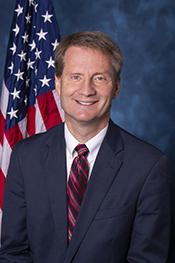
U.S. Representative for Tennessee’s 2nd district
Republican
119th Congress, two-year term
Missed 2.8% of roll calls. Chamber median 1.9%.
The full voting recordCounts roll calls where most Democrats and most Republicans voted differently, leaving out procedural votes.
How we countFrom FEC filings, Voteview roll calls and Congress.gov.
Republican. In Congress since 2019, 4 terms in total.
Following saves Burchett to your list, which Chamber & Street keeps on its server, linked to a cookie on this browser and not to your name or email. Email alerts will come with constituent verification.
Bills and resolutions Burchett signed on to as a cosponsor. An original cosponsor signed on the day the bill was introduced. Source: govinfo bill status files, last updated Nov 6, 2026.
Death Tax Repeal Act
Sponsor Randy Feenstra (R). Original cosponsor. 182 cosponsors. H.R. 1301 on Congress.gov
Introduced
SHUSH Act
Sponsor Michael Cloud (R). Joined Feb 12, 2025. 18 cosponsors. H.R. 850 on Congress.gov(opens in a new tab)
Introduced
Silencers Help Us Save Hearing Act or the SHUSH Act
This bill removes silencers from regulation under certain federal statutes governing the sale, transfer, and possession of firearms.
Specifically, it removes silencers from the list of firearms subject to regulation (i.e., registration and licensing requirements) under the National Firearms Act (NFA). Additionally, it excludes a muffler or silencer from the list of firearms subject to regulation (e.g., background check requirements) under the Gun Control Act of 1968 (GCA).
Finally, the bill does the following:
• preempts state or local laws that tax or regulate firearm silencers,
• specifies that a person who lawfully acquires or possesses a silencer under provisions of the GCA meets the registration and licensing requirements of the NFA,
• eliminates mandatory minimum prison terms for a crime of violence or drug trafficking offense in which a defendant uses or carries a firearm equipped with a silencer or muffler, and
• permits active and retired law enforcement officers to carry a concealed silencer.
Combating Illicit Xylazine Act
Sponsor Jimmy Panetta (D). Original cosponsor. 114 cosponsors. H.R. 1266 on Congress.gov(opens in a new tab)
Passed the House
Combating Illicit Xylazine Act
This bill regulates xylazine under the Controlled Substances Act (CSA).
Xylazine, also known as tranq, is a nonopioid sedative and pain reliever that is approved for use in animals. Recently, the Drug Enforcement Administration (DEA) has reported an increase in trafficking of fentanyl mixed with xylazine.
This bill adds xylazine, including its salts, isomers, and salts of isomers, to schedule III of the CSA. Schedule III controlled substances, including anabolic steroids, buprenorphine, and ketamine, have less potential for abuse than a schedule I or II substance, have a currently accepted medical use, and have low or moderate risk of dependence if abused.
Under the bill, manufacturing, distributing, or dispensing xylazine, or possessing with intent to manufacture, distribute, or dispense xylazine for illicit use is subject to criminal penalties under the CSA. The bill also requires xylazine transactions to be tracked in the drug reporting system maintained by the DEA.
The bill exempts from registration under the CSA persons and entities that possess xylazine (1) lawfully dispensed by a veterinarian or pharmacy and (2) for an animal or for use in certain animal-control or wildlife programs.
The bill also exempts xylazine manufacturers from the CSA's physical security requirements.
Finally, the bill requires the DEA, in coordination with the Food and Drug Administration, to report on (1) the prevalence and impact of illicit xylazine use in the United States, and (2) updated information on the prevalence and proliferation of xylazine trafficking and misuse in the United States.
Funding is Zero for Zero Nutrition Options (FIZZ-NO) Act of 2025
Sponsor Keith Self (R). Joined Feb 11, 2025. 3 cosponsors. H.R. 813 on Congress.gov(opens in a new tab)
Introduced
Funding is Zero for Zero Nutrition Options (FIZZ-NO) Act of 2025
This bill revises the Supplemental Nutrition Assistance Program (SNAP) to prohibit the use of SNAP benefits to purchase soda. Under the bill, soda means a carbonated beverage that contains more than 1 gram of added sugar, artificial sweetener, or flavoring per serving.
To repeal the Impoundment Control Act of 1974.
Sponsor Andrew Clyde (R). Original cosponsor. 25 cosponsors. H.R. 1180 on Congress.gov(opens in a new tab)
Introduced
This bill repeals the Impoundment Control Act of 1974 (ICA). The ICA generally limits the authority of the President to impound (i.e., withhold from obligation or expenditure) funds that have been appropriated by Congress and establishes related procedures. It also establishes expedited legislative procedures that Congress may use to consider legislation to enact rescissions proposed by the President.
Crime Victims Fund Stabilization Act of 2025
Sponsor Ann Wagner (R). Joined Feb 6, 2025. 327 cosponsors. H.R. 909 on Congress.gov(opens in a new tab)
Passed the House
Crime Victims Fund Stabilization Act of 2025
This bill adds a new source of revenue for the Crime Victims Fund (CVF). Specifically, the bill requires certain civil monetary penalties collected from settlements and judgments in cases involving fraud and false claims against the federal government to be deposited into the CVF through FY2029.
The CVF supports federal, state, and local programs and activities to compensate and assist victims of crimes. Currently, the CVF is funded by deposits from a variety of sources, including federal criminal fines, penalties, and assessments; forfeited bail bonds; and certain other gifts, donations, and bequests.
Educators Expense Deduction Modernization Act of 2025
Sponsor Sean Casten (D). Original cosponsor. 19 cosponsors. H.R. 1054 on Congress.gov(opens in a new tab)
Introduced
Educators Expense Deduction Modernization Act of 2025
This bill increases the above-the-line tax deduction for unreimbursed expenses incurred by an eligible educator for classroom supplies and certain professional development courses. (Above-the-line deductions are subtracted from gross income to calculate adjusted gross income.)
Under current law, an eligible educator may deduct up to $300 in 2025 (adjusted annually for inflation) for unreimbursed expenses for classroom supplies and certain professional development courses. An eligible educator is defined as a kindergarten through grade 12 teacher, instructor, counselor, principal, or aide who works at least 900 hours during a school year in a school that provides elementary or secondary education.
Under the bill, an eligible educator may deduct up to $1,000 in 2026 for unreimbursed expenses for classroom supplies and certain professional development. For tax years after 2026, the $1,000 limit on the tax deduction is adjusted annually for inflation.
Senior Citizens Tax Elimination Act
Sponsor Thomas Massie (R). Original cosponsor. 34 cosponsors. H.R. 1040 on Congress.gov(opens in a new tab)
Introduced
Protection of Women in Olympic and Amateur Sports Act of 2026
Sponsor W. Steube (R). Original cosponsor. 73 cosponsors. H.R. 1028 on Congress.gov(opens in a new tab)
Introduced
Protection of Women in Olympic and Amateur Sports Act
This bill requires certified national governing bodies (NGBs) of amateur sports (e.g., USA Gymnastics) to prohibit a person whose sex is male from participating in an amateur athletic competition that is designated for females, women, or girls.
Under the bill, male means an individual who has, had, will have—or would have, but for a developmental or genetic anomaly or historical accident—the reproductive system that at some point produces, transports, and utilizes sperm for fertilization.
To terminate the Department of Education.
Sponsor Thomas Massie (R). Original cosponsor. 37 cosponsors. H.R. 899 on Congress.gov(opens in a new tab)
Introduced
This bill terminates the Department of Education on December 31, 2026.
Household Goods Shipping Consumer Protection Act
Sponsor Eleanor Norton (D). Original cosponsor. 26 cosponsors. H.R. 880 on Congress.gov(opens in a new tab)
Introduced
Household Goods Shipping Consumer Protection Act
This bill allows the Federal Motor Carrier Safety Administration (FMCSA) to assess civil penalties against motor carriers, brokers, and freight forwarders for violations related to the interstate transportation of household goods and provides states with additional related authorities.
As background, a broker is the “middle person” between a shipper and a motor carrier and arranges for the transportation of household goods. A freight forwarder organizes shipments for individuals or corporations. Unlike a broker, freight forwarders assume responsibility for transportation and may transport the freight itself.
The bill expands the FMCSA registration requirements to require motor carriers, brokers, and freight forwarders to designate a principal place of business (i.e., a single physical location where management officials report to work, a significant portion of the transportation business is conducted, and records are maintained). FMCSA may withhold, suspend, amend, or revoke any part of a registration for failure to designate.
In addition, brokers and freight forwarders must disclose any common ownership, management, control, or familial relationship with any other carrier, freight forwarder, broker, or applicant in the previous three years. Under current law, motor carriers must disclose this information.
Further, states may use certain grant funds to enforce federal household goods statutes and regulations for the interstate transportation of these goods by motor carriers and brokers. This applies to Motor Carrier Safety Assistance Program (MCSAP) grant funds and MCSAP High Priority discretionary grant funds. A state shall retain collected fines that are a result of enforcement.
Securing America’s Land from Foreign Interference Act
Sponsor Chip Roy (R). Original cosponsor. 14 cosponsors. H.R. 809 on Congress.gov(opens in a new tab)
Introduced
Securing America's Land from Foreign Interference Act
This bill requires the President to take actions as necessary to prohibit members of the Chinese Communist Party (and entities owned, controlled, or influenced by the party) from purchasing real estate located in the United States, U.S. territories, or U.S. possessions.
To provide for a review of sanctions with respect to Hong Kong.
Sponsor Young Kim (R). Original cosponsor. 7 cosponsors. H.R. 733 on Congress.gov(opens in a new tab)
Introduced
This bill requires the President to submit to Congress a determination, including a detailed justification, of whether specified Hong Kong officials meet the criteria for the imposition of sanctions under certain U.S. laws or executive orders, including the Global Magnitsky Human Rights Accountability Act.
Main Street Tax Certainty Act
Sponsor Lloyd Smucker (R). Original cosponsor. 192 cosponsors. H.R. 703 on Congress.gov(opens in a new tab)
Introduced
Main Street Tax Certainty Act
This bill makes permanent the qualified business income (QBI) tax deduction.
Under current law, individuals, estates, and trusts may deduct the lower of (1) 20% of QBI from a qualified business, qualified real estate investment trust dividends, and qualified publicly traded partnership income; or (2) 20% of taxable income less net capital gain. (Some limitations apply.)
However, under current law, the QBI tax deduction expires after December 31, 2025.
MERIT Act of 2025
Sponsor Barry Loudermilk (R). Original cosponsor. 24 cosponsors. H.R. 687 on Congress.gov(opens in a new tab)
Introduced
Heartbeat Protection Act of 2025
Sponsor Mike Kelly (R). Original cosponsor. 42 cosponsors. H.R. 682 on Congress.gov(opens in a new tab)
Introduced
Heartbeat Protection Act of 2025
This bill makes it a crime for a physician to knowingly perform an abortion (1) without determining whether the unborn child has a detectable heartbeat, (2) without informing the mother of the results, or (3) after determining that an unborn child has a detectable heartbeat.
A physician who performs a prohibited abortion is subject to criminal penalties—a fine, up to five years in prison, or both.
The bill provides an exception for an abortion that is necessary to save the life of a mother whose life is endangered by a physical (but not psychological or emotional) disorder, illness, or condition. It also provides exceptions for certain pregnancies that are the result of rape or incest. A physician who performs or attempts to perform an abortion under an exception must comply with specified requirements.
A woman who undergoes a prohibited abortion may not be prosecuted for violating or conspiring to violate the provisions of this bill.
National Constitutional Carry Act
Sponsor Thomas Massie (R). Original cosponsor. 78 cosponsors. H.R. 645 on Congress.gov(opens in a new tab)
Introduced
Recognizing that article I, section 10 of the United States Constitution explicitly reserves to the States the sovereign power to repel an invasion and defend their citizenry from the overwhelming and "imminent danger" posed by paramilitary, narco-terrorist cartels, terrorists and criminal actors who seized control of our southern border.
Sponsor Jodey Arrington (R). Joined Jan 22, 2025. 41 cosponsors. H.Res. 50 on Congress.gov(opens in a new tab)
Introduced
This resolution declares that every state within the United States has the sovereign right to exclude any person who does not have the right to be there. It also declares that the states along the southern border (1) were invaded by terrorists, narco-terrorist cartels, and criminal actors from 2021 through 2024; and (2) have the sovereign and unilateral authority to defend themselves against such an invasion.
Proxy Voting for New Parents Resolution
Sponsor Brittany Pettersen (D). Joined Jan 21, 2025. 175 cosponsors. H.Res. 23 on Congress.gov(opens in a new tab)
Introduced
Proxy Voting for New Parents Resolution
This resolution authorizes proxy voting in the House of Representatives for a Member who has given birth or whose spouse has given birth and pregnant Members who are unable to travel safely or have a serious medical condition.
Under the resolution, a qualifying Member may designate a proxy to cast a vote in a committee, the Committee of the Whole, or on the House floor; however, proxies will not be counted for purposes of establishing a quorum. The proxy designation is valid for up to 12 weeks.
To designate a proxy for House and Committee of the Whole votes, the Member must submit a signed and dated letter to the Clerk stating the Member’s qualifying circumstances and the name and state of the Member who has agreed to be designated as proxy. A Member who has designated a proxy according to these requirements may also designate a proxy for committee votes. To designate a proxy for committee votes, the Member must provide the committee chair and ranking minority member with a signed and dated letter specifying another member of the committee to cast a proxy vote.
The resolution further provides that a Member may revoke the proxy authorization by (1) casting the Member’s own vote; (2) recording the Member’s own presence in the House or in the Committee of the Whole; or (3) in a committee, by submitting a signed letter to the chair and ranking minority member.
Offshore Lands Authorities Act of 2025
Sponsor Clay Higgins (R). Original cosponsor. 25 cosponsors. H.R. 513 on Congress.gov(opens in a new tab)
Introduced
Offshore Lands Authorities Act of 2025
This bill limits the withdrawal of unleased lands of the Outer Continental Shelf (OCS) from areas that may be leased for mineral development and nullifies certain past withdrawals. The OCS includes the federally managed ocean area extending from the outer boundaries of state-controlled waters (generally 3 nautical miles [nmi] from shore) to 200 nmi from shore, with some exceptions.
Specifically, the bill limits the President's authority to restrict offshore development of minerals, such as oil and gas, on the OCS. For example, the bill (1) caps the number of acres of OCS lands that a President may withdraw from areas that may be leased; (2) prohibits withdrawals from being made for a period longer than 20 years; (3) prohibits the President from making withdrawals of unleased land that conflict with areas included in lease sales scheduled under approved oil and gas leasing programs; and (4) prohibits the President from withdrawing unleased lands unless the Department of the Interior has completed assessments addressing issues such as mineral resources and the national security, economic, and energy value of the identified mineral deposits.
The President must also obtain congressional approval before withdrawing more than 500,000 acres cumulatively. Further, the bill gives Congress the authority to review and disapprove withdrawals by enacting a joint resolution.
In addition, the bill nullifies certain presidential memoranda and executive orders related to withdrawing unleased land from areas that may be leased for the development of oil, gas, or other minerals on the OCS.
SHOW UP Act of 2025
Sponsor James Comer (R). Original cosponsor. 23 cosponsors. H.R. 473 on Congress.gov(opens in a new tab)
Introduced
Stopping Home Office Work's Unproductive Problems Act of 2025 or the SHOW UP Act of 2025
This bill requires each executive agency (other than the Government Accountability Office) to establish as its current policies the telework policies that were in place on December 31, 2019. Agencies may not implement expanded telework policies unless the Office of Personnel Management certifies that such policies, among other requirements, will have a positive effect on the agency's mission and operational costs.
Old Glory Only Act
Sponsor William Timmons (R). Original cosponsor. 34 cosponsors. H.R. 465 on Congress.gov(opens in a new tab)
Introduced
Old Glory Only Act
This bill prohibits the flying of any flag other than the U.S. flag over U.S. diplomatic and consular posts.
FORCE Act
Sponsor Maria Salazar (R). Original cosponsor. 30 cosponsors. H.R. 450 on Congress.gov(opens in a new tab)
Introduced
Fighting Oppression until the Reign of Castro Ends or the FORCE Act
This bill prohibits removing Cuba from the list of state sponsors of terrorism until the President makes the determination that a transition government in Cuba is in power.
Hearing Protection Act
Sponsor Ben Cline (R). Original cosponsor. 151 cosponsors. H.R. 404 on Congress.gov(opens in a new tab)
Introduced
Repeal the NFA Act
Sponsor Eric Burlison (R). Joined Jan 15, 2025. 25 cosponsors. H.R. 335 on Congress.gov(opens in a new tab)
Introduced