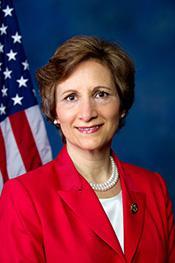
U.S. Representative for Oregon’s 1st district
Democrat
119th Congress, two-year term
Missed 1.2% of roll calls. Chamber median 1.9%.
The full voting recordCounts roll calls where most Democrats and most Republicans voted differently, leaving out procedural votes.
How we countFrom FEC filings, Voteview roll calls and Congress.gov.
Democrat. In Congress since 2012, 8 terms in total.
Following saves Bonamici to your list, which Chamber & Street keeps on its server, linked to a cookie on this browser and not to your name or email. Email alerts will come with constituent verification.
Bills and resolutions Bonamici signed on to as a cosponsor. An original cosponsor signed on the day the bill was introduced. Source: govinfo bill status files, last updated Nov 6, 2026.
PAST Act of 2025
Sponsor Brian Fitzpatrick (R). Original cosponsor. 207 cosponsors. H.R. 1684 on Congress.gov
Introduced
Prevent All Soring Tactics Act of 2025 or the PAST Act of 2025
This bill increases protections for horses at shows, exhibitions, sales, or auctions (horse events) to prevent the practice of soring horses. Generally, the soring of horses includes certain actions taken on horses' limbs to produce higher gaits that may cause pain, distress, inflammation, or lameness.
Specifically, the bill expands existing soring prohibitions under the Horse Protection Act, including by banning the use of certain action devices (e.g., nonprotective boots) on specified horse breeds.
The bill also requires soring inspectors at horse events to be assigned by the Animal and Plant Health Inspection Service (APHIS) of the Department of Agriculture rather than appointed by the management of horse events. APHIS must also license, train, and oversee inspectors to detect and diagnose soring at such events.
Additionally, the bill increases penalties for violations of the act. It also directs APHIS to disqualify horses found to be sore from being shown or exhibited for specified periods. Further, APHIS may permanently disqualify violators from participating in horse events after the third or any subsequent violation.
By way of background, APHIS issued a rule in 2024 to increase efforts to protect horses from soring practices. However, in 2025, a court vacated parts of the rule as exceeding APHIS' statutory authority (e.g., prohibiting the use of certain action devices) while deeming other parts acceptable (e.g., establishing APHIS-designated inspectors). APHIS subsequently delayed the effective date of the rule to December 31, 2026.
Keep Americans Safe Act
Sponsor Diana DeGette (D). Original cosponsor. 145 cosponsors. H.R. 1674 on Congress.gov(opens in a new tab)
Introduced
Keep Americans Safe Act
This bill establishes a new criminal offense for the import, sale, manufacture, transfer, or possession of a large capacity ammunition feeding device (LCAFD).
The bill does not prohibit certain conduct with respect to an LCAFD, including the following:
• importation, sale, manufacture, transfer, or possession related to certain law enforcement efforts, or authorized tests or experiments;
• importation, sale, transfer, or possession related to securing nuclear materials; and
• possession by a retired law enforcement officer.
The bill permits continued possession of, but prohibits sale or transfer of, a grandfathered LCAFD.
Newly manufactured LCAFDs must display serial number identification and the date of manufacture.
Additionally, the bill allows a state or local government to use Edward Byrne Memorial Justice Assistance Grant Program funds to compensate individuals who surrender an LCAFD under a buy-back program.
Pell Grant Sustainability Act
Sponsor Sean Casten (D). Original cosponsor. 41 cosponsors. H.R. 1666 on Congress.gov(opens in a new tab)
Introduced
Pell Grant Sustainability Act
This bill indexes the maximum award amount for Pell Grants to the rate of inflation. The bill also permanently reauthorizes the discretionary statutory authority for the Pell Grant program.
Humane Cosmetics Act of 2025
Sponsor Donald Beyer (D). Original cosponsor. 161 cosponsors. H.R. 1657 on Congress.gov(opens in a new tab)
Introduced
Humane Cosmetics Act of 2025
This bill generally prohibits animal testing in the evaluation of cosmetic products, and it prohibits the sale or transport of cosmetics developed using animal testing, subject to civil penalties. These prohibitions begin one year after enactment.
The bill specifies exceptions to these prohibitions, including if such animal testing (1) is conducted outside the United States to comply with a foreign regulatory authority; (2) is pursuant to a finding by the Food and Drug Administration (FDA) that there are no nonanimal alternatives to test the safety of a potentially dangerous cosmetic product or ingredient; (3) is of a product or ingredient for a drug or device subject to regulation by the FDA; or (4) is required for a noncosmetic purpose pursuant to a state, federal, or foreign regulatory authority.
Further, evidence derived from animal testing conducted more than one year after the bill's enactment may not be used to establish the safety of a cosmetic product or ingredient that is regulated by the FDA, subject to limited exceptions.
Nancy Gardner Sewell Medicare Multi-Cancer Early Detection Screening Coverage Act
Sponsor Jodey Arrington (R). Joined Feb 26, 2025. 338 cosponsors. H.R. 842 on Congress.gov(opens in a new tab)
Introduced
Nancy Gardner Sewell Medicare Multi-Cancer Early Detection Screening Coverage Act
This bill allows, beginning in 2028, for Medicare coverage and payment for multi-cancer early detection screening tests that are approved by the Food and Drug Administration and that are used to screen for cancer across many cancer types, if the Centers for Medicare & Medicaid Services determines such coverage is appropriate. Coverage is limited to those under a certain age (age 68 in 2028, increased by one year every year thereafter) and to one test every 11 months.
American Dream and Promise Act of 2025
Sponsor Sylvia Garcia (D). Original cosponsor. 221 cosponsors. H.R. 1589 on Congress.gov(opens in a new tab)
Introduced
American Dream and Promise Act of 2025
This bill provides certain non-U.S. nationals (aliens under federal law) with a path to receive permanent resident status and contains other immigration-related provisions.
The Department of Homeland Security (DHS) or the Department of Justice (DOJ) shall provide conditional permanent resident status for 10 years to a qualifying individual who entered the United States as a minor and (1) is deportable or inadmissible, (2) has deferred enforced departure (DED) status or temporary protected status (TPS), or (3) is the child of certain classes of nonimmigrants. The bill imposes various qualifying requirements, such as the individual being continuously physically present in the United States since January 1, 2021, passing a background check, and being enrolled in or having completed certain educational programs.
DHS shall remove the conditions placed on permanent resident status granted under this bill if the individual applies and meets certain requirements, such as completing certain programs at an educational institution, serving in the military, or being employed.
Furthermore, DHS or DOJ shall provide lawful permanent resident status to certain individuals who had TPS, were eligible for TPS, or were eligible for DED status on certain dates. Such individuals must meet certain requirements and apply for such status within three years of this bill's enactment.
This bill also repeals a restriction that bars a state from providing higher education benefits to undocumented individuals unless those benefits are available to all U.S. nationals without regard to residency in the state.
Ethan's Law
Sponsor Rosa DeLauro (D). Original cosponsor. 202 cosponsors. H.R. 1564 on Congress.gov(opens in a new tab)
Introduced
Ethan's Law
This bill establishes a framework to regulate the storage of firearms on residential premises at the federal, state, and tribal levels.
At the federal level, the bill establishes statutory requirements for firearms on residential premises to be safely stored if a minor is likely to gain access without permission or if a resident is ineligible to possess a firearm.
An individual who violates the requirements is subject to criminal penalties. A firearm stored in violation of the requirements is subject to seizure and forfeiture.
At the state and tribal levels, the bill requires the Department of Justice to award grants to implement functionally identical requirements for the safe storage of firearms.
Empowering and Enforcing Environmental Justice Act of 2025
Sponsor Nanette Barragán (D). Original cosponsor. 18 cosponsors. H.R. 1553 on Congress.gov(opens in a new tab)
Introduced
Empowering and Enforcing Environmental Justice Act of 2025
This bill establishes the Office of Environmental Justice within the Department of Justice (DOJ). It also establishes grants to improve the capacity of state, local, and tribal governments to enforce environmental laws involving environmental justice matters. (On February 5, 2025, DOJ issued a directive to close its Office of Environmental Justice by March 15, 2025.)
Secure Rural Schools Reauthorization Act of 2025
Joined Feb 25, 2025. 93 cosponsors. H.R. 1383 on Congress.gov(opens in a new tab)
Progress not on file
Secure Rural Schools Reauthorization Act of 2025
This bill extends and modifies the Secure Rural Schools and Community Self-Determination Act of 2000, including by
• extending payments made to states and counties containing federal land through FY2026,
• providing for payments for FY2024 and FY2025,
• extending the authority of counties to initiate projects using such funds through FY2028, and
• extending the authority to initiate projects proposed by resource advisory committees through FY2028.
Caring for All Families Act
Sponsor Jahana Hayes (D). Joined Feb 25, 2025. 47 cosponsors. H.R. 1002 on Congress.gov(opens in a new tab)
Introduced
Expressing support for the designation of the week of February 24 through February 28, 2025, as "Public Schools Week".
Sponsor Mark Pocan (D). Original cosponsor. 99 cosponsors. H.Res. 159 on Congress.gov(opens in a new tab)
Introduced
This resolution supports the designation of Public Schools Week.
To award a Congressional Gold Medal to the Freedom Riders, collectively, in recognition of their unique contribution to Civil Rights, which inspired a revolutionary movement for equality in interstate travel.
Sponsor Henry Johnson (D). Joined Feb 24, 2025. 124 cosponsors. H.R. 945 on Congress.gov(opens in a new tab)
Introduced
This bill provides for the presentation of a Congressional Gold Medal to the Freedom Riders, in recognition of their contribution to civil rights by fighting for equality in interstate travel.
Due Process Continuity of Care Act
Original cosponsor. 36 cosponsors. H.R. 1510 on Congress.gov(opens in a new tab)
Progress not on file
Due Process Continuity of Care Act
This bill allows an otherwise eligible individual who is in custody pending disposition of charges (i.e., pretrial detainees) to receive Medicaid benefits at the option of the state. The bill also provides for state planning grants to support the provision of such benefits.
To amend the Grand Ronde Reservation Act to address the hunting, fishing, trapping, and animal gathering rights of the Confederated Tribes of the Grand Ronde Community, and for other purposes.
Sponsor Andrea Salinas (D). Original cosponsor. 4 cosponsors. H.R. 1499 on Congress.gov(opens in a new tab)
Introduced
This bill provides a process by which the Confederated Tribes of the Grand Ronde Community of Oregon and Oregon may negotiate to amend or replace the existing agreement defining the tribe's hunting, fishing, trapping, and animal gathering rights.
The current agreement, which was made effective by a January 12, 1987, consent decree by the U.S. District Court for the District of Oregon, serves as the exclusive and final determination of the tribe's hunting, fishing, trapping, and gathering rights. This bill instead allows a December 2, 1986, agreement between the United States, Oregon, and the tribe (known as the Grand Ronde Hunting and Fishing Agreement) to define the tribe's rights until and unless it is amended or replaced upon mutual agreement of the tribe and Oregon.
The bill allows the tribe and Oregon to return to the U.S. District Court for the District of Oregon to request the modification or termination of the January 12, 1987, consent decree.
The bill prohibits a new or amended agreement from (1) affecting the other rights of the tribe or any other Indian tribe, (2) limiting Oregon from entering into separate agreements with other tribes to address the authority to take species within the geographic scope of the agreement, or (3) being used in a civil or criminal action to modify any treaty or other right of a tribe.
TRIO Access Act
Sponsor Gwen Moore (D). Original cosponsor. 4 cosponsors. H.R. 1490 on Congress.gov(opens in a new tab)
Introduced
MODERN WIC Act of 2025
Sponsor Brian Fitzpatrick (R). Original cosponsor. 80 cosponsors. H.R. 1464 on Congress.gov(opens in a new tab)
Introduced
More Options to Develop and Enhance Remote Nutrition in WIC Act of 2025 or the MODERN WIC Act of 2025
This bill permanently allows individuals to remotely certify their eligibility for, and receive benefits through, the Special Supplemental Nutrition Program for Women, Infants, and Children (WIC).
Specifically, the bill requires that a state agency allow an individual seeking a WIC certification, recertification, or a nutritional risk evaluation to do so by phone or through video teleconference, in addition to the in-person option.
A state agency has 90 days to collect data for a nutritional risk evaluation for a remotely certified individual. Further, a state agency may consider an applicant who meets the income eligibility standards to be temporarily eligible on an interim basis to participate in the program and may certify the individual for immediate participation without waiting for a nutritional risk evaluation.
The bill also allows states to provide benefits on WIC electronic benefit transfer cards through mail or remote issuance instead of requiring participants to pick up or reload benefits in person at a WIC office.
Further, the Department of Agriculture must report to Congress about the use of remote technologies and other digital tools in the WIC program.
Currently, individuals are generally required to be physically present to certify their WIC eligibility and receive benefits, with exceptions. The Food and Nutrition Service has temporarily waived these requirements and allowed remote certification and benefits using authorities that were provided by laws that were enacted to address COVID-19.
Energy Resilient Communities Act
Sponsor Nanette Barragán (D). Original cosponsor. 31 cosponsors. H.R. 1449 on Congress.gov(opens in a new tab)
Introduced
Health Care Affordability Act of 2025
Sponsor Lauren Underwood (D). Joined Feb 18, 2025. 165 cosponsors. H.R. 247 on Congress.gov(opens in a new tab)
Introduced
Health Care Affordability Act of 2025
This bill makes permanent temporary changes enacted by the American Rescue Plan Act of 2021 (ARPA) and the Inflation Reduction Act of 2022 (IRA) that generally expand eligibility for and increase the amount of the premium tax credit.
Currently, eligible taxpayers may be able to claim the premium tax credit, which applies toward the cost of obtaining health insurance through health insurance exchanges. To be eligible for the premium tax credit, a taxpayer’s household income must meet or exceed 100% of the federal poverty level (FPL) and, after 2025, may not exceed 400% of the FPL (maximum income limit). For 2021-2025, the ARPA and IRA eliminated the maximum income limit, which generally expands eligibility for the premium tax credit.
Further, under current law, the amount of the premium tax credit is (1) generally the plan premium (conditions apply), minus (2) the taxpayer’s household income multiplied by the applicable percentage. The applicable percentage is a specific percentage that varies depending on which of six income ranges (adjusted for inflation after 2025) the taxpayer’s household income falls within. For 2021-2025, the ARPA and IRA lowered the applicable percentages and eliminated the adjustment of the applicable percentages for inflation, which generally increases the amount of the premium tax credit.
The bill makes permanent the elimination of the 400% maximum income limit, the lower applicable percentages, and the elimination of the inflation adjustment for the applicable percentages.
Affordable Child Care Act
Sponsor Sharice Davids (D). Original cosponsor. 8 cosponsors. H.R. 1408 on Congress.gov(opens in a new tab)
Introduced
Expressing support for the designation of February 15 through February 22, 2025, as "National FFA Week", recognizing the important role of the National FFA Organization in developing the next generation of leaders who will change the world, and celebrating the 90th anniversary of New Farmers of America and the 75th anniversary of the Federal charter to Future Farmers of America.
Sponsor Tracey Mann (R). Original cosponsor. 67 cosponsors. H.Res. 133 on Congress.gov(opens in a new tab)
Introduced
This resolution supports the designation of National FFA (Future Farmers of America) Week.
It also celebrates the 90th anniversary of New Farmers of America (NFA), which served Black vocational agriculture students in segregated public schools until NFA and FFA became one organization in 1965.
The resolution also commemorates the 75th anniversary of the federal charter for the Future Farmers of America.
Smithsonian American Women’s History Museum Act
Sponsor Nicole Malliotakis (R). Original cosponsor. 231 cosponsors. H.R. 1329 on Congress.gov(opens in a new tab)
Introduced
Smithsonian American Women’s History Museum Act
This bill authorizes the Smithsonian American Women's History Museum to be located on a particular site within the Reserve of the National Mall in Washington, DC.
Specifically, the bill designates the South Monument site as the location for the museum; however, the President may designate an alternative site within 180 days of the bill's enactment. (The site is the undeveloped land across the National Mall from the National Museum of African American History and Culture.) Administrative jurisdiction of the site must be transferred to the Smithsonian Institution.
The Board of Regents of the Smithsonian Institution must have the approval of specified federal entities (e.g., the Commission of Fine Arts) to plan, design, and construct a museum building. The bill (1) outlines the criteria for considering site and design proposals, and (2) requires the Smithsonian Institution to reimburse for costs resulting from the building approval process.
The bill directs the museum to be dedicated to preserving, researching, and presenting the history, achievements, and lived experiences of biological women in the United States. Under this bill, the museum may not identify, present, describe, or depict any biological male as a female.
In carrying out its duties, the museum's advisory council must (1) seek and utilize guidance from a broad array of knowledgeable and respected sources reflecting the diversity of the political viewpoints and authentic experiences held by women in the United States, and (2) seek guidance for the creation and substantial revision of exhibits and programs.
I CAN Act
Sponsor David Joyce (R). Original cosponsor. 36 cosponsors. H.R. 1317 on Congress.gov(opens in a new tab)
Introduced
Improving Care and Access to Nurses Act or the I CAN Act
This bill allows other health care providers besides physicians (e.g., nurses) to provide certain services under Medicare and Medicaid.
Among other changes, the bill (1) allows a nurse practitioner or physician assistant to fulfill documentation requirements for Medicare coverage of special shoes for diabetic individuals; (2) expedites the ability of physician assistants, nurse practitioners, and clinical nurse specialists to supervise Medicare cardiac, intensive cardiac, and pulmonary rehabilitation programs; and (3) allows nurse practitioners to certify the need for inpatient hospital services under Medicare and Medicaid.
Office of Gun Violence Prevention Act of 2025
Sponsor Maxwell Frost (D). Original cosponsor. 136 cosponsors. H.R. 1307 on Congress.gov(opens in a new tab)
Introduced
Office of Gun Violence Prevention Act of 2025
This bill establishes an Office of Gun Violence Prevention within the Department of Justice's (DOJ's) Office of Legal Policy.
Among its duties, the office must coordinate various gun violence prevention efforts that are administered by DOJ, recommend policy options to promote evidence-based gun violence prevention strategies, and promote related data collection.
Celebrating the legacy and contributions of immigrants and opposing discriminatory immigration policies.
Sponsor Yassamin Ansari (D). Original cosponsor. 17 cosponsors. H.Res. 126 on Congress.gov(opens in a new tab)
Introduced
This resolution recognizes and celebrates the contributions of immigrants to the United States; condemns discrimination against immigrants; and supports comprehensive immigration reform that addresses the needs of the economy, strengthens communities, and reflects the values of compassion, fairness, and opportunity for all.
Commission to Study and Develop Reparation Proposals for African Americans Act
Sponsor Ayanna Pressley (D). Joined Feb 12, 2025. 119 cosponsors. H.R. 40 on Congress.gov(opens in a new tab)
Introduced
Commission to Study and Develop Reparation Proposals for African Americans Act
This bill establishes the Commission to Study and Develop Reparation Proposals for African Americans.
The commission must (1) compile documentary evidence of slavery in the United States; (2) study the role of the federal and state governments in supporting the institution of slavery; (3) analyze discriminatory laws and policies against freed African slaves and their descendants; and (4) recommend ways the United States may recognize and remedy the effects of slavery and discrimination on African Americans, including through a formal apology and compensation (i.e., reparations).
The commission consists of individuals from civil society and reparations organizations and individuals appointed by the President and congressional leadership; Members of Congress and governmental employees may not serve on the commission. The commission may hold hearings, subpoena witnesses and records, and contract with other entities to conduct its work.
The commission must submit its final report within 18 months of its first meeting.