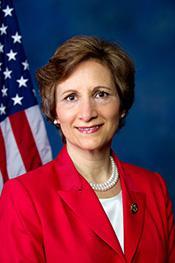
U.S. Representative for Oregon’s 1st district
Democrat
119th Congress, two-year term
Missed 1.2% of roll calls. Chamber median 1.9%.
The full voting recordCounts roll calls where most Democrats and most Republicans voted differently, leaving out procedural votes.
How we countFrom FEC filings, Voteview roll calls and Congress.gov.
Democrat. In Congress since 2012, 8 terms in total.
Following saves Bonamici to your list, which Chamber & Street keeps on its server, linked to a cookie on this browser and not to your name or email. Email alerts will come with constituent verification.
Bills and resolutions Bonamici signed on to as a cosponsor. An original cosponsor signed on the day the bill was introduced. Source: govinfo bill status files, last updated Nov 6, 2026.
Recognizing and honoring teachers who have earned or maintained National Board Certification.
Sponsor Julia Letlow (R). Original cosponsor. 28 cosponsors. H.Res. 218 on Congress.gov
Introduced
This resolution honors the teachers who have earned or maintained National Board Certification as of March 2025.
Medicare Dental, Vision, and Hearing Benefit Act of 2025
Sponsor Lloyd Doggett (D). Original cosponsor. 132 cosponsors. H.R. 2045 on Congress.gov(opens in a new tab)
Introduced
Medicare Dental, Vision, and Hearing Benefit Act of 2025
This bill provides for Medicare coverage of dental, vision, and hearing care. Coverage includes (1) routine dental cleanings and exams, basic and major dental services, emergency dental care, and dentures; (2) routine eye exams, eyeglasses, and contact lenses; and (3) routine hearing exams, hearing aids, and exams for hearing aids. With respect to such care, the bill establishes special payment rules, limitations, and coinsurance requirements.
American Housing and Economic Mobility Act of 2025
Sponsor Emanuel Cleaver (D). Original cosponsor. 26 cosponsors. H.R. 2038 on Congress.gov(opens in a new tab)
Introduced
American Housing and Economic Mobility Act of 2025
This bill addresses housing affordability and availability through grants, housing programs, and oversight of financial institutions. The bill also makes certain changes to the estate tax, such as by generally increasing the rate.
The Department of Housing and Urban Development shall provide grants to (1) state, local, and tribal governments to remove barriers to building affordable units, (2) states to assist borrowers who have negative equity in their homes, (3) state housing finance agencies to support construction of affordable rental housing and prevent tenant displacement and harassment, and (4) eligible individuals (generally, lower income individuals who are first generation homebuyers) to help them purchase their first homes.
The bill establishes and provides funding for the first-time homeowner grant program and the affordable rental housing construction program, and it also funds existing rural housing programs.
The bill also requires financial regulators to generally assess the effectiveness of financial institutions in meeting the credit and lending needs of their communities, particularly of underserved populations.
The bill also expands fair housing protections to prohibit discrimination based on sexual orientation, gender identity, marital status, source of income, veteran status, or an individual's perceived membership in a protected class (e.g., an individual's perceived race or sex).
Additionally, the bill modifies the estate tax in various ways, including by reducing the number of brackets to three, increasing the tax rates, and reducing the basic exemption amount. The bill also places additional taxes on high-income estates and trusts.
Stop Comstock Act
Sponsor Becca Balint (D). Original cosponsor. 146 cosponsors. H.R. 2029 on Congress.gov(opens in a new tab)
Introduced
Women's Retirement Protection Act
Sponsor Lauren Underwood (D). Original cosponsor. 16 cosponsors. H.R. 2023 on Congress.gov(opens in a new tab)
Introduced
American Teacher Act
Sponsor Frederica Wilson (D). Original cosponsor. 102 cosponsors. H.R. 2021 on Congress.gov(opens in a new tab)
Introduced
American Teacher Act
This bill establishes grants to increase the minimum salary of public elementary and secondary school teachers. It also authorizes a national campaign regarding the value of the teaching profession.
First, the bill directs the Department of Education (ED) to award four-year grants to state educational agencies (SEAs) and, through them, subgrants to local educational agencies to establish a minimum annual salary of $60,000 (to be adjusted annually for inflation) for these teachers.
Second, the bill directs ED to award grants to eligible SEAs to provide cost-of-living adjustments to the annual base salary of teachers.
Finally, the bill authorizes ED to carry out a national campaign to (1) increase awareness about the importance of teachers and the value of the teaching profession, (2) encourage secondary school and college students to consider teaching as a professional career, and (3) diversify the pool of individuals who enter the teaching profession.
American Innovation and R&D Competitiveness Act of 2025
Sponsor Ron Estes (R). Original cosponsor. 81 cosponsors. H.R. 1990 on Congress.gov(opens in a new tab)
Introduced
Protect Our Probationary Employees Act
Sponsor Sarah Elfreth (D). Original cosponsor. 72 cosponsors. H.R. 1989 on Congress.gov(opens in a new tab)
Introduced
Honoring Our Fallen Heroes Act of 2025
Sponsor Mary Gay Scanlon (D). Joined Mar 10, 2025. 180 cosponsors. H.R. 1269 on Congress.gov(opens in a new tab)
Introduced
Honoring Our Fallen Heroes Act of 2025
This bill extends death and disability benefits under the Public Safety Officers' Benefits Program (PSOB) to certain public safety officers who suffer from exposure-related cancer while on duty and their survivors. The PSOB program provides death, disability, and education benefits to public safety officers who are killed or injured in the line of duty and their survivors.
The bill specifies that exposure to a carcinogen shall be presumed to constitute a personal injury in the line of duty if
• the exposure occurred while the officer was in the line of duty;
• the officer began serving as an officer not fewer than 5 years before the date of the diagnosis of an exposure-related cancer and the diagnosis occurred not more than 15 years after the last date of active service; and
• the exposure-related cancer directly and proximately resulted in the death or permanent and total disability of the officer.
The Department of Justice's Bureau of Justice Assistance must periodically review the definition of exposure-related cancer and update the definition if appropriate based on medical evidence and in accordance with the requirements of a petition process.
Crime Victims Fund Stabilization Act of 2025
Sponsor Ann Wagner (R). Joined Mar 6, 2025. 327 cosponsors. H.R. 909 on Congress.gov(opens in a new tab)
Passed the House
Crime Victims Fund Stabilization Act of 2025
This bill adds a new source of revenue for the Crime Victims Fund (CVF). Specifically, the bill requires certain civil monetary penalties collected from settlements and judgments in cases involving fraud and false claims against the federal government to be deposited into the CVF through FY2029.
The CVF supports federal, state, and local programs and activities to compensate and assist victims of crimes. Currently, the CVF is funded by deposits from a variety of sources, including federal criminal fines, penalties, and assessments; forfeited bail bonds; and certain other gifts, donations, and bequests.
Do No Harm Act
Sponsor Robert Scott (D). Original cosponsor. 125 cosponsors. H.R. 1954 on Congress.gov(opens in a new tab)
Introduced
Do No Harm Act
This bill prohibits the application of the Religious Freedom Restoration Act of 1993 (RFRA) to specified federal laws or the implementation of such laws. Currently, RFRA prohibits the government from substantially burdening a person's exercise of religion even if the burden results from a rule of general applicability, except in furtherance of a compelling governmental interest when using the least restrictive means.
Under the bill, RFRA is inapplicable to laws or the implementation of laws that
• protect against discrimination or require the promotion of equal opportunity (e.g., the Civil Rights Act of 1964);
• require employers to provide wages, other compensation, or benefits, including leave;
• protect collective activity in the workplace;
• protect against child labor, abuse, or exploitation; or
• provide for access to, information about, referrals for, provision of, or coverage for any health care item or service.
The bill prevents RFRA from being used to deny (1) goods or services the government has agreed to provide to a beneficiary of or participant in a program or activity funded by a government contract, grant, agreement, or other award; or (2) a person's full and equal enjoyment of a government-provided good, service, benefit, facility, privilege, advantage, or accommodation.
In order for a person to assert a RFRA claim or defense in a judicial proceeding, the government must be a party to the proceeding.
Farewell to Foam Act of 2025
Sponsor Lloyd Doggett (D). Original cosponsor. 86 cosponsors. H.R. 1918 on Congress.gov(opens in a new tab)
Introduced
CHIPP Act
Sponsor Nanette Barragán (D). Original cosponsor. 29 cosponsors. H.R. 1901 on Congress.gov(opens in a new tab)
Introduced
Children’s Health Insurance Program Permanency Act or the CHIPP Act
This bill permanently extends the Children's Health Insurance Program (CHIP) and related measures, programs, and authorities.
Specifically, the bill permanently funds CHIP and related programs that support the development of child health quality measures and outreach and enrollment efforts. The bill also permanently authorizes the Medicaid and CHIP express lane eligibility option, which allows states to use information from designated programs (e.g., the Supplemental Nutrition Assistance Program) to streamline eligibility determinations for children. Additionally, under the bill, states may expand eligibility to children whose family income exceeds the otherwise applicable limits.
Richard L. Trumka Protecting the Right to Organize Act of 2025
Sponsor Robert Scott (D). Original cosponsor. 217 cosponsors. H.R. 20 on Congress.gov(opens in a new tab)
Introduced
Pay Our Coast Guard Parity Act of 2025
Sponsor Hillary Scholten (D). Joined Mar 5, 2025. 67 cosponsors. H.R. 1542 on Congress.gov(opens in a new tab)
Introduced
Pay Our Coast Guard Parity Act of 2025
This bill provides continuing appropriations to the Coast Guard for pay and benefits when there is a Coast Guard-specific funding lapse.
Under the bill, a Coast Guard-specific funding lapse occurs when (1) a bill providing appropriations for the Coast Guard for a fiscal year has not been enacted before the beginning of that fiscal year, and no joint resolution providing continuing appropriations for the Coast Guard is in effect; and (2) a bill providing appropriations for the Department of Defense (DOD) for the fiscal year has been enacted before the beginning of the fiscal year, or a joint resolution providing continuing appropriation for DOD is in effect.
If a Coast Guard-specific funding lapse occurs, the bill provides appropriations to the Coast Guard for
• pay and allowances for military members of the Coast Guard who perform active service or inactive-duty training;
• pay and benefits for certain civilian employees and contract employees;
• the payment of a death gratuity;
• payments for travel related to funerals, the dignified transfer of remains, and unit memorial services; and
• the temporary continuation of the basic allowance for housing for dependents of members of the Coast Guard dying on active duty.
The bill generally provides the appropriations to the Coast Guard until the earlier of
• the enactment of specified Coast Guard appropriations legislation,
• the termination of the availability of appropriations for DOD, or
• two weeks after the beginning of the Coast Guard-specific funding lapse.
John R. Lewis Voting Rights Advancement Act of 2025
Sponsor Terri Sewell (D). Original cosponsor. 221 cosponsors. H.R. 14 on Congress.gov(opens in a new tab)
Introduced
John R. Lewis Voting Rights Advancement Act of 2025
This bill establishes new criteria for determining which states and political subdivisions must obtain preclearance before changes to voting practices may take effect. Preclearance is the process of receiving preapproval from the Department of Justice (DOJ) or the U.S. District Court for the District of Columbia before making legal changes that would affect voting rights.
A state and all of its political subdivisions shall be subject to preclearance of voting practice changes for a 10-year period if, during the previous 25 years:
• 15 or more voting rights violations occurred in the state;
• 10 or more violations occurred, at least 1 of which was committed by the state itself; or
• 3 or more violations occurred and the state administers the elections.
A political subdivision as a separate unit shall also be subject to preclearance for a 10-year period if three or more voting rights violations occurred there during the previous 25 years.
States and political subdivisions that meet certain thresholds regarding minority groups must preclear covered practices before implementation, such as redistricting.
States and political subdivisions must notify the public of changes to voting practices.
The bill authorizes DOJ to require states or political subdivisions to provide certain documents or answers to questions for enforcing voting rights.
The bill outlines factors courts must consider when hearing challenges to voting practices, such as the extent of any history of official voting discrimination in the state or political subdivision.
MERIT Act
Sponsor LaMonica McIver (D). Original cosponsor. 108 cosponsors. H.R. 1835 on Congress.gov(opens in a new tab)
Introduced
CROWN Act of 2025
Sponsor Bonnie Watson Coleman (D). Joined Mar 4, 2025. 84 cosponsors. H.R. 1638 on Congress.gov(opens in a new tab)
Introduced
Creating a Respectful and Open World for Natural Hair Act of 2025 or the CROWN Act of 2025
This bill prohibits discrimination based on a person's hair texture or hairstyle if that style or texture is commonly associated with a particular race or national origin. Specifically, the bill prohibits this type of discrimination against those participating in federally assisted programs, housing programs, public accommodations, and employment.
Persons shall not be deprived of equal rights under the law and shall not be subjected to prohibited practices based on their hair texture or style.
The bill provides for enforcement procedures under the applicable laws (e.g., the Civil Rights Act of 1964).
Mikaela Naylon Give Kids a Chance Act
Sponsor Michael McCaul (R). Joined Mar 4, 2025. 313 cosponsors. H.R. 1262 on Congress.gov(opens in a new tab)
Passed the House
Give Kids a Chance Act of 2025
This bill expands the Food and Drug Administration’s (FDA’s) authority with respect to research on rare pediatric diseases, including by permitting the FDA to take enforcement action against drug sponsors that fail to satisfy pediatric study requirements and by reauthorizing programs that support pediatric research.
Specifically, the bill
• modifies requirements relating to molecularly targeted pediatric cancer investigations to permit research on new drugs in combination with active ingredients that have already been approved, provided certain conditions are met;
• permits the FDA to take enforcement action against drug sponsors that fail to comply with pediatric study requirements, if such sponsors demonstrated a lack of due diligence in satisfying the requirement;
• renews the FDA’s authority to award priority review vouchers to sponsors of new products intended to treat rare pediatric diseases through September 30, 2029; and
• reauthorizes through FY2027 certain funding for the National Institutes of Health to support priority pediatric research.
The bill also provides statutory authority for the FDA’s interpretation of the orphan drug exclusivity period. The bill specifies, consistent with FDA regulations, that the seven-year market exclusivity period for drugs for rare diseases or conditions (i.e., orphan drugs) prohibits the approval of the same drug for the same approved use or indication with respect to the disease or condition. (In Catalyst Pharmaceuticals, Inc. v. Becerra, a court rejected the FDA’s interpretation and held that orphan drug exclusivity extends to all uses or indications for the disease or condition.)
Redesignating the Robert E. Lee Memorial as the "Arlington House National Historic Site".
Sponsor Donald Beyer (D). Joined Mar 4, 2025. 175 cosponsors. H.J.Res. 63 on Congress.gov(opens in a new tab)
Introduced
This joint resolution redesignates the memorial to Robert. E. Lee in Arlington National Cemetery as the Arlington House National Historic Site.
Original Black History Month Resolution of 2025
Sponsor Al Green (D). Original cosponsor. 84 cosponsors. H.Res. 181 on Congress.gov(opens in a new tab)
Introduced
Original Black History Month Resolution of 2025
This resolution recognizes the importance of commemorating Black History Month as it acknowledges the achievements of Black Americans throughout the nation's history.
Safe Schools Improvement Act
Sponsor Linda Sánchez (D). Original cosponsor. 218 cosponsors. H.R. 1810 on Congress.gov(opens in a new tab)
Introduced
Safe Schools Improvement Act
This bill requires states to direct their local educational agencies (LEAs) to establish policies that prevent and prohibit bullying and harassment of elementary and secondary school students. In particular, these policies must prohibit bullying and harassment based on race, color, national origin, disability, religion, or sex. Sex includes sexual orientation, gender identity, and sex characteristics (including intersex traits).
Further, LEAs must provide (1) students, parents, and educational professionals with annual notice of the conduct prohibited in their disciplinary policies; (2) students and parents with grievance procedures that target such conduct; and (3) the public with annual data on the incidence and frequency of that conduct at the school and LEA level.
The Department of Education must conduct and report on an independent biennial evaluation of programs and policies to combat bullying and harassment in elementary and secondary schools. The National Center for Education Statistics must collect state data to determine the incidence and frequency of the conduct prohibited by LEA disciplinary policies.
Protect Veteran Jobs Act
Sponsor Derek Tran (D). Joined Mar 3, 2025. 96 cosponsors. H.R. 1637 on Congress.gov(opens in a new tab)
Introduced
Protect Veteran Jobs Act
This bill provides reinstatement eligibility to veterans who were involuntarily removed or otherwise dismissed without cause from civil service positions from January 20, 2025, through the date of enactment of this bill. Such veterans must be eligible for reinstatement to their former positions or any other civil service positions for which they are qualified.
Each executive branch agency must regularly report through January 20, 2029, to Congress regarding veteran employees who were removed or otherwise dismissed from the agency, including the total number of employees removed and the reasons for the dismissals.
Expressing support for Americas Black workers and affirming the need to pass legislation to reduce inequalities and discrimination in the workforce.
Sponsor Dwight Evans (D). Original cosponsor. 19 cosponsors. H.Res. 170 on Congress.gov(opens in a new tab)
Introduced
Preventing Deep Fake Scams Act
Sponsor Brittany Pettersen (D). Original cosponsor. 11 cosponsors. H.R. 1734 on Congress.gov(opens in a new tab)
Introduced
Preventing Deep Fake Scams Act
This bill establishes the Task Force on Artificial Intelligence in the Financial Services Sector. Members include representatives from the Department of the Treasury, the Federal Reserve Board, the Federal Deposit Insurance Corporation, and the National Credit Union Administration. The task force must report on (1) how banks and credit unions prevent fraud that utilizes artificial intelligence, (2) best practices for financial institutions to protect their customers, and (3) related legislative and regulatory recommendations.