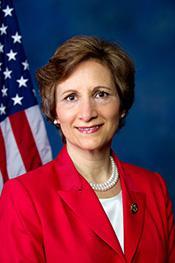
U.S. Representative for Oregon’s 1st district
Democrat
119th Congress, two-year term
Missed 1.2% of roll calls. Chamber median 1.9%.
The full voting recordCounts roll calls where most Democrats and most Republicans voted differently, leaving out procedural votes.
How we countFrom FEC filings, Voteview roll calls and Congress.gov.
Democrat. In Congress since 2012, 8 terms in total.
Following saves Bonamici to your list, which Chamber & Street keeps on its server, linked to a cookie on this browser and not to your name or email. Email alerts will come with constituent verification.
Bills and resolutions Bonamici signed on to as a cosponsor. An original cosponsor signed on the day the bill was introduced. Source: govinfo bill status files, last updated Nov 6, 2026.
Water Affordability, Transparency, Equity, and Reliability Act of 2025
Sponsor Bonnie Watson Coleman (D). Original cosponsor. 90 cosponsors. H.R. 3376 on Congress.gov
Introduced
GHOST Act of 2025
Sponsor Jill Tokuda (D). Original cosponsor. 34 cosponsors. H.R. 3373 on Congress.gov(opens in a new tab)
Introduced
Public Service Worker Protection Act
Sponsor Christopher Deluzio (D). Joined May 13, 2025. 85 cosponsors. H.R. 3139 on Congress.gov(opens in a new tab)
Introduced
Adult Education WORKS Act
Sponsor Lucy McBath (D). Joined May 13, 2025. 17 cosponsors. H.R. 2789 on Congress.gov(opens in a new tab)
Introduced
Recognizing the 60th anniversary of SkillsUSA.
Sponsor Glenn Thompson (R). Original cosponsor. 4 cosponsors. H.Res. 401 on Congress.gov(opens in a new tab)
Introduced
Ensuring Lasting Smiles Act
Sponsor Neal Dunn (R). Original cosponsor. 222 cosponsors. H.R. 3277 on Congress.gov(opens in a new tab)
Introduced
Child Care Infrastructure Act
Sponsor Katherine Clark (D). Original cosponsor. 9 cosponsors. H.R. 3274 on Congress.gov(opens in a new tab)
Introduced
Child Care Workforce Development Act
Sponsor Katherine Clark (D). Original cosponsor. 7 cosponsors. H.R. 3273 on Congress.gov(opens in a new tab)
Introduced
Special District Fairness and Accessibility Act
Sponsor Pat Fallon (R). Joined May 8, 2025. 28 cosponsors. H.R. 2766 on Congress.gov(opens in a new tab)
Passed committee
Therapeutic Fraud Prevention Act of 2025
Sponsor Ted Lieu (D). Original cosponsor. 204 cosponsors. H.R. 3243 on Congress.gov(opens in a new tab)
Introduced
America's Red Rock Wilderness Act
Sponsor Melanie Stansbury (D). Joined May 7, 2025. 81 cosponsors. H.R. 2467 on Congress.gov(opens in a new tab)
Introduced
Metastatic Breast Cancer Access to Care Act
Sponsor Andrew Garbarino (R). Joined May 7, 2025. 271 cosponsors. H.R. 2048 on Congress.gov(opens in a new tab)
Introduced
Metastatic Breast Cancer Access to Care Act
This bill expedites payment of Social Security Disability Insurance (SSDI) benefits and eligibility for Medicare coverage for those with metastatic breast cancer (i.e., breast cancer that has spread to other sites in the body).
Specifically, the bill eliminates the 5-month waiting period for SSDI benefits and the subsequent 24-month waiting period for Medicare coverage for individuals with metastatic breast cancer. Under current law, individuals generally must wait 5 months after the onset of disability to begin receiving SSDI benefits and an additional 24 months to become eligible for Medicare.
Supporting the goals and ideals of National Nurses Week, to be observed from May 6 through May 12, 2025.
Sponsor David Joyce (R). Original cosponsor. 3 cosponsors. H.Res. 389 on Congress.gov(opens in a new tab)
Introduced
This resolution expresses support for the goals and ideals of National Nurses Week.
STAR Act of 2025
Sponsor Blake Moore (R). Joined May 6, 2025. 28 cosponsors. H.R. 802 on Congress.gov(opens in a new tab)
Introduced
Expressing support for the recognition of May 4 through May 10, 2025, as Wildfire Preparedness Week, the national event educating the public on fire safety and preparedness, and supporting the goals of a Wildfire Preparedness Week.
Sponsor Norma Torres (D). Original cosponsor. 25 cosponsors. H.Res. 383 on Congress.gov(opens in a new tab)
Introduced
This resolution supports (1) the goals of Wildfire Preparedness Week; and (2) resources and educational initiatives that communicate how affected communities can take preventative measures such as instituting early warning systems and reducing unplanned human ignitions, as well as how to safely and efficiently evacuate people and their animals.
Expressing support for the designation of May 5, 2025, as the "National Day of Awareness for Missing and Murdered Indigenous Women and Girls".
Sponsor Dan Newhouse (R). Original cosponsor. 16 cosponsors. H.Res. 381 on Congress.gov(opens in a new tab)
Introduced
This resolution expresses support for the designation of a National Day of Awareness for Missing and Murdered Indigenous Women and Girls.
Recognizing the roles and contributions of elementary and secondary school teachers in building and enhancing the civic, cultural, and economic well-being of the United States.
Sponsor Sam Graves (R). Original cosponsor. 4 cosponsors. H.Res. 379 on Congress.gov(opens in a new tab)
Introduced
Dr. Lorna Breen Health Care Provider Protection Reauthorization Act
Sponsor Debbie Dingell (D). Joined May 5, 2025. 85 cosponsors. H.R. 929 on Congress.gov(opens in a new tab)
Introduced
PFAS Alternatives Act
Sponsor Debbie Dingell (D). Original cosponsor. 151 cosponsors. H.R. 3184 on Congress.gov(opens in a new tab)
Introduced
Supporting the designation of the week of April 28 through May 2, 2025, as "National Specialized Instructional Support Personnel Appreciation Week".
Sponsor Jahana Hayes (D). Joined May 1, 2025. 2 cosponsors. H.Res. 355 on Congress.gov(opens in a new tab)
Introduced
Community Services Block Grant Improvement Act of 2025
Sponsor Glenn Thompson (R). Original cosponsor. 31 cosponsors. H.R. 3131 on Congress.gov(opens in a new tab)
Introduced
Community Services Block Grant Improvement Act of 2025
This bill reauthorizes the Community Services Block Grant (CSBG) program through FY2032 and makes certain changes to the program and associated eligibility requirements. The CSBG program supports various antipoverty activities, primarily through formula-based allotments to states, tribes, and territories, the majority of which must be made available in grants to eligible local entities.
Specifically, the bill permanently sets the measure of eligibility for services, assistance, or resources provided directly to individuals or families under the program at 200% of the poverty line. (Under current law, the eligibility measure is temporarily set at 200% of the poverty line, an increase from the previous measure of 125% of the poverty line.)
The bill also makes certain changes to the permitted uses of funding, including by allowing CSBG funds to be used to facilitate low-income individuals’ and communities’ access to high-speed broadband, digital literacy training, technical support, and other services. States may also use certain funds allocated for training and technical assistance to assist eligible entities in responding to statewide and regional conditions that create economic insecurity, including emergency conditions.
The bill also expands requirements for the plans that states must submit to the Department of Health and Human Services in order to receive CSBG funds (e.g., transparency assurances), and sets deadlines by which states must make funds available to eligible entities.
Finally, the bill repeals a provision that allowed states to use CSBG funds to offset revenue losses associated with state charity tax credits.
Assault Weapons Ban of 2025
Sponsor Lucy McBath (D). Original cosponsor. 194 cosponsors. H.R. 3115 on Congress.gov(opens in a new tab)
Introduced
Assault Weapons Ban of 2025
This bill makes it a crime to knowingly import, sell, manufacture, transfer, or possess a semiautomatic assault weapon (SAW) or large capacity ammunition feeding device (LCAFD).
The prohibition does not apply to a firearm that is (1) manually operated by bolt, pump, lever, or slide action, except for certain shotguns; (2) permanently inoperable; (3) an antique; (4) only capable of firing rimfire ammunition; or (5) a rifle or shotgun specifically identified by make and model.
The bill also exempts from the prohibition the following, with respect to a SAW or LCAFD:
• importation, sale, manufacture, transfer, or possession related to certain law enforcement efforts, or authorized tests or experiments;
• importation, sale, transfer, or possession related to securing nuclear materials; and
• possession by a retired law enforcement officer.
The bill permits continued possession, sale, or transfer of a grandfathered SAW, which must be securely stored. A licensed gun dealer must conduct a background check prior to the sale or transfer of a grandfathered SAW between private parties.
The bill permits continued possession of, but prohibits sale or transfer of, a grandfathered LCAFD.
Newly manufactured LCAFDs must display serial number identification. Newly manufactured SAWs and LCAFDs must display the date of manufacture.
The bill also allows a state or local government to use Edward Byrne Memorial Justice Assistance Grant Program funds to compensate individuals who surrender a SAW or LCAFD under a buy-back program.
SERVICE Act
Sponsor Nikema Williams (D). Joined Apr 30, 2025. 21 cosponsors. H.R. 2906 on Congress.gov(opens in a new tab)
Introduced
Ensuring Agency Service Quality Act
Sponsor Nikema Williams (D). Joined Apr 30, 2025. 16 cosponsors. H.R. 2905 on Congress.gov(opens in a new tab)
Introduced
Medicare for All Act
Sponsor Pramila Jayapal (D). Original cosponsor. 118 cosponsors. H.R. 3069 on Congress.gov(opens in a new tab)
Introduced
Medicare for All Act
This bill establishes a national health insurance program that is administered by the Department of Health and Human Services (HHS).
Among other requirements, the program must (1) cover all U.S. residents; (2) provide for automatic enrollment of individuals upon birth or residency in the United States; and (3) cover items and services that are medically necessary or appropriate to maintain health or to diagnose, treat, or rehabilitate a health condition, including hospital services, prescription drugs, mental health and substance abuse treatment, dental and vision services, long-term care, gender affirming care, and reproductive care, including contraception and abortions.
The bill prohibits cost-sharing (e.g., deductibles, coinsurance, and copayments) and other charges for covered services. Additionally, private health insurers and employers may only offer coverage that is supplemental to, and not duplicative of, benefits provided under the program.
Health insurance exchanges and specified federal health programs terminate upon program implementation. However, the program does not affect coverage provided through the Department of Veterans Affairs or the Indian Health Service.
The bill also establishes a series of implementing provisions relating to (1) health care provider participation; (2) HHS administration; and (3) payments and costs, including the requirement that HHS negotiate prices for prescription drugs.
Individuals who are age 18 or younger, age 55 or older, or already enrolled in Medicare may enroll in the program starting one year after enactment of this bill; other individuals may buy into the program at this time. The program must be fully implemented two years after enactment.