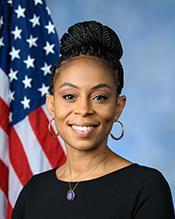
U.S. Representative for Ohio’s 11th district
Democrat
119th Congress, two-year term
Missed 0.0% of roll calls. Chamber median 1.9%.
The full voting recordCounts roll calls where most Democrats and most Republicans voted differently, leaving out procedural votes.
How we countFrom FEC filings, Voteview roll calls and Congress.gov.
Democrat. In Congress since 2021, 3 terms in total.
Following saves Brown to your list, which Chamber & Street keeps on its server, linked to a cookie on this browser and not to your name or email. Email alerts will come with constituent verification.
Bills and resolutions Brown signed on to as a cosponsor. An original cosponsor signed on the day the bill was introduced. Source: govinfo bill status files, last updated Nov 6, 2026.
Menstrual Equity For All Act of 2025
Sponsor Grace Meng (D). Original cosponsor. 77 cosponsors. H.R. 3644 on Congress.gov
Introduced
Menstrual Equity For All Act of 2025
This bill expands access to menstrual products (e.g., tampons) in certain locations and for particular groups, such as in schools and for low-income individuals, through federal programs and requirements. It also prohibits state or local sales taxes for these products.
The bill expands access to menstrual products through federal programs by
• requiring Medicaid to cover such products,
• establishing grants within the Temporary Assistance for Needy Families (TANF) program to provide benefits to ensure access to such products,
• authorizing the Emergency Food and Shelter Program to provide menstrual products to homeless individuals, and
• increasing Social Services Block Grant funding to provide such products to low-income individuals.
Also, the bill sets out requirements to make free menstrual products available in federal and state correctional facilities (including Department of Homeland Security detention facilities) and restrooms in federal buildings that are open to the public.
Further, the bill (1) establishes grants to provide free menstrual products to students at institutions of higher education, and (2) permits elementary and secondary schools to use certain grant funds to provide menstrual products to students.
In addition, the bill requires employers with at least 100 employees to provide free menstrual products for employees.
Finally, the bill prohibits states and local governments from taxing retail sales of menstrual products.
Henrietta Lacks Congressional Gold Medal Act
Sponsor Kweisi Mfume (D). Joined May 23, 2025. 35 cosponsors. H.R. 3498 on Congress.gov(opens in a new tab)
Introduced
Henrietta Lacks Congressional Gold Medal Act
This bill awards posthumously a Congressional Gold Medal in commemoration of Henrietta Lacks, in recognition of the contributions of her immortal cells to global health, scientific research, quality of life, and patients' rights.
Second Chance Reauthorization Act of 2025
Sponsor Carol Miller (R). Original cosponsor. 34 cosponsors. H.R. 3552 on Congress.gov(opens in a new tab)
Introduced
Second Chance Reauthorization Act of 2025
This bill reauthorizes through FY2030 various federal grants for state, local, and tribal governments, nonprofit organizations, and service providers to support individuals who reenter the community following a period of incarceration.
Specifically, the bill reauthorizes the following:
• grants for adult and juvenile offender reentry demonstration projects;
• grants for family-based substance abuse treatment programs;
• grants to evaluate and improve educational methods at prisons, jails, and juvenile facilities;
• grants for career training education;
• the offender reentry substance abuse and criminal justice collaboration program; and
• grants to nonprofit organizations for community-based mentoring and transitional services.
Improving Seniors’ Timely Access to Care Act of 2025
Sponsor Mike Kelly (R). Original cosponsor. 308 cosponsors. H.R. 3514 on Congress.gov(opens in a new tab)
Passed committee
Improving Seniors' Timely Access to Care Act of 2025
This bill establishes several requirements and standards relating to prior authorization processes under Medicare Advantage (MA) plans.
Specifically, MA plans must (1) establish an electronic prior authorization program that meets specified standards; (2) annually submit to the CMS for publication specified prior authorization information, including the percentage of requests approved and the average response time; and (3) meet other standards, as set by the Centers for Medicare & Medicaid Services (CMS), relating to the quality and timeliness of prior authorization determinations.
The CMS and the Office of the National Coordinator for Health Information Technology must publish on the CMS' website a report that analyzes the information received from MA plans, the feasibility of implementing real-time decision making with respect to prior authorization requests, and the impact of decisions that are made using artificial intelligence on patient access.
Stronger Communities through Better Transit Act
Sponsor Henry Johnson (D). Original cosponsor. 150 cosponsors. H.R. 3449 on Congress.gov(opens in a new tab)
Introduced
Stronger Communities through Better Transit Act
This bill requires the Department of Transportation (DOT) to establish a grant program to support operating projects for public transportation and related service improvements, particularly in underserved communities and areas of persistent poverty.
Specifically, the bill requires DOT to allocate funding under the program for urbanized areas, states, and Indian tribes that are recipients of funds under either the Federal Transit Administration's (FTA's) Urbanized Area Formula Funding program or Formula Grants for Rural Areas program. Eligible recipients may use funding for operating costs associated with projects that improve public transportation service for transit-dependent populations and support increased transit ridership (e.g., service expansion, information technology enhancements, and workforce development). DOT must apportion the funding so that recipients receive funds that are proportional to their share of operating costs.
The bill also provides for an increased federal cost share for operating assistance for projects or programs carried out in areas of persistent poverty or underserved communities.
DOT must set up a multimodal access measurement interface for public agencies to aid transit agencies in determining and reporting on access to jobs and essential services.
A grant recipient must (1) report specific information to the FTA for inclusion in the National Transit Database, and (2) survey transit riders and non-riding residents regarding transit service improvements.
Further, the bill expands the purposes of the public transportation programs to include supporting public transportation's role in combating climate change through growing/retaining transit ridership.
Water Affordability, Transparency, Equity, and Reliability Act of 2025
Sponsor Bonnie Watson Coleman (D). Original cosponsor. 90 cosponsors. H.R. 3376 on Congress.gov(opens in a new tab)
Introduced
Born in the USA Act of 2025
Sponsor Delia Ramirez (D). Original cosponsor. 140 cosponsors. H.R. 3368 on Congress.gov(opens in a new tab)
Introduced
Expressing the sense of the House of Representatives that public servants should be commended for their dedication and continued service to the United States during Public Service Recognition Week and throughout the year.
Original cosponsor. 14 cosponsors. H.Res. 403 on Congress.gov(opens in a new tab)
Progress not on file
No DeepSeek on Government Devices Act
Sponsor Josh Gottheimer (D). Joined May 9, 2025. 32 cosponsors. H.R. 1121 on Congress.gov(opens in a new tab)
Introduced
No DeepSeek on Government Devices Act
This bill directs the Office of Management and Budget to develop standards and guidance requiring removal of the DeepSeek application from federal agency information technology. Such standards and guidance also apply to any successor application developed or provided by High Flyer or entities owned by High Flyer.
DeepSeek is an artificial intelligence start-up founded in 2023 and based in Hangzhou, China. DeepSeek's chief executive officer also created High Flyer, a hedge fund that is reportedly the sole funder of DeepSeek.
VA Employee Fairness Act of 2025
Sponsor Mark Takano (D). Original cosponsor. 120 cosponsors. H.R. 3261 on Congress.gov(opens in a new tab)
Introduced
Modernizing Government Technology Reform Act
Sponsor Nancy Mace (R). Joined May 7, 2025. 2 cosponsors. H.R. 2985 on Congress.gov(opens in a new tab)
Passed committee
Modernizing Government Technology Reform Act
This bill reauthorizes through 2032 and revises the Technology Modernization Fund (TMF). (The TMF is a revolving fund administered by the General Services Administration to improve information technology and enhance cybersecurity across the federal government.)
Changes to the TMF include
• requiring the Office of the Federal Chief Information Officer to annually submit to Congress (1) a list of the 10 legacy information technology (IT) systems that present the greatest security, privacy, and operational risks to the federal government; and (2) each federal agency's list of high-risk legacy IT systems;
• authorizing TMF funding for IT projects that improve the ability of the agency to perform its mission and deliver services to the public;
• additional requirements for agencies that receive funds to reimburse the TMF (for example, funds used for services or work in direct support of a project must be fully reimbursed); and
• revising the criteria by which agency proposals for TMF funding are evaluated to include the (1) impact of modernizing, retiring, or replacing legacy IT systems; and (2) ability of an agency to repay funds provided.
TIPS Act
Sponsor Steven Horsford (D). Joined May 7, 2025. 32 cosponsors. H.R. 1314 on Congress.gov(opens in a new tab)
Introduced
Food Secure Strikers Act of 2025
Sponsor Alma Adams (D). Joined May 5, 2025. 89 cosponsors. H.R. 2357 on Congress.gov(opens in a new tab)
Introduced
Food Secure Strikers Act of 2025
This bill allows certain striking workers and their households to maintain their eligibility for the Supplemental Nutrition Assistance Program (SNAP).
Specifically, the bill provides that a household that would otherwise be eligible to participate in SNAP is eligible for benefits if any member of the household is on strike because of a labor dispute. Current law generally prohibits a household from participating in SNAP if any member of the household is on strike unless the household was eligible for SNAP immediately prior to the strike. Also, under current law, households are not eligible for an increased SNAP allotment as a result of the decreased income of a striking member of the household. The bill expands SNAP eligibility for households with striking workers by repealing both of these restrictions.
The bill also allows a government employee who is dismissed for striking and their household to maintain SNAP program eligibility. Specifically, current law prohibits certain individuals who voluntarily and without good cause quit a job from participating in SNAP. Further, a federal, state, or local government employee who participates in a strike against the government that results in their dismissal is considered to have voluntarily quit without good cause. The bill eliminates the provision that considers the dismissed government employee to have voluntarily quit without good cause, thereby allowing the employee and their household to maintain SNAP program eligibility if they are otherwise eligible for the program.
Mikaela Naylon Give Kids a Chance Act
Sponsor Michael McCaul (R). Joined May 5, 2025. 313 cosponsors. H.R. 1262 on Congress.gov(opens in a new tab)
Passed the House
Give Kids a Chance Act of 2025
This bill expands the Food and Drug Administration’s (FDA’s) authority with respect to research on rare pediatric diseases, including by permitting the FDA to take enforcement action against drug sponsors that fail to satisfy pediatric study requirements and by reauthorizing programs that support pediatric research.
Specifically, the bill
• modifies requirements relating to molecularly targeted pediatric cancer investigations to permit research on new drugs in combination with active ingredients that have already been approved, provided certain conditions are met;
• permits the FDA to take enforcement action against drug sponsors that fail to comply with pediatric study requirements, if such sponsors demonstrated a lack of due diligence in satisfying the requirement;
• renews the FDA’s authority to award priority review vouchers to sponsors of new products intended to treat rare pediatric diseases through September 30, 2029; and
• reauthorizes through FY2027 certain funding for the National Institutes of Health to support priority pediatric research.
The bill also provides statutory authority for the FDA’s interpretation of the orphan drug exclusivity period. The bill specifies, consistent with FDA regulations, that the seven-year market exclusivity period for drugs for rare diseases or conditions (i.e., orphan drugs) prohibits the approval of the same drug for the same approved use or indication with respect to the disease or condition. (In Catalyst Pharmaceuticals, Inc. v. Becerra, a court rejected the FDA’s interpretation and held that orphan drug exclusivity extends to all uses or indications for the disease or condition.)
Women and Underrepresented Minorities in STEM Booster Act of 2025
Sponsor Marilyn Strickland (D). Original cosponsor. 17 cosponsors. H.R. 3124 on Congress.gov(opens in a new tab)
Introduced
Medicare for All Act
Sponsor Pramila Jayapal (D). Original cosponsor. 118 cosponsors. H.R. 3069 on Congress.gov(opens in a new tab)
Introduced
Medicare for All Act
This bill establishes a national health insurance program that is administered by the Department of Health and Human Services (HHS).
Among other requirements, the program must (1) cover all U.S. residents; (2) provide for automatic enrollment of individuals upon birth or residency in the United States; and (3) cover items and services that are medically necessary or appropriate to maintain health or to diagnose, treat, or rehabilitate a health condition, including hospital services, prescription drugs, mental health and substance abuse treatment, dental and vision services, long-term care, gender affirming care, and reproductive care, including contraception and abortions.
The bill prohibits cost-sharing (e.g., deductibles, coinsurance, and copayments) and other charges for covered services. Additionally, private health insurers and employers may only offer coverage that is supplemental to, and not duplicative of, benefits provided under the program.
Health insurance exchanges and specified federal health programs terminate upon program implementation. However, the program does not affect coverage provided through the Department of Veterans Affairs or the Indian Health Service.
The bill also establishes a series of implementing provisions relating to (1) health care provider participation; (2) HHS administration; and (3) payments and costs, including the requirement that HHS negotiate prices for prescription drugs.
Individuals who are age 18 or younger, age 55 or older, or already enrolled in Medicare may enroll in the program starting one year after enactment of this bill; other individuals may buy into the program at this time. The program must be fully implemented two years after enactment.
Equality Act
Sponsor Mark Takano (D). Original cosponsor. 218 cosponsors. H.R. 15 on Congress.gov(opens in a new tab)
Introduced
Equality Act
This bill prohibits discrimination based on sex, sexual orientation, or gender identity with respect to businesses, employment, housing, federally funded programs, and other settings.
Specifically, the bill expands Title II and Title VI of the Civil Rights Act of 1964 to prohibit public accommodations and federally funded programs, respectively, from discriminating based on sex, sexual orientation, or gender identity. It also includes stores, transit services, recreational facilities, and establishments that provide health care, accounting, or legal services as public accommodations under Title II.
The bill also expands Title IV (desegregation of public schools) and Title VII (employment discrimination) to specifically include sexual orientation and gender identity. (The Supreme Court held in Bostock v. Clayton County that Title VII's prohibition of employment discrimination based on sex also prohibits employment discrimination based on sexual orientation or gender identity.)
The bill similarly expands the Fair Housing Act (discrimination in public and private housing) to include sexual orientation and gender identity. It also prohibits discrimination based on sexual orientation or gender identity by creditors and with respect to jury selection.
The bill defines sex for purposes of the aforementioned provisions to include sex stereotypes, pregnancy, childbirth, sexual orientation, gender identity, and sex characteristics.
Original Slavery Remembrance Month Resolution
Sponsor Al Green (D). Joined Apr 29, 2025. 37 cosponsors. H.J.Res. 67 on Congress.gov(opens in a new tab)
Introduced
Ocean Regional Opportunity and Innovation Act of 2025
Sponsor Chellie Pingree (D). Original cosponsor. 9 cosponsors. H.R. 3048 on Congress.gov(opens in a new tab)
Introduced
Leveling the Playing Field 2.0 Act
Sponsor Beth Van Duyne (R). Joined Apr 21, 2025. 103 cosponsors. H.R. 1548 on Congress.gov(opens in a new tab)
Introduced
Leveling the Playing Field 2.0 Act
This bill addresses unfair trade practices by making various changes to U.S. antidumping and countervailing duty laws. Antidumping laws provide relief to U.S industries and workers that are materially injured or threatened with injury due to imports of like products sold in the U.S. market at less than fair value, while countervailing duty laws provide such relief from imports of products subsidized by a foreign government or public entity.
Specifically, the bill establishes a process for successive antidumping and countervailing duty investigations. Successive investigations may be concurrent (an ongoing investigation of the same product) or recently completed (not more than two years before the date of the initiation of the successive investigation). Further, the bill establishes a timeline for the Department of Commerce to issue determinations in successive investigations.
Among other provisions, the bill authorizes Commerce to
• apply countervailing duty law to subsidies provided by a foreign government or public entity to a company operating in a different country,
• use another method for calculating the cost of production in specific circumstances, and
• require importers to certify that the imported merchandise is not subject to an antidumping or countervailing duty order.
Additionally, the bill statutorily establishes procedures for Commerce to conduct circumvention inquiries, including by specifying the deadlines for preliminary and final determinations.
The bill also provides statutory authority for Commerce to investigate currency undervaluation as a countervailable subsidy.
Pursuing Equity in Mental Health Act
Sponsor Bonnie Watson Coleman (D). Joined Apr 17, 2025. 41 cosponsors. H.R. 2904 on Congress.gov(opens in a new tab)
Introduced
Supporting the designation of the week of April 11 through April 17, 2025, as the eighth annual "Black Maternal Health Week", founded by Black Mamas Matter Alliance, Inc. (BMMA), to bring national attention to the maternal and reproductive health crisis in the United States and the importance of reducing maternal mortality and morbidity among Black women and birthing people.
Sponsor Alma Adams (D). Original cosponsor. 54 cosponsors. H.Res. 332 on Congress.gov(opens in a new tab)
Introduced
Condemning the Trump administration for the use of an unauthorized method of communicating highly sensitive or potentially classified information regarding a United States military operation via the messaging platform "Signal".
Sponsor Julie Johnson (D). Joined Apr 10, 2025. 13 cosponsors. H.Res. 265 on Congress.gov(opens in a new tab)
Introduced
Anti-Racism in Public Health Act of 2025
Sponsor Ayanna Pressley (D). Original cosponsor. 24 cosponsors. H.R. 2884 on Congress.gov(opens in a new tab)
Introduced
Anti-Racism in Public Health Act of 2025
This bill establishes within the Centers for Disease Control and Prevention (CDC) a National Center on Antiracism and Health and a law enforcement violence prevention program.
In particular, the new center must carry out various activities to address racism and its impact on health and well-being. This includes declaring racism a public health crisis, collecting and analyzing data, and administering research and grant programs.
Additionally, the bill specifically directs the CDC's National Center for Injury Prevention and Control, in coordination with the Department of Justice and other relevant stakeholders, to implement the law enforcement violence prevention program by conducting research and supporting other activities pertaining to law enforcement violence and public health.
Great Lakes and National Weather Service Funding Protection Act
Sponsor Timothy Kennedy (D). Original cosponsor. 11 cosponsors. H.R. 2856 on Congress.gov(opens in a new tab)
Introduced