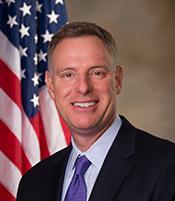
U.S. Representative for California’s 50th district
Democrat
119th Congress, two-year term
Missed 1.5% of roll calls. Chamber median 1.9%.
The full voting recordCounts roll calls where most Democrats and most Republicans voted differently, leaving out procedural votes.
How we countFrom FEC filings, Voteview roll calls and Congress.gov.
Democrat. In Congress since 2013, 7 terms in total.
Following saves Peters to your list, which Chamber & Street keeps on its server, linked to a cookie on this browser and not to your name or email. Email alerts will come with constituent verification.
Bills and resolutions Peters signed on to as a cosponsor. An original cosponsor signed on the day the bill was introduced. Source: govinfo bill status files, last updated Nov 6, 2026.
Peters also withdrew as a cosponsor from 1 bill, not listed here.
Memorializing Rev. Jesse Jackson by flying the flag of the United States at halfstaff.
Sponsor Joyce Beatty (D). Original cosponsor. 168 cosponsors. H.Res. 1107 on Congress.gov
Introduced
Debt-to-GDP Transparency and Stabilization Act
Sponsor Lloyd Smucker (R). Original cosponsor. 16 cosponsors. H.R. 7808 on Congress.gov(opens in a new tab)
Introduced
Debt-to-GDP Transparency and Stabilization Act
This bill requires the President's annual budget and congressional budget resolutions to include (1) the ratio of the public debt to the estimated gross domestic product (GDP), and (2) the ratio of the surplus or deficit to the estimated GDP.
DISCLOSE Act of 2026
Sponsor Chris Pappas (D). Original cosponsor. 189 cosponsors. H.R. 7802 on Congress.gov(opens in a new tab)
Introduced
Democracy Is Strengthened by Casting Light On Spending in Elections Act of 2026 or the DISCLOSE Act of 2026
This bill addresses campaign finance, including by expanding the prohibition on campaign spending by foreign nationals, requiring additional disclosures of campaign expenditures, and requiring additional disclosures regarding certain political advertisements.
Specifically, the bill expands existing foreign money prohibitions to include disbursements for paid web-based or digital communications and federal judicial nomination communications. It also prohibits foreign nationals from contributing to campaigns related to ballot initiatives and referenda.
The Government Accountability Office must, for each four-year election cycle, study and report on the incidence of illicit foreign money in federal elections.
Next, the bill makes it unlawful to establish or use a corporation, company, or other entity with the intent to conceal an election contribution or donation by a foreign national. A violator is subject to criminal penalties—a fine, a prison term of up to five years, or both.
Covered organizations (e.g., corporations, labor organizations, and political organizations) must, within 24 hours, file reports with the Federal Election Commission to disclose campaign expenditures of more than $10,000 during an election cycle.
The bill also requires organizations to provide additional disclosures regarding political advertisements, including the donors who contributed the most money to that organization in the last year.
African American History Act of 2026
Sponsor Kweisi Mfume (D). Original cosponsor. 97 cosponsors. H.R. 7740 on Congress.gov(opens in a new tab)
Introduced
Stop ICE Election Militarization Act
Sponsor John Larson (D). Joined Feb 24, 2026. 12 cosponsors. H.R. 7621 on Congress.gov(opens in a new tab)
Introduced
Generating Retirement Ownership through Long-Term Holding
Sponsor Beth Van Duyne (R). Joined Feb 24, 2026. 130 cosponsors. H.R. 2089 on Congress.gov(opens in a new tab)
Introduced
Roberto Clemente Commemorative Coin Act
Sponsor Adriano Espaillat (D). Joined Feb 24, 2026. 221 cosponsors. H.R. 1787 on Congress.gov(opens in a new tab)
Introduced
Roberto Clemente Commemorative Coin Act
This bill directs the Department of the Treasury to mint and issue coins in recognition of the life of Roberto Clemente, baseball player and human rights activist. All sales of coins issued under this bill must include a surcharge to be paid to the Roberto Clemente Foundation.
Essential Caregivers Act of 2025
Sponsor Claudia Tenney (R). Joined Feb 23, 2026. 160 cosponsors. H.R. 6766 on Congress.gov(opens in a new tab)
Introduced
Essential Caregivers Act of 2025
This bill prohibits certain health care facilities from limiting the access of essential caregivers to residents of those facilities, including during designated emergency periods.
Specifically, the bill generally prohibits Medicare skilled nursing facilities, Medicaid nursing facilities, Medicaid intermediate care facilities, and associated inpatient rehabilitation facilities from restricting the access of essential caregivers to residents of the facilities, including during emergency periods in which visitation rights are otherwise restricted. During emergency periods, facilities may restrict access for an initial period of up to seven days and for one additional maximum seven-day period (if the additional period is approved by the state health department). Facilities may restrict access for a total of 7 days (or 14 days with the approval of the state health department) during an emergency period.
Essential caregivers must agree to comply with any safety protocols set by the facility, which may be no more stringent for caregivers compared to those for staff. Caregivers who fail to comply with these requirements may be denied access, subject to an appeals process.
Healthcare Workforce Resilience Act
Sponsor Bradley Schneider (D). Joined Feb 23, 2026. 17 cosponsors. H.R. 5283 on Congress.gov(opens in a new tab)
Introduced
Jaime’s Law
Sponsor Debbie Wasserman Schultz (D). Joined Feb 20, 2026. 17 cosponsors. H.R. 7564 on Congress.gov(opens in a new tab)
Introduced
Federal Extreme Risk Protection Order Act of 2026
Sponsor Lucy McBath (D). Original cosponsor. 113 cosponsors. H.R. 7599 on Congress.gov(opens in a new tab)
Introduced
Federal Extreme Risk Protection Order Act of 2026
This bill authorizes and establishes procedures for federal courts to issue federal extreme risk protection orders. Additionally, the bill establishes grants to support the implementation of extreme risk protection order laws at the state and local levels, extends federal firearms restrictions to individuals who are subject to extreme risk protection orders, and expands related data collection.
Extreme risk protection order laws, or red flag laws, generally allow certain individuals (e.g., law enforcement officers or family members) to petition a court for a temporary order that prohibits an at-risk individual from purchasing and possessing firearms.
Among its provisions, the bill
• authorizes a family or household member, or a law enforcement officer, to petition for a federal extreme risk protection order with respect to an individual who poses a risk to themselves or others;
• directs the Department of Justice to establish a grant program to help states, local governments, Indian tribes, and other entities implement extreme risk protection order laws;
• extends federal restrictions on the receipt, possession, shipment, and transportation of firearms and ammunition to individuals who are subject to extreme risk protection orders; and
• requires the Federal Bureau of Investigation to compile records from federal, tribal, and state courts and other agencies that identify individuals who are subject to extreme risk protection orders.
Providing for congressional disapproval under chapter 8 of title 5, United States Code, of the rule submitted by the Department of Veterans Affairs relating to "Reproductive Health Services".
Sponsor Julia Brownley (D). Joined Feb 17, 2026. 155 cosponsors. H.J.Res. 144 on Congress.gov(opens in a new tab)
Introduced
To amend title XI of the Social Security Act to equalize the negotiation period between small-molecule and biologic candidates under the Drug Price Negotiation Program.
Sponsor Gregory Murphy (R). Joined Feb 12, 2026. 68 cosponsors. H.R. 1492 on Congress.gov(opens in a new tab)
Introduced
This bill lengthens the amount of time for which drug products must have market approval in order for the products to qualify for negotiation under the Medicare Drug Price Negotiation Program.
The Medicare Drug Price Negotiation Program requires the Centers for Medicare & Medicaid Services to negotiate the prices of certain prescription drugs under Medicare beginning in 2026. Among other requirements, drugs must have had market approval for at least 7 years (for drug products) or 11 years (for biologics) to qualify for negotiation.
The bill modifies these provisions so as to require drug products to also have had at least 11 years of market approval in order to qualify for negotiation.
The bill's changes apply retroactively.
Recognizing that it is the duty of the Federal Government to develop and implement a Transgender Bill of Rights to protect and codify the rights of transgender and nonbinary people under the law and ensure their access to medical care, shelter, safety, and economic security.
Sponsor Pramila Jayapal (D). Original cosponsor. 111 cosponsors. H.Res. 1058 on Congress.gov(opens in a new tab)
Introduced
Department of Homeland Security Appropriations Act, 2026
Sponsor Rosa DeLauro (D). Original cosponsor. 114 cosponsors. H.R. 7481 on Congress.gov(opens in a new tab)
Introduced
Department of Homeland Security Appropriations Act, 2026
This bill provides FY2026 appropriations for various agencies and offices within the Department of Homeland Security (DHS), except for U.S. Immigration and Customs Enforcement (ICE), U.S. Customs and Border Protection (CBP), and management and oversight activities of the Office of the Secretary.
Specifically, the bill provides appropriations to DHS for
• the Federal Protective Service,
• the Office of Inspector General,
• the Transportation Security Administration,
• the U.S. Coast Guard,
• the U.S. Secret Service,
• the Cybersecurity and Infrastructure Security Agency,
• the Federal Emergency Management Agency (FEMA),
• U.S. Citizenship and Immigration Services,
• the Federal Law Enforcement Training Centers, and
• the Science and Technology Directorate.
The bill does not provide appropriations for some agencies and activities that have been funded in prior DHS appropriations acts, including ICE, CBP, and management and oversight activities of the Office of the Secretary.
Build HUBS Act
Sponsor Laura Friedman (D). Joined Feb 11, 2026. 3 cosponsors. H.R. 7062 on Congress.gov(opens in a new tab)
Introduced
Loan Equity for Advanced Professionals Act
Sponsor Timothy Kennedy (D). Joined Feb 11, 2026. 77 cosponsors. H.R. 6574 on Congress.gov(opens in a new tab)
Introduced
Passports for Purple Hearts and Medals of Honor Act
Sponsor Mike Levin (D). Original cosponsor. 18 cosponsors. H.R. 7398 on Congress.gov(opens in a new tab)
Introduced
PASTEUR Act of 2026
Sponsor Earl Carter (R). Original cosponsor. 29 cosponsors. H.R. 7352 on Congress.gov(opens in a new tab)
Introduced
Right to FDA-Approved Medicines Act
Sponsor Deborah Ross (D). Joined Jan 30, 2026. 29 cosponsors. H.R. 4525 on Congress.gov(opens in a new tab)
Introduced
Right to FDA-Approved Medicines Act
This bill sets out statutory protections for an individual's right to access and a health care provider's right to provide medicines (i.e., drugs and biological products) approved by the Food and Drug Administration (FDA).
Generally, the bill prohibits measures that single out and impede access to FDA-approved medicines and related information. However, a party may defend against a claim that a measure violates the bill's prohibitions by demonstrating, through clear and convincing evidence, that the measure significantly advances access to FDA-approved medicines and such access cannot be advanced through less restrictive means. The bill also specifies that the prohibition preempts inconsistent state and local laws and applies in spite of other federal laws, including the Religious Freedom Restoration Act of 1993.
The Department of Justice, individuals, or health care providers may bring a lawsuit to enforce this bill, and states are not immune from suits for violations.
Impeaching Kristi Lynn Arnold Noem, Secretary of Homeland Security, for high crimes and misdemeanors.
Sponsor Robin Kelly (D). Joined Jan 27, 2026. 187 cosponsors. H.Res. 996 on Congress.gov(opens in a new tab)
Introduced
Prohibit Partisan Park Passes Act
Sponsor Sarah Elfreth (D). Original cosponsor. 24 cosponsors. H.R. 7251 on Congress.gov(opens in a new tab)
Introduced
More Homes on the Market Act
Sponsor Jimmy Panetta (D). Joined Jan 27, 2026. 159 cosponsors. H.R. 1340 on Congress.gov(opens in a new tab)
Introduced
More Homes on the Market Act
This bill increases the amount of gain from the sale of a principal residence that an individual may exclude from gross income (for federal tax purposes).
Under the bill, an individual may exclude from gross income gain from the sale of a principal residence of up to $500,000 (currently $250,000), and taxpayers who are married and file a joint federal income tax return may exclude up to $1 million (currently $500.000). The bill also requires these amounts to be adjusted annually for inflation.
Commission on Equity and Reconciliation in the Uniformed Services Act
Sponsor Mark Takano (D). Original cosponsor. 26 cosponsors. H.R. 7238 on Congress.gov(opens in a new tab)
Introduced
Ensuring Access to General Surgery Act of 2026
Sponsor Ami Bera (D). Original cosponsor. 9 cosponsors. H.R. 7198 on Congress.gov(opens in a new tab)
Introduced
Ensuring Access to General Surgery Act of 2026
This bill requires the Health Resources and Services Administration (HRSA) to study access to general surgeons by underserved populations.
Specifically, HRSA must study (1) whether the health professional shortage area designation under the National Health Service Corps (NHSC) program accurately assesses adequacy of access to general surgeons, (2) whether another measure would be more accurate, and (3) potential methodologies for designating general surgery shortage areas. (The NHSC provides scholarships and student loan repayment awards to primary care, dental care, and mental health care providers who agree to work in areas that HRSA designates as having a shortage of those particular types of providers.)
HRSA must also publish data comparing the availability and need of general surgery services in urban, suburban, and rural areas.
On the basis of its study, HRSA may establish a methodology for designating general surgery shortage areas and make such designations. If any designations are made, HRSA must publish a list of general surgery shortage areas.