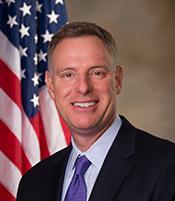
U.S. Representative for California’s 50th district
Democrat
119th Congress, two-year term
Missed 1.5% of roll calls. Chamber median 1.9%.
The full voting recordCounts roll calls where most Democrats and most Republicans voted differently, leaving out procedural votes.
How we countFrom FEC filings, Voteview roll calls and Congress.gov.
Democrat. In Congress since 2013, 7 terms in total.
Following saves Peters to your list, which Chamber & Street keeps on its server, linked to a cookie on this browser and not to your name or email. Email alerts will come with constituent verification.
Bills and resolutions Peters signed on to as a cosponsor. An original cosponsor signed on the day the bill was introduced. Source: govinfo bill status files, last updated Nov 6, 2026.
Peters also withdrew as a cosponsor from 1 bill, not listed here.
Project Turnkey Act
Sponsor Suzanne Bonamici (D). Joined Feb 10, 2025. 16 cosponsors. H.R. 1042 on Congress.gov
Introduced
Housing Unhoused Disabled Veterans Act
Sponsor Brad Sherman (D). Joined Feb 7, 2025. 46 cosponsors. H.R. 965 on Congress.gov(opens in a new tab)
Passed the House
To award a Congressional Gold Medal to the Freedom Riders, collectively, in recognition of their unique contribution to Civil Rights, which inspired a revolutionary movement for equality in interstate travel.
Sponsor Henry Johnson (D). Joined Feb 7, 2025. 124 cosponsors. H.R. 945 on Congress.gov(opens in a new tab)
Introduced
This bill provides for the presentation of a Congressional Gold Medal to the Freedom Riders, in recognition of their contribution to civil rights by fighting for equality in interstate travel.
Prevent Tariff Abuse Act
Sponsor Suzan DelBene (D). Joined Feb 6, 2025. 75 cosponsors. H.R. 407 on Congress.gov(opens in a new tab)
Introduced
Prevent Tariff Abuse Act
This bill prohibits the President from exercising authorities under the International Emergency Economic Powers Act (IEEPA) to impose duties, tariff-rate quotas, or other quotas on imports entering the United States. (IEEPA provides the President with broad authority to regulate various economic transactions following a declaration of a national emergency.)
Scientific Integrity Act
Sponsor Paul Tonko (D). Original cosponsor. 140 cosponsors. H.R. 1106 on Congress.gov(opens in a new tab)
Introduced
Scientific Integrity Act
This bill requires each federal agency that funds, conducts, or oversees scientific research to adopt and enforce a scientific integrity policy.
Under the bill, among other parameters, such policies must (1) ensure that scientific conclusions are not based on political considerations, (2) prohibit the suppression or alteration of findings, and (3) permit researchers to disseminate their findings and engage with the scientific community as appropriate. Scientific integrity policies must also include a mechanism through which stakeholders may report violations of the policy.
Agencies are required to submit their scientific integrity policies to the Office of Science and Technology Policy (OSTP) for approval. Approved policies must be made public, submitted to Congress, and periodically updated. Agencies may use their existing policies provided they satisfy the requirements of the bill. The Government Accountability Office must review implementation of the policies.
Each agency is also required to (1) appoint a Scientific Integrity Officer, (2) establish a process for dispute resolution consistent with the scientific integrity policy, and (3) establish a specified training program for current and new employees.
Commission To Study the Potential of a National Museum of Italian American History and Culture Act
Sponsor Thomas Suozzi (D). Original cosponsor. 53 cosponsors. H.R. 1102 on Congress.gov(opens in a new tab)
Introduced
Taxpayer Data Protection Act
Sponsor Haley Stevens (D). Original cosponsor. 205 cosponsors. H.R. 1101 on Congress.gov(opens in a new tab)
Introduced
Taxpayer Data Protection Act
This bill restricts access to any public money receipt or payment system belonging to the Department of the Treasury.
Specifically, access is limited to authorized Treasury officers, employees, or contractors meeting certain performance standards who have held a qualified position for at least a year, or who hold other qualifications as provided by the bill. The bill specifically prohibits special government employees (i.e., temporary appointees hired to perform specific tasks) from having access to such systems. The bill also provides that an individual accessing such systems shall be treated as an executive branch employee for purposes of federal criminal conflict of interest laws.
Treasury's Office of Inspector General must investigate and report on each instance of unauthorized use or other access of such payment systems.
Truth in Tuition Act of 2025
Sponsor Marie Perez (D). Original cosponsor. 5 cosponsors. H.R. 1090 on Congress.gov(opens in a new tab)
Introduced
Truth in Tuition Act of 2025
This bill requires institutions of higher education (IHEs) that participate in federal student aid programs to provide admitted students with information related to tuition and fees. Specifically, the bill requires an IHE to provide to a student (1) a multi-year tuition and fee schedule; or (2) a single-year tuition and fee schedule and a nonbinding, multi-year estimate of net costs after financial aid is awarded. The Department of Education may waive this requirement under certain circumstances.
Protecting Sensitive Locations Act
Sponsor Adriano Espaillat (D). Original cosponsor. 157 cosponsors. H.R. 1061 on Congress.gov(opens in a new tab)
Introduced
Protecting Sensitive Locations Act
This bill prohibits immigration enforcement actions within 1,000 feet of a sensitive location except in exigent circumstances, such as the imminent risk of death, violence, or physical harm to any person.
Sensitive locations include
• health care facilities;
• schools and school bus stops;
• places that provide assistance for people such as children, pregnant women, and abuse victims;
• child care facilities;
• places that provide disaster or emergency services;
• places of worship;
• courthouses and lawyers’ offices;
• facilities used as polling places;
• certain labor union facilities; and
• public assistance offices.
The prohibition shall apply to Department of Homeland Security officers and agents, as well as state employees pursuing immigration enforcement actions.
If an enforcement action is carried out in violation of this prohibition (1) no information resulting from the action may be entered into the record in a resulting removal proceeding, and (2) the affected individual may move to immediately terminate such a proceeding.
U.S. Immigration and Customs Enforcement and U.S. Customs and Border Protection shall annually report to Congress about enforcement actions taken at sensitive locations in the preceding year.
Expressing the sense of the House of Representatives that Congress should take all appropriate measures to ensure that the United States Postal Service remains an independent establishment of the Federal Government and is not subject to privatization.
Sponsor Stephen Lynch (D). Joined Feb 5, 2025. 238 cosponsors. H.Res. 70 on Congress.gov(opens in a new tab)
Introduced
This resolution expresses the sense of the House of Representatives that Congress should ensure that the U.S. Postal Service is not privatized and remains an independent establishment of the federal government.
Condemning the pardons for individuals who were found guilty of assaulting Capitol Police Officers.
Sponsor Bonnie Watson Coleman (D). Original cosponsor. 138 cosponsors. H.Res. 116 on Congress.gov(opens in a new tab)
Introduced
This resolution disapproves of pardons for individuals who were found guilty of assaulting U.S. Capitol Police officers.
Right to Contraception Act
Sponsor Lizzie Fletcher (D). Original cosponsor. 211 cosponsors. H.R. 999 on Congress.gov(opens in a new tab)
Introduced
Right to Contraception Act
This bill sets out statutory protections for an individual's right to access and a health care provider's right to provide contraception and related information. Contraception refers to an action taken to prevent pregnancy, including the use of contraceptives (i.e., a device or medication used to prevent pregnancy), fertility-awareness based methods, and sterilization procedures.
Generally, the bill prohibits measures that single out and impede access to contraception and related information. However, a party may defend against a claim that a measure violates the bill's prohibitions by demonstrating, through clear and convincing evidence, that the measure significantly advances the safety of contraception and cannot be achieved through less restrictive means. The bill also specifies that the prohibition preempts inconsistent state and local laws and applies notwithstanding other federal laws, including the Religious Freedom Restoration Act of 1993.
The Department of Justice, individuals, or health care providers may bring a lawsuit to enforce this bill, and states are not immune from suits for violations.
Department of Education Protection Act
Sponsor Jahana Hayes (D). Joined Feb 5, 2025. 132 cosponsors. H.R. 433 on Congress.gov(opens in a new tab)
Introduced
Department of Education Protection Act
This bill prohibits the use of appropriated funds made available to the Department of Education (ED) to decentralize, reduce the staffing level of, or alter the responsibilities or functionality of ED compared to its organization or operation on January 1, 2025.
Spent Fuel Prioritization Act of 2025
Sponsor Mike Levin (D). Original cosponsor. 6 cosponsors. H.R. 1012 on Congress.gov(opens in a new tab)
Introduced
Expressing support for the Nation's local public K-12 schools and condemning any actions that would defund public education or weaken or dismantle the Department of Education.
Sponsor Suzanne Bonamici (D). Original cosponsor. 99 cosponsors. H.Res. 94 on Congress.gov(opens in a new tab)
Introduced
This resolution supports federal investment in public K-12 schools, affirms that the Department of Education (ED) plays a vital role in the public education system, and states that public education funding should not be diverted (e.g., through the use of vouchers) to privately run K-12 schools.
The resolution also rejects any claim that the executive branch has the legal authority to (1) dismantle or relocate ED or any of its major offices; or (2) reduce federal funding for public education, block federal grants for education, or transfer funding burdens for education to state and local governments.
ORPHAN Cures Act
Sponsor John Joyce (R). Original cosponsor. 18 cosponsors. H.R. 946 on Congress.gov(opens in a new tab)
Introduced
Optimizing Research Progress Hope And New Cures Act or the ORPHAN Cures Act
This bill modifies certain provisions under the Medicare Drug Price Negotiation Program with respect to orphan drugs.
The Medicare Drug Price Negotiation Program requires the Centers for Medicare & Medicaid Services to negotiate the prices of certain prescription drugs under Medicare beginning in 2026. Among other requirements, drugs must have had market approval for at least 7 years (for drug products) or 11 years (for biologics) to qualify for negotiation. The program does not apply to orphan drugs that are approved to treat only one rare disease or condition.
The bill modifies these provisions so as to exclude any period in which a drug was an orphan drug from market approval calculations. It also excludes orphan drugs that are approved to treat more than one rare disease or condition from the program.
NO BAN Act
Sponsor Judy Chu (D). Original cosponsor. 122 cosponsors. H.R. 924 on Congress.gov(opens in a new tab)
Introduced
National Origin-Based Antidiscrimination for Nonimmigrants Act or the NO BAN Act
This bill imposes limitations on the President's authority to suspend or restrict aliens from entering the United States. It also prohibits religious discrimination in various immigration-related decisions, such as whether to issue an immigrant or nonimmigrant visa, unless there is a statutory basis for such discrimination.
The President may temporarily restrict the entry of any aliens or class of aliens after the Department of State determines that the restriction would address specific and credible facts that threaten U.S. interests such as public safety.
The bill also imposes limitations on such restrictions, such as requiring the President, State Department, and the Department of Homeland Security (DHS) to (1) only issue a restriction when required to address a compelling government interest, and (2) narrowly tailor the suspension to use the least restrictive means to achieve such an interest.
Before imposing a restriction, the State Department and DHS shall consult with Congress. The State Department and DHS shall report to Congress about the restriction within 48 hours of the restriction's imposition. If such a report is not made, the restriction shall immediately terminate.
Individuals or entities present in the United States and unlawfully harmed by such a restriction may sue in federal court.
The bill transfers the authority to suspend the entry of aliens traveling to the United States on a commercial airline that failed to comply with regulations related to detecting fraudulent travel documents from the Department of Justice to DHS.
SAFE Act
Sponsor Chris Pappas (D). Joined Feb 4, 2025. 17 cosponsors. H.R. 830 on Congress.gov(opens in a new tab)
Introduced
Save Americans from the Fentanyl Emergency Act or the SAFE Act
This bill permanently places fentanyl-related substances as a class into schedule I of the Controlled Substances Act. A schedule I controlled substance is a drug, substance, or chemical that has a high potential for abuse; has no currently accepted medical value; and is subject to regulatory controls and administrative, civil, and criminal penalties under the Controlled Substances Act. Fentanyl-related substances are currently regulated under schedule I through a temporary order issued by the Drug Enforcement Administration. The temporary order expires on March 31, 2025.
It limits mandatory minimum penalties for certain offenses involving fentanyl-related substances, establishes a process to deschedule or remove certain fentanyl-related substances that have a low potential for abuse, and allows federal courts to vacate or reduce sentences for convictions involving a fentanyl-related substance that is descheduled or moved to a schedule other than schedule I or II.
The bill establishes a new, alternative registration process for schedule I research. It also makes other changes to registration requirements for conducting research with controlled substances, including
• permitting a single registration for related research sites in certain circumstances,
• waiving the requirement for a new inspection in certain situations, and
• allowing a registered researcher to perform certain manufacturing activities with small quantities of a substance without obtaining a manufacturing registration.
Finally, the bill requires the Government Accountability Office to analyze the implementation and impact of permanently placing fentanyl-related substances into schedule I of the Controlled Substances Act.
Ensuring Military Readiness Not Discrimination Act
Sponsor Sara Jacobs (D). Joined Jan 31, 2025. 52 cosponsors. H.R. 515 on Congress.gov(opens in a new tab)
Introduced
Ensuring Military Readiness Not Discrimination Act
This bill addresses the standards for eligibility for service in the Armed Forces. Specifically, the bill provides that any qualifications established or applied relating to eligibility for service in any of the Armed Forces must not include any criteria relating to the race, color, national origin, religion, or sex (including gender identity, sexual orientation, or sex characteristics) of an individual.
Additionally, any personnel policy developed or implemented by a military department with respect to members of the Armed Forces must ensure equality of treatment and opportunity for all persons, without regard to race, color, national origin, religion, or sex (including gender identity, sexual orientation, or sex characteristics).
Sustainable Cardiopulmonary Rehabilitation Services in the Home Act
Sponsor John Joyce (R). Original cosponsor. 37 cosponsors. H.R. 783 on Congress.gov(opens in a new tab)
Introduced
Sustainable Cardiopulmonary Rehabilitation Services in the Home Act
This bill permanently allows services relating to cardiac rehabilitation programs, intensive cardiac rehabilitation programs, and pulmonary rehabilitation programs to be furnished via telehealth at a beneficiary's home under Medicare.
Holocaust Education and Antisemitism Lessons Act
Sponsor Josh Gottheimer (D). Original cosponsor. 112 cosponsors. H.R. 768 on Congress.gov(opens in a new tab)
Introduced
Holocaust Education and Antisemitism Lessons Act
This bill directs the U.S. Holocaust Memorial Museum to study and report on Holocaust education efforts in states, local educational agencies (LEAs), and public elementary and secondary schools. Among other elements, the study must (1) determine whether states and LEAs require Holocaust education as part of the curriculum taught in public elementary and secondary schools, (2) identify the standards and requirements relating to Holocaust education, and (3) identify the types of instructional material used to teach students about the Holocaust.
Global Health, Empowerment and Rights Act
Sponsor Lois Frankel (D). Original cosponsor. 138 cosponsors. H.R. 764 on Congress.gov(opens in a new tab)
Introduced
Global Health, Empowerment and Rights Act
This bill establishes that a foreign nongovernmental organization shall not be disqualified from receiving certain U.S. international development assistance solely because the organization provides medical services (including counseling and referral services) using non-U.S. government funds if the medical services do not violate the laws of the country in which they are being provided. Such foreign organizations shall not be subject to requirements relating to their use of non-U.S. funds for advocacy or lobbying activities other than those that apply to U.S. nongovernmental organizations receiving such assistance.
Miracle on Ice Congressional Gold Medal Act
Sponsor Pete Stauber (R). Joined Jan 28, 2025. 299 cosponsors. H.R. 452 on Congress.gov(opens in a new tab)
Became law
Miracle on Ice Congressional Gold Medal Act
This act provides for the award of Congressional Gold Medals to the members of the 1980 U.S. Olympic men's ice hockey team in recognition of the team's achievement at the 1980 Winter Olympic Games.
Expressing strong disapproval of the President's announcement to withdraw the United States from the Paris Agreement.
Sponsor Bradley Schneider (D). Original cosponsor. 162 cosponsors. H.Res. 68 on Congress.gov(opens in a new tab)
Introduced
Health Care Providers Safety Act of 2025
Sponsor Veronica Escobar (D). Original cosponsor. 72 cosponsors. H.R. 612 on Congress.gov(opens in a new tab)
Introduced
Health Care Providers Safety Act of 2025
This bill authorizes the Department of Health and Human Services to award grants to health care providers for security services and other expenses related to physical security and cybersecurity.