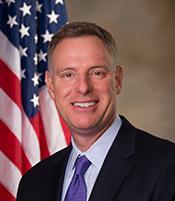
U.S. Representative for California’s 50th district
Democrat
119th Congress, two-year term
Missed 1.5% of roll calls. Chamber median 1.9%.
The full voting recordCounts roll calls where most Democrats and most Republicans voted differently, leaving out procedural votes.
How we countFrom FEC filings, Voteview roll calls and Congress.gov.
Democrat. In Congress since 2013, 7 terms in total.
Following saves Peters to your list, which Chamber & Street keeps on its server, linked to a cookie on this browser and not to your name or email. Email alerts will come with constituent verification.
Bills and resolutions Peters signed on to as a cosponsor. An original cosponsor signed on the day the bill was introduced. Source: govinfo bill status files, last updated Nov 6, 2026.
Peters also withdrew as a cosponsor from 1 bill, not listed here.
Employer Participation in Repayment Act
Sponsor Nicole Malliotakis (R). Original cosponsor. 6 cosponsors. H.R. 1801 on Congress.gov
Introduced
United States-Abraham Accords Cooperation and Security Act of 2025
Sponsor Diana Harshbarger (R). Original cosponsor. 6 cosponsors. H.R. 1794 on Congress.gov(opens in a new tab)
Introduced
Improper Payments Transparency Act
Sponsor Rudy Yakym (R). Original cosponsor. 7 cosponsors. H.R. 1771 on Congress.gov(opens in a new tab)
Introduced
Improper Payments Transparency Act
This bill requires the President's annual budget to include specified information regarding improper payment amounts and rates for programs and activities at certain federal agencies. (An improper payment is any payment that should not have been made or that was made in an incorrect amount, including an overpayment or underpayment, under a statutory, contractual, administrative, or other legally applicable requirement.)
Specifically, the President's budget must include (1) a narrative description, including a detailed explanation of why any improper payment amounts and rates occurred and related trends for programs and activities; and (2) corrective actions and steps the agencies will take to address improper payment amount and rate issues.
Humane Cosmetics Act of 2025
Sponsor Donald Beyer (D). Joined Mar 3, 2025. 161 cosponsors. H.R. 1657 on Congress.gov(opens in a new tab)
Introduced
Humane Cosmetics Act of 2025
This bill generally prohibits animal testing in the evaluation of cosmetic products, and it prohibits the sale or transport of cosmetics developed using animal testing, subject to civil penalties. These prohibitions begin one year after enactment.
The bill specifies exceptions to these prohibitions, including if such animal testing (1) is conducted outside the United States to comply with a foreign regulatory authority; (2) is pursuant to a finding by the Food and Drug Administration (FDA) that there are no nonanimal alternatives to test the safety of a potentially dangerous cosmetic product or ingredient; (3) is of a product or ingredient for a drug or device subject to regulation by the FDA; or (4) is required for a noncosmetic purpose pursuant to a state, federal, or foreign regulatory authority.
Further, evidence derived from animal testing conducted more than one year after the bill's enactment may not be used to establish the safety of a cosmetic product or ingredient that is regulated by the FDA, subject to limited exceptions.
Protect Veteran Jobs Act
Sponsor Derek Tran (D). Joined Mar 3, 2025. 96 cosponsors. H.R. 1637 on Congress.gov(opens in a new tab)
Introduced
Protect Veteran Jobs Act
This bill provides reinstatement eligibility to veterans who were involuntarily removed or otherwise dismissed without cause from civil service positions from January 20, 2025, through the date of enactment of this bill. Such veterans must be eligible for reinstatement to their former positions or any other civil service positions for which they are qualified.
Each executive branch agency must regularly report through January 20, 2029, to Congress regarding veteran employees who were removed or otherwise dismissed from the agency, including the total number of employees removed and the reasons for the dismissals.
Access to Reproductive Care for Servicemembers Act
Original cosponsor. 80 cosponsors. H.R. 1742 on Congress.gov(opens in a new tab)
Progress not on file
GUARD VA Benefits Act
Sponsor Chris Pappas (D). Original cosponsor. 137 cosponsors. H.R. 1732 on Congress.gov(opens in a new tab)
Introduced
Governing Unaccredited Representatives Defrauding VA Benefits Act or the GUARD VA Benefits Act
This bill imposes fines on individuals for soliciting, contracting for, charging, or receiving any unauthorized fee or compensation with respect to the preparation, presentation, or prosecution of any claim for Department of Veterans Affairs benefits. The attempted commission of such offenses is also punishable by fine.
MEME Act
Sponsor Sam Liccardo (D). Original cosponsor. 33 cosponsors. H.R. 1712 on Congress.gov(opens in a new tab)
Introduced
Modern Emoluments and Malfeasance Enforcement Act or the MEME Act
This bill prohibits the President, the Vice President, Members of Congress, those holding Senior Executive Service positions, admirals, generals, and other federal public officials from engaging in or benefiting from the issuance, sponsorship, or promotion of certain assets. The spouse and dependent children of such an official are also covered by the prohibition.
Assets covered by the bill are securities, security futures, commodities, digital assets such as cryptocurrency or a meme coin, as well as derivatives, options, warrants, mutual funds, or exchange traded funds of the preceding assets.
The prohibition applies to (1) such officials during their term of service and for 180 days prior to and after their service, and (2) the spouse and dependent children of such an official during that same period.
Civil and criminal penalties under the bill include disgorging (giving) to the Treasury any profits from prohibited transactions, fines, and imprisonment for up to five years. The bill provides additional penalties for such prohibited activities if they involve bribery or insider trading.
The U.S. Office of Special Counsel may also determine that federal employees or officers serving in other positions are covered by the prohibition.
PAST Act of 2025
Sponsor Brian Fitzpatrick (R). Original cosponsor. 207 cosponsors. H.R. 1684 on Congress.gov(opens in a new tab)
Introduced
Prevent All Soring Tactics Act of 2025 or the PAST Act of 2025
This bill increases protections for horses at shows, exhibitions, sales, or auctions (horse events) to prevent the practice of soring horses. Generally, the soring of horses includes certain actions taken on horses' limbs to produce higher gaits that may cause pain, distress, inflammation, or lameness.
Specifically, the bill expands existing soring prohibitions under the Horse Protection Act, including by banning the use of certain action devices (e.g., nonprotective boots) on specified horse breeds.
The bill also requires soring inspectors at horse events to be assigned by the Animal and Plant Health Inspection Service (APHIS) of the Department of Agriculture rather than appointed by the management of horse events. APHIS must also license, train, and oversee inspectors to detect and diagnose soring at such events.
Additionally, the bill increases penalties for violations of the act. It also directs APHIS to disqualify horses found to be sore from being shown or exhibited for specified periods. Further, APHIS may permanently disqualify violators from participating in horse events after the third or any subsequent violation.
By way of background, APHIS issued a rule in 2024 to increase efforts to protect horses from soring practices. However, in 2025, a court vacated parts of the rule as exceeding APHIS' statutory authority (e.g., prohibiting the use of certain action devices) while deeming other parts acceptable (e.g., establishing APHIS-designated inspectors). APHIS subsequently delayed the effective date of the rule to December 31, 2026.
Keep Americans Safe Act
Sponsor Diana DeGette (D). Original cosponsor. 145 cosponsors. H.R. 1674 on Congress.gov(opens in a new tab)
Introduced
Keep Americans Safe Act
This bill establishes a new criminal offense for the import, sale, manufacture, transfer, or possession of a large capacity ammunition feeding device (LCAFD).
The bill does not prohibit certain conduct with respect to an LCAFD, including the following:
• importation, sale, manufacture, transfer, or possession related to certain law enforcement efforts, or authorized tests or experiments;
• importation, sale, transfer, or possession related to securing nuclear materials; and
• possession by a retired law enforcement officer.
The bill permits continued possession of, but prohibits sale or transfer of, a grandfathered LCAFD.
Newly manufactured LCAFDs must display serial number identification and the date of manufacture.
Additionally, the bill allows a state or local government to use Edward Byrne Memorial Justice Assistance Grant Program funds to compensate individuals who surrender an LCAFD under a buy-back program.
Maintaining Investments in New Innovation Act
Sponsor Donald Davis (D). Original cosponsor. 51 cosponsors. H.R. 1672 on Congress.gov(opens in a new tab)
Introduced
Maintaining Investments in New Innovation Act
This bill requires drug products with genetically targeted technology to have had market approval for at least 11 years in order to qualify for the Medicare Drug Price Negotiation Program. (The program requires the Centers for Medicare & Medicaid Services to negotiate the prices of certain prescription drugs under Medicare beginning in 2026. Among other requirements, drugs must have had market approval for at least 7 years (for drug products) or 11 years (for biologics) to qualify for negotiation.)
Pell Grant Sustainability Act
Sponsor Sean Casten (D). Original cosponsor. 41 cosponsors. H.R. 1666 on Congress.gov(opens in a new tab)
Introduced
Pell Grant Sustainability Act
This bill indexes the maximum award amount for Pell Grants to the rate of inflation. The bill also permanently reauthorizes the discretionary statutory authority for the Pell Grant program.
SAFE Act of 2025
Sponsor Vern Buchanan (R). Original cosponsor. 238 cosponsors. H.R. 1661 on Congress.gov(opens in a new tab)
Introduced
Save America's Forgotten Equines Act of 2025 or the SAFE Act of 2025
This bill permanently prohibits the slaughter of equines (e.g., horses and mules) for human consumption. (Current law prohibits the slaughter of dogs and cats for human consumption. This bill extends the prohibition to equines.)
Specifically, this bill prohibits a person from knowingly (1) slaughtering an equine for human consumption; or (2) shipping, transporting, possessing, purchasing, selling, or donating an equine to be slaughtered for human consumption or equine parts for human consumption.
The bill subjects a violator to a fine.
The bill applies to conduct in or affecting interstate or foreign commerce or within the special maritime and territorial jurisdiction of the United States. However, it does not apply to an activity carried out by an Indian for a religious ceremony.
As background, in recent years, the appropriations acts have prohibited the Department of Agriculture (USDA) from using federal funds to inspect horses before they are slaughtered for human consumption. Therefore, there are currently no USDA-inspected horse slaughter facilities in the United States.
Security Clearance Review Act
Sponsor Donald Beyer (D). Original cosponsor. 22 cosponsors. H.R. 1591 on Congress.gov(opens in a new tab)
Introduced
American Dream and Promise Act of 2025
Sponsor Sylvia Garcia (D). Original cosponsor. 221 cosponsors. H.R. 1589 on Congress.gov(opens in a new tab)
Introduced
American Dream and Promise Act of 2025
This bill provides certain non-U.S. nationals (aliens under federal law) with a path to receive permanent resident status and contains other immigration-related provisions.
The Department of Homeland Security (DHS) or the Department of Justice (DOJ) shall provide conditional permanent resident status for 10 years to a qualifying individual who entered the United States as a minor and (1) is deportable or inadmissible, (2) has deferred enforced departure (DED) status or temporary protected status (TPS), or (3) is the child of certain classes of nonimmigrants. The bill imposes various qualifying requirements, such as the individual being continuously physically present in the United States since January 1, 2021, passing a background check, and being enrolled in or having completed certain educational programs.
DHS shall remove the conditions placed on permanent resident status granted under this bill if the individual applies and meets certain requirements, such as completing certain programs at an educational institution, serving in the military, or being employed.
Furthermore, DHS or DOJ shall provide lawful permanent resident status to certain individuals who had TPS, were eligible for TPS, or were eligible for DED status on certain dates. Such individuals must meet certain requirements and apply for such status within three years of this bill's enactment.
This bill also repeals a restriction that bars a state from providing higher education benefits to undocumented individuals unless those benefits are available to all U.S. nationals without regard to residency in the state.
LEASH DOGE Act
Sponsor Suhas Subramanyam (D). Joined Feb 26, 2025. 21 cosponsors. H.R. 1544 on Congress.gov(opens in a new tab)
Introduced
Ethan's Law
Sponsor Rosa DeLauro (D). Original cosponsor. 202 cosponsors. H.R. 1564 on Congress.gov(opens in a new tab)
Introduced
Ethan's Law
This bill establishes a framework to regulate the storage of firearms on residential premises at the federal, state, and tribal levels.
At the federal level, the bill establishes statutory requirements for firearms on residential premises to be safely stored if a minor is likely to gain access without permission or if a resident is ineligible to possess a firearm.
An individual who violates the requirements is subject to criminal penalties. A firearm stored in violation of the requirements is subject to seizure and forfeiture.
At the state and tribal levels, the bill requires the Department of Justice to award grants to implement functionally identical requirements for the safe storage of firearms.
Ending DOGE Conflicts Act
Sponsor John Larson (D). Joined Feb 25, 2025. 86 cosponsors. H.R. 1321 on Congress.gov(opens in a new tab)
Introduced
New Era of Preventing End-Stage Kidney Disease Act
Sponsor Gus Bilirakis (R). Original cosponsor. 64 cosponsors. H.R. 1518 on Congress.gov(opens in a new tab)
Introduced
New Era of Preventing End-Stage Kidney Disease Act
This bill establishes regional centers of excellence, postgraduate fellowships, and training for health professionals relating to the diagnosis and treatment of rare kidney disease. It also requires the Department of Health and Human Services (HHS) to conduct various studies on rare kidney disease.
Specifically, it authorizes the National Institute of Diabetes and Digestive and Kidney Diseases to award funding to public and private nonprofit entities for establishing regional centers of excellence that will increase public awareness, conduct research, and develop resources for diagnosing and treating rare kidney diseases. A center may receive such funding for up to five years, unless extended by the institute.
The bill also requires health professions schools receiving a grant from the Health Resources and Services Administration (HRSA) Centers of Excellence program to award fellowships for training on preventing, diagnosing, and treating rare kidney disease in disproportionately impacted populations.
Also, the bill expands the priorities of HRSA’s Primary Care Training and Enhancement program to include training for health care workers to care for individuals with kidney disease.
Additionally, HHS must conduct several studies and report to Congress on topics such as treating rare kidney disease in disproportionately affected populations, eliminating the need for dialysis or kidney transplants, and increasing public awareness of rare kidney disease.
PLASMA Act
Sponsor Richard Hudson (R). Original cosponsor. 5 cosponsors. H.R. 1476 on Congress.gov(opens in a new tab)
Introduced
Preserving Life-saving Access to Specialty Medicines in America Act or the PLASMA Act
This bill phases-in certain price adjustments for plasma-derived products under the Medicare prescription drug benefit's Manufacturer Discount Program.
Current law requires manufacturers of covered drugs under the Medicare prescription drug benefit to provide a 10% discount for covered drugs during the initial coverage phase (i.e., before a beneficiary reaches the out-of-pocket spending threshold) and a 20% discount during the catastrophic coverage phase (i.e., after a beneficiary reaches the out-of-pocket spending threshold).
The bill phases-in discounts for plasma-derived products over several years, starting with a 1% discount in 2026 for both the initial and catastrophic coverage phases, and ending with a 10% discount beginning in 2030 for the initial coverage phase and a 20% discount beginning in 2032 for the catastrophic coverage phase.
Freedom to Invest in Tomorrow’s Workforce Act
Sponsor Robert Wittman (R). Joined Feb 14, 2025. 203 cosponsors. H.R. 1151 on Congress.gov(opens in a new tab)
Introduced
Freedom to Invest in Tomorrow’s Workforce Act
This bill expands the expenses eligible for tax-free withdrawals from a qualified tuition program (known as a 529 plan) to include tuition, fees (including test fees), books, supplies, equipment, and other expenses related to the enrollment or attendance in a recognized postsecondary credentialing program.
Under the bill, a recognized postsecondary credentialing program includes certain programs identified by a state as providing training services, a program listed in the Web Enabled Approval Management System (WEAMS) maintained by the Department of Veterans Affairs, certain examinations required to obtain or maintain a credential, and other reputable credentialing programs.
Further, under the bill, such programs must be designed for an individual to obtain
• an industry-recognized postsecondary employment credential (e.g., project management professional certificate, advanced emergency medical technician certificate, and welding supervisor certificate),
• a certificate of completion of a registered and certified apprenticeship,
• an occupational or professional license issued or recognized by a state or the federal government (and any certification required for obtaining such license), or
• an associate or baccalaureate degree.
Expanding Child Care Access Act of 2025
Sponsor Herbert Conaway (D). Original cosponsor. 39 cosponsors. H.R. 1296 on Congress.gov(opens in a new tab)
Introduced
Expanding Child Care Access Act of 2025
This bill establishes a temporary (for seven years) refundable tax credit for certain expenses incurred to establish and operate a qualified family child care provider. (Conditions and limitations apply.)
Under the bill, a qualified family child care provider is a child care provider that
• provides child care services at the taxpayer's primary residence for at least two children (other than the children of such taxpayer) for a significant portion of the tax year,
• receives compensation for such child care services, and
• is licensed or registered to provide such child care services by the state in which such services are provided.
The bill allows a taxpayer that operates a qualified family child care provider to claim a tax credit of up to $5,000 for
• child care licensing fees;
• child care supplies (e.g., diapers, food, toys, and learning materials);
• liability insurance;
• fencing (including installation costs);
• outdoor playground equipment (including installation costs);
• furniture necessary to provide child care;
• the salary of an employee (other than the taxpayer);
• printers and computers;
• professional training required by the state for licensing or registration; and
• remediation or renovation of a primary residence to meet state licensing or registration requirements.
The tax credit may only be claimed once and may not be claimed for expenses for which another tax deduction or tax credit is allowed.
Finally, the bill requires the Internal Revenue Service to issue guidance on the tax credit, including guidance related to information reporting requirements.
Capitol Remembrance Act
Sponsor Jason Crow (D). Joined Feb 12, 2025. 46 cosponsors. H.R. 212 on Congress.gov(opens in a new tab)
Introduced
Capitol Remembrance Act
This bill requires the Architect of the Capitol (AOC) to design and install in a prominent location in the U.S. Capitol a permanent exhibit that depicts the January 6, 2021, attack on the Capitol.
To the extent possible, the AOC must preserve property that was damaged during the attack and include it in the exhibit. The AOC must also include (1) existing photographic records relating to the attack; and (2) a plaque to honor the U.S. Capitol Police and other law enforcement agencies that protected the Capitol, the individuals who died or sustained injuries to protect the Capitol, and the staff who helped restore the Capitol complex after the attack.
The exhibit shall be installed within two years after the bill's enactment.
Proposing an amendment to the Constitution of the United States providing that the rights protected and extended by the Constitution are the rights of natural persons only.
Sponsor Pramila Jayapal (D). Original cosponsor. 82 cosponsors. H.J.Res. 54 on Congress.gov(opens in a new tab)
Introduced
This joint resolution proposes a constitutional amendment providing that the rights protected and extended by the Constitution are the rights of natural persons only. Artificial entities, such as corporations, shall have no rights under the Constitution and are subject to regulation.
The amendment requires federal, state, and local governments to (1) regulate, limit, or prohibit election contributions and expenditures, including a candidate's own contributions and expenditures, to ensure equal access of citizens to the political process, regardless of economic status; and (2) require that any permissible contributions and expenditures be publicly disclosed.
Additionally, the judiciary is prohibited from construing the spending of money to influence elections to be speech under the First Amendment.
Credit Union Board Modernization Act
Sponsor Juan Vargas (D). Joined Feb 10, 2025. 22 cosponsors. H.R. 975 on Congress.gov(opens in a new tab)
Passed the House
Credit Union Board Modernization Act
This bill reduces the required frequency of meetings held by the board of directors of certain credit unions. Under the bill, new credit unions and credit unions with a low soundness rating must meet monthly, as required under current law. All other credit unions must hold at least six meetings annually, with at least one meeting held during each fiscal quarter.