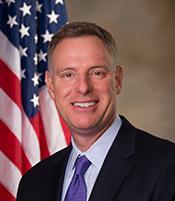
U.S. Representative for California’s 50th district
Democrat
119th Congress, two-year term
Missed 1.5% of roll calls. Chamber median 1.9%.
The full voting recordCounts roll calls where most Democrats and most Republicans voted differently, leaving out procedural votes.
How we countFrom FEC filings, Voteview roll calls and Congress.gov.
Democrat. In Congress since 2013, 7 terms in total.
Following saves Peters to your list, which Chamber & Street keeps on its server, linked to a cookie on this browser and not to your name or email. Email alerts will come with constituent verification.
Bills and resolutions Peters signed on to as a cosponsor. An original cosponsor signed on the day the bill was introduced. Source: govinfo bill status files, last updated Nov 6, 2026.
Peters also withdrew as a cosponsor from 1 bill, not listed here.
Recognizing the cultural and historical significance of Nowruz.
Sponsor Zoe Lofgren (D). Original cosponsor. 17 cosponsors. H.Res. 244 on Congress.gov
Introduced
Rights for the TSA Workforce Act
Sponsor Bennie Thompson (D). Joined Mar 24, 2025. 190 cosponsors. H.R. 2086 on Congress.gov(opens in a new tab)
Introduced
Establishing the ratification of the Equal Rights Amendment.
Sponsor Ayanna Pressley (D). Original cosponsor. 221 cosponsors. H.J.Res. 80 on Congress.gov(opens in a new tab)
Introduced
This joint resolution provides that the Equal Rights Amendment, which prohibits discrimination on the basis of sex, was ratified by three-fourths of the states and is therefore a valid constitutional amendment, regardless of any time limit that was in the original proposal.
The Equal Rights Amendment was originally proposed to the states in 1972. The original proposal included a deadline for ratification of March 22, 1979; Congress subsequently extended the deadline to June 30, 1982. Although the requisite 38 states have ratified the amendment, three of these states did so after the deadlines, and five states subsequently rescinded their ratifications. The status of the amendment has been the subject of litigation.
Expressing the sense of the House of Representatives that every person has the basic right to emergency health care, including abortion care.
Sponsor Emilia Sykes (D). Original cosponsor. 111 cosponsors. H.Res. 238 on Congress.gov(opens in a new tab)
Introduced
This resolution expresses the sense of the House of Representatives that every individual has the right to emergency health care, including abortion care.
Fire Department Repayment Act of 2025
Sponsor Josh Harder (D). Joined Mar 18, 2025. 10 cosponsors. H.R. 345 on Congress.gov(opens in a new tab)
Passed committee
Fire Department Repayment Act of 2025
This bill requires standard operating procedures for reciprocal fire suppression cost share agreements, which are agreements between federal, state, and local governments to share the costs of suppressing wildfires that occur across multiple jurisdictions.
The Departments of Agriculture, the Interior, Homeland Security, and Defense must establish standard operating procedures relating to payment timelines for fire suppression cost share agreements established under the Reciprocal Fire Protection Act. The departments must also review each agreement that is in operation within a year of this bill's enactment and modify an agreement as necessary to comply with the standard operating procedures.
The standard operating procedures must require that (1) each fire suppression cost share agreement be aligned with each of the cooperative fire protection agreements applicable to the entity subject to such fire suppression cost share agreement, and (2) the federal paying entity reimburse a local fire department if the fire department submits an invoice in accordance with cost settlement procedures.
Office of Management and Budget Inspector General Act
Sponsor Emily Randall (D). Original cosponsor. 25 cosponsors. H.R. 2221 on Congress.gov(opens in a new tab)
Introduced
Feed Hungry Veterans Act of 2025
Sponsor Jahana Hayes (D). Original cosponsor. 68 cosponsors. H.R. 2195 on Congress.gov(opens in a new tab)
Introduced
Feed Hungry Veterans Act of 2025
This bill expands eligibility for the Supplemental Nutrition Assistance Program (SNAP) for certain disabled veterans, including those determined to be catastrophically disabled. In addition, those disabled veterans who are eligible for SNAP under this bill are exempt from the general SNAP work registration and employment and training requirements.
The bill takes effect on October 1, 2030.
Access to Family Building Act
Sponsor Laura Gillen (D). Joined Mar 18, 2025. 77 cosponsors. H.R. 2049 on Congress.gov(opens in a new tab)
Introduced
Access to Family Building Act
This bill provides a statutory right to access assisted reproductive technology (e.g., in vitro fertilization).
Specifically, under the bill, individuals have the right to access assisted reproductive technology, and to retain all rights with respect to the use or disposition of reproductive genetic materials (e.g., eggs or sperm), without prohibitions or unreasonable restrictions. Health care providers and insurers also have the right to provide and cover these services, respectively.
The bill does not affect state or local health and safety regulations that achieve their purpose in the least restrictive manner possible.
The Department of Justice may bring civil actions against states, localities, or government officials or entities that enact or enforce limitations or requirements that violate this bill. Individuals and health care providers who are affected by violations may also bring civil actions for relief.
JUDGES Act of 2025
Sponsor Darrell Issa (R). Joined Mar 14, 2025. 17 cosponsors. H.R. 1702 on Congress.gov(opens in a new tab)
Passed committee
Judicial Understaffing Delays Getting Emergencies Solved Act of 2025 or the JUDGES Act of 2025
This bill creates 64 U.S. district court judgeships—63 permanent and 1 temporary—and expands the jurisdictional coverage of two district courts.
Specifically, the bill creates 63 new permanent judgeships across 14 states over a 10-year period beginning in 2025. The state and total number of judgeships added over the 10-year period are as follows:
• Arizona (1),
• California (20),
• Colorado (2),
• Delaware (2),
• Florida (9),
• Georgia (2),
• Idaho (1),
• Indiana (1),
• Iowa (1),
• Nebraska (1),
• New Jersey (3),
• New York (5),
• Oklahoma (2), and
• Texas (13).
Additionally, the bill creates one temporary judgeship in the Eastern District of Oklahoma in 2025.
Finally, the bill adds locations where court must be held in two district courts—one in California and one in Texas. Specifically, the bill adds College Station to the list of places where court must be held in the Houston Division of the Southern District of Texas. Also, the bill adds El Centro to the list of places where court must be held in the Southern District of California.
The bill directs the Government Accountability Office to submit reports to Congress on judicial caseloads and detention space.
The bill also directs the Administrative Office of the U.S. Courts to make available on its website the biennial report by the Judicial Conference of the United States on judgeship recommendations.
Office of Gun Violence Prevention Act of 2025
Sponsor Maxwell Frost (D). Joined Mar 14, 2025. 136 cosponsors. H.R. 1307 on Congress.gov(opens in a new tab)
Introduced
Office of Gun Violence Prevention Act of 2025
This bill establishes an Office of Gun Violence Prevention within the Department of Justice's (DOJ's) Office of Legal Policy.
Among its duties, the office must coordinate various gun violence prevention efforts that are administered by DOJ, recommend policy options to promote evidence-based gun violence prevention strategies, and promote related data collection.
Expressing support for the Iranian people's desires for a democratic, secular, and nonnuclear Republic of Iran, and condemning the Iranian regime's terrorism, regional proxy war, internal suppression, and for other purposes.
Sponsor Tom McClintock (R). Joined Mar 11, 2025. 230 cosponsors. H.Res. 166 on Congress.gov(opens in a new tab)
Introduced
Caring for Survivors Act of 2025
Sponsor Jahana Hayes (D). Original cosponsor. 134 cosponsors. H.R. 2055 on Congress.gov(opens in a new tab)
Introduced
Caring for Survivors Act of 2025
This bill increases the monthly rate of dependency and indemnity compensation payable to surviving spouses through the Department of Veterans Affairs (VA).
Dependency and indemnity compensation is a monthly payment made to eligible survivors (i.e., spouses, parents, or children) of (1) certain veterans who died as a result of a service-connected condition; (2) service members killed while on active military duty or active or inactive duty for training; or (3) veterans who did not die from a service-connected condition, but were totally disabled by a service-connected disability for a certain period of time.
The bill also (1) reduces, from 10 years to 5 years, the period of time that certain veterans must have been rated totally disabled due to a service-connected disability in order for a survivor to qualify for benefits; and (2) specifies the amount that is payable to survivors of veterans who were rated totally disabled for a period of less than 10 years before their death.
United States-Israel Defense Partnership Act of 2025
Sponsor Joe Wilson (R). Joined Mar 11, 2025. 178 cosponsors. H.R. 1229 on Congress.gov(opens in a new tab)
Introduced
United States-Israel Defense Partnership Act of 2025
This bill requires or authorizes certain actions to increase defense-related cooperation between the United States and Israel.
Specifically, the bill requires the Department of Defense (DOD) to
• establish a cooperative program, with the concurrence of Israel's Ministry of Defense (MOD), to develop and deploy advanced technologies for countering unmanned systems that threaten the United States and Israel;
• establish in Israel an office of the Defense Innovation Unit (an organization that focuses on rapidly fielding and scaling commercial technology across the U.S. military); and
• seek to engage Israel's MOD on the ascension of Israel into the national technology and industrial base (currently defined in law as the persons and organizations engaged in research, development, production, integration, services, or information technology activities conducted within the United States, the United Kingdom, Australia, New Zealand, and Canada).
The bill authorizes DOD, upon request of Israel's MOD, to jointly conduct research, development, test, and evaluation (RDT&E) of emerging technologies such as artificial intelligence and robotics to meet defense challenges.
Additionally, the bill extends the authority for DOD to (1) carry out RDT&E on a joint basis with Israel to establish anti-tunnel and counter unmanned aerial systems capabilities through 2028, and (2) transfer defense articles intended for use as reserve stocks for Israel through January 1, 2029.
Nancy Gardner Sewell Medicare Multi-Cancer Early Detection Screening Coverage Act
Sponsor Jodey Arrington (R). Joined Mar 10, 2025. 338 cosponsors. H.R. 842 on Congress.gov(opens in a new tab)
Introduced
Nancy Gardner Sewell Medicare Multi-Cancer Early Detection Screening Coverage Act
This bill allows, beginning in 2028, for Medicare coverage and payment for multi-cancer early detection screening tests that are approved by the Food and Drug Administration and that are used to screen for cancer across many cancer types, if the Centers for Medicare & Medicaid Services determines such coverage is appropriate. Coverage is limited to those under a certain age (age 68 in 2028, increased by one year every year thereafter) and to one test every 11 months.
Tyler’s Law
Sponsor Ted Lieu (D). Original cosponsor. 65 cosponsors. H.R. 2004 on Congress.gov(opens in a new tab)
Passed the House
Tyler’s Law
This bill requires the Department of Health and Human Services (HHS) to complete, within one year after the bill’s enactment, a study on how frequently Medicare-participating hospital emergency departments test for fentanyl in patients experiencing an overdose, the costs associated with such testing, and how such testing may impact patients.
Within six months after the study’s completion and based on its results, HHS must issue guidance regarding (1) whether hospital emergency departments should implement fentanyl testing as a routine procedure for patients experiencing an overdose, (2) how to ensure clinicians know which substances they are testing for in routine drug tests, and (3) how fentanyl testing may affect the future risk of overdose and other health outcomes.
Protect Our Probationary Employees Act
Sponsor Sarah Elfreth (D). Original cosponsor. 72 cosponsors. H.R. 1989 on Congress.gov(opens in a new tab)
Introduced
BAH Restoration Act
Sponsor Marilyn Strickland (D). Original cosponsor. 37 cosponsors. H.R. 1956 on Congress.gov(opens in a new tab)
Introduced
BAH Restoration Act
This bill increases the monthly amount of the basic housing allowance for members of the uniformed services inside the United States.
Specifically, the monthly amount of allowance for a member must be the amount of the monthly cost of adequate housing in the area, as determined by the Department of Defense, for members of the uniformed services serving in the same pay grade and same dependency status as the member. (Currently, the allowance is based on the difference between this amount and a percentage of the national average monthly cost of housing for members with the same pay grade and dependency status.)
Do No Harm Act
Sponsor Robert Scott (D). Original cosponsor. 125 cosponsors. H.R. 1954 on Congress.gov(opens in a new tab)
Introduced
Do No Harm Act
This bill prohibits the application of the Religious Freedom Restoration Act of 1993 (RFRA) to specified federal laws or the implementation of such laws. Currently, RFRA prohibits the government from substantially burdening a person's exercise of religion even if the burden results from a rule of general applicability, except in furtherance of a compelling governmental interest when using the least restrictive means.
Under the bill, RFRA is inapplicable to laws or the implementation of laws that
• protect against discrimination or require the promotion of equal opportunity (e.g., the Civil Rights Act of 1964);
• require employers to provide wages, other compensation, or benefits, including leave;
• protect collective activity in the workplace;
• protect against child labor, abuse, or exploitation; or
• provide for access to, information about, referrals for, provision of, or coverage for any health care item or service.
The bill prevents RFRA from being used to deny (1) goods or services the government has agreed to provide to a beneficiary of or participant in a program or activity funded by a government contract, grant, agreement, or other award; or (2) a person's full and equal enjoyment of a government-provided good, service, benefit, facility, privilege, advantage, or accommodation.
In order for a person to assert a RFRA claim or defense in a judicial proceeding, the government must be a party to the proceeding.
Richard L. Trumka Protecting the Right to Organize Act of 2025
Sponsor Robert Scott (D). Original cosponsor. 217 cosponsors. H.R. 20 on Congress.gov(opens in a new tab)
Introduced
Disaster Mitigation and Tax Parity Act of 2025
Original cosponsor. 32 cosponsors. H.R. 1849 on Congress.gov(opens in a new tab)
Progress not on file
Disaster Mitigation and Tax Parity Act of 2025
This bill excludes from gross income, for federal income tax purposes, payments received from a state catastrophe loss mitigation program by an individual for the purpose of making improvements to the individual’s property that mitigate the impact of certain disasters.
Under current law, individuals may exclude from gross income, for federal income tax purposes, payments received under the Robert T. Stafford Disaster Relief and Emergency Assistance Act or the National Flood Insurance Act (as in effect on April 15, 2005) for hazard mitigation. (Some exceptions apply.) Further, under current law, such payments do not increase the basis of the property for which the payments are made.
The bill allows a similar exclusion from gross income for certain payments received by an individual from a program established by
• a state (or any political subdivision or instrumentality of the state),
• a joint powers authority, or
• an entity that was established by the state to provide essential or basic property insurance and is regulated by the state.
Under the bill, such payments must be for making improvements to the individual’s property for the sole purpose of reducing damage that would be done to the property by a windstorm, earthquake, flood, or wildfire.
Finally, the bill provides that such payments from a state catastrophe loss mitigation program do not increase the basis of the property for which the payments are made.
Pay Our Coast Guard Parity Act of 2025
Sponsor Hillary Scholten (D). Joined Mar 5, 2025. 67 cosponsors. H.R. 1542 on Congress.gov(opens in a new tab)
Introduced
Pay Our Coast Guard Parity Act of 2025
This bill provides continuing appropriations to the Coast Guard for pay and benefits when there is a Coast Guard-specific funding lapse.
Under the bill, a Coast Guard-specific funding lapse occurs when (1) a bill providing appropriations for the Coast Guard for a fiscal year has not been enacted before the beginning of that fiscal year, and no joint resolution providing continuing appropriations for the Coast Guard is in effect; and (2) a bill providing appropriations for the Department of Defense (DOD) for the fiscal year has been enacted before the beginning of the fiscal year, or a joint resolution providing continuing appropriation for DOD is in effect.
If a Coast Guard-specific funding lapse occurs, the bill provides appropriations to the Coast Guard for
• pay and allowances for military members of the Coast Guard who perform active service or inactive-duty training;
• pay and benefits for certain civilian employees and contract employees;
• the payment of a death gratuity;
• payments for travel related to funerals, the dignified transfer of remains, and unit memorial services; and
• the temporary continuation of the basic allowance for housing for dependents of members of the Coast Guard dying on active duty.
The bill generally provides the appropriations to the Coast Guard until the earlier of
• the enactment of specified Coast Guard appropriations legislation,
• the termination of the availability of appropriations for DOD, or
• two weeks after the beginning of the Coast Guard-specific funding lapse.
John R. Lewis Voting Rights Advancement Act of 2025
Sponsor Terri Sewell (D). Original cosponsor. 221 cosponsors. H.R. 14 on Congress.gov(opens in a new tab)
Introduced
John R. Lewis Voting Rights Advancement Act of 2025
This bill establishes new criteria for determining which states and political subdivisions must obtain preclearance before changes to voting practices may take effect. Preclearance is the process of receiving preapproval from the Department of Justice (DOJ) or the U.S. District Court for the District of Columbia before making legal changes that would affect voting rights.
A state and all of its political subdivisions shall be subject to preclearance of voting practice changes for a 10-year period if, during the previous 25 years:
• 15 or more voting rights violations occurred in the state;
• 10 or more violations occurred, at least 1 of which was committed by the state itself; or
• 3 or more violations occurred and the state administers the elections.
A political subdivision as a separate unit shall also be subject to preclearance for a 10-year period if three or more voting rights violations occurred there during the previous 25 years.
States and political subdivisions that meet certain thresholds regarding minority groups must preclear covered practices before implementation, such as redistricting.
States and political subdivisions must notify the public of changes to voting practices.
The bill authorizes DOJ to require states or political subdivisions to provide certain documents or answers to questions for enforcing voting rights.
The bill outlines factors courts must consider when hearing challenges to voting practices, such as the extent of any history of official voting discrimination in the state or political subdivision.
Redesignating the Robert E. Lee Memorial as the "Arlington House National Historic Site".
Sponsor Donald Beyer (D). Joined Mar 4, 2025. 175 cosponsors. H.J.Res. 63 on Congress.gov(opens in a new tab)
Introduced
This joint resolution redesignates the memorial to Robert. E. Lee in Arlington National Cemetery as the Arlington House National Historic Site.
Safe Schools Improvement Act
Sponsor Linda Sánchez (D). Original cosponsor. 218 cosponsors. H.R. 1810 on Congress.gov(opens in a new tab)
Introduced
Safe Schools Improvement Act
This bill requires states to direct their local educational agencies (LEAs) to establish policies that prevent and prohibit bullying and harassment of elementary and secondary school students. In particular, these policies must prohibit bullying and harassment based on race, color, national origin, disability, religion, or sex. Sex includes sexual orientation, gender identity, and sex characteristics (including intersex traits).
Further, LEAs must provide (1) students, parents, and educational professionals with annual notice of the conduct prohibited in their disciplinary policies; (2) students and parents with grievance procedures that target such conduct; and (3) the public with annual data on the incidence and frequency of that conduct at the school and LEA level.
The Department of Education must conduct and report on an independent biennial evaluation of programs and policies to combat bullying and harassment in elementary and secondary schools. The National Center for Education Statistics must collect state data to determine the incidence and frequency of the conduct prohibited by LEA disciplinary policies.
Keep America’s Waterfronts Working Act of 2025
Sponsor Chellie Pingree (D). Original cosponsor. 20 cosponsors. H.R. 1808 on Congress.gov(opens in a new tab)
Introduced