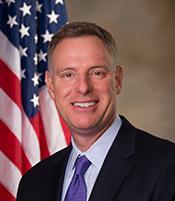
U.S. Representative for California’s 50th district
Democrat
119th Congress, two-year term
Missed 1.5% of roll calls. Chamber median 1.9%.
The full voting recordCounts roll calls where most Democrats and most Republicans voted differently, leaving out procedural votes.
How we countFrom FEC filings, Voteview roll calls and Congress.gov.
Democrat. In Congress since 2013, 7 terms in total.
Following saves Peters to your list, which Chamber & Street keeps on its server, linked to a cookie on this browser and not to your name or email. Email alerts will come with constituent verification.
Bills and resolutions Peters signed on to as a cosponsor. An original cosponsor signed on the day the bill was introduced. Source: govinfo bill status files, last updated Nov 6, 2026.
Peters also withdrew as a cosponsor from 1 bill, not listed here.
Equality Act
Sponsor Mark Takano (D). Original cosponsor. 218 cosponsors. H.R. 15 on Congress.gov
Introduced
Equality Act
This bill prohibits discrimination based on sex, sexual orientation, or gender identity with respect to businesses, employment, housing, federally funded programs, and other settings.
Specifically, the bill expands Title II and Title VI of the Civil Rights Act of 1964 to prohibit public accommodations and federally funded programs, respectively, from discriminating based on sex, sexual orientation, or gender identity. It also includes stores, transit services, recreational facilities, and establishments that provide health care, accounting, or legal services as public accommodations under Title II.
The bill also expands Title IV (desegregation of public schools) and Title VII (employment discrimination) to specifically include sexual orientation and gender identity. (The Supreme Court held in Bostock v. Clayton County that Title VII's prohibition of employment discrimination based on sex also prohibits employment discrimination based on sexual orientation or gender identity.)
The bill similarly expands the Fair Housing Act (discrimination in public and private housing) to include sexual orientation and gender identity. It also prohibits discrimination based on sexual orientation or gender identity by creditors and with respect to jury selection.
The bill defines sex for purposes of the aforementioned provisions to include sex stereotypes, pregnancy, childbirth, sexual orientation, gender identity, and sex characteristics.
Smithsonian American Women’s History Museum Act
Sponsor Nicole Malliotakis (R). Joined Apr 29, 2025. 231 cosponsors. H.R. 1329 on Congress.gov(opens in a new tab)
Introduced
Smithsonian American Women’s History Museum Act
This bill authorizes the Smithsonian American Women's History Museum to be located on a particular site within the Reserve of the National Mall in Washington, DC.
Specifically, the bill designates the South Monument site as the location for the museum; however, the President may designate an alternative site within 180 days of the bill's enactment. (The site is the undeveloped land across the National Mall from the National Museum of African American History and Culture.) Administrative jurisdiction of the site must be transferred to the Smithsonian Institution.
The Board of Regents of the Smithsonian Institution must have the approval of specified federal entities (e.g., the Commission of Fine Arts) to plan, design, and construct a museum building. The bill (1) outlines the criteria for considering site and design proposals, and (2) requires the Smithsonian Institution to reimburse for costs resulting from the building approval process.
The bill directs the museum to be dedicated to preserving, researching, and presenting the history, achievements, and lived experiences of biological women in the United States. Under this bill, the museum may not identify, present, describe, or depict any biological male as a female.
In carrying out its duties, the museum's advisory council must (1) seek and utilize guidance from a broad array of knowledgeable and respected sources reflecting the diversity of the political viewpoints and authentic experiences held by women in the United States, and (2) seek guidance for the creation and substantial revision of exhibits and programs.
YOUNG Act of 2025
Sponsor Yassamin Ansari (D). Joined Apr 28, 2025. 4 cosponsors. H.R. 2971 on Congress.gov(opens in a new tab)
Introduced
Recognizing linemen, the profession of linemen, the contributions of these brave men and women who protect public safety, and expressing support for the designation of April 18, 2025, as "National Lineman Appreciation Day".
Sponsor David Rouzer (R). Joined Apr 24, 2025. 56 cosponsors. H.Res. 337 on Congress.gov(opens in a new tab)
Introduced
Combating Organized Retail Crime Act of 2025
Sponsor David Joyce (R). Joined Apr 24, 2025. 206 cosponsors. H.R. 2853 on Congress.gov(opens in a new tab)
Passed the House
Combating Organized Retail Crime Act of 2025
This bill expands federal enforcement of criminal offenses related to organized retail and supply chain crime. The term organized retail and supply chain crime includes criminal offenses involving the interstate transportation of stolen property, the sale or receipt of stolen goods, or theft from an interstate or foreign shipment that is committed by, in coordination with, or at the instruction of an organization.
First, with respect to criminal offenses involving the interstate transportation of stolen property or the sale or receipt of stolen goods, the bill broadens the scope of conduct that qualifies as offenses by allowing prosecutions to be based on the aggregate value of stolen items over a 12-month period. Additionally, the bill makes the offenses predicate offenses (i.e., underlying offenses) for prosecutions under the federal money laundering statute and authorizes the criminal forfeiture of any property obtained from the proceeds of an offense.
Second, with respect to criminal offenses involving theft from an interstate or foreign shipment, the bill also makes an offense an underlying offense for prosecution under the federal money laundering statute and authorizes the criminal forfeiture of any associated property.
Third, the bill expands the federal money laundering statute to include offenses involving general-use prepaid cards, gift certificates, or store gift cards.
Finally, the bill temporarily establishes a center within the Department of Homeland Security to coordinate federal law enforcement activities related to organized retail and supply chain crime.
Expressing support for honoring Earth Day, and for other purposes.
Sponsor Doris Matsui (D). Original cosponsor. 52 cosponsors. H.Res. 341 on Congress.gov(opens in a new tab)
Introduced
Closing the Bump Stock Loophole Act of 2025
Sponsor Dina Titus (D). Joined Apr 17, 2025. 152 cosponsors. H.R. 2799 on Congress.gov(opens in a new tab)
Introduced
Closing the Bump Stock Loophole Act of 2025
This bill generally prohibits the import, sale, manufacture, transfer, receipt, or possession of
• a device that is primarily designed, or redesigned, to increase the rate of fire when attached to a semiautomatic firearm;
• a device, part, or combination of parts that is designed and functions to increase the rate of fire of a firearm; or
• a semiautomatic firearm that has been modified to materially increase the rate of fire or to approximate the action or rate of fire of a machine gun.
Additionally, the bill adds to the list of firearms subject to regulation under the National Firearms Act semiautomatic firearms that have been modified to materially increase the rate of fire or approximate the action or rate of fire of a machine gun.
Protect America's Workforce Act
Sponsor Jared Golden (D). Joined Apr 17, 2025. 226 cosponsors. H.R. 2550 on Congress.gov(opens in a new tab)
Passed the House
Protect America's Workforce Act
This bill nullifies the Executive Order titled Exclusions from Federal Labor-Management Relations Programs (issued on March 27, 2025), which excludes specified executive agencies and subdivisions from the Federal Service Labor-Management Relations Statute. The statute authorizes federal employees' participation in collective bargaining and enforces collective bargaining rights.
The bill also specifies that a covered collective bargaining agreement in place as of March 26, 2025, shall have full force and effect through the stated term of the agreement.
Animal Cruelty Enforcement Act of 2025
Sponsor David Joyce (R). Joined Apr 17, 2025. 53 cosponsors. H.R. 1477 on Congress.gov(opens in a new tab)
Introduced
Animal Cruelty Enforcement Act of 2025
This bill establishes a new section in the Environment and Natural Resources Division of the Department of Justice to enforce federal laws concerning animal cruelty.
Southern California Coast and Ocean Protection Act
Sponsor Mike Levin (D). Original cosponsor. 23 cosponsors. H.R. 2862 on Congress.gov(opens in a new tab)
Introduced
West Coast Ocean Protection Act of 2025
Sponsor Jared Huffman (D). Original cosponsor. 39 cosponsors. H.R. 2849 on Congress.gov(opens in a new tab)
Introduced
Stop Arctic Ocean Drilling Act of 2025
Sponsor Jared Huffman (D). Original cosponsor. 16 cosponsors. H.R. 2848 on Congress.gov(opens in a new tab)
Introduced
Small Business Energy Loan Enhancement Act
Sponsor Jason Crow (D). Original cosponsor. 42 cosponsors. H.R. 2831 on Congress.gov(opens in a new tab)
Introduced
California Clean Coast Act of 2025
Sponsor Salud Carbajal (D). Original cosponsor. 37 cosponsors. H.R. 2820 on Congress.gov(opens in a new tab)
Introduced
Recognizing the commencement of Ramadan, the Muslim holy month of fasting and spiritual renewal, and commending Muslims in the United States and throughout the world for their faith.
Sponsor André Carson (D). Joined Apr 9, 2025. 6 cosponsors. H.Res. 192 on Congress.gov(opens in a new tab)
Introduced
PLAN for Broadband Act
Sponsor Tim Walberg (R). Original cosponsor. 3 cosponsors. H.R. 2805 on Congress.gov(opens in a new tab)
Passed committee
Proper Leadership to Align Networks for Broadband Act or the PLAN for Broadband Act
This bill requires the National Telecommunications and Information Administration (NTIA) to develop and implement a national strategy to improve the coordination and management of federal broadband programs to meet the goal of providing high-speed, affordable broadband internet access services to all individuals in the United States. The strategy must also address barriers, costs, and administrative burdens for state, local, and tribal governments participating in these programs.
The NTIA must also develop and publish for public comment a plan for the implementation of the national strategy. Among other requirements, the implementation plan must (1) describe the roles and responsibilities of relevant agencies and interagency mechanisms, and (2) provide a plan for holding agencies accountable for objectives identified in the strategy.
The NTIA must submit the strategy and implementation plan to Congress and must periodically brief Congress on implementation progress.
Finally, the Government Accountability Office must submit a report to Congress that assesses the efficacy of the strategy and implementation plan and makes recommendations for improving them.
American Family Act
Sponsor Rosa DeLauro (D). Original cosponsor. 215 cosponsors. H.R. 2763 on Congress.gov(opens in a new tab)
Introduced
Puppy Protection Act of 2025
Sponsor Brian Fitzpatrick (R). Joined Apr 9, 2025. 219 cosponsors. H.R. 2253 on Congress.gov(opens in a new tab)
Introduced
Public Service Freedom to Negotiate Act of 2025
Sponsor Donald Norcross (D). Original cosponsor. 192 cosponsors. H.R. 2736 on Congress.gov(opens in a new tab)
Introduced
Affordable Housing Credit Improvement Act of 2025
Sponsor Darin LaHood (R). Original cosponsor. 168 cosponsors. H.R. 2725 on Congress.gov(opens in a new tab)
Introduced
People Over Parking Act of 2025
Sponsor Robert Garcia (D). Original cosponsor. 11 cosponsors. H.R. 2710 on Congress.gov(opens in a new tab)
Introduced
Save Our Sequoias Act
Sponsor Vince Fong (R). Original cosponsor. 29 cosponsors. H.R. 2709 on Congress.gov(opens in a new tab)
Passed the House
Save Our Sequoias Act
This bill provides for the conservation of giant sequoia trees (Sequoiadendron giganteum) in California.
Specifically, it provides statutory authority for the Giant Sequoia Lands Coalition and outlines the coalition's duties. The coalition must submit a Giant Sequoia Health and Resiliency Assessment and annually update it. The information from the assessment must be made available so the information can be integrated into certain other plans. The coalition must also create and maintain a website that contains the assessment, educational materials, searchable information about individual giant sequoia groves, and a searchable database to track the status and costs of reforestation and rehabilitation activities.
In addition, the bill declares an emergency on certain public lands and allows officials to carry out protection plans during the emergency to respond to the threat of wildfires, insects, and drought. The emergency expires after seven years.
The Department of the Interior must develop and implement a Giant Sequoia Reforestation and Rehabilitation Strategy.
Finally, the bill establishes a variety of programs and funds to support the conservation of giant sequoias.
Advancing GETs Act of 2025
Sponsor Kathy Castor (D). Original cosponsor. 12 cosponsors. H.R. 2703 on Congress.gov(opens in a new tab)
Introduced
Armenian Genocide Education Act
Sponsor Dina Titus (D). Joined Apr 8, 2025. 84 cosponsors. H.R. 2585 on Congress.gov(opens in a new tab)
Introduced
Medical Device Electronic Labeling Act
Sponsor Jay Obernolte (R). Joined Apr 8, 2025. 7 cosponsors. H.R. 1539 on Congress.gov(opens in a new tab)
Introduced
Medical Device Electronic Labeling Act
This bill expands the permitted use of electronic labeling of medical devices to allow directions for use and warning labels for all medical devices to be provided electronically, rather than physically (i.e., affixed to or accompanying the device or its container).
(Under current law, direction and warning labels may be provided electronically only for (1) prescription devices intended for use in health care facilities or by health care professionals, and (2) in vitro diagnostic devices intended for use in blood establishments or by health care professionals.)
Under the bill, direction and warning labels may be provided solely electronically for all medical devices so long as (1) the electronic label is readily accessible to the device’s intended users, (2) intended users may request a paper label at no additional cost, and (3) the label affixed to the device or its packaging contains all information required under current laws and regulations.
The Food and Drug Administration may issue regulations establishing additional requirements or exceptions to these provisions.