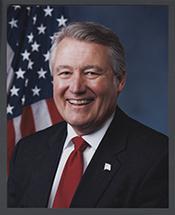
U.S. Representative for Georgia’s 12th district
Republican
119th Congress, two-year term
Missed 1.6% of roll calls. Chamber median 1.9%.
The full voting recordCounts roll calls where most Democrats and most Republicans voted differently, leaving out procedural votes.
How we countFrom FEC filings, Voteview roll calls and Congress.gov.
Republican. In Congress since 2015, 6 terms in total.
Following saves Allen to your list, which Chamber & Street keeps on its server, linked to a cookie on this browser and not to your name or email. Email alerts will come with constituent verification.
Bills and resolutions Allen signed on to as a cosponsor. An original cosponsor signed on the day the bill was introduced. Source: govinfo bill status files, last updated Nov 6, 2026.
CLEAR Act
Sponsor Earl Carter (R). Original cosponsor. 8 cosponsors. H.R. 4218 on Congress.gov
Passed committee
Worker Enfranchisement Act
Sponsor Robert Onder (R). Joined Jun 26, 2025. 9 cosponsors. H.R. 2572 on Congress.gov(opens in a new tab)
Introduced
Reliable Power Act
Sponsor Troy Balderson (R). Joined Jun 23, 2025. 20 cosponsors. H.R. 3616 on Congress.gov(opens in a new tab)
Passed the House
Reliable Power Act
This bill directs the electric reliability organization (i.e., the North American Electric Reliability Corporation) to conduct annual long-term assessments of the reliability of electric power in the bulk-power system. It also establishes a process for the Federal Energy Regulatory Commission (FERC) to review federal regulations before they are finalized if the electric reliability organization finds that the system is at risk of not having sufficient electric generation to maintain reliability.
If the electric reliability organization finds that the system does not have sufficient generation to maintain reliability, it must notify FERC that the bulk-power system is in a state of generation inadequacy. FERC must then notify the Department of Energy, the Environmental Protection Agency, and any other appropriate federal agencies of the generation inadequacy. Upon receiving the notice, the federal agency must provide proposed regulations that affect any generation resource in the bulk-power system to FERC for review and comment. If applicable, FERC must provide recommendations to modify the regulations. Federal agencies may not finalize such a regulation until FERC finds that it will not be likely to have a significant negative impact on the ability of the bulk-power system to supply sufficient electric energy necessary to maintain an adequate level of reliability.
No American Land for Communist China Act
Sponsor Dan Newhouse (R). Joined Jun 12, 2025. 60 cosponsors. H.R. 1575 on Congress.gov(opens in a new tab)
Introduced
END CELLS Act
Sponsor Gus Bilirakis (R). Joined Jun 10, 2025. 6 cosponsors. H.R. 3577 on Congress.gov(opens in a new tab)
Introduced
Condemning the rise in ideologically motivated attacks on Jewish individuals in the United States, including the recent violent assault in Boulder, Colorado, and reaffirming the House of Representatives commitment to combating antisemitism and politically motivated violence.
Sponsor Jefferson Van Drew (R). Original cosponsor. 70 cosponsors. H.Res. 481 on Congress.gov(opens in a new tab)
Passed the House
This resolution condemns the June 1, 2025, targeted act of terror in Boulder, Colorado, as an act of ideologically motivated violence and reaffirms the House of Representatives' commitment to protecting the rights of all Americans to assemble peacefully and practice their faith without fear of violence.
Enhanced Iran Sanctions Act of 2025
Sponsor Michael Lawler (R). Joined Jun 4, 2025. 295 cosponsors. H.R. 1422 on Congress.gov(opens in a new tab)
Passed the House
Enhanced Iran Sanctions Act of 2025
This bill imposes sanctions on certain foreign persons (individuals and entities) that are involved in Iran's petroleum sector as well as certain associated persons. The bill also requires or authorizes actions to facilitate the enforcement of sanctions on Iran.
Specifically, the bill requires the President to impose visa- and property-blocking sanctions on any foreign person that, after the bill's enactment, knowingly engages in any transaction related to the processing, export, or sale of oil, condensates, gas, liquefied natural gas, or other petrochemical products in whole or in part from Iran. The President must also impose sanctions on certain foreign persons associated with a sanctioned individual or entity. For example, the President must sanction the subsidiaries and corporate officers of a sanctioned business.
The bill provides certain exceptions to these sanctions, including specifying that sanctions do not apply to the importation of goods or to conducting or facilitating transactions for humanitarian assistance.
The Department of State must establish an interagency working group that shall seek to establish a multilateral contact group to coordinate international efforts to enforce sanctions on Iran.
The bill expands the State Department rewards program to authorize a reward payment to any individual who furnishes information leading to the identification of a person (1) subject to sanctions under this bill, or (2) that has attempted or is attempting to evade sanctions under this bill.
Modern Worker Empowerment Act
Sponsor Kevin Kiley (I). Joined Jun 3, 2025. 23 cosponsors. H.R. 1319 on Congress.gov(opens in a new tab)
Introduced
This bill specifies a legal standard for determining whether an individual is considered an independent contractor rather than an employee for the purposes of federal labor laws that address issues such as the federal minimum wage, overtime compensation, and collective bargaining. The rights and protections provided by these laws exclusively apply to employees.
Under the bill, an individual is considered an independent contractor if (1) another individual or entity does not exercise significant control over the details of how the individual's work is performed, without regard to any control the other individual or entity may exercise over the final result of the work performed; and (2) while performing such work, the individual has opportunities and risks inherent with entrepreneurship (for example, the discretion to exercise professional judgment).
The bill also sets forth factors that may not be used to determine whether an individual is an employee. Specifically, factors such as whether another individual or entity requires the individual to meet certain legal, health and safety, insurance, or performance requirements may not be used to make such a determination.
SALUTE Act
Sponsor Brian Jack (R). Joined May 14, 2025. 32 cosponsors. H.R. 3148 on Congress.gov(opens in a new tab)
Introduced
Supporting the Local Radio Freedom Act.
Sponsor Steve Womack (R). Joined May 13, 2025. 233 cosponsors. H.Con.Res. 12 on Congress.gov(opens in a new tab)
Introduced
This concurrent resolution declares that Congress should not impose any new performance fee, tax, royalty, or other charge relating to the public performance of sound recordings on a local radio station for broadcasting sound recordings over the air, or on any business for such public performance of sound recordings.
PHIT Act of 2025
Sponsor Mike Kelly (R). Joined May 5, 2025. 30 cosponsors. H.R. 2369 on Congress.gov(opens in a new tab)
Introduced
Personal Health Investment Today Act of 2025 or the PHIT Act of 2025
This bill allows a federal tax deduction of up to $1,000 ($2,000 for married individuals who file a joint federal tax return or a head of a household) for qualified sports and fitness expenses. (Conditions apply.)
Under current law, an individual may deduct unreimbursed expenses paid for medical care for themselves, their spouse, or a qualified dependent to the extent that such expenses exceed 7.5% of adjusted gross income.
Under the bill, the definition of medical care (for purposes of the tax deduction) is expanded to include qualified sports and fitness expenses. The bill defines qualified sports and fitness expenses as amounts paid exclusively for the sole purpose of participating in a physical activity, including
• fitness facility memberships,
• participation or instruction in physical exercise or activity, or
• equipment for a physical exercise or activity program.
Broadband Grant Tax Treatment Act
Sponsor Mike Kelly (R). Joined Apr 28, 2025. 15 cosponsors. H.R. 1873 on Congress.gov(opens in a new tab)
Introduced
Broadband Grant Tax Treatment Act
This bill excludes from gross income (for federal tax purposes) certain grants received for broadband deployment.
As background, contributions of capital to a corporation generally are not taxable income. However, under an exception enacted in 2017 by the Tax Cuts and Jobs Act, grants from a government or civic organization are not contributions to capital and, thus, treated as taxable income. Prior to the Tax Cuts and Jobs Act, the Internal Revenue Service (IRS) considered certain grants from a government or civic organization contributions of capital and, thus, not taxable income.
The bill specifically excludes from gross income grants received for broadband deployment from the
• National Telecommunications and Information Administration (NTIA) Broadband Equity, Access, and Deployment Program;
• NTIA State Digital Equity Capacity Grant Program;
• NTIA Digital Equity Competitive Grant Program;
• NTIA Enabling Middle Mile Broadband Infrastructure Program;
• Department of Agriculture ReConnect Program;
• Coronavirus State and Local Fiscal Recovery Funds and the Coronavirus Capital Projects Fund; and
• NTIA Tribal Broadband Connectivity Program and the Broadband Infrastructure Program.
The bill also requires the IRS to issue guidance on the exclusion from gross income of such grants.
The bill applies to funds received in tax years ending after March 11, 2023.
Combating Organized Retail Crime Act of 2025
Sponsor David Joyce (R). Joined Apr 17, 2025. 206 cosponsors. H.R. 2853 on Congress.gov(opens in a new tab)
Passed the House
Combating Organized Retail Crime Act of 2025
This bill expands federal enforcement of criminal offenses related to organized retail and supply chain crime. The term organized retail and supply chain crime includes criminal offenses involving the interstate transportation of stolen property, the sale or receipt of stolen goods, or theft from an interstate or foreign shipment that is committed by, in coordination with, or at the instruction of an organization.
First, with respect to criminal offenses involving the interstate transportation of stolen property or the sale or receipt of stolen goods, the bill broadens the scope of conduct that qualifies as offenses by allowing prosecutions to be based on the aggregate value of stolen items over a 12-month period. Additionally, the bill makes the offenses predicate offenses (i.e., underlying offenses) for prosecutions under the federal money laundering statute and authorizes the criminal forfeiture of any property obtained from the proceeds of an offense.
Second, with respect to criminal offenses involving theft from an interstate or foreign shipment, the bill also makes an offense an underlying offense for prosecution under the federal money laundering statute and authorizes the criminal forfeiture of any associated property.
Third, the bill expands the federal money laundering statute to include offenses involving general-use prepaid cards, gift certificates, or store gift cards.
Finally, the bill temporarily establishes a center within the Department of Homeland Security to coordinate federal law enforcement activities related to organized retail and supply chain crime.
Free Speech Fairness Act
Sponsor Mark Harris (R). Joined Apr 17, 2025. 38 cosponsors. H.R. 2501 on Congress.gov(opens in a new tab)
Introduced
Postal Service Transparency and Review Act
Sponsor Andrew Clyde (R). Original cosponsor. 6 cosponsors. H.R. 2807 on Congress.gov(opens in a new tab)
Introduced
To amend title XI of the Social Security Act to equalize the negotiation period between small-molecule and biologic candidates under the Drug Price Negotiation Program.
Sponsor Gregory Murphy (R). Joined Apr 8, 2025. 68 cosponsors. H.R. 1492 on Congress.gov(opens in a new tab)
Introduced
This bill lengthens the amount of time for which drug products must have market approval in order for the products to qualify for negotiation under the Medicare Drug Price Negotiation Program.
The Medicare Drug Price Negotiation Program requires the Centers for Medicare & Medicaid Services to negotiate the prices of certain prescription drugs under Medicare beginning in 2026. Among other requirements, drugs must have had market approval for at least 7 years (for drug products) or 11 years (for biologics) to qualify for negotiation.
The bill modifies these provisions so as to require drug products to also have had at least 11 years of market approval in order to qualify for negotiation.
The bill's changes apply retroactively.
No Taxpayer Funding for Abortion and Abortion Insurance Full Disclosure Act of 2025
Sponsor Christopher Smith (R). Joined Apr 7, 2025. 133 cosponsors. H.R. 7 on Congress.gov(opens in a new tab)
Introduced
No Taxpayer Funding for Abortion and Abortion Insurance Full Disclosure Act of 2025
This bill modifies provisions relating to federal funding for, and health insurance coverage of, abortions.
Specifically, the bill prohibits the use of federal funds for abortions or for health coverage that includes abortions. Such restrictions extend to the use of funds in the budget of the District of Columbia. Additionally, abortions may not be provided in a federal health care facility or by a federal employee.
Historically, language has been included in annual appropriations bills for the Department of Health and Human Services (HHS) that prohibits the use of federal funds for abortions—such language is commonly referred to as the Hyde Amendment. Similar language is also frequently included in appropriations bills for other federal agencies and the District of Columbia. The bill makes these restrictions permanent and extends the restrictions to all federal funds (rather than specific agencies).
The bill's restrictions regarding the use of federal funds do not apply in cases of rape, incest, or where a physical disorder, injury, or illness endangers a woman's life unless an abortion is performed. The Hyde Amendment provides the same exceptions.
The bill also prohibits qualified health plans from including coverage for abortions. Currently, qualified health plans may cover abortion, but the portion of the premium attributable to abortion coverage is not eligible for subsidies.
Protecting Student Athletes’ Economic Freedom Act of 2025
Sponsor Lisa McClain (R). Original cosponsor. 9 cosponsors. H.R. 2688 on Congress.gov(opens in a new tab)
Introduced
AM Radio for Every Vehicle Act of 2025
Sponsor Gus Bilirakis (R). Joined Apr 1, 2025. 317 cosponsors. H.R. 979 on Congress.gov(opens in a new tab)
Passed the House
AM Radio for Every Vehicle Act of 2025
This bill requires the Department of Transportation (DOT) to issue a rule requiring AM radio capabilities to be standard in all new passenger vehicles. (AM radio is often used to deliver emergency alerts and news and entertainment programming; some newer vehicles do not include AM equipment.)
Specifically, this bill applies to passenger vehicles (1) manufactured in the United States for sale in the United States, imported into the United States, or shipped in interstate commerce; and (2) manufactured after the rule's effective date. The rule must require all such vehicles to have devices that can receive signals and play content transmitted by AM stations or digital audio AM stations installed as standard equipment and made easily accessible to drivers.
Prior to the rule's effective date, manufacturers that do not include devices that can access AM radio as standard equipment (1) must inform purchasers of this fact through clear and conspicuous labeling, and (2) may not charge an additional or separate fee for AM radio access.
DOT may assess civil penalties for any violation of the rule. The Department of Justice may also bring a civil action to enjoin a violation.
The rule, including DOT’s authority to enforce it, must expire 10 years after the bill’s enactment.
Further, the Government Accountability Office must study and report on the dissemination of emergency alerts to the public, including by conducting an assessment of AM radio relative to other Integrated Public Alert and Warning System communication technologies.
Association Health Plans Act
Sponsor Tim Walberg (R). Original cosponsor. 32 cosponsors. H.R. 2528 on Congress.gov(opens in a new tab)
Introduced
FUTURE Networks Act
Sponsor Doris Matsui (D). Original cosponsor. 2 cosponsors. H.R. 2449 on Congress.gov(opens in a new tab)
Passed the House
Future Uses of Technology Upholding Reliable and Enhanced Networks Act or the FUTURE Networks Act
This bill requires the Federal Communications Commission (FCC) to establish a 6G Task Force to report on industry-led efforts to set standards for sixth-generation wireless technology and the possible uses and limitations of such technology, among other topics. The task force must publish and solicit public comment on a draft of the report, and must take such comments into consideration in preparing the final report.
Members of the task force must include, to the extent practicable, representatives of companies in the communications industry; public interest organizations or academic institutions; and federal, state, tribal, and local governments (with at least one member representing each level of government). Members are to be selected by the chair of the FCC, and generally may not include representatives of entities owned or controlled by, or subject to the influence of, a foreign adversary, or otherwise deemed to pose a threat to U.S. national security.
Credit for Caring Act of 2025
Sponsor Mike Carey (R). Joined Mar 27, 2025. 145 cosponsors. H.R. 2036 on Congress.gov(opens in a new tab)
Introduced
Ocmulgee Mounds National Park and Preserve Establishment Act
Sponsor Austin Scott (R). Original cosponsor. 12 cosponsors. H.R. 2345 on Congress.gov(opens in a new tab)
Introduced
Providing for congressional disapproval under chapter 8 of title 5, United States Code, of the rule submitted by the Environmental Protection Agency relating to "Review of Final Rule Reclassification of Major Sources as Area Sources Under Section 112 of the Clean Air Act".
Sponsor Julie Fedorchak (R). Original cosponsor. 3 cosponsors. H.J.Res. 79 on Congress.gov(opens in a new tab)
Introduced
This joint resolution nullifies the Environmental Protection Agency final rule titled Review of Final Rule Reclassification of Major Sources as Area Sources Under Section 112 of the Clean Air Act (89 Fed. Reg. 73293) and published on September 10, 2024. Among other elements, the rule requires sources of persistent and bioaccumulative hazardous air pollutants to continue to comply with certain major source emission standards under the Clean Air Act even if the sources reclassify as area sources.
DRUG Act
Sponsor Mariannette Miller-Meeks (R). Original cosponsor. 6 cosponsors. H.R. 2214 on Congress.gov(opens in a new tab)
Introduced