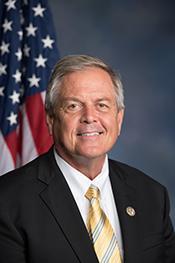
U.S. Representative for South Carolina’s 5th district
Republican
119th Congress, two-year term
Missed 11.3% of roll calls. Chamber median 1.9%.
The full voting recordCounts roll calls where most Democrats and most Republicans voted differently, leaving out procedural votes.
How we countFrom FEC filings, Voteview roll calls and Congress.gov.
Republican. In Congress since 2017, 5 terms in total.
Following saves Norman to your list, which Chamber & Street keeps on its server, linked to a cookie on this browser and not to your name or email. Email alerts will come with constituent verification.
Bills and resolutions Norman signed on to as a cosponsor. An original cosponsor signed on the day the bill was introduced. Source: govinfo bill status files, last updated Nov 6, 2026.
Norman also withdrew as a cosponsor from 1 bill, not listed here.
Preventing the Abuse of Immigration Parole Act
Sponsor Addison McDowell (R). Original cosponsor. 27 cosponsors. H.R. 3725 on Congress.gov
Introduced
Preventing the Abuse of Immigration Parole Act
This bill places limits on the authority of the Department of Homeland Security (DHS) to parole individuals into the United States.
Currently, DHS is allowed to parole non-U.S. nationals (aliens under federal law) temporarily into the United States on public benefit or urgent humanitarian grounds.
Under the bill, the total number of parolees allowed annually is capped at 3,000. Additionally, parole may not be granted to nationals of China, Russia, Iran, North Korea, Cuba, or Syria without a waiver from the Department of State. The bill also eliminates DHS’s authority to parole refugees into the United States on separate public interest grounds.
New IDEA Act
Sponsor Brandon Gill (R). Original cosponsor. 15 cosponsors. H.R. 3715 on Congress.gov(opens in a new tab)
Introduced
Make American Flags in America Act of 2025
Sponsor Nicholas Langworthy (R). Joined Jun 3, 2025. 53 cosponsors. H.R. 1421 on Congress.gov(opens in a new tab)
Introduced
Veterans’ Life Insurance Expansion and Integrity Act of 2025
Sponsor Sheri Biggs (R). Joined May 26, 2025. 1 cosponsor. H.R. 3576 on Congress.gov(opens in a new tab)
Introduced
Calling upon all Americans on this Memorial Day, 2025, to honor the men and women of the Armed Forces who have died in the pursuit of freedom and peace.
Sponsor Michael Guest (R). Original cosponsor. 43 cosponsors. H.Res. 444 on Congress.gov(opens in a new tab)
Introduced
A resolution condemning former FBI Director James Comey's incitement of violence against President Donald J. Trump.
Sponsor Laurel Lee (R). Original cosponsor. 29 cosponsors. H.Res. 433 on Congress.gov(opens in a new tab)
Introduced
AM Radio for Every Vehicle Act of 2025
Sponsor Gus Bilirakis (R). Joined May 20, 2025. 317 cosponsors. H.R. 979 on Congress.gov(opens in a new tab)
Passed the House
AM Radio for Every Vehicle Act of 2025
This bill requires the Department of Transportation (DOT) to issue a rule requiring AM radio capabilities to be standard in all new passenger vehicles. (AM radio is often used to deliver emergency alerts and news and entertainment programming; some newer vehicles do not include AM equipment.)
Specifically, this bill applies to passenger vehicles (1) manufactured in the United States for sale in the United States, imported into the United States, or shipped in interstate commerce; and (2) manufactured after the rule's effective date. The rule must require all such vehicles to have devices that can receive signals and play content transmitted by AM stations or digital audio AM stations installed as standard equipment and made easily accessible to drivers.
Prior to the rule's effective date, manufacturers that do not include devices that can access AM radio as standard equipment (1) must inform purchasers of this fact through clear and conspicuous labeling, and (2) may not charge an additional or separate fee for AM radio access.
DOT may assess civil penalties for any violation of the rule. The Department of Justice may also bring a civil action to enjoin a violation.
The rule, including DOT’s authority to enforce it, must expire 10 years after the bill’s enactment.
Further, the Government Accountability Office must study and report on the dissemination of emergency alerts to the public, including by conducting an assessment of AM radio relative to other Integrated Public Alert and Warning System communication technologies.
Protect Children’s Innocence Act
Original cosponsor. 44 cosponsors. H.R. 3492 on Congress.gov(opens in a new tab)
Progress not on file
Protect Children’s Innocence Act of 2025
This bill establishes federal criminal offenses for providing gender-affirming care to minors. The bill also changes the existing federal criminal offense that prohibits female genital mutilation (FGM) and related conduct.
Specifically, the bill makes it a federal crime to knowingly perform or attempt to perform procedures or provide medications (e.g., hormonal treatments) to a minor for the purpose of changing their body to correspond to a sex that differs from their biological sex. The bill provides exceptions for specified types of surgeries or procedures, including those for treating (1) individuals who have both ovarian and testicular tissue or abnormal sex chromosome structure or hormones, or (2) infections or other harms that result from a previous gender-transition procedure. A violation is punishable by a fine, a prison term of up to 10 years, or both. The bill prohibits the arrest or prosecution of an individual who undergoes gender-affirming procedures or medications.
Additionally, the bill makes changes to the existing federal criminal prohibition on performing FGM on a minor and related conduct. Among the changes, the bill broadens the scope of prohibited conduct to include the facilitation or consent to FGM by any person (currently, prohibited facilitation or consent applies only to a parent, guardian, or caretaker of the minor). The bill also prohibits the arrest or prosecution of an individual who undergoes FGM. The bill does not change the applicable criminal penalty of a fine, a prison term of up to 10 years, or both.
Ending Medicaid Discrimination Against the Most Vulnerable Act
Sponsor Chip Roy (R). Joined May 19, 2025. 18 cosponsors. H.R. 3321 on Congress.gov(opens in a new tab)
Introduced
TRUST in Congress Act
Sponsor Seth Magaziner (D). Joined May 15, 2025. 103 cosponsors. H.R. 396 on Congress.gov(opens in a new tab)
Introduced
Transparent Representation Upholding Service and Trust in Congress Act or the TRUST in Congress Act
This bill requires a Member of Congress, as well as any spouse or dependent child of a Member, to place specified investments into a qualified blind trust (i.e., an arrangement in which certain financial holdings are placed in someone else's control to avoid a possible conflict of interest) until 180 days after the end of their tenure as a Member of Congress.
Insurance Data Protection Act
Sponsor Scott Fitzgerald (R). Original cosponsor. 25 cosponsors. H.R. 3437 on Congress.gov(opens in a new tab)
Introduced
Insurance Data Protection Act
This bill limits the ability of federal entities to compel insurance companies to share information.
Specifically, the bill eliminates the subpoena power of the Federal Insurance Office. Under current law, the office has the power to subpoena information from insurers to, among other purposes, identify issues that could contribute to a systemic crisis in the insurance industry or the U.S. financial system.
The bill also eliminates the ability of the Office of Financial Research to subpoena insurance companies.
When seeking to collect insurance company data under specified consumer protection laws, a financial regulator must obtain the data from other regulators or from publicly available sources if possible. Otherwise, the financial regulator may only collect this data directly from the insurance company if the regulator complies with the Paperwork Reduction Act.
Pregnancy.Gov Act
Sponsor Diana Harshbarger (R). Joined May 13, 2025. 15 cosponsors. H.R. 3287 on Congress.gov(opens in a new tab)
Introduced
Constitutional Hearing Protection Act
Sponsor Andrew Clyde (R). Original cosponsor. 48 cosponsors. H.R. 3228 on Congress.gov(opens in a new tab)
Introduced
Enhanced Iran Sanctions Act of 2025
Sponsor Michael Lawler (R). Joined Apr 29, 2025. 295 cosponsors. H.R. 1422 on Congress.gov(opens in a new tab)
Passed the House
Enhanced Iran Sanctions Act of 2025
This bill imposes sanctions on certain foreign persons (individuals and entities) that are involved in Iran's petroleum sector as well as certain associated persons. The bill also requires or authorizes actions to facilitate the enforcement of sanctions on Iran.
Specifically, the bill requires the President to impose visa- and property-blocking sanctions on any foreign person that, after the bill's enactment, knowingly engages in any transaction related to the processing, export, or sale of oil, condensates, gas, liquefied natural gas, or other petrochemical products in whole or in part from Iran. The President must also impose sanctions on certain foreign persons associated with a sanctioned individual or entity. For example, the President must sanction the subsidiaries and corporate officers of a sanctioned business.
The bill provides certain exceptions to these sanctions, including specifying that sanctions do not apply to the importation of goods or to conducting or facilitating transactions for humanitarian assistance.
The Department of State must establish an interagency working group that shall seek to establish a multilateral contact group to coordinate international efforts to enforce sanctions on Iran.
The bill expands the State Department rewards program to authorize a reward payment to any individual who furnishes information leading to the identification of a person (1) subject to sanctions under this bill, or (2) that has attempted or is attempting to evade sanctions under this bill.
Protecting the Mailing of Firearms Act
Sponsor Sheri Biggs (R). Original cosponsor. 33 cosponsors. H.R. 3033 on Congress.gov(opens in a new tab)
Introduced
Putting Trust in Transparency Act
Sponsor Paul Gosar (R). Original cosponsor. 10 cosponsors. H.R. 2841 on Congress.gov(opens in a new tab)
Introduced
Main Street Tax Certainty Act
Sponsor Lloyd Smucker (R). Joined Apr 8, 2025. 192 cosponsors. H.R. 703 on Congress.gov(opens in a new tab)
Introduced
Main Street Tax Certainty Act
This bill makes permanent the qualified business income (QBI) tax deduction.
Under current law, individuals, estates, and trusts may deduct the lower of (1) 20% of QBI from a qualified business, qualified real estate investment trust dividends, and qualified publicly traded partnership income; or (2) 20% of taxable income less net capital gain. (Some limitations apply.)
However, under current law, the QBI tax deduction expires after December 31, 2025.
NPR and PBS Act
Sponsor Ronny Jackson (R). Joined Mar 31, 2025. 16 cosponsors. H.R. 2443 on Congress.gov(opens in a new tab)
Introduced
Cellphone Jamming Reform Act of 2025
Sponsor David Kustoff (R). Original cosponsor. 23 cosponsors. H.R. 2350 on Congress.gov(opens in a new tab)
Introduced
Firearm Due Process Protection Act of 2025
Sponsor Tom Emmer (R). Original cosponsor. 24 cosponsors. H.R. 2184 on Congress.gov(opens in a new tab)
Introduced
Firearm Due Process Protection Act of 2025
This bill expands the grounds for pursuing judicial remedies related to the denial of certain firearm transfers. Additionally, the bill establishes procedural rules applicable to actions for judicial remedies.
Current law authorizes judicial remedies for an individual who is erroneously denied a firearm (e.g., an individual is denied a firearm but the individual is eligible to receive or possess a firearm). This bill authorizes remedies for an individual who experiences an extended delay (i.e., a delay of more than 60 days) on a firearm transfer.
Additionally, the bill requires an expedited hearing on an action for judicial remedies and places the burden of proof on the respondent (i.e., the government) to show that the individual was ineligible to receive or possess a firearm.
FOCA Act of 2025
Sponsor Clay Higgins (R). Original cosponsor. 107 cosponsors. H.R. 2126 on Congress.gov(opens in a new tab)
Introduced
Fair and Open Competition Act of 2025 or the FOCA Act of 2025
This bill requires that federal contracts for construction projects neither require nor prohibit a bidder, offeror, contractor, or subcontractor from entering into agreements with one or more labor organizations with respect to such projects or related projects.
Under the bill, the controlling documents for federal construction contracts (such as bid specifications and project agreements) may not require or prohibit a bidder, offeror, contractor, or subcontractor from entering into or adhering to such labor agreements. Additionally, the controlling documents may not discriminate against or give preference to a bidder, offeror, contractor, or subcontractor who signs or refuses to sign such a labor agreement.
These requirements also apply to any (1) construction manager acting on behalf of the federal government with respect to such contract, (2) recipient of a federal grant or financial assistance for construction projects or construction manager acting on the recipient's behalf, and (3) party to a federal cooperative agreement for construction projects or construction managers acting on the party's behalf.
An agency may exempt a project from this prohibition to avert an imminent threat to public health or safety or to serve the national security.
Expressing support for the designation of April 5, 2025, as "Barth Syndrome Awareness Day".
Sponsor Paul Tonko (D). Original cosponsor. 14 cosponsors. H.Res. 209 on Congress.gov(opens in a new tab)
Introduced
This resolution supports the designation of Barth Syndrome Awareness Day. Barth Syndrome is a rare, life-threatening genetic disorder of lipid metabolism that primarily affects males.
Removing a certain Member from a certain standing committee of the House.
Sponsor Elijah Crane (R). Original cosponsor. 10 cosponsors. H.Res. 204 on Congress.gov(opens in a new tab)
Introduced
Anti-CBDC Surveillance State Act
Sponsor Tom Emmer (R). Original cosponsor. 135 cosponsors. H.R. 1919 on Congress.gov(opens in a new tab)
Passed the House
Anti-CBDC Surveillance State Act
This bill prohibits a Federal Reserve bank from offering products or services directly to an individual, maintaining an account on behalf of an individual, or issuing a central bank digital currency (i.e., a digital dollar). Further, the Board of Governors of the Federal Reserve System is prohibited from using a central bank digital currency to implement monetary policy or from testing, studying, creating, or implementing a central bank digital currency, with exceptions as provided by the bill.
No Tax Dollars for the United Nation’s Immigration Invasion Act
Sponsor Lance Gooden (R). Original cosponsor. 18 cosponsors. H.R. 1792 on Congress.gov(opens in a new tab)
Introduced