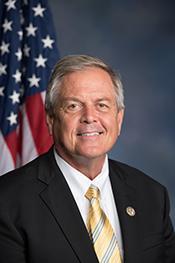
U.S. Representative for South Carolina’s 5th district
Republican
119th Congress, two-year term
Missed 11.3% of roll calls. Chamber median 1.9%.
The full voting recordCounts roll calls where most Democrats and most Republicans voted differently, leaving out procedural votes.
How we countFrom FEC filings, Voteview roll calls and Congress.gov.
Republican. In Congress since 2017, 5 terms in total.
Following saves Norman to your list, which Chamber & Street keeps on its server, linked to a cookie on this browser and not to your name or email. Email alerts will come with constituent verification.
Bills and resolutions Norman signed on to as a cosponsor. An original cosponsor signed on the day the bill was introduced. Source: govinfo bill status files, last updated Nov 6, 2026.
Norman also withdrew as a cosponsor from 1 bill, not listed here.
Firearm Access During Shutdowns Act
Sponsor Ben Cline (R). Joined Jul 23, 2026. 112 cosponsors. H.R. 5874 on Congress.gov
Introduced
Firearm Access During Shutdowns Act
This bill requires various federal agencies to continue certain operations, functions, and services related to firearms during a government shutdown.
The bill applies to
• the Federal Bureau of Investigation's National Instant Criminal Background Check System, including the processing of background checks in support of the operations of the Directorate of Enforcement Programs and Services of the Bureau of Alcohol, Tobacco, Firearms and Explosives (ATF);
• the ATF's Directorate of Enforcement Programs and Services;
• the activities of the Department of Commerce's Bureau of Industry and Security relating to firearms and firearm-related products, including activities related to processing of applications for export licenses; and
• the activities of the Department of State's Directorate of Defense Trade Controls relating to firearms and firearm-related products, including activities related to processing of applications for export licenses.
Under the bill, (1) these operations, functions, and services are deemed to relate to an emergency involving the safety of human life or the protection of property; and (2) employees carrying out the operations, functions, and services are deemed to be excepted employees. (Under an exception in the Antideficiency Act, an employee whose duties involve the safety of human life or the protection of property may be required to work during a government shutdown. Employees who are required to work during a government shutdown because they fall under this or other exceptions are known as excepted employees.)
End Birthright Citizenship for Territories Act
Sponsor H. Griffith (R). Joined Jul 21, 2026. 1 cosponsor. H.R. 9724 on Congress.gov(opens in a new tab)
Introduced
Birthright CLAIM Act of 2026
Sponsor W. Steube (R). Original cosponsor. 3 cosponsors. H.R. 9662 on Congress.gov(opens in a new tab)
Introduced
American Franchise Act
Sponsor Kevin Hern (R). Joined Jul 14, 2026. 158 cosponsors. H.R. 5267 on Congress.gov(opens in a new tab)
Introduced
Permanent Trump Secure Border Act
Sponsor Chip Roy (R). Joined Jul 9, 2026. 15 cosponsors. H.R. 9199 on Congress.gov(opens in a new tab)
Introduced
Proposing an amendment to the Constitution of the United States to protect United States citizenship.
Sponsor Clay Fuller (R). Joined Jul 2, 2026. 6 cosponsors. H.J.Res. 172 on Congress.gov(opens in a new tab)
Introduced
Essential Caregivers Act of 2025
Sponsor Claudia Tenney (R). Joined Jun 25, 2026. 160 cosponsors. H.R. 6766 on Congress.gov(opens in a new tab)
Introduced
Essential Caregivers Act of 2025
This bill prohibits certain health care facilities from limiting the access of essential caregivers to residents of those facilities, including during designated emergency periods.
Specifically, the bill generally prohibits Medicare skilled nursing facilities, Medicaid nursing facilities, Medicaid intermediate care facilities, and associated inpatient rehabilitation facilities from restricting the access of essential caregivers to residents of the facilities, including during emergency periods in which visitation rights are otherwise restricted. During emergency periods, facilities may restrict access for an initial period of up to seven days and for one additional maximum seven-day period (if the additional period is approved by the state health department). Facilities may restrict access for a total of 7 days (or 14 days with the approval of the state health department) during an emergency period.
Essential caregivers must agree to comply with any safety protocols set by the facility, which may be no more stringent for caregivers compared to those for staff. Caregivers who fail to comply with these requirements may be denied access, subject to an appeals process.
Ban Abortion by Mail Act
Sponsor Sheri Biggs (R). Original cosponsor. 12 cosponsors. H.R. 9421 on Congress.gov(opens in a new tab)
Introduced
Preventing International Surrogacy Exploitation Act
Sponsor Scott Perry (R). Joined Jun 23, 2026. 28 cosponsors. H.R. 9132 on Congress.gov(opens in a new tab)
Introduced
Protecting Kids from Creeps Act
Sponsor Scott Perry (R). Joined Jun 23, 2026. 30 cosponsors. H.R. 9131 on Congress.gov(opens in a new tab)
Introduced
America 250 Commemorative Flag Act.
Sponsor Barry Loudermilk (R). Original cosponsor. 30 cosponsors. H.Res. 1314 on Congress.gov(opens in a new tab)
Introduced
ASSIMILATION Act
Sponsor Andrew Ogles (R). Original cosponsor. 17 cosponsors. H.R. 8827 on Congress.gov(opens in a new tab)
Introduced
In God We Trust Act
Sponsor Mary Miller (R). Original cosponsor. 17 cosponsors. H.R. 8826 on Congress.gov(opens in a new tab)
Introduced
One Flag for All Act
Sponsor Diana Harshbarger (R). Joined May 14, 2026. 25 cosponsors. H.R. 1313 on Congress.gov(opens in a new tab)
Introduced
Resolution memorializing law enforcement officers killed in the line of duty.
Sponsor Michael Guest (R). Joined May 13, 2026. 126 cosponsors. H.Res. 1252 on Congress.gov(opens in a new tab)
Passed the House
This resolution expresses support for police officers and other law enforcement personnel.
The resolution further recognizes
• law enforcement officers across the United States in the pursuit of preserving safe and secure communities;
• the need to ensure that such officers have the equipment, training, and resources necessary to protect their health and safety while they are protecting the public; and
• the law enforcement community for acts of sacrifice and heroism.
The resolution expresses condolences and appreciation to the loved ones of each law enforcement officer who has made the ultimate sacrifice in the line of duty.
CRUSADE Act
Sponsor Barry Moore (R). Joined May 13, 2026. 7 cosponsors. H.R. 8756 on Congress.gov(opens in a new tab)
Introduced
COP Act of 2025
Sponsor Kat Cammack (R). Joined May 13, 2026. 9 cosponsors. H.R. 4783 on Congress.gov(opens in a new tab)
Introduced
Expressing support for the designation of the week of May 3 through May 9, 2026, as "National Small Business Week" to celebrate the contributions of small businesses and entrepreneurs in every community in the United States.
Sponsor Brad Finstad (R). Original cosponsor. 27 cosponsors. H.Res. 1261 on Congress.gov(opens in a new tab)
Introduced
This resolution honors the contributions of small businesses in the United States and supports the designation of National Small Business Week.
No Kill Switches in Cars Act
Sponsor Scott Perry (R). Joined May 7, 2026. 35 cosponsors. H.R. 1137 on Congress.gov(opens in a new tab)
Introduced
No Kill Switches in Cars Act
This bill repeals a requirement that the National Highway Traffic Safety Administration prescribe a federal motor vehicle safety standard that requires certain passenger vehicles to be equipped with advanced drunk and impaired driving prevention technology. Currently, there is no federal motor vehicle safety standard that requires the technology.
In general, advanced drunk and impaired driving prevention technology is a passive system that (1) monitors a driver's performance to identify driver impairment, or (2) accurately detects whether a driver's blood alcohol concentration is equal to or greater than 0.08%. The system must also prevent or limit vehicle operation if the system determines the driver may be intoxicated or impaired.
Logan's Law
Sponsor Russell Fry (R). Original cosponsor. 11 cosponsors. H.R. 8611 on Congress.gov(opens in a new tab)
Introduced
Measures Against Marxism’s Dangerous Adherents and Noxious Islamists Act of 2026
Sponsor Chip Roy (R). Joined Apr 27, 2026. 9 cosponsors. H.R. 8387 on Congress.gov(opens in a new tab)
Introduced
Nuclear Family Priority Act
Sponsor Elijah Crane (R). Joined Apr 27, 2026. 48 cosponsors. H.R. 2705 on Congress.gov(opens in a new tab)
Introduced
Nuclear Family Priority Act
This bill imposes limits on various types of family-sponsored immigration visas.
The non-U.S. national (alien under federal law) parents of U.S. citizens shall not qualify for visas for immediate relatives, which are not subject to any direct numerical limits. Currently, the spouses, unmarried children under 21, and parents of citizens are considered immediate relatives.
The bill also creates a nonimmigrant visa for such parents of citizens. Such non-U.S. nationals shall not be eligible for employment or any public benefits.
The bill also reduces the baseline annual cap for family-sponsored visas from 480,000 to 88,000, and revises the methods for calculating the cap. Currently, the 480,000 cap may be adjusted depending on various factors but shall not be less than 226,000.
The bill eliminates preference allocations (visa categories subject to various annual caps) for various family-sponsored visas, including those for the siblings and married children of citizens. The bill provides for a preference allocation for the unmarried children under 21 and spouses of permanent residents, subject to the 88,000 annual cap.
Legal Workforce Act
Sponsor Ken Calvert (R). Joined Apr 27, 2026. 45 cosponsors. H.R. 251 on Congress.gov(opens in a new tab)
Introduced
Legal Workforce Act
This bill directs the Department of Homeland Security (DHS) to create an electronic employment eligibility confirmation system modeled after and to replace the E-Verify system, which allows employers and recruiters to verify the immigration status of individuals. The bill also mandates the use of such a system, where currently only some employers, such as those with federal contracts, are required to use E-Verify.
The bill specifies documents that can establish an individual's identity and employment authorization. During the period starting when a job offer is made until three business days after hiring, the individual must attest to his or her employment authorization, and the employer or recruiter must attest that it has examined the individual's required documents.
Employers shall reverify certain types of employees who were not previously verified using E-Verify.
The Social Security Administration shall notify employees if their Social Security number has been used multiple times in an unusual manner. DHS shall establish programs for blocking and suspending misused numbers.
Employers that are required to use the verification system shall not be liable for any employment-related action based on a good-faith reliance on the system.
The bill establishes a phased-in participation deadline for different sizes and categories of employers, including agricultural employers.
The bill increases civil penalties related to hiring individuals without work authorization. It also preempts state laws relating to hiring and employment eligibility verification, but states may use their authority of business licensing to penalize employers for failing to comply with the bill's provisions.
Fairness for High-Skilled Americans Act of 2025
Sponsor Paul Gosar (R). Joined Apr 27, 2026. 40 cosponsors. H.R. 2315 on Congress.gov(opens in a new tab)
Introduced
Fairness for High-Skilled Americans Act of 2025
This bill eliminates the Optional Practical Training Program or any successor program, unless Congress expressly authorizes such a program. (The program provides an F-1 student visa holder temporary employment authorization before or after completion of the student's studies, or both.)
SAFE for America Act of 2025
Sponsor Mike Collins (R). Joined Apr 27, 2026. 59 cosponsors. H.R. 1241 on Congress.gov(opens in a new tab)
Introduced
Security And Fairness Enhancement for America Act of 2025 or SAFE for America Act of 2025
This bill eliminates the diversity visa program. This program provides up to 55,000 visas annually to individuals from countries with low rates of immigration to the United States.