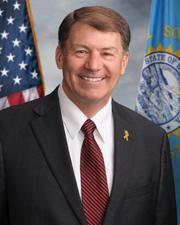
U.S. Senator for South Dakota
Republican
Senate term end not loaded yet
Missed 0.9% of roll calls. Chamber median 2.1%.
The full voting recordCounts roll calls where most Democrats and most Republicans voted differently, leaving out procedural votes.
How we countFrom FEC filings, Voteview roll calls and Congress.gov.
Republican. In Congress since 2015, 2 terms in total.
Following saves Rounds to your list, which Chamber & Street keeps on its server, linked to a cookie on this browser and not to your name or email. Email alerts will come with constituent verification.
Bills and resolutions Rounds signed on to as a cosponsor. An original cosponsor signed on the day the bill was introduced. Source: govinfo bill status files, last updated Nov 6, 2026.
AM Radio for Every Vehicle Act of 2025
Sponsor Edward Markey (D). Original cosponsor. 60 cosponsors. S. 315 on Congress.gov
Passed committee
AM Radio for Every Vehicle Act of 2025
This bill requires the Department of Transportation (DOT) to issue a rule requiring AM radio capabilities to be standard in all new passenger vehicles. (AM radio is often used to deliver emergency alerts and news and entertainment programming; some newer vehicles do not include AM equipment.)
Specifically, this bill applies to passenger vehicles (1) manufactured in the United States for sale in the United States, imported into the United States, or shipped in interstate commerce; and (2) manufactured after the rule's effective date. The rule must require all such vehicles to have devices that can receive signals and play content transmitted by AM stations or digital audio AM stations installed as standard equipment and made easily accessible to drivers.
Prior to the rule's effective date, manufacturers that do not include devices that can access AM radio as standard equipment (1) must inform purchasers of this fact through clear and conspicuous labeling, and (2) may not charge an additional or separate fee for AM radio access.
DOT may assess civil penalties for any violation of the rule. The Department of Justice may also bring a civil action to enjoin a violation.
DOT’s authority to issue the rule expires 10 years after the bill’s enactment.
Further, the Government Accountability Office must study and report on the dissemination of emergency alerts to the public, including by conducting an assessment of AM broadcast stations relative to other Integrated Public Alert and Warning System communication technologies.
A PLUS Act
Sponsor Steve Daines (R). Original cosponsor. 12 cosponsors. S. 309 on Congress.gov(opens in a new tab)
Introduced
Academic Partnerships Lead Us to Success Act or the A PLUS Act
This bill creates a framework under which states may receive federal elementary and secondary education funds on a consolidated basis and use such funds for any educational purpose permitted by state law.
Defund the CFPB Act
Sponsor Ted Cruz (R). Original cosponsor. 6 cosponsors. S. 303 on Congress.gov(opens in a new tab)
Introduced
Defund the CFPB Act
This bill caps funding of the Consumer Financial Protection Bureau at $0.
WALL Act of 2025
Sponsor Katie Britt (R). Original cosponsor. 5 cosponsors. S. 293 on Congress.gov(opens in a new tab)
Introduced
WALL Act of 2025
This bill appropriates $25 billion for the construction of a wall on the U.S.-Mexico border and addresses other issues related to immigration.
As offsets to this spending, the bill restricts the child tax credit, earned income credits, and lifetime learning credits to those with Social Security numbers who are not prohibited from employment in the United States. Also, individuals who file taxes using an individual taxpayer identification number (ITIN) instead of a Social Security number must pay a fee ($300 for each individual on the tax return using an ITIN).
The bill restricts eligibility for certain federally funded benefits, including unemployment compensation, supplemental nutrition assistance, and housing benefits, to those eligible to work in the United States. Agencies administering such benefits must use the E-Verify program to confirm the eligibility of applicants for such benefits.
This bill also sets fines for non-U.S. nationals (aliens under federal law) who improperly enter the United States or overstay their visas.
POLICE Act of 2025
Sponsor Ted Budd (R). Joined Jan 28, 2025. 14 cosponsors. S. 212 on Congress.gov(opens in a new tab)
Introduced
Protect Our Law enforcement with Immigration Control and Enforcement Act of 2025 or the POLICE Act of 2025
This bill makes assaulting a law enforcement officer, firefighter, or other first responder a deportable offense.
Specifically, the bill makes deportable any non-U.S. national (alien under federal law) who has been convicted of (or admits to have committed) any act that constitutes the essential elements of any offense involving assault of a law enforcement officer, firefighter, or other first responder.
The Department of Homeland Security must publish annually on its website a report on the number of individuals deported in the previous fiscal year pursuant to this bill.
Dignity for Aborted Children Act
Sponsor Pete Ricketts (R). Original cosponsor. 12 cosponsors. S. 242 on Congress.gov(opens in a new tab)
Introduced
Dignity for Aborted Children Act
This bill establishes requirements for abortion providers with respect to the disposal of human fetal tissue from an abortion.
Specifically, it requires abortion providers to obtain a patient's informed consent for one of two specified methods of disposition and to retain the corresponding documentation in the patient's file.
First, patients may choose to retain possession of the tissue. A patient may choose to transfer the tissue to an entity that provides interment or cremation services.
Second, patients may choose to release the tissue to the provider. Providers must ensure any tissue released to them is interred or cremated within seven days of the procedure in a manner consistent with state law regarding the disposal of human remains.
Abortion providers must submit reports annually to the Department of Health and Human Services about these requirements and other specified information.
The bill establishes civil penalties for violations of the requirement to retain documentation of informed consent, and it establishes criminal penalties for violations of the requirement regarding the disposal of human fetal tissue.
Honoring Our Fallen Heroes Act of 2025
Sponsor Amy Klobuchar (D). Original cosponsor. 59 cosponsors. S. 237 on Congress.gov(opens in a new tab)
Passed committee
Honoring Our Fallen Heroes Act of 2025
This bill extends death and disability benefits under the Public Safety Officers' Benefits Program (PSOB) to certain public safety officers who suffer from exposure-related cancer while on duty and their survivors. The PSOB program provides death, disability, and education benefits to public safety officers who are killed or injured in the line of duty and their survivors.
The bill specifies that exposure to a carcinogen shall be presumed to constitute a personal injury in the line of duty if
• the exposure occurred while the officer was in the line of duty;
• the officer began serving as an officer not fewer than 5 years before the date of the diagnosis of an exposure-related cancer and the diagnosis occurred not more than 15 years after the last date of active service; and
• the exposure-related cancer directly and proximately resulted in the death or permanent and total disability of the officer.
The Department of Justice's Bureau of Justice Assistance must periodically review the definition of exposure-related cancer and update the definition if appropriate based on medical evidence and in accordance with the requirements of a petition process.
Veterans Health Care Freedom Act
Sponsor Marsha Blackburn (R). Original cosponsor. 8 cosponsors. S. 219 on Congress.gov(opens in a new tab)
Introduced
Veterans Health Care Freedom Act
This bill requires the Center for Innovation for Care and Payment within the Department of Veterans Affairs (VA) to implement a three-year pilot program to provide veterans who are enrolled in the VA health care system with the ability to choose health care providers through the covered care system. Under the bill, the covered care system includes VA medical facilities, health care providers participating in the Veterans Community Care Program (VCCP), and eligible entities or providers that have entered into a Veterans Care Agreement.
A veteran participating in the program may elect to receive care at any provider in the covered care system.
The pilot program removes certain requirements (e.g., location of the veteran) to access care at VA and non-VA facilities. After four years, the bill permanently phases out the requirements for accessing care under the VCCP and Veterans Care Agreements and requires the VA to provide such care under the same conditions of the pilot program. Additionally, after four years, veterans may receive care at a VA medical facility regardless of whether the facility is in the same Veterans Integrated Service Network as the veteran.
Main Street Tax Certainty Act
Sponsor Steve Daines (R). Original cosponsor. 45 cosponsors. S. 213 on Congress.gov(opens in a new tab)
Introduced
Main Street Tax Certainty Act
This bill makes permanent the qualified business income (QBI) tax deduction.
Under current law, individuals, estates, and trusts may deduct the lower of (1) 20% of QBI from a qualified business, qualified real estate investment trust dividends, and qualified publicly traded partnership income; or (2) 20% of taxable income less net capital gain. (Some limitations apply.)
However, under current law, the QBI tax deduction expires after December 31, 2025.
Resiliency for Ranching and Natural Conservation Health Act
Sponsor John Barrasso (R). Original cosponsor. 6 cosponsors. S. 211 on Congress.gov(opens in a new tab)
Introduced
No Taxpayer Funding for Abortion and Abortion Insurance Full Disclosure Act of 2025
Sponsor Roger Wicker (R). Original cosponsor. 50 cosponsors. S. 186 on Congress.gov(opens in a new tab)
Introduced
No Taxpayer Funding for Abortion and Abortion Insurance Full Disclosure Act of 2025
This bill modifies provisions relating to federal funding for, and health insurance coverage of, abortions.
Specifically, the bill prohibits the use of federal funds for abortions or for health coverage that includes abortions. Such restrictions extend to the use of funds in the budget of the District of Columbia. Additionally, abortions may not be provided in a federal health care facility or by a federal employee.
Historically, language has been included in annual appropriations bills for the Department of Health and Human Services (HHS) that prohibits the use of federal funds for abortions—such language is commonly referred to as the Hyde Amendment. Similar language is also frequently included in appropriations bills for other federal agencies and the District of Columbia. The bill makes these restrictions permanent and extends the restrictions to all federal funds (rather than specific agencies).
The bill's restrictions regarding the use of federal funds do not apply in cases of rape, incest, or where a physical disorder, injury, or illness endangers a woman's life unless an abortion is performed. The Hyde Amendment provides the same exceptions.
The bill also prohibits qualified health plans from including coverage for abortions. Currently, qualified health plans may cover abortion, but the portion of the premium attributable to abortion coverage is not eligible for subsidies.
Justice for Victims of Sanctuary Cities Act of 2025
Sponsor Thomas Tillis (R). Original cosponsor. 11 cosponsors. S. 185 on Congress.gov(opens in a new tab)
Introduced
Justice for Victims of Sanctuary Cities Act of 2025
This bill provides a private right of action against state and local jurisdictions with certain policies that limit cooperation with federal immigration enforcement efforts, and contains additional provisions related to such jurisdictions. Currently, such cooperation is generally not required.
An individual (or certain relatives of such an individual) who is the victim of any felony for which an alien has been arrested, convicted, or sentenced to a prison term of at least one year may sue a state or local jurisdiction if the jurisdiction failed to comply with (1) certain Department of Homeland Security (DHS) requests related to arresting and detaining aliens, and (2) a DHS request to detain the alien in question or provide a notification about the release of the alien. A jurisdiction that accepts certain federal grants may not assert immunity in such a civil action.
A jurisdiction (or employee of a jurisdiction) that complies with certain DHS detainer requests shall be deemed to be acting as an agent of DHS. A complying jurisdiction or employee of the jurisdiction shall not be liable in any lawsuit relating to compliance with such requests. In a lawsuit against an employee of the jurisdiction, the United States shall be substituted in as the defendant, and remedies shall be limited to provisions for bringing tort claims against the federal government.
Restore VA Accountability Act of 2025
Sponsor Jerry Moran (R). Joined Jan 22, 2025. 18 cosponsors. S. 124 on Congress.gov(opens in a new tab)
Introduced
Restore Department of Veterans Affairs Accountability Act of 2025 or the Restore VA Accountability Act of 2025
This bill modifies personnel action procedures regarding certain employees and executives of the Department of Veterans Affairs (VA).
The bill authorizes the VA to remove from civil service, demote, or suspend VA employees that are supervisors or managers if the VA determines by substantial evidence that the performance or misconduct of such individual warrants such action. This authority does not apply to certain appointees or individuals in their probationary or trial period.
Supervisors or managers who are subject to a removal, demotion, or suspension under this bill are entitled to (1) advance notice of the action and supporting evidence, (2) representation by an attorney or representative, and (3) grieve the action in accordance with an internal grievance process.
The bill also provides protections from removal, demotion, or suspension for supervisor or managers who are whistleblowers or are seeking corrective action for an alleged prohibited personnel practice such as discrimination.
The bill also modifies the procedures to remove, demote, or suspend VA employees or senior executives based on performance or misconduct, specifically by requiring the VA to determine by substantial evidence that the performance or misconduct of the individual warrants such removal, demotion, or suspension. Such procedures must apply retroactively, beginning on the date of enactment of the Department of Veterans Affairs Accountability and Whistleblower Protection Act of 2017 (June 23, 2017).
Student Empowerment Act
Sponsor Ted Cruz (R). Original cosponsor. 8 cosponsors. S. 152 on Congress.gov(opens in a new tab)
Introduced
Student Empowerment Act
This bill expands the education-related expenses that may be paid for with tax-free distributions from a qualified tuition program (also known as a 529 plan) to include certain expenses related to elementary, secondary, and homeschool education.
Under current law, distributions from a 529 plan are excluded from gross income if they are used to pay for qualified higher education expenses, which includes up to $10,000 (per year and per beneficiary) for tuition at an elementary or secondary public, private, or religious school.
The bill expands the education-related expenses that may be paid for with tax-free distributions from a 529 plan to include tuition related to homeschooling and the following expenses related to elementary, secondary, and homeschool education:
• curriculum and curricular materials,
• books or other instructional materials,
• online educational materials,
• tutoring or educational classes outside the home,
• testing fees,
• fees for dual enrollment in an institution of higher education, and
• educational therapies for students with disabilities.
Dismantle Iran’s Proxy Act of 2025
Sponsor James Risch (R). Original cosponsor. 20 cosponsors. S. 145 on Congress.gov(opens in a new tab)
Introduced
Dismantle Iran’s Proxy Act of 2025
This bill requires the President to take actions against Ansarallah, the Iran-backed movement in Yemen also known as the Houthis.
Specifically, the bill requires the President to designate Ansarallah as a foreign terrorist organization. (Among other things, such a designation allows the Department of the Treasury to require U.S. financial institutions to block transactions involving the organization.)
The President must also (1) impose property blocking sanctions on Ansarallah and any foreign person who is an official, agent, or affiliate of the organization; (2) submit to Congress a determination as to whether three specified individuals are officials, agents, or affiliates of Ansarallah; and (3) submit to Congress a strategy to degrade the offensive capabilities of Ansarallah and to restore freedom of navigation in the Red Sea and nearby waterways.
Whole-Home Repairs Act of 2025
Sponsor John Fetterman (D). Original cosponsor. 10 cosponsors. S. 127 on Congress.gov(opens in a new tab)
Introduced
Whole-Home Repairs Act of 2025
This bill establishes a pilot program through which the Department of Housing and Urban Development provides grants to state and local governments to support the ability of certain landlords and low- to moderate-income homeowners to make necessary modifications, repairs, or updates to their properties.
State and local governments must use the funds they receive under the program to award grants to homeowners and loans to landlords to make changes that address issues such as accessibility, habitability, and energy efficiency.
A homeowner is eligible for a grant if the homeowner's household income (1) does not exceed 80% of the area median income, (2) does not exceed 200% of the federal poverty guidelines, or (3) meets the income eligibility criteria of another federal program that serves families of limited means. A landlord is eligible for a loan (which may be forgivable) if the landlord owns fewer than 10 rental properties that have a total of up to 50 units and that mostly consist of units that are affordable (i.e., affordable to a tenant with an income that does not exceed 80% of the area median income).
The program terminates on October 1, 2030.
Make the Migrant Protection Protocols Mandatory Act of 2025
Sponsor Marsha Blackburn (R). Original cosponsor. 9 cosponsors. S. 112 on Congress.gov(opens in a new tab)
Introduced
Make the Migrant Protection Protocols Mandatory Act of 2025
This bill requires the Department of Justice (DOJ) to remove certain non-U.S. nationals (aliens under federal law) from the United States while such an individual's application for admission is pending.
Specifically, if such an individual arrived by land from a foreign country bordering the United States and the individual is not clearly and beyond a doubt entitled to admission into the United States, DOJ must return that individual to that bordering foreign country while the individual's application for admission is pending. (Currently, DOJ may choose to detain such an individual or return the individual to the bordering foreign country while the application for admission is pending.)
Chiropractic Medicare Coverage Modernization Act of 2025
Sponsor Kevin Cramer (R). Original cosponsor. 15 cosponsors. S. 106 on Congress.gov(opens in a new tab)
Introduced
Chiropractic Medicare Coverage Modernization Act of 2025
This bill expands Medicare coverage of chiropractic services to include all services provided by chiropractors, rather than only subluxation corrections through manual manipulation of the spine.
Miracle on Ice Congressional Gold Medal Act
Sponsor Kevin Cramer (R). Original cosponsor. 75 cosponsors. S. 94 on Congress.gov(opens in a new tab)
Introduced
Miracle on Ice Congressional Gold Medal Act
This bill provides for the award of Congressional Gold Medals to the members of the 1980 U.S. Olympic men's ice hockey team in recognition of the team's achievement at the 1980 Winter Olympic Games.
Born-Alive Abortion Survivors Protection Act
Sponsor James Lankford (R). Original cosponsor. 50 cosponsors. S. 6 on Congress.gov(opens in a new tab)
Introduced
Born-Alive Abortion Survivors Protection Act
This bill establishes requirements for the degree of care a health care practitioner must provide in the case of a child born alive following an abortion or attempted abortion.
Specifically, a health care practitioner who is present must (1) exercise the same degree of care as would reasonably be provided to any other child born alive at the same gestational age, and (2) ensure the child is immediately admitted to a hospital. Additionally, a health care practitioner or other employee who has knowledge of a failure to comply with the degree-of-care requirements must immediately report such failure to law enforcement.
A health care practitioner who fails to provide the required degree of care, or a health care practitioner or other employee who fails to report such failure, is subject to criminal penalties—a fine, up to five years in prison, or both.
An individual who intentionally kills or attempts to kill a child born alive is subject to prosecution for murder.
The bill bars the criminal prosecution of a mother of a child born alive under this bill and allows her to bring a civil action against a health care practitioner or other employee for violations.
Sarah's Law
Sponsor Joni Ernst (R). Original cosponsor. 34 cosponsors. S. 84 on Congress.gov(opens in a new tab)
Introduced
Sarah's Law
This bill requires U.S. Immigration and Customs Enforcement (ICE) to detain a non-U.S. national (alien under federal law) who is unlawfully present in the United States and has been charged with a crime that resulted in the death or serious bodily injury of another person.
ICE must make reasonable efforts to obtain information about the identity of any victims of the crimes for which the detained individual was charged or convicted. ICE shall provide the victim, or a relative or guardian of a deceased victim, with information about the detained individual, including name, date of birth, nationality, immigration status, criminal history, and a description of any related removal efforts.
A resolution honoring the life and legacy of President Jimmy Carter and commending President Jimmy Carter for his life-long career of public service, humanitarian leadership, diplomacy, and courageous advocacy.
Sponsor Raphael Warnock (D). Original cosponsor. 98 cosponsors. S.Res. 19 on Congress.gov(opens in a new tab)
Passed the Senate
This resolution (1) mourns the passing of former President Jimmy Carter and extends sympathy to his family; and (2) honors his life, legacy, and contributions to the United States.
Constitutional Concealed Carry Reciprocity Act of 2025
Sponsor John Cornyn (R). Original cosponsor. 49 cosponsors. S. 65 on Congress.gov(opens in a new tab)
Introduced
Constitutional Concealed Carry Reciprocity Act of 2025
This bill allows a qualified individual to carry a concealed handgun into or possess a concealed handgun in another state that allows its residents to carry concealed firearms.
A qualified individual must (1) be eligible to possess, transport, or receive a firearm under federal law; (2) carry a valid photo identification document; and (3) carry a valid state-issued concealed carry permit, or be eligible to carry a concealed firearm in his or her state of residence.
PRINTS Act
Sponsor Marsha Blackburn (R). Original cosponsor. 11 cosponsors. S. 53 on Congress.gov(opens in a new tab)
Introduced
Preventing the Recycling of Immigrants is Necessary for Trafficking Suspension Act or the PRINTS Act
This bill addresses migrant minor children entering the United States. Specifically, the bill makes it a crime for a person to knowingly use a minor to gain entry to the United States if the minor is not a close relative or if the person is not the minor’s guardian. In addition, U.S. Customs and Border Protection (CBP) must fingerprint all non-U.S. nationals (aliens under federal law) entering the United States who are younger than 14 years of age if a CBP officer suspects that the child is victim of human trafficking.
The Department of Homeland Security (DHS) must share with the Department of Health and Human Services (HHS) any fingerprints collected under this bill from an unaccompanied child if that child is transferred to HHS custody.
DHS must report to Congress on the number of children fingerprinted annually under this bill. DHS must also publish on a monthly basis the number of individuals apprehended for falsely claiming a child accompanying them into the United States was a close relative.
Preserving Safe Communities by Ending Swatting Act of 2025
Sponsor Rick Scott (R). Original cosponsor. 2 cosponsors. S. 38 on Congress.gov(opens in a new tab)
Introduced
Preserving Safe Communities by Ending Swatting Act of 2025
This bill makes it a crime to intentionally convey false or misleading information in circumstances where the information may reasonably be expected to cause an emergency response and the information indicates the occurrence of criminal conduct or a threat to health or safety (commonly referred to as swatting).