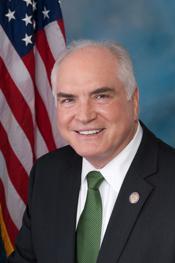
U.S. Representative for Pennsylvania’s 16th district
Republican
119th Congress, two-year term
Missed 1.6% of roll calls. Chamber median 1.9%.
The full voting recordCounts roll calls where most Democrats and most Republicans voted differently, leaving out procedural votes.
How we countFrom FEC filings, Voteview roll calls and Congress.gov.
Republican. In Congress since 2011, 8 terms in total.
Following saves Kelly to your list, which Chamber & Street keeps on its server, linked to a cookie on this browser and not to your name or email. Email alerts will come with constituent verification.
Bills and resolutions Kelly signed on to as a cosponsor. An original cosponsor signed on the day the bill was introduced. Source: govinfo bill status files, last updated Nov 6, 2026.
Expressing support for the goals of National Adoption Day and National Adoption Month by promoting national awareness of adoption and the children awaiting families, celebrating children and families involved in adoption, and encouraging the people of the United States to secure safety, permanency, and well-being for all children.
Sponsor Robert Aderholt (R). Original cosponsor. 50 cosponsors.
Introduced
Apples to Apples Comparison Act of 2025
Sponsor Aaron Bean (R). Joined Oct 31, 2025. 25 cosponsors. H.R. 4093 on Congress.gov(opens in a new tab)
Passed committee
Apples to Apples Comparison Act of 2025
This bill requires additional reporting and disclosures regarding Medicare enrollment and expenditures.
Specifically, the bill requires the Centers for Medicare & Medicaid Services to annually report on and publish information on its website regarding expenditures for Medicare hospital services and medical services, the Medicare prescription drug benefit, and Medicare Advantage (MA), including for those who are enrolled in one program but not others or have supplemental insurance. This information must be broken down by county and metropolitan statistical area for each month over the prior 10-year period and for each month over the next 5-year period.
In addition, the Medicare Payment Advisory Commission must annually analyze and report on expenditures for Medicare beneficiaries who have an MA plan compared to those who do not have an MA plan. The Boards of Trustees for Medicare must annually report on expenditures for (1) Medicare beneficiaries who have either hospital services or medical services but not both, and (2) Medicare beneficiaries who have both hospital and medical services but do not have an MA plan.
Secure Family Futures Act of 2025
Sponsor Randy Feenstra (R). Joined Oct 31, 2025. 54 cosponsors. H.R. 2547 on Congress.gov(opens in a new tab)
Introduced
9/11 Responder and Survivor Health Funding Correction Act of 2025
Sponsor Andrew Garbarino (R). Joined Oct 28, 2025. 133 cosponsors. H.R. 1410 on Congress.gov(opens in a new tab)
Introduced
9/11 Responder and Survivor Health Funding Correction Act of 2025
This bill modifies the World Trade Center Health Program (WTCHP), including by updating the formula for determining the program’s annual funding amounts and authorizing mental health providers to provide certain evaluations under the program.
The WTCHP is a federal health care program (terminating in FY2090) providing responders and survivors with monitoring and treatment of certified medical conditions related to the terrorist attacks that occurred on September 11, 2001. Under current law, the program’s annual federal funding is determined based on the amount specifically appropriated in the previous fiscal year, adjusted for inflation.
The bill establishes a new federal funding formula for FY2026-FY2090 that is generally based on annual changes in the number of enrollees. The bill also increases the amounts the program may spend annually on medical research and activities relating to data collection. The bill requires the National Institute for Occupational Safety and Health (NIOSH), which administers the program, to submit a report to Congress on the program’s projected budgetary needs and expenditures.
In addition, the bill authorizes licensed mental health providers to perform initial health evaluations with respect to mental health conditions for purposes of determining eligibility under the WTCHP. NIOSH must issue regulations specifying the categories of mental health providers that may perform these activities.
Qualified Immunity Act of 2025
Sponsor Virginia Foxx (R). Joined Oct 24, 2025. 24 cosponsors. H.R. 503 on Congress.gov(opens in a new tab)
Introduced
Qualified Immunity Act of 2025
This bill provides statutory authority for qualified immunity for law enforcement officers in civil cases involving constitutional violations.
Current law provides a statutory civil cause of action against state and local government actors (e.g., law enforcement officers) for violations of constitutional rights, also known as Section 1983 lawsuits. The Supreme Court has also found an implied cause of action against federal law enforcement officers in certain situations (e.g., Fourth Amendment violations), also known as Bivens lawsuits. However, under the judicial doctrine of qualified immunity, government officials performing discretionary duties are generally shielded from civil liability, unless their actions violate clearly established rights of which a reasonable person would have known.
The bill provides statutory authority for these principles with respect to law enforcement officers. Specifically, under the bill, law enforcement officers are entitled to qualified immunity if (1) at the time of the alleged violation, the constitutional right at issue was not clearly established or the state of the law was not sufficiently clear that every reasonable officer would have known that the conduct was unconstitutional; or (2) a court has held that the specific conduct at issue is constitutional.
The bill applies to federal, state, and local law enforcement officers. It also specifies that law enforcement agencies and local governments may not be held liable if their officers are entitled to qualified immunity.
Cameron’s Law
Sponsor Josh Gottheimer (D). Joined Oct 24, 2025. 19 cosponsors. H.R. 1414 on Congress.gov(opens in a new tab)
Introduced
Cameron's Law
This bill increases the orphan drug tax credit to 50% (from 25%) of qualified clinical testing expenses paid or incurred in the development of drugs to treat certain rare diseases or conditions.
As background, the Tax Cuts and Jobs Act reduced the orphan drug tax credit (for tax years after 2017) to 25% of qualified clinical testing expenses (e.g., wages, supplies, and certain contract expenses) paid or incurred in the development of drugs to treat certain rare diseases or conditions. For 2017 and prior tax years, the orphan tax credit was 50% of such expenses paid or incurred.
Methane Reduction and Economic Growth Act
Sponsor Carol Miller (R). Joined Oct 21, 2025. 10 cosponsors. H.R. 1881 on Congress.gov(opens in a new tab)
Introduced
To prohibit Federal funding for entities that employ individuals who condone and celebrate political violence and domestic terrorism, and for other purposes.
Sponsor Derrick Van Orden (R). Joined Sep 26, 2025. 3 cosponsors. H.R. 5352 on Congress.gov(opens in a new tab)
Introduced
Energy Choice Act
Sponsor Nicholas Langworthy (R). Joined Sep 26, 2025. 157 cosponsors. H.R. 3699 on Congress.gov(opens in a new tab)
Introduced
Energy Choice Act
This bill prohibits a state or local government from banning or limiting the connection, reconnection, modification, installation, transportation, distribution, expansion, or access to an energy service based on the type or source of energy (e.g., natural gas) that is sold.
Fair Housing for Disabeled Veterans Act
Sponsor Linda Sánchez (D). Original cosponsor. 20 cosponsors. H.R. 5529 on Congress.gov(opens in a new tab)
Introduced
Community TEAMS Act of 2025
Sponsor Carol Miller (R). Joined Sep 19, 2025. 36 cosponsors. H.R. 3885 on Congress.gov(opens in a new tab)
Introduced
Essential Workers for Economic Advancement Act
Sponsor Lloyd Smucker (R). Original cosponsor. 10 cosponsors. H.R. 5494 on Congress.gov(opens in a new tab)
Introduced
USA Workforce Investment Act
Sponsor Lloyd Smucker (R). Original cosponsor. 4 cosponsors. H.R. 5493 on Congress.gov(opens in a new tab)
Introduced
Make America's Youth Healthy Again Act of 2025
Sponsor Gregory Murphy (R). Original cosponsor. 15 cosponsors. H.R. 5480 on Congress.gov(opens in a new tab)
Introduced
Claiming Age Clarity Act
Sponsor Lloyd Smucker (R). Joined Sep 17, 2025. 9 cosponsors. H.R. 5284 on Congress.gov(opens in a new tab)
Passed the House
Claiming Age Clarity Act
This bill changes certain terms that are used by the Social Security Administration (SSA) to describe the ages at which a worker may claim Social Security retirement benefits.
First, the SSA must use minimum monthly benefit age instead of early eligibility age. This refers to the earliest age (62 under current law) at which a worker may claim benefits. (Currently, the benefit amount of a worker who claims benefits early is reduced to account for the longer period during which the worker is expected to receive benefits.)
Second, the SSA must use standard monthly benefit age instead of full retirement age and normal retirement age. These terms refer to the age at which a worker may claim benefits without a reduction in the benefit amount. (Currently, this age ranges from 65 to 67, depending on the worker's year of birth.)
Finally, the SSA must use the term maximum monthly benefit age for any reference to age 70 as the maximum age at which a worker may receive delayed retirement credits. The SSA may not use the term delayed retirement credit. These terms refer to the mechanism that increases the benefit amount of a worker who delays claiming benefits after reaching the full retirement age. (Currently, a worker receives a credit for each month between the full retirement age and age 70 that the worker delays claiming benefits. Each credit increases the benefit amount that the worker will receive after claiming benefits by a specified percentage.)
Honoring the life and legacy of Charles Charlie James Kirk.
Sponsor Mike Johnson (R). Original cosponsor. 196 cosponsors. H.Res. 719 on Congress.gov(opens in a new tab)
Passed the House
This resolution (1) condemns the assassination of Charles "Charlie" James Kirk and all forms of political violence; and (2) honors the life, leadership, and legacy of Charlie Kirk.
Pay Our Troops Act of 2026
Sponsor Jennifer Kiggans (R). Original cosponsor. 210 cosponsors. H.R. 5401 on Congress.gov(opens in a new tab)
Introduced
Pay Our Troops Act of 2026
This bill provides continuing appropriations for military pay for any period during which interim or full-year appropriations for FY2026 are not in effect (i.e., a government shutdown).
Specifically, the bill provides FY2026 continuing appropriations for the pay and allowances of (1) members of the Armed Forces, including reserve components, who perform active service during the period; and (2) civilian personnel and contractors of the Department of Defense (and the Department of Homeland Security in the case of the Coast Guard) who are providing support to such members of the Armed Forces.
If a government shutdown occurs, the bill provides the continuing appropriations until the earlier of (1) the enactment into law of specified appropriations legislation, or (2) January 1, 2027.
Peer to Peer Mental Health Support Act
Sponsor Donald Beyer (D). Original cosponsor. 2 cosponsors. H.R. 5353 on Congress.gov(opens in a new tab)
Introduced
Expanding Access to Diabetes Self-Management Training Act of 2025
Sponsor Kim Schrier (D). Joined Sep 15, 2025. 15 cosponsors. H.R. 3826 on Congress.gov(opens in a new tab)
Introduced
Expanding Access to Diabetes Self-Management Training Act of 2025
This bill expands Medicare coverage of diabetes outpatient self-management training.
Specifically, the bill specifies that in addition to physicians, other health care practitioners may also provide such services. It also specifies that coverage includes an initial 10 hours of training until used, as well as an additional 2 hours of training per year. The bill also prohibits the Centers for Medicare & Medicaid Services from limiting training that is deemed medically necessary.
Additionally, the Center for Medicare and Medicaid Innovation must test a model in which such training is provided virtually and evaluate any effects on costs, services, and health outcomes.
Protection of Women in Olympic and Amateur Sports Act of 2026
Sponsor W. Steube (R). Joined Sep 15, 2025. 73 cosponsors. H.R. 1028 on Congress.gov(opens in a new tab)
Introduced
Protection of Women in Olympic and Amateur Sports Act
This bill requires certified national governing bodies (NGBs) of amateur sports (e.g., USA Gymnastics) to prohibit a person whose sex is male from participating in an amateur athletic competition that is designated for females, women, or girls.
Under the bill, male means an individual who has, had, will have—or would have, but for a developmental or genetic anomaly or historical accident—the reproductive system that at some point produces, transports, and utilizes sperm for fertilization.
Department of War Restoration Act of 2025
Sponsor W. Steube (R). Joined Sep 11, 2025. 11 cosponsors. H.R. 5080 on Congress.gov(opens in a new tab)
Introduced
Blind Americans Return to Work Act of 2025
Sponsor Pete Sessions (R). Joined Sep 9, 2025. 54 cosponsors. H.R. 1175 on Congress.gov(opens in a new tab)
Introduced
Blind Americans Return to Work Act of 2025
This bill requires the Social Security Administration to carry out a demonstration project during which blind Social Security Disability Insurance (SSDI) beneficiaries receive reduced benefits commensurate with income above certain thresholds.
Under current law, only individuals who earn under a specified monthly income, known as the substantial gainful activity (SGA) threshold, are considered disabled and thereby eligible for SSDI benefits. For blind workers, this limit is $2,700 per month in 2025. SSDI beneficiaries may earn beyond the SGA threshold for a limited period of time, known as the trial work period, before their benefits are suspended and ultimately terminate.
The bill establishes a 20-year demonstration project during which individuals who are entitled to SSDI benefits by reason of blindness and who earn above the SGA threshold continue to receive benefits at an amount gradually reduced commensurate with their earnings beyond a specified amount.
During this period, blind workers’ SSDI benefits must be reduced by $1 for every $2 that a worker earns above the sum of (1) the SGA threshold, and (2) the worker’s expenses reasonably attributable to their work. The SGA threshold may not be used to determine whether an individual is disabled during this period, and blind workers’ SSDI benefits may not be terminated due to work-related earnings. The trial work period also must not apply.
After 10 years, affected beneficiaries may opt out of the modified benefits structure.
Accelerating Access to Dementia and Alzheimer’s Provider Training Act
Sponsor Troy Balderson (R). Joined Sep 8, 2025. 97 cosponsors. H.R. 3747 on Congress.gov(opens in a new tab)
Passed the House
Accelerating Access to Dementia and Alzheimer’s Provider Training Act or the AADAPT Act
This bill reauthorizes through FY2031 and revises the Technology-enabled Collaborative Learning Program, which is administered by the Health Resources and Services Administration. This program provides grants to support the use of technology that connects different health care professionals to improve access to health care, including specialty care, for certain rural and medically underserved populations.
The bill explicitly adds dementia care to the types of specialty care that the program may address.
Delphi Retirees Pension Restoration Act
Sponsor Victoria Spartz (R). Joined Sep 8, 2025. 20 cosponsors. H.R. 1895 on Congress.gov(opens in a new tab)
Introduced
Delphi Retirees Pension Restoration Act
This bill restores the full vested monthly benefits for eligible participants of certain pension plans that were sponsored by Delphi Corporation and terminated as a result of General Motors' bankruptcy in 2009.
The Pension Benefit Guaranty Corporation (PBGC) must recalculate and adjust each plan participant's monthly benefits payment. The PBGC must also apply the recalculation to previously-made monthly payments and make a lump-sum payment for any additional benefits based on the recalculation.
Monthly benefits under the bill must be paid using specified PBGC funds, and the bill specifies how the lump-sum payments are treated for tax purposes.
Marc Fischer Memorial Act
Sponsor Don Bacon (R). Joined Sep 8, 2025. 135 cosponsors. H.R. 1046 on Congress.gov(opens in a new tab)
Introduced