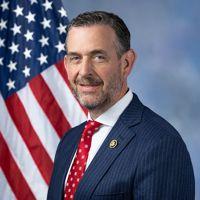
U.S. Representative for Ohio’s 6th district
Republican
119th Congress, two-year term
Missed 5.3% of roll calls. Chamber median 1.9%.
The full voting recordCounts roll calls where most Democrats and most Republicans voted differently, leaving out procedural votes.
How we countFrom FEC filings, Voteview roll calls and Congress.gov.
Republican. In Congress since 2024, 2 terms in total.
Following saves Rulli to your list, which Chamber & Street keeps on its server, linked to a cookie on this browser and not to your name or email. Email alerts will come with constituent verification.
Bills and resolutions Rulli signed on to as a cosponsor. An original cosponsor signed on the day the bill was introduced. Source: govinfo bill status files, last updated Nov 6, 2026.
Expressing support for the designation of the week of June 30 through July 4, 2025, as "National Tire Safety Week" in the United States, and supporting the goals and ideals of "National Tire Safety Week" to educate American motorists about the importance of proper tire care and maintenance.
Sponsor Tim Moore (R). Original cosponsor. 12 cosponsors.
Introduced
This resolution supports the designation of National Tire Safety Week. The resolution also encourages people to educate themselves and others on the importance of regularly inspecting and maintaining a vehicle's tires.
Expressing the sense of the House of Representatives that Social Security should be preserved and protected for current beneficiaries, and for future generations to come.
Sponsor Claudia Tenney (R). Joined Jun 30, 2025. 9 cosponsors. H.Res. 506 on Congress.gov(opens in a new tab)
Introduced
WILTR Act of 2025
Sponsor Darrell Issa (R). Joined Jun 30, 2025. 8 cosponsors. H.R. 4181 on Congress.gov(opens in a new tab)
Introduced
To prohibit the participation of males in athletic programs or activities at the military service academies that are designated for women or girls.
Sponsor Dusty Johnson (R). Joined Jun 30, 2025. 27 cosponsors. H.R. 3917 on Congress.gov(opens in a new tab)
Introduced
Safeguarding Americans From Extremist Risk (SAFER) at the Border Act
Sponsor Nicholas Langworthy (R). Original cosponsor. 19 cosponsors. H.R. 4234 on Congress.gov(opens in a new tab)
Introduced
New IDEA Act
Sponsor Brandon Gill (R). Joined Jun 25, 2025. 15 cosponsors. H.R. 3715 on Congress.gov(opens in a new tab)
Introduced
To amend the Internal Revenue Code of 1986 to modify the railroad track maintenance credit.
Sponsor Mike Kelly (R). Joined Jun 24, 2025. 183 cosponsors. H.R. 516 on Congress.gov(opens in a new tab)
Introduced
This bill increases the annual limit on the tax credit for qualified railroad track maintenance expenses (also referred to as the short line railroad tax credit) and expands eligibility for claiming the credit.
Under current law, the tax credit is limited each tax year to $3,500 multiplied by the sum of the number of miles of railroad track owned or leased by the taxpayer (miles owned or leased) and the number of railroad track miles assigned to the taxpayer by a Class II or III railroad (miles assigned). This bill increases the annual limit to $6,100 multiplied by the sum of miles owned or leased and miles assigned. The $6,100 amount used in the calculation of the tax credit limit is adjusted for inflation for tax years beginning after 2025.
The bill also expands eligibility for the tax credit to include gross expenses for maintaining railroad tracks owned or leased as of January 1, 2024. Under current law, the tax credit is limited to gross expenses for maintaining railroad tracks owned or leased as of January 1, 2015.
Protect RAIL Act
Sponsor Paul Gosar (R). Original cosponsor. 39 cosponsors. H.R. 4092 on Congress.gov(opens in a new tab)
Introduced
LEDGER Act
Sponsor Mike Haridopolos (R). Original cosponsor. 60 cosponsors. H.R. 4091 on Congress.gov(opens in a new tab)
Introduced
Locating Every Disbursement in Government Expenditure Records Act or the LEDGER Act
This bill requires the Department of the Treasury to implement a system that tracks all outlays from each appropriation, receipt, or other fund account in the Treasury by each department, agency, office, or other establishment in the executive, legislative, or judicial branches of the federal government. The system must also track the period of availability of the amounts in the applicable appropriation, receipt, or other fund account.
Foreign Adversary Federal Offense Act of 2025
Sponsor Pat Harrigan (R). Joined Jun 24, 2025. 8 cosponsors. H.R. 4081 on Congress.gov(opens in a new tab)
Introduced
Reliable Power Act
Sponsor Troy Balderson (R). Joined Jun 24, 2025. 20 cosponsors. H.R. 3616 on Congress.gov(opens in a new tab)
Passed the House
Reliable Power Act
This bill directs the electric reliability organization (i.e., the North American Electric Reliability Corporation) to conduct annual long-term assessments of the reliability of electric power in the bulk-power system. It also establishes a process for the Federal Energy Regulatory Commission (FERC) to review federal regulations before they are finalized if the electric reliability organization finds that the system is at risk of not having sufficient electric generation to maintain reliability.
If the electric reliability organization finds that the system does not have sufficient generation to maintain reliability, it must notify FERC that the bulk-power system is in a state of generation inadequacy. FERC must then notify the Department of Energy, the Environmental Protection Agency, and any other appropriate federal agencies of the generation inadequacy. Upon receiving the notice, the federal agency must provide proposed regulations that affect any generation resource in the bulk-power system to FERC for review and comment. If applicable, FERC must provide recommendations to modify the regulations. Federal agencies may not finalize such a regulation until FERC finds that it will not be likely to have a significant negative impact on the ability of the bulk-power system to supply sufficient electric energy necessary to maintain an adequate level of reliability.
GRID Power Act
Sponsor Troy Balderson (R). Joined Jun 24, 2025. 17 cosponsors. H.R. 1047 on Congress.gov(opens in a new tab)
Passed the House
Guaranteeing Reliability through the Interconnection of Dispatchable Power Act or the GRID Power Act
This bill requires the Federal Energy Regulatory Commission (FERC) to issue and periodically review a rule that revises the approval process for interconnection requests of generating units that produce electricity to prioritize dispatchable power projects (e.g., certain fossil fuel projects).
Under the bill, dispatchable power generally refers to an electric energy generation resource, such as a generating unit that produces electricity from fossil fuels, capable of providing known and forecastable electric supply in time intervals necessary to ensure grid reliability. Currently, FERC receives interconnection requests from those projects and other generating units, such as units that produce electricity from renewable energy. Interconnection requests are requests from generating units to connect to the high voltage transmission lines of the electric grid.
First, the rule must address the efficiency and effectiveness of the existing procedures for processing interconnection requests to ensure that new dispatchable power projects that improve grid reliability and resource adequacy can interconnect to the electric grid quickly, cost-effectively, and reliably.
Second, the rule must revise the pro forma Large Generator Interconnection Procedures, and the pro forma Large Generator Interconnection Agreement as appropriate, to authorize transmission providers to submit proposals to FERC to prioritize new dispatchable power projects that will improve grid reliability and resource adequacy by assigning those projects higher positions in the interconnection queue of the provider. FERC must review and approve or deny such proposals within 60 days after the proposal is submitted.
SAFE Cities Act
Sponsor Tony Wied (R). Joined Jun 23, 2025. 17 cosponsors. H.R. 3894 on Congress.gov(opens in a new tab)
Introduced
CREATE JOBS Act
Sponsor Glenn Grothman (R). Original cosponsor. 3 cosponsors. H.R. 3967 on Congress.gov(opens in a new tab)
Introduced
Baseload Reliability Protection Act
Sponsor Julie Fedorchak (R). Original cosponsor. 26 cosponsors. H.R. 3843 on Congress.gov(opens in a new tab)
Introduced
Protect and Serve Act of 2025
Sponsor John Rutherford (R). Joined Jun 5, 2025. 120 cosponsors. H.R. 1551 on Congress.gov(opens in a new tab)
Introduced
Supporting the designation of Family Month.
Sponsor Mary Miller (R). Original cosponsor. 22 cosponsors. H.Res. 475 on Congress.gov(opens in a new tab)
Introduced
Pet and Livestock Protection Act
Sponsor Lauren Boebert (R). Joined Jun 4, 2025. 37 cosponsors. H.R. 845 on Congress.gov(opens in a new tab)
Passed the House
Pet and Livestock Protection Act of 2025
This bill directs the Department of the Interior to remove protections for the gray wolf under the Endangered Species Act of 1973 (ESA). Specifically, the bill requires Interior to reissue the final rule titled Endangered and Threatened Wildlife and Plants; Removing the Gray Wolf (Canis lupus) From the List of Endangered and Threatened Wildlife and published on November 3, 2020.
The rule removed the gray wolf in the lower 48 United States, except for the Mexican wolf (C. l. baileyi) subspecies, from the endangered and threatened species list. However, the U.S. District Court for the Northern District of California vacated the rule on February 10, 2022. As a result, the gray wolf reattained the protection status it had prior to the rule's promulgation.
The bill also prohibits the reissuance of the rule from being subject to judicial review.
Energy Choice Act
Sponsor Nicholas Langworthy (R). Original cosponsor. 157 cosponsors. H.R. 3699 on Congress.gov(opens in a new tab)
Introduced
Energy Choice Act
This bill prohibits a state or local government from banning or limiting the connection, reconnection, modification, installation, transportation, distribution, expansion, or access to an energy service based on the type or source of energy (e.g., natural gas) that is sold.
ESA Amendments Act of 2025
Sponsor Bruce Westerman (R). Joined Jun 3, 2025. 26 cosponsors. H.R. 1897 on Congress.gov(opens in a new tab)
Passed committee
ESA Amendments Act of 2025
This bill reauthorizes through FY2031 the Endangered Species Act and generally narrows protections provided under the act.
The bill directs the Fish and Wildlife Service and the National Marine Fisheries Service to submit a National Listing Work Plan that establishes a five-year schedule and plan for addressing listing of endangered or threatened species and designation of critical habitats for such species. Under the plan, the bill gives the Services flexibility on the timing of acting on listing petitions and eliminates the requirement for the Services to act within 12 months on listing petitions.
The bill limits what land may be designated as critical habitat for an endangered or threatened species.
It also limits protections provided to threatened species and allows a state to regulate the recovery of such species if the Services determine the state's proposed recovery strategy would conserve the species.
The bill provides statutory authority for Conservation Benefit Agreements, which allow private landowners to voluntarily enter agreements to reduce threats to candidate species in exchange for being allowed to continue their operations if the species is later listed.
The bill also modifies the permitting process for certain other voluntary conservation agreements, including by exempting incidental take permits (e.g., permits to harm or kill a species) from environmental review requirements.
The bill also makes a variety of other changes to the act, including limiting consultation requirements, judicial review, and awards for attorneys’ fees in certain cases.
Amateur Radio Emergency Preparedness Act
Sponsor August Pfluger (R). Joined Jun 3, 2025. 33 cosponsors. H.R. 1094 on Congress.gov(opens in a new tab)
Introduced
Amateur Radio Emergency Preparedness Act
This bill limits the adoption and enforcement of private land use restrictions (e.g., rules of a homeowners' association) that prohibit, restrict, or impair the installation, maintenance, or operation of an amateur station antenna on property controlled by an amateur radio operator.
Private land use restrictions are deemed to prohibit, restrict, or impair the installation, maintenance, or operation of an amateur station antenna if they unreasonably delay, prevent, or increase the cost or difficulty of such installation, maintenance, or operation; or if they prevent or degrade the reception or transmission of a signal acceptable to the operator.
However, the bill permits certain private land use restrictions, including restrictions that require amateur station antennas (1) to be maintained in a structurally safe condition; or (2) to be installed in compliance with manufacturer specifications, applicable zoning ordinances, amateur radio tower ordinances, and building codes.
The bill also establishes certain limits on the adoption and enforcement of private land use restrictions that require an amateur radio operator to obtain prior approval before installing an amateur station antenna, and exempts certain categories of amateur station antenna from prior approval requirements altogether.
Finally, the bill sets forth procedures for the enforcement of these provisions and provides a private right of action for individuals harmed by violations of the provisions.
United States-Israel Defense Partnership Act of 2025
Sponsor Joe Wilson (R). Joined Jun 2, 2025. 178 cosponsors. H.R. 1229 on Congress.gov(opens in a new tab)
Introduced
United States-Israel Defense Partnership Act of 2025
This bill requires or authorizes certain actions to increase defense-related cooperation between the United States and Israel.
Specifically, the bill requires the Department of Defense (DOD) to
• establish a cooperative program, with the concurrence of Israel's Ministry of Defense (MOD), to develop and deploy advanced technologies for countering unmanned systems that threaten the United States and Israel;
• establish in Israel an office of the Defense Innovation Unit (an organization that focuses on rapidly fielding and scaling commercial technology across the U.S. military); and
• seek to engage Israel's MOD on the ascension of Israel into the national technology and industrial base (currently defined in law as the persons and organizations engaged in research, development, production, integration, services, or information technology activities conducted within the United States, the United Kingdom, Australia, New Zealand, and Canada).
The bill authorizes DOD, upon request of Israel's MOD, to jointly conduct research, development, test, and evaluation (RDT&E) of emerging technologies such as artificial intelligence and robotics to meet defense challenges.
Additionally, the bill extends the authority for DOD to (1) carry out RDT&E on a joint basis with Israel to establish anti-tunnel and counter unmanned aerial systems capabilities through 2028, and (2) transfer defense articles intended for use as reserve stocks for Israel through January 1, 2029.
Protect Children’s Innocence Act
Joined May 29, 2025. 44 cosponsors. H.R. 3492 on Congress.gov(opens in a new tab)
Progress not on file
Protect Children’s Innocence Act of 2025
This bill establishes federal criminal offenses for providing gender-affirming care to minors. The bill also changes the existing federal criminal offense that prohibits female genital mutilation (FGM) and related conduct.
Specifically, the bill makes it a federal crime to knowingly perform or attempt to perform procedures or provide medications (e.g., hormonal treatments) to a minor for the purpose of changing their body to correspond to a sex that differs from their biological sex. The bill provides exceptions for specified types of surgeries or procedures, including those for treating (1) individuals who have both ovarian and testicular tissue or abnormal sex chromosome structure or hormones, or (2) infections or other harms that result from a previous gender-transition procedure. A violation is punishable by a fine, a prison term of up to 10 years, or both. The bill prohibits the arrest or prosecution of an individual who undergoes gender-affirming procedures or medications.
Additionally, the bill makes changes to the existing federal criminal prohibition on performing FGM on a minor and related conduct. Among the changes, the bill broadens the scope of prohibited conduct to include the facilitation or consent to FGM by any person (currently, prohibited facilitation or consent applies only to a parent, guardian, or caretaker of the minor). The bill also prohibits the arrest or prosecution of an individual who undergoes FGM. The bill does not change the applicable criminal penalty of a fine, a prison term of up to 10 years, or both.
Congratulating His Holiness Pope Leo XIV on his historic election as the 267th pontiff of the Holy Roman Catholic Church and the first American pontiff.
Sponsor Riley Moore (R). Original cosponsor. 30 cosponsors. H.Res. 412 on Congress.gov(opens in a new tab)
Introduced
LIT Act of 2025
Sponsor Craig Goldman (R). Original cosponsor. 3 cosponsors. H.R. 3341 on Congress.gov(opens in a new tab)
Introduced