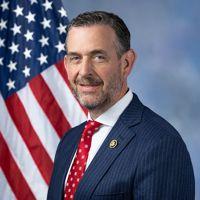
U.S. Representative for Ohio’s 6th district
Republican
119th Congress, two-year term
Missed 5.3% of roll calls. Chamber median 1.9%.
The full voting recordCounts roll calls where most Democrats and most Republicans voted differently, leaving out procedural votes.
How we countFrom FEC filings, Voteview roll calls and Congress.gov.
Republican. In Congress since 2024, 2 terms in total.
Following saves Rulli to your list, which Chamber & Street keeps on its server, linked to a cookie on this browser and not to your name or email. Email alerts will come with constituent verification.
Bills and resolutions Rulli signed on to as a cosponsor. An original cosponsor signed on the day the bill was introduced. Source: govinfo bill status files, last updated Nov 6, 2026.
Small Business Tax Cut Act
Sponsor David Kustoff (R). Joined Jul 14, 2026. 11 cosponsors. H.R. 8415 on Congress.gov
Introduced
No Tax on Takings Act
Sponsor Ben Cline (R). Joined Jul 14, 2026. 10 cosponsors. H.R. 7687 on Congress.gov(opens in a new tab)
Introduced
Chloe Cole Act of 2026
Sponsor Robert Onder (R). Joined Jul 14, 2026. 95 cosponsors. H.R. 7651 on Congress.gov(opens in a new tab)
Passed committee
Tax Relief for Victims of Crimes, Scams, and Disasters Act
Sponsor W. Steube (R). Joined Jul 14, 2026. 63 cosponsors. H.R. 3469 on Congress.gov(opens in a new tab)
Introduced
Remembering the life of Corey Comperatore who passed away on Saturday, July 13, 2024.
Sponsor Mike Kelly (R). Original cosponsor. 20 cosponsors. H.Res. 1426 on Congress.gov(opens in a new tab)
Introduced
ACCURATE Act
Sponsor Scott Franklin (R). Joined Jul 13, 2026. 5 cosponsors. H.R. 8407 on Congress.gov(opens in a new tab)
Introduced
ICU Bed Act of 2026
Sponsor Jay Obernolte (R). Joined Jul 13, 2026. 5 cosponsors. H.R. 8271 on Congress.gov(opens in a new tab)
Introduced
Alternatives to PAIN Act
Sponsor Mariannette Miller-Meeks (R). Joined Jul 9, 2026. 116 cosponsors. H.R. 1227 on Congress.gov(opens in a new tab)
Introduced
Alternatives to Prevent Addiction In the Nation Act or the Alternatives to PAIN Act
This bill reduces cost-sharing and prohibits the imposition of certain utilization requirements under the Medicare prescription drug benefit for certain non-opioid pain management drugs.
Specifically, the bill requires such drugs to be covered without a deductible and to be placed on the lowest cost-sharing tier (if any). The bill also prohibits the imposition of prior authorization requirements (i.e., requiring prior approval from a plan) or step therapy requirements (i.e., requiring the use of alternative drugs before a drug is covered under a plan) with respect to such drugs.
Supporting the designation of June as Family Month.
Sponsor Mary Miller (R). Original cosponsor. 26 cosponsors. H.Res. 1338 on Congress.gov(opens in a new tab)
Introduced
Medicare Audiology Access Improvement Act of 2025
Sponsor Gus Bilirakis (R). Joined Jun 2, 2026. 38 cosponsors. H.R. 2757 on Congress.gov(opens in a new tab)
Introduced
Medicare Audiology Access Improvement Act of 2025
This bill provides for Medicare coverage of certain audiology services. Specifically, the bill expands coverage to include diagnostic and treatment services that are furnished by audiologists and that would otherwise be covered if provided by a physician, including incidental services, regardless of whether such services are provided pursuant to a referral from, or under the supervision of, a physician or other health care practitioner.
Restore Protections for Dialysis Patients Act
Sponsor Mike Kelly (R). Joined Jun 2, 2026. 94 cosponsors. H.R. 2199 on Congress.gov(opens in a new tab)
Introduced
Restore Protections for Dialysis Patients Act
This bill specifies certain requirements for private health insurers regarding coverage of individuals with end stage renal disease (ESRD) who are also covered under Medicare.
In particular, the bill specifies that insurers may not limit benefits, including limiting network composition, in a manner that will affect ESRD Medicare beneficiaries differently compared to others without ESRD. The bill additionally specifies that insurers are not required to include a particular renal dialysis provider or a particular number of such providers as part of their networks.
Essential Caregivers Act of 2025
Sponsor Claudia Tenney (R). Joined May 29, 2026. 160 cosponsors. H.R. 6766 on Congress.gov(opens in a new tab)
Introduced
Essential Caregivers Act of 2025
This bill prohibits certain health care facilities from limiting the access of essential caregivers to residents of those facilities, including during designated emergency periods.
Specifically, the bill generally prohibits Medicare skilled nursing facilities, Medicaid nursing facilities, Medicaid intermediate care facilities, and associated inpatient rehabilitation facilities from restricting the access of essential caregivers to residents of the facilities, including during emergency periods in which visitation rights are otherwise restricted. During emergency periods, facilities may restrict access for an initial period of up to seven days and for one additional maximum seven-day period (if the additional period is approved by the state health department). Facilities may restrict access for a total of 7 days (or 14 days with the approval of the state health department) during an emergency period.
Essential caregivers must agree to comply with any safety protocols set by the facility, which may be no more stringent for caregivers compared to those for staff. Caregivers who fail to comply with these requirements may be denied access, subject to an appeals process.
Heat Workforce Standards Act of 2025
Sponsor Mark Messmer (R). Joined May 29, 2026. 74 cosponsors. H.R. 6213 on Congress.gov(opens in a new tab)
Passed committee
Heat Workforce Standards Act of 2025
This bill prohibits the Occupational Safety and Health Administration (OSHA) from finalizing, implementing, or enforcing a safety standard requiring certain employers to create a heat injury and illness prevention plan to evaluate and control heat hazards in their workplaces.
Specifically, OSHA is prohibited from finalizing the proposed rule titled Heat Injury and Illness Prevention in Outdoor and Indoor Work Settings, which was published on August 30, 2024, or any substantially similar standard. The proposed standard generally applies to employers conducting outdoor and indoor work in all general industry, construction, maritime, and agriculture sectors where OSHA has jurisdiction. Employers must develop plans in accordance with the specified standards to address employee exposures to heat indexes at or above 80 degrees (initial heat trigger) or 90 degrees (high heat trigger) Fahrenheit.
As background, the Occupational Safety and Health Act of 1970 generally requires employers to provide their employees with a place of employment that is free from recognized hazards that are causing or likely to cause death or serious harm to employees. OSHA conducts workplace inspections and cites employers that fail to satisfy these requirements. Currently, OSHA does not have specific heat exposure standards; however, OSHA has historically used its general authority to cite employers for violations involving excessive heat, including through a National Emphasis Program that focuses on indoor and outdoor heat exposure in industries that have the highest risks.
Living Donor Protection Act of 2025
Sponsor Don Bacon (R). Joined May 29, 2026. 168 cosponsors. H.R. 4583 on Congress.gov(opens in a new tab)
Introduced
To amend the Family and Medical Leave Act of 1993 and title 5, United States Code, to clarify that organ donation surgery qualifies as a serious health condition.
Sponsor Don Bacon (R). Joined May 29, 2026. 168 cosponsors. H.R. 4582 on Congress.gov(opens in a new tab)
Introduced
BUILD America 250 Act
Sponsor Sam Graves (R). Joined May 26, 2026. 5 cosponsors. H.R. 8870 on Congress.gov(opens in a new tab)
Passed committee
Building Unrivaled Infrastructure and Long-term Development for America's 250th Act or the BUILD America 250 Act
This bill authorizes federal surface transportation (highway, public transportation, and rail) programs and activities through FY2031. The bill also establishes or modifies Department of Transportation (DOT) programs and policies that are a part of the federal-aid highway, transit, highway safety, motor carrier, research, hazardous materials, and rail programs.
For example, the bill authorizes appropriations through FY2031 out of the Highway Trust Fund for the federal-aid highway program, the Transportation Infrastructure Finance and Innovation Act (TIFIA) program, highway safety programs, and bridge programs. The bill also authorizes funding through FY2031 for Amtrak. Current authorization for these programs expires on September 30, 2026.
Among other provisions, the bill
• establishes a Surface Transportation Accelerator Grant (STAG) discretionary program to fund surface transportation projects in rural, urban, local, and regional communities;
• requires the Federal Highway Administration to impose a new annual electric vehicle (EV) registration fee, starting at $130 for a covered EV and $35 for a covered plug-in hybrid vehicle;
• exempts automated driving system technology and equipment from vehicle width requirements;
• establishes a consolidated state block grant program that allows DOT to allocate a lump sum to participating states to fund public transportation services in rural and urbanized areas;
• allows state rail safety inspectors to conduct railroad bridge inspections; and
• establishes a system for state, local, and tribal governments to report safety concerns about the condition of railroad bridges.
Calling upon all Americans on this Memorial Day, 2026, to honor the men and women of the Armed Forces who have died in the pursuit of freedom and peace.
Sponsor Michael Guest (R). Original cosponsor. 55 cosponsors. H.Res. 1320 on Congress.gov(opens in a new tab)
Introduced
American Reserve Modernization Act of 2026
Sponsor Nicholas Begich (R). Original cosponsor. 23 cosponsors. H.R. 8957 on Congress.gov(opens in a new tab)
Passed committee
Housing Regulatory Clarity Act of 2026
Sponsor David Taylor (R). Original cosponsor. 4 cosponsors. H.R. 8944 on Congress.gov(opens in a new tab)
Introduced
Title IX Clarification Act of 2026
Sponsor Jodey Arrington (R). Original cosponsor. 44 cosponsors. H.R. 8781 on Congress.gov(opens in a new tab)
Introduced
Title IX Clarification Act of 2026
This bill defines the terms sex, female, and male for purposes of Title IX of the Education Amendments of 1972. Title IX prohibits discrimination on the basis of sex in education programs that receive federal financial assistance.
Specifically, the bill defines sex as an individual’s biologically determined sex, as either male or female. Therefore, Title IX's prohibition on sex discrimination only applies to biological sex under the bill.
The bill defines female, when used with respect to a natural person, as an individual who naturally has, had, will have, or would have, but for a congenital anomaly, historical accident, or intentional or unintentional disruption, the reproductive system that at some point produces, transports, and utilizes the large gamete (ova) for fertilization.
The bill defines male, when used with respect to a natural person, as an individual who naturally has, had, will have, or would have, but for a congenital anomaly, historical accident, or intentional or unintentional disruption, the reproductive system that at some point produces, transports, and utilizes the small gamete (sperm) for fertilization.
(A January 20, 2025, executive order stated that it is the policy of the United States to recognize two sexes—male and female—which are not changeable. On February 4, 2025, the Department of Education announced its intent to enforce its Title IX regulations consistent with this executive order. For more information on the status of these regulations, see LBS11279.)
PACK Act
Sponsor Randy Weber (R). Joined May 13, 2026. 19 cosponsors. H.R. 6832 on Congress.gov(opens in a new tab)
Passed committee
Expressing support for law enforcement officers.
Sponsor Zachary Nunn (R). Joined May 13, 2026. 25 cosponsors. H.Con.Res. 96 on Congress.gov(opens in a new tab)
Passed the House
This concurrent resolution expresses support for law enforcement officers. It also appreciates the contributions and recognizes the sacrifices of law enforcement officers.
Honoring mothers, and recognizing the significance of motherhood and the impact mothers have on raising the next generation, on the occasion of Mother's Day.
Sponsor Randy Weber (R). Original cosponsor. 24 cosponsors. H.Res. 1273 on Congress.gov(opens in a new tab)
Introduced
Expressing support for the designation of the week of May 3 through May 9, 2026, as "National Small Business Week" to celebrate the contributions of small businesses and entrepreneurs in every community in the United States.
Sponsor Brad Finstad (R). Original cosponsor. 27 cosponsors. H.Res. 1261 on Congress.gov(opens in a new tab)
Introduced
This resolution honors the contributions of small businesses in the United States and supports the designation of National Small Business Week.
RAPID Responders Act of 2026
Sponsor Emilia Sykes (D). Original cosponsor. 1 cosponsor. H.R. 8713 on Congress.gov(opens in a new tab)
Introduced