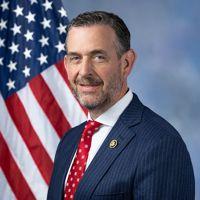
U.S. Representative for Ohio’s 6th district
Republican
119th Congress, two-year term
Missed 5.3% of roll calls. Chamber median 1.9%.
The full voting recordCounts roll calls where most Democrats and most Republicans voted differently, leaving out procedural votes.
How we countFrom FEC filings, Voteview roll calls and Congress.gov.
Republican. In Congress since 2024, 2 terms in total.
Following saves Rulli to your list, which Chamber & Street keeps on its server, linked to a cookie on this browser and not to your name or email. Email alerts will come with constituent verification.
Bills and resolutions Rulli signed on to as a cosponsor. An original cosponsor signed on the day the bill was introduced. Source: govinfo bill status files, last updated Nov 6, 2026.
Less Bureaucracy, Better Student Aid Act
Sponsor Tim Walberg (R). Joined Aug 31, 2026. 1 cosponsor. H.R. 9609 on Congress.gov
Passed committee
Less Bureaucracy, Better Student Aid Act
This bill transfers specified functions relating to federal student aid from the Department of Education (ED) to the Department of the Treasury.
Specifically, the bill transfers to Treasury all the functions and authorities exercised by ED related to servicing and collections of defaulted federal student loan debt, servicing of non-defaulted federal student loan debt, and other specified programs (e.g., Federal Pell Grants and Federal Direct Loans). ED and Treasury must jointly determine effective dates for these transfers in accordance with the bill's requirements. (On March 19, 2026, ED announced an interagency agreement with Treasury for Treasury to assume operational responsibility for collecting on defaulted federal student loans, while ED must maintain its statutory responsibilities.)
Additionally, the bill transfers to Treasury all personnel and appropriations related to the functions that are transferred under this bill.
The bill outlines the authority of the Office of Management and Budget (OMB) related to the functions that are transferred under this bill, including that OMB must ensure that this bill does not create a net increase in full-time equivalent employees at Treasury or ED. Further, OMB must certify compliance with the bill to specified congressional committees.
The transfer of these functions does not affect any suits, proceedings, or applications for benefits, services, licenses, permits, certificates, or financial assistance that are pending on the date of this bill's enactment.
The bill also terminates the authority to exempt delinquent or defaulted federal student loans from the Debt Collection Improvement Act.
ASAP Act
Sponsor Vern Buchanan (R). Joined Aug 31, 2026. 235 cosponsors. H.R. 6130 on Congress.gov(opens in a new tab)
Passed committee
Alzheimer's Screening and Prevention Act of 2025 or the ASAP Act
This bill provides for Medicare coverage of blood tests to screen for the early stages of Alzheimer’s disease or related dementias. Specifically, the bill provides for coverage of genomic sequencing blood or blood product tests, or other equivalent tests, that are approved by the Food and Drug Administration.
Less Bureaucracy, Better Foreign Medical Accreditation Act
Sponsor Glenn Grothman (R). Joined Aug 20, 2026. 1 cosponsor. H.R. 9605 on Congress.gov(opens in a new tab)
Passed committee
Less Bureaucracy, Better Foreign Medical Accreditation Act
This bill transfers specified functions relating to accreditation for foreign medical schools from the Department of Education (ED) to the Department of Health and Human Services (HHS).
Specifically, the bill transfers to HHS all the functions and authorities exercised by ED before the bill's effective date related to the National Committee on Foreign Medical Education and Accreditation. (This committee evaluates the standards of accreditation applied to foreign medical schools and determines the comparability of those standards to standards applied to U.S. medical schools. On November 18, 2025, ED announced an interagency agreement with HHS for HHS to provide subject matter expertise, coordinate meetings, and manage technology systems to assist ED in managing and overseeing this committee.)
Additionally, the bill transfers to HHS all personnel and appropriations related to the functions that are transferred under this bill.
The bill outlines the authority of the Office of Management and Budget (OMB) related to the functions that are transferred under this bill, including that OMB must ensure that this bill does not create a net increase in full-time equivalent employees at HHS or ED. Further, OMB must certify compliance with the bill to specified congressional committees.
The transfer of these functions does not affect any suits, proceedings, or applications for benefits, services, licenses, permits, certificates, or financial assistance that are pending on the date of this bill's enactment.
Less Bureaucracy, Better International Foreign Gift Transparency Act
Sponsor Michael Baumgartner (R). Joined Aug 20, 2026. 1 cosponsor. H.R. 9602 on Congress.gov(opens in a new tab)
Passed committee
Less Bureaucracy, Better International Foreign Gift Transparency Act
This bill transfers specified functions relating to disclosure of foreign gifts and contracts from the Department of Education (ED) to the Department of State.
Specifically, the bill transfers to the State Department all the functions and authorities exercised by ED before the bill's effective date related to disclosure of foreign gifts and contracts. (Institutions of higher education must disclose to ED a gift from or contract with a foreign source that is valued at $250,000 or more, considered alone or in combination with all other gifts from or contracts with that foreign source. On February 23, 2026, ED announced an interagency agreement with the State Department for the State Department to provide support for managing the reporting portal, while ED must maintain its statutory responsibilities and program oversight.)
Additionally, the bill transfers to the State Department all personnel and appropriations related to the functions that are transferred under this bill.
The bill outlines the authority of the Office of Management and Budget (OMB) related to the functions that are transferred under this bill, including that OMB must ensure that this bill does not create a net increase in full-time equivalent employees at the State Department or ED. Further, OMB must certify compliance with the bill to specified congressional committees.
The transfer of these functions does not affect any suits, proceedings, or applications for benefits, services, licenses, permits, certificates, or financial assistance that are pending on the date of this bill's effective date.
Less Bureaucracy, Better Higher Education Act
Sponsor Mark Harris (R). Joined Aug 13, 2026. 1 cosponsor. H.R. 9611 on Congress.gov(opens in a new tab)
Passed committee
Less Bureaucracy, Better Higher Education Act
This bill transfers specified functions relating to postsecondary education programs from the Department of Education (ED) to the Department of Labor's Employment and Training Administration (ETA).
Specifically, the bill transfers to the ETA all the functions and authorities exercised by ED before the bill's effective date related to postsecondary education programs. These programs include, among others, TRIO programs and the Fund for the Improvement of Postsecondary Education. (On November 18, 2025, ED announced an interagency agreement with Labor for Labor to manage grant funds, provide technical assistance, and integrate ED's programs with Labor's existing programs, while ED must maintain its statutory responsibilities and program oversight.)
The bill also repeals the Leveraging Educational Assistance Partnership Program, the Robert C. Byrd Honors Scholarship Program, the College Access Challenge Grant Program, and the Project GRAD program.
Additionally, the bill transfers to the ETA all personnel and appropriations related to the functions that are transferred under this bill.
The bill outlines the authority of the Office of Management and Budget (OMB) related to the functions that are transferred under this bill, including that OMB must ensure that this bill does not create a net increase in full-time equivalent employees at the ETA or ED. Further, OMB must certify compliance with the bill to specified congressional committees.
The transfer of these functions does not affect any suits, proceedings, or applications for benefits, services, licenses, permits, certificates, or financial assistance that are pending on the date of this bill's enactment.
Less Bureaucracy, Better K–12 Education Act
Sponsor Mark Harris (R). Joined Aug 13, 2026. 1 cosponsor. H.R. 9610 on Congress.gov(opens in a new tab)
Passed committee
Less Bureaucracy, Better K-12 Education Act
This bill transfers specified functions relating to elementary and secondary education from the Department of Education (ED) to the Department of Labor.
Specifically, the bill transfers to Labor all the functions and authorities exercised by ED before the bill's effective date related to elementary and secondary education programs. These programs include, among others, programs for disadvantaged students, migratory students, at-risk students, and English language learners, as well as programs for teacher development, literacy, and charter schools. (On November 18, 2025, ED announced an interagency agreement with Labor for Labor to manage competitions, provide technical assistance, and integrate ED's programs with Labor's existing employment and training programs, while ED must maintain its statutory responsibilities and program oversight.)
Additionally, the bill transfers to Labor all personnel and appropriations related to the functions that are transferred under this bill.
The bill outlines the authority of the Office of Management and Budget (OMB) related to the functions that are transferred under this bill, including that OMB must ensure that this bill does not create a net increase in full-time equivalent employees at Labor or ED. Further, OMB must certify compliance with the bill to specified congressional committees.
The transfer of these functions does not affect any suits, proceedings, or applications for benefits, services, licenses, permits, certificates, or financial assistance that are pending on the date of this bill's effective date.
Less Bureaucracy, Better Child Care for Student Parents Act
Sponsor Robert Onder (R). Joined Aug 13, 2026. 1 cosponsor. H.R. 9606 on Congress.gov(opens in a new tab)
Passed committee
Less Bureaucracy, Better Child Care for Student Parents Act
This bill transfers specified functions relating to child care access for eligible low-income parents in postsecondary education from the Department of Education (ED) to the Department of Health and Human Services (HHS).
Specifically, the bill transfers to HHS all the functions and authorities exercised by ED before the bill's effective date related to the Child Care Access Means Parents in School (CCAMPIS) program. (The CCAMPIS program awards grants to support the participation of eligible low-income parents in postsecondary education through the provision of campus-based child care services. On November 18, 2025, ED announced an interagency agreement with HHS for HHS to manage competitions, provide technical assistance, and integrate ED's program with HHS's existing programs, while ED must maintain its statutory responsibilities and program oversight.)
Additionally, the bill transfers to HHS all personnel and appropriations related to the functions that are transferred under this bill.
The bill outlines the authority of the Office of Management and Budget (OMB) related to the functions that are transferred under this bill, including that OMB must ensure that this bill does not create a net increase in full-time equivalent employees at HHS or ED. Further, OMB must certify compliance with the bill to specified congressional committees.
The transfer of these functions does not affect any suits, proceedings, or applications for benefits, services, licenses, permits, certificates, or financial assistance that are pending on the date of this bill's effective date.
Less Bureaucracy, Better Tribal Education Act
Sponsor Burgess Owens (R). Joined Aug 13, 2026. 1 cosponsor. H.R. 9604 on Congress.gov(opens in a new tab)
Passed committee
Less Bureaucracy, Better Tribal Education Act
This bill transfers specified functions relating to tribal education and job training from the Department of Education (ED) to the Department of the Interior.
Specifically, the bill transfers to Interior all the functions and authorities exercised by ED before the bill's effective date related to Indian elementary and secondary education, higher education, career and technical education, and vocational rehabilitation. (On November 18, 2025, ED announced an interagency agreement with Interior for Interior to manage competitions, provide technical assistance, and integrate ED's programs with Interior's programs, while ED maintains its statutory responsibilities and oversight.)
The bill repeals (1) a program regarding science, technology, engineering, and mathematics education; and (2) the Henry Kuualoha Giugni Kupuna Memorial Archives.
Additionally, the bill transfers to Interior all personnel and appropriations related to the functions that are transferred under this bill.
The bill outlines the authority of the Office of Management and Budget (OMB) related to the functions that are transferred under this bill, including that OMB must ensure that this bill does not create a net increase in full-time equivalent employees at Interior or ED. OMB must certify compliance with the bill to specified congressional committees.
The transfer of these functions does not affect any suits, proceedings, or applications for benefits, services, licenses, permits, certificates, or financial assistance that are pending on the date of this bill's enactment.
The bill takes effect one year after ED corresponds with and publishes a response to Indian tribes on the bill's implementation.
Foreign Robocall Elimination Act
Sponsor Addison McDowell (R). Joined Aug 13, 2026. 39 cosponsors. H.R. 6152 on Congress.gov(opens in a new tab)
Passed committee
Foreign Robocall Elimination Act
This bill modifies and expands certain Federal Communications Commission (FCC) programs targeting illegal robocalls and creates a task force to advise the federal government on foreign robocalls.
For example, the bill directs the FCC to issue rules under which certain voice service providers (i.e., phone companies) may be required to post a bond before filing required certifications in the Robocall Mitigation Database. (Under current law, providers must file annual certifications in this database regarding their compliance with illegal robocall mitigation requirements. Noncompliant providers are removed from the database and effectively blocked from the U.S. telephone network.) Providers that do not demonstrate legitimate operations, sufficient regulatory oversight, or the ability to pay fines may be subject to the bond requirement. The FCC must establish categorical exemptions for classes of legitimate providers that satisfy certain criteria.
Further, the bill makes changes related to the FCC’s traceback consortium, a group selected by the FCC to conduct private-led efforts to trace the origin of suspected illegal robocalls. Specifically, the bill protects the consortium from liability for receiving, sharing, or publishing information about suspected fraudulent, abusive, or illegal robocalls and other illegal calls. Additionally, the bill authorizes the consortium to publish a list of voice service providers based on information about providers’ transmission or origination of illegal robocalls or refusal to participate in traceback efforts. (Currently, only the FCC may publish this list.)
The bill also establishes an interagency task force on combating robocalls that originate outside the United States.
Great American Outdoors Act 250
Sponsor Bruce Westerman (R). Joined Aug 3, 2026. 263 cosponsors. H.R. 9250 on Congress.gov(opens in a new tab)
Passed committee
FASTER Act of 2026
Sponsor Anna Paulina Luna (R). Original cosponsor. 21 cosponsors. H.R. 9988 on Congress.gov(opens in a new tab)
Introduced
Connected Vehicle Security Act of 2026
Sponsor John Moolenaar (R). Joined Jul 22, 2026. 146 cosponsors. H.R. 8730 on Congress.gov(opens in a new tab)
Introduced
Connected Vehicle Security Act of 2026
This bill prohibits the importation, manufacture, sale, resale, or introduction into U.S. interstate commerce of connected vehicles and related software and hardware components associated with China, Russia, Iran, or North Korea.
Connected vehicle means a vehicle that (1) integrates onboard networked hardware with automotive software systems to communicate with any other network or device using certain methods (e.g., wireless spectrum connectivity); or (2) is designed, manufactured, or originally equipped to communicate via such methods, regardless of whether such capability is enabled, disabled, or removed at the time the vehicle enters the United States.
Current regulations administered by the Department of Commerce's Bureau of Industry and Security (BIS) prohibit transactions involving vehicle connectivity system hardware and covered software designed, developed, manufactured, or supplied by persons owned by, controlled by, or subject to the jurisdiction or direction of China or Russia.
The bill expands the BIS regulatory framework, including by (1) expanding the countries covered by the prohibition to include China, Russia, Iran, and North Korea (Current BIS regulations apply only to China and Russia.); and (2) specifying that certain artificial intelligence components are covered by the prohibition.
By January 1, 2027, BIS must publish a list of items that are authorized for the importation, manufacture, sale, resale, or introduction into U.S. interstate commerce and would otherwise be subject to the bill's prohibition.
The bill also includes enforcement mechanisms, including that BIS must assess civil penalties for violations of the prohibition.
Condemning the attack on the Argentine Jewish Mutual Association Jewish Community Center in Buenos Aires, Argentina, in July 1994, and encouraging accountability for the attack.
Sponsor Debbie Wasserman Schultz (D). Original cosponsor. 5 cosponsors. H.Res. 1445 on Congress.gov(opens in a new tab)
Introduced
English Language Proficiency Act
Sponsor Brandon Gill (R). Joined Jul 21, 2026. 7 cosponsors. H.R. 9742 on Congress.gov(opens in a new tab)
Introduced
ASSIMILATION Act
Sponsor Andrew Ogles (R). Joined Jul 21, 2026. 17 cosponsors. H.R. 8827 on Congress.gov(opens in a new tab)
Introduced
SAFE Act
Sponsor Harriet Hageman (R). Joined Jul 21, 2026. 20 cosponsors. H.R. 7539 on Congress.gov(opens in a new tab)
Introduced
To amend the Internal Revenue Code of 1986 to establish an exception for multiemployer plan participants to the requirements for automatic enrollment.
Sponsor Brad Finstad (R). Joined Jul 20, 2026. 17 cosponsors. H.R. 6685 on Congress.gov(opens in a new tab)
Introduced
Daughters of the American Revolution Membership Integrity Act.
Sponsor Ben Cline (R). Original cosponsor. 48 cosponsors. H.R. 9701 on Congress.gov(opens in a new tab)
Introduced
Daughters of the American Revolution Membership Integrity Act
This bill limits membership eligibility for the National Society of the Daughters of the American Revolution (commonly known as the Daughters of the American Revolution, or DAR) to biological women. (Under the bill, biological women are human females who naturally have, had, will have, or would have—if not for a congenital anomaly or intentional or unintentional disruption—a female reproductive system.)
Members must also satisfy any genealogical and membership qualifications the organization establishes, as under current law.
As background, DAR's federal charter provides that its purposes include perpetuating the memory and spirit of the men and women who achieved American independence.
Illegal Alien Patient Reporting Act
Sponsor Chip Roy (R). Joined Jul 15, 2026. 4 cosponsors. H.R. 9656 on Congress.gov(opens in a new tab)
Introduced
Celiac Safety Act of 2026
Sponsor Emanuel Cleaver (D). Joined Jul 15, 2026. 54 cosponsors. H.R. 9048 on Congress.gov(opens in a new tab)
Introduced
DEF Act
Sponsor Julie Fedorchak (R). Joined Jul 14, 2026. 7 cosponsors. H.R. 9618 on Congress.gov(opens in a new tab)
Introduced
Homeownership Eligibility Reform Act
Sponsor Brandon Gill (R). Joined Jul 14, 2026. 16 cosponsors. H.R. 9514 on Congress.gov(opens in a new tab)
Introduced
End EPA Abuse Act of 2026
Sponsor Andrew Clyde (R). Joined Jul 14, 2026. 25 cosponsors. H.R. 9453 on Congress.gov(opens in a new tab)
Introduced
Stopping Harmful and Outrageous Torts Act
Sponsor Derek Schmidt (R). Joined Jul 14, 2026. 126 cosponsors. H.R. 9298 on Congress.gov(opens in a new tab)
Introduced
Federal Cryptocurrency Theft Enforcement and Coordination Act
Sponsor Lance Gooden (R). Joined Jul 14, 2026. 6 cosponsors. H.R. 9276 on Congress.gov(opens in a new tab)
Introduced