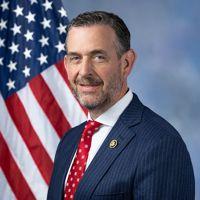
U.S. Representative for Ohio’s 6th district
Republican
119th Congress, two-year term
Missed 5.3% of roll calls. Chamber median 1.9%.
The full voting recordCounts roll calls where most Democrats and most Republicans voted differently, leaving out procedural votes.
How we countFrom FEC filings, Voteview roll calls and Congress.gov.
Republican. In Congress since 2024, 2 terms in total.
Following saves Rulli to your list, which Chamber & Street keeps on its server, linked to a cookie on this browser and not to your name or email. Email alerts will come with constituent verification.
Bills and resolutions Rulli signed on to as a cosponsor. An original cosponsor signed on the day the bill was introduced. Source: govinfo bill status files, last updated Nov 6, 2026.
Honoring mothers, and recognizing the significance of motherhood and the impact mothers have on raising the next generation, on the occasion of Mother's Day.
Sponsor Randy Weber (R). Original cosponsor. 20 cosponsors. H.Res. 402 on Congress.gov
Introduced
Student Loan Marriage Penalty Elimination Act of 2025
Sponsor Glenn Grothman (R). Original cosponsor. 17 cosponsors. H.R. 3285 on Congress.gov(opens in a new tab)
Introduced
Constitutional Hearing Protection Act
Sponsor Andrew Clyde (R). Original cosponsor. 48 cosponsors. H.R. 3228 on Congress.gov(opens in a new tab)
Introduced
No Vaccine Mandates in Higher Education Act
Sponsor Mark Messmer (R). Joined May 5, 2025. 16 cosponsors. H.R. 3044 on Congress.gov(opens in a new tab)
Introduced
Combating Organized Retail Crime Act of 2025
Sponsor David Joyce (R). Joined May 5, 2025. 206 cosponsors. H.R. 2853 on Congress.gov(opens in a new tab)
Passed the House
Combating Organized Retail Crime Act of 2025
This bill expands federal enforcement of criminal offenses related to organized retail and supply chain crime. The term organized retail and supply chain crime includes criminal offenses involving the interstate transportation of stolen property, the sale or receipt of stolen goods, or theft from an interstate or foreign shipment that is committed by, in coordination with, or at the instruction of an organization.
First, with respect to criminal offenses involving the interstate transportation of stolen property or the sale or receipt of stolen goods, the bill broadens the scope of conduct that qualifies as offenses by allowing prosecutions to be based on the aggregate value of stolen items over a 12-month period. Additionally, the bill makes the offenses predicate offenses (i.e., underlying offenses) for prosecutions under the federal money laundering statute and authorizes the criminal forfeiture of any property obtained from the proceeds of an offense.
Second, with respect to criminal offenses involving theft from an interstate or foreign shipment, the bill also makes an offense an underlying offense for prosecution under the federal money laundering statute and authorizes the criminal forfeiture of any associated property.
Third, the bill expands the federal money laundering statute to include offenses involving general-use prepaid cards, gift certificates, or store gift cards.
Finally, the bill temporarily establishes a center within the Department of Homeland Security to coordinate federal law enforcement activities related to organized retail and supply chain crime.
Anti-CBDC Surveillance State Act
Sponsor Tom Emmer (R). Joined May 5, 2025. 135 cosponsors. H.R. 1919 on Congress.gov(opens in a new tab)
Passed the House
Anti-CBDC Surveillance State Act
This bill prohibits a Federal Reserve bank from offering products or services directly to an individual, maintaining an account on behalf of an individual, or issuing a central bank digital currency (i.e., a digital dollar). Further, the Board of Governors of the Federal Reserve System is prohibited from using a central bank digital currency to implement monetary policy or from testing, studying, creating, or implementing a central bank digital currency, with exceptions as provided by the bill.
Honoring Our Fallen Heroes Act of 2025
Sponsor Mary Gay Scanlon (D). Joined May 5, 2025. 180 cosponsors. H.R. 1269 on Congress.gov(opens in a new tab)
Introduced
Honoring Our Fallen Heroes Act of 2025
This bill extends death and disability benefits under the Public Safety Officers' Benefits Program (PSOB) to certain public safety officers who suffer from exposure-related cancer while on duty and their survivors. The PSOB program provides death, disability, and education benefits to public safety officers who are killed or injured in the line of duty and their survivors.
The bill specifies that exposure to a carcinogen shall be presumed to constitute a personal injury in the line of duty if
• the exposure occurred while the officer was in the line of duty;
• the officer began serving as an officer not fewer than 5 years before the date of the diagnosis of an exposure-related cancer and the diagnosis occurred not more than 15 years after the last date of active service; and
• the exposure-related cancer directly and proximately resulted in the death or permanent and total disability of the officer.
The Department of Justice's Bureau of Justice Assistance must periodically review the definition of exposure-related cancer and update the definition if appropriate based on medical evidence and in accordance with the requirements of a petition process.
Supporting May 2 as "National Space Day" in recognition of the significant positive impact the aerospace community has and will continue to have on the United States of America.
Sponsor Ted Lieu (D). Original cosponsor. 3 cosponsors. H.Res. 370 on Congress.gov(opens in a new tab)
Introduced
Hearing Protection Act
Sponsor Ben Cline (R). Joined Apr 28, 2025. 151 cosponsors. H.R. 404 on Congress.gov(opens in a new tab)
Introduced
Neighborhood Homes Investment Act
Sponsor Mike Kelly (R). Joined Apr 28, 2025. 70 cosponsors. H.R. 2854 on Congress.gov(opens in a new tab)
Introduced
Safeguarding American Property Act of 2025
Sponsor Troy Downing (R). Joined Apr 28, 2025. 36 cosponsors. H.R. 2708 on Congress.gov(opens in a new tab)
Introduced
Fight Fentanyl Act
Sponsor David Taylor (R). Joined Apr 24, 2025. 40 cosponsors. H.R. 2964 on Congress.gov(opens in a new tab)
Introduced
Protecting America’s Strategic Petroleum Reserve from China Act
Sponsor Randy Weber (R). Joined Apr 24, 2025. 20 cosponsors. H.R. 2806 on Congress.gov(opens in a new tab)
Introduced
To amend title XI of the Social Security Act to equalize the negotiation period between small-molecule and biologic candidates under the Drug Price Negotiation Program.
Sponsor Gregory Murphy (R). Joined Apr 24, 2025. 68 cosponsors. H.R. 1492 on Congress.gov(opens in a new tab)
Introduced
This bill lengthens the amount of time for which drug products must have market approval in order for the products to qualify for negotiation under the Medicare Drug Price Negotiation Program.
The Medicare Drug Price Negotiation Program requires the Centers for Medicare & Medicaid Services to negotiate the prices of certain prescription drugs under Medicare beginning in 2026. Among other requirements, drugs must have had market approval for at least 7 years (for drug products) or 11 years (for biologics) to qualify for negotiation.
The bill modifies these provisions so as to require drug products to also have had at least 11 years of market approval in order to qualify for negotiation.
The bill's changes apply retroactively.
Marc Fischer Memorial Act
Sponsor Don Bacon (R). Joined Apr 24, 2025. 135 cosponsors. H.R. 1046 on Congress.gov(opens in a new tab)
Introduced
Providing congressional disapproval under chapter 8 of title 5, United States Code, of the rule submitted by the Environmental Protection Agency relating to "California State Motor Vehicle and Engine Pollution Control Standards; Heavy-Duty Vehicle and Engine Emission Warranty and Maintenance Provisions; Advanced Clean Trucks; Zero Emission Airport Shuttle; Zero-Emission Power Train Certification; Waiver of Preemption; Notice of Decision".
Sponsor John James (R). Joined Apr 24, 2025. 24 cosponsors. H.J.Res. 87 on Congress.gov(opens in a new tab)
Became law
This joint resolution revokes waivers granted to the California Air Resources Board regarding several of its regulations, including the Heavy-Duty Vehicle and Engine Emission Warranty Regulations and Maintenance Provisions. (Under the Clean Air Act, California may seek waivers of the preemption prohibiting states from enacting certain emission standards.)
Specifically, the joint resolution nullifies the Environmental Protection Agency notice titled California State Motor Vehicle and Engine Pollution Control Standards; Heavy-Duty Vehicle and Engine Emission Warranty and Maintenance Provisions; Advanced Clean Trucks; Zero Emission Airport Shuttle; Zero-Emission Power Train Certification; Waiver of Preemption; Notice of Decision.
Recognizing linemen, the profession of linemen, the contributions of these brave men and women who protect public safety, and expressing support for the designation of April 18, 2025, as "National Lineman Appreciation Day".
Sponsor David Rouzer (R). Original cosponsor. 56 cosponsors. H.Res. 337 on Congress.gov(opens in a new tab)
Introduced
Providing congressional disapproval under chapter 8 of title 5, United States Code, of the rule submitted by the Environmental Protection Agency relating to "California State Motor Vehicle and Engine Pollution Control Standards; Advanced Clean Cars II; Waiver of Preemption; Notice of Decision".
Sponsor John Joyce (R). Joined Apr 10, 2025. 41 cosponsors. H.J.Res. 88 on Congress.gov(opens in a new tab)
Became law
This joint resolution revokes the waiver granted to the California Air Resources Board regarding its Advanced Clean Cars II (ACC II) regulations, which include new requirements for low-emission vehicles and zero-emission vehicles. (Under the Clean Air Act, California may seek waivers of the preemption prohibiting states from enacting certain emission standards.)
Specifically, the joint resolution nullifies the Environmental Protection Agency notice titled California State Motor Vehicle and Engine Pollution Control Standards; Advanced Clean Cars II; Waiver of Preemption; Notice of Decision.
Providing congressional disapproval under chapter 8 of title 5, United States Code, of the rule submitted by the Environmental Protection Agency relating to "California State Motor Vehicle and Engine and Nonroad Engine Pollution Control Standards; The 'Omnibus' Low NOX Regulation; Waiver of Preemption; Notice of Decision".
Sponsor Jay Obernolte (R). Joined Apr 7, 2025. 32 cosponsors. H.J.Res. 89 on Congress.gov(opens in a new tab)
Became law
This joint resolution revokes the waiver granted to the California Air Resources Board regarding new emissions standards for new 2024 and subsequent model year on-road heavy-duty vehicles and engines, off-road diesel engines, and off-road diesel-fueled auxiliary power units. (Under the Clean Air Act, California may seek waivers of the preemption prohibiting states from enacting certain emission standards.)
Specifically, the joint resolution nullifies the Environmental Protection Agency notice titled California State Motor Vehicle and Engine and Nonroad Engine Pollution Control Standards; The ‘Omnibus’ Low NOX Regulation; Waiver of Preemption; Notice of Decision.
SAVES Act
Sponsor Morgan Luttrell (R). Original cosponsor. 76 cosponsors. H.R. 2605 on Congress.gov(opens in a new tab)
Introduced
No Iranian Energy Act
Sponsor August Pfluger (R). Original cosponsor. 21 cosponsors. H.R. 2574 on Congress.gov(opens in a new tab)
Introduced
RIFLE Act
Sponsor Ashley Hinson (R). Original cosponsor. 33 cosponsors. H.R. 2552 on Congress.gov(opens in a new tab)
Introduced
Improving Care in Rural America Reauthorization Act of 2025
Sponsor Earl Carter (R). Original cosponsor. 5 cosponsors. H.R. 2493 on Congress.gov(opens in a new tab)
Passed the House
Improving Care in Rural America Reauthorization Act of 2025
This bill reauthorizes through FY2030 grant programs administered by the Health Resources and Services Administration (HRSA) that provide funding to health care service providers and related entities in rural areas.
Specifically, the bill reauthorizes grants for
• expanding the delivery of health care services in rural areas,
• developing integrated health care networks (i.e., collaborative groups of local health care organizations) in rural areas, and
• improving the quality of services provided by small health care providers in rural areas.
Also, the bill requires HRSA to ensure that grant funds for expanding services or developing health care networks are used to (1) meet the health care needs of underserved populations, and (2) engage such populations in the planning and implementation of related activities.
Black Vulture Relief Act
Sponsor John Rose (R). Original cosponsor. 26 cosponsors. H.R. 2462 on Congress.gov(opens in a new tab)
Introduced
Black Vulture Relief Act of 2025
This bill allows livestock producers and their employees to take certain actions against black vultures to protect livestock. (Black vultures are protected under the Migratory Bird Treaty Act.)
Specifically, livestock producers and their employees may (1) take (i.e., capture, kill, or disperse, or transport the carcass of) a black vulture that they reasonably believe will cause death, injury, or destruction to livestock; or (2) in the course of taking or attempting to take the black vulture, cause injury to the bird. However, they may not take or attempt to take a black vulture through the use of poison.
Livestock producers and their employees must submit an annual report to the U.S. Fish and Wildlife Service (FWS) on black vultures taken under this bill. The FWS must develop a reporting form and make this reporting form available on its website.
Currently, the FWS has a permit process under the Migratory Bird Treaty Act for the taking of black vultures.
Regulations from the Executive in Need of Scrutiny Act of 2025
Sponsor Kat Cammack (R). Joined Mar 25, 2025. 93 cosponsors. H.R. 142 on Congress.gov(opens in a new tab)
Introduced
Regulations from the Executive in Need of Scrutiny Act of 2025
This bill revises provisions relating to congressional review of agency rulemaking.
Specifically, the bill establishes a congressional approval process for a major rule. A major rule may only take effect if Congress approves of the rule. A major rule is a rule that has resulted in or is likely to result in (1) an annual effect on the economy of $100 million or more; (2) a major increase in costs or prices for consumers, individual industries, government agencies, or geographic regions; or (3) significant adverse effects on competition, employment, investment, productivity, innovation, or the ability of U.S.-based enterprises to compete with foreign-based enterprises.
The bill generally preserves the current congressional review process for a nonmajor rule.