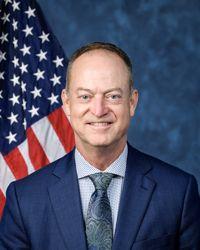
U.S. Representative for Indiana’s 8th district
Republican
119th Congress, two-year term
Missed 1.9% of roll calls. Chamber median 1.9%.
The full voting recordCounts roll calls where most Democrats and most Republicans voted differently, leaving out procedural votes.
How we countFrom FEC filings, Voteview roll calls and Congress.gov.
Republican. In Congress since 2025, 1 term in total.
Following saves Messmer to your list, which Chamber & Street keeps on its server, linked to a cookie on this browser and not to your name or email. Email alerts will come with constituent verification.
Bills and resolutions Messmer signed on to as a cosponsor. An original cosponsor signed on the day the bill was introduced. Source: govinfo bill status files, last updated Nov 6, 2026.
Messmer also withdrew as a cosponsor from 3 bills, not listed here.
Respect Parents’ Childcare Choices Act
Sponsor Riley Moore (R). Joined Mar 27, 2025. 7 cosponsors. H.R. 2282 on Congress.gov
Introduced
Recognizing the 250th anniversary of the United States Marine Corps.
Sponsor Jack Bergman (R). Original cosponsor. 64 cosponsors. H.Res. 254 on Congress.gov(opens in a new tab)
Introduced
Providing for congressional disapproval under chapter 8 of title 5, United States Code, of the rule submitted by the Department of Energy relating to "Energy Conservation Program: Energy Conservation Standards for Walk-In Coolers and Walk-In Freezers".
Sponsor Stephanie Bice (R). Joined Mar 25, 2025. 10 cosponsors. H.J.Res. 24 on Congress.gov(opens in a new tab)
Became law
This joint resolution eliminates new, more stringent energy conservation standards for certain walk-in coolers and freezers, including the new limits on maximum daily energy consumption for walk-in non-display doors. Under the joint resolution, walk-in non-display doors and walk-in refrigeration systems are no longer required to comply with the new standards.
Specifically, the joint resolution nullifies the rule titled Energy Conservation Program: Energy Conservation Standards for Walk-In Coolers and Walk-In Freezers and submitted by the Department of Energy (DOE) on December 23, 2024. Under the rule, DOE adopted energy conservation standards for walk-in coolers and freezers to achieve the maximum improvement in energy efficiency that DOE determined was technologically feasible and economically justified. The rule required walk-in non-display doors to comply with those standards by December 23, 2027, and walk-in refrigeration systems to comply with them by December 31, 2028.
Providing for congressional disapproval under chapter 8 of title 5, United States Code, of the rule submitted by the Office of Energy Efficiency and Renewable Energy, Department of Energy relating to "Energy Conservation Program: Energy Conservation Standards for Commercial Refrigerators, Freezers, and Refrigerator-Freezers".
Sponsor Craig Goldman (R). Joined Mar 24, 2025. 13 cosponsors. H.J.Res. 75 on Congress.gov(opens in a new tab)
Became law
This joint resolution eliminates new, more stringent energy conservation standards for commercial refrigerators, freezers, and refrigerator-freezers. Under the joint resolution, such equipment is no longer required to comply with the new standards.
Specifically, the joint resolution nullifies the rule titled Energy Conservation Program: Energy Conservation Standards for Commercial Refrigerators, Freezers, and Refrigerator-Freezers and published by the Department of Energy's Office of Energy Efficiency and Renewable Energy on January 21, 2025. Under the rule, the office adopted new energy conservation standards for commercial refrigeration equipment to achieve the maximum improvement in energy efficiency that is technologically feasible and economically justified. The rule required the equipment to comply with the those standards by January 22, 2029.
Flexibility for Workers Education Act
Sponsor Ashley Hinson (R). Original cosponsor. 2 cosponsors. H.R. 2262 on Congress.gov(opens in a new tab)
Introduced
Flexibility for Workers Education Act
This bill modifies the definition of hours worked under the Fair Labor Standards Act to exclude certain voluntary training that occurs outside an employee's regular working hours. Such training does not count as hours worked even if it is offered by the employer, provided that an employee's working conditions are not adversely affected by choosing not to participate and the employee does not perform any work for the employer during the training.
Expressing support for the designation of March 18, 2025, as "National Agriculture Day" and celebrating the importance of agriculture as one of the most impactful industries in the United States.
Sponsor Mark Alford (R). Original cosponsor. 44 cosponsors. H.Res. 227 on Congress.gov(opens in a new tab)
Introduced
This resolution supports the designation of National Agriculture Day.
Innovative FEED Act of 2025
Sponsor Nicholas Langworthy (R). Original cosponsor. 53 cosponsors. H.R. 2203 on Congress.gov(opens in a new tab)
Introduced
Innovative Feed Enhancement and Economic Development Act of 2025 or the Innovative FEED Act of 2025
This bill provides for the regulation of zootechnical animal food substances as food additives.
The bill defines zootechnical animal food substance as a substance that is added to the food or drinking water of animals and that affects only the animal's gastrointestinal tract, with the intended purpose of affecting the byproducts of the animal's digestion, reducing foodborne pathogens, or altering the animal's gastrointestinal biome.
The definition does not include substances that are used to treat or prevent diseases in animals, hormones, or active ingredients of animal drugs. Labels for zootechnical animal food substances must include a disclaimer that the substance may not be used to treat or prevent diseases in animals.
To provide that members of the Armed Forces performing services in Kenya, Mali, Burkina Faso, and Chad shall be entitled to tax benefits in the same manner as if such services were performed in a combat zone.
Sponsor Jimmy Panetta (D). Original cosponsor. 17 cosponsors. H.R. 2157 on Congress.gov(opens in a new tab)
Introduced
This bill treats Kenya, Mali, Burkina Faso, and Chad as combat zones for purposes of determining eligibility for certain federal tax benefits available to members of the U.S. Armed Forces. (Conditions apply.)
Specifically, under the bill, a qualified hazardous duty area is treated as a combat zone for purposes of
• determining the filing status of an individual whose spouse is missing in action;
• excluding compensation received by a member of the Armed Forces serving in a combat zone from gross income and wages subject to withholding;
• forgiving the income tax liability of a member of the Armed Forces who dies in a combat zone;
• certain estate tax rules applicable to a member of the Armed Forces who dies in a combat zone or as a result of an injury, wound, or disease suffered while in a combat zone;
• the exemption from the federal excise tax imposed on certain telephone services for telephone calls originating from a combat zone by a member of the Armed Forces; and
• postponing certain federal tax deadlines (e.g., filing a tax return, paying taxes, and claiming a tax refund) for a member of the Armed Forces serving in a combat zone.
The bill defines a qualified hazardous duty area as Kenya, Mali, Burkina Faso, and Chad if any member of the U.S. Armed Forces is entitled to special pay (e.g., hostile fire pay and imminent danger pay) for services performed in such locations.
Educational Choice for Children Act of 2025
Sponsor Adrian Smith (R). Joined Mar 11, 2025. 91 cosponsors. H.R. 833 on Congress.gov(opens in a new tab)
Introduced
To amend the Workforce Innovation and Opportunity Act to define the term evidence-based.
Sponsor Erin Houchin (R). Original cosponsor. 3 cosponsors. H.R. 2058 on Congress.gov(opens in a new tab)
Introduced
To amend the Clean Air Act with respect to the ethanol waiver for Reid Vapor Pressure under that Act, and for other purposes.
Sponsor Adrian Smith (R). Joined Mar 11, 2025. 55 cosponsors. H.R. 1346 on Congress.gov(opens in a new tab)
Passed the House
Nationwide Consumer and Fuel Retailer Choice Act of 2025
This bill amends the Clean Air Act to address the limitations on Reid Vapor Pressure (a measure of gasoline's volatility) that are placed on gasoline during the summer ozone season. Specifically, the bill applies the waiver for Reid Vapor Pressure requirements that is applicable to gasoline blended with 10% ethanol (E10) to gasoline blended with up to 15% ethanol (E15). This change allows gasoline that is blended with 10% to 15% ethanol to be sold year-round.
Currently, states may be excluded from the waiver for Reid Vapor Pressure requirements by submitting documentation supporting that the waiver would increase air pollution. The bill nullifies existing state exclusions, but states may submit documentation after enactment of the bill to be excluded going forward.
The bill also modifies the Renewable Fuel Standard Program, which requires transportation fuel sold or introduced into commerce in the United States to contain minimum volumes of renewable fuel. Under the existing program, obligated parties, such as small refineries, must satisfy the volume obligations by either blending renewable fuels into their gasoline or diesel fuel products or by acquiring credits that represent the required renewable fuel volume. The bill directs the Environmental Protection Agency to return compliance credits to small refineries under certain circumstances.
Expressing support for the Iranian people's desires for a democratic, secular, and nonnuclear Republic of Iran, and condemning the Iranian regime's terrorism, regional proxy war, internal suppression, and for other purposes.
Sponsor Tom McClintock (R). Joined Mar 10, 2025. 230 cosponsors. H.Res. 166 on Congress.gov(opens in a new tab)
Introduced
IGO Anti-Boycott Act
Sponsor Michael Lawler (R). Joined Mar 10, 2025. 24 cosponsors. H.R. 867 on Congress.gov(opens in a new tab)
Introduced
IGO Anti-Boycott Act
This bill penalizes U.S. persons (individuals or entities) that participate in certain boycotts imposed by international governmental organizations (IGOs).
The bill expands an existing law that prohibits various actions by U.S. persons in relation to boycotts imposed by foreign governments on a country that is friendly to the United States and not itself the object of a U.S. boycott. This bill applies those prohibitions to similar boycotts imposed by IGOs.
Prohibited actions include (1) refusing to do business with companies organized under the laws of the boycotted country, if the refusal is pursuant to an agreement with or request from the country or IGO imposing the boycott; (2) furnishing information about whether any person has a business relationship with or in the boycotted country; and (3) furnishing information about whether someone is associated with charitable or fraternal organizations that support the boycotted country.
Criminal penalties for willful violations of this law include fines of up to $1 million. In addition to such fines, individuals may be imprisoned for up to 20 years. Civil penalties may include fines and revocations of export licenses for certain national security-related items.
The bill also requires the President to annually submit to Congress and make available to the public a report describing these boycotts and listing the foreign countries and international organizations involved in fostering or imposing them.
Nancy Gardner Sewell Medicare Multi-Cancer Early Detection Screening Coverage Act
Sponsor Jodey Arrington (R). Joined Mar 10, 2025. 338 cosponsors. H.R. 842 on Congress.gov(opens in a new tab)
Introduced
Nancy Gardner Sewell Medicare Multi-Cancer Early Detection Screening Coverage Act
This bill allows, beginning in 2028, for Medicare coverage and payment for multi-cancer early detection screening tests that are approved by the Food and Drug Administration and that are used to screen for cancer across many cancer types, if the Centers for Medicare & Medicaid Services determines such coverage is appropriate. Coverage is limited to those under a certain age (age 68 in 2028, increased by one year every year thereafter) and to one test every 11 months.
Pay Our Troops Act of 2025
Sponsor Jennifer Kiggans (R). Joined Mar 10, 2025. 34 cosponsors. H.R. 1932 on Congress.gov(opens in a new tab)
Introduced
Pay Our Troops Act of 2025
This bill provides continuing appropriations for military pay for any period during which interim or full-year appropriations for FY2025 are not in effect (i.e., a government shutdown).
Specifically, the bill provides FY2025 continuing appropriations for the pay and allowances of (1) members of the Armed Forces, including reserve components, who perform active service during the period; and (2) civilian personnel and contractors of the Department of Defense (and the Department of Homeland Security in the case of the Coast Guard) who are providing support to such members of the Armed Forces.
If a government shutdown occurs, the bill provides the continuing appropriations until the earlier of (1) the enactment into law of specified appropriations legislation, or (2) January 1, 2026.
Deporting Fraudsters Act of 2026
Sponsor David Taylor (R). Original cosponsor. 34 cosponsors. H.R. 1958 on Congress.gov(opens in a new tab)
Passed the House
Deporting Fraudsters Act of 2026
This bill makes certain acts related to public benefits fraud grounds for (1) barring a non-U.S. national (alien under federal law) from admission into the United States, or (2) deporting the individual. The bill also makes such an individual ineligible for immigration enforcement relief, including relief for an individual in danger of subjection to torture.
Specifically, this bill applies to individuals who have been convicted of, admit to having committed, or admit to acts which constitute certain offenses. Offenses covered by this bill include (1) fraud involving Supplemental Nutrition Assistance Program (SNAP) benefits, (2) fraud involving Social Security benefits, (3) fraud involving programs that receive federal funds, and (4) the production of fraudulent identification documents.
Anti-CBDC Surveillance State Act
Sponsor Tom Emmer (R). Original cosponsor. 135 cosponsors. H.R. 1919 on Congress.gov(opens in a new tab)
Passed the House
Anti-CBDC Surveillance State Act
This bill prohibits a Federal Reserve bank from offering products or services directly to an individual, maintaining an account on behalf of an individual, or issuing a central bank digital currency (i.e., a digital dollar). Further, the Board of Governors of the Federal Reserve System is prohibited from using a central bank digital currency to implement monetary policy or from testing, studying, creating, or implementing a central bank digital currency, with exceptions as provided by the bill.
AM Radio for Every Vehicle Act of 2025
Sponsor Gus Bilirakis (R). Joined Mar 5, 2025. 317 cosponsors. H.R. 979 on Congress.gov(opens in a new tab)
Passed the House
AM Radio for Every Vehicle Act of 2025
This bill requires the Department of Transportation (DOT) to issue a rule requiring AM radio capabilities to be standard in all new passenger vehicles. (AM radio is often used to deliver emergency alerts and news and entertainment programming; some newer vehicles do not include AM equipment.)
Specifically, this bill applies to passenger vehicles (1) manufactured in the United States for sale in the United States, imported into the United States, or shipped in interstate commerce; and (2) manufactured after the rule's effective date. The rule must require all such vehicles to have devices that can receive signals and play content transmitted by AM stations or digital audio AM stations installed as standard equipment and made easily accessible to drivers.
Prior to the rule's effective date, manufacturers that do not include devices that can access AM radio as standard equipment (1) must inform purchasers of this fact through clear and conspicuous labeling, and (2) may not charge an additional or separate fee for AM radio access.
DOT may assess civil penalties for any violation of the rule. The Department of Justice may also bring a civil action to enjoin a violation.
The rule, including DOT’s authority to enforce it, must expire 10 years after the bill’s enactment.
Further, the Government Accountability Office must study and report on the dissemination of emergency alerts to the public, including by conducting an assessment of AM radio relative to other Integrated Public Alert and Warning System communication technologies.
Build the Wall Act of 2025
Sponsor Jefferson Shreve (R). Joined Mar 3, 2025. 10 cosponsors. H.R. 816 on Congress.gov(opens in a new tab)
Introduced
Build the Wall Act of 2025
This bill establishes the Southern Border Wall Construction Fund to be used by the Department of Homeland Security to construct and maintain physical barriers along the U.S.-Mexico border. All unobligated amounts in the Coronavirus State and Local Fiscal Recovery Funds must be immediately deposited in the Southern Border Wall Construction Fund.
Law Enforcement Protection and Privacy Act of 2025
Sponsor Clay Higgins (R). Original cosponsor. 25 cosponsors. H.R. 1698 on Congress.gov(opens in a new tab)
Introduced
Protect Medicaid Act
Sponsor Richard Hudson (R). Joined Feb 27, 2025. 16 cosponsors. H.R. 1195 on Congress.gov(opens in a new tab)
Introduced
Protect Medicaid Act
This bill prohibits federal payment under Medicaid for the administrative costs of providing health benefits to noncitizens who are ineligible for Medicaid based on their immigration status. The Department of Health and Human Services must report on specified information regarding states that provide health benefits to such individuals.
Protecting American Agriculture from Foreign Adversaries Act of 2025
Sponsor Dan Newhouse (R). Original cosponsor. 60 cosponsors. H.R. 1576 on Congress.gov(opens in a new tab)
Introduced
Protecting American Agriculture from Foreign Adversaries Act of 2025
This bill makes changes to the Committee on Foreign Investment in the United States (CFIUS), including by requiring CFIUS to determine whether a national security review is necessary for reportable agricultural land transactions that are referred by the Department of Agriculture (USDA). (CFIUS oversees the national security risks of certain foreign investment in the United States. CFIUS has the authority to review covered transactions, which include mergers, acquisitions, and takeovers that could result in foreign control of a U.S. business; certain investments in businesses involved in critical technologies, critical infrastructure, or sensitive personal data; and certain real estate transactions.)
Specifically, the bill directs CFIUS to, after receiving notification from USDA, determine (1) whether a reportable agricultural land transaction is a covered transaction, and (2) whether CFIUS should initiate a national security review or take another action with respect to the transaction.
Reportable agricultural land transaction means a transaction (1) that USDA has reason to believe is a covered transaction; (2) that involves the acquisition of an interest in agricultural land by a foreign person of China, North Korea, Russia, or Iran; and (3) with respect to which a foreign person is required to submit a report to USDA regarding their agricultural land transactions.
The bill also expands the membership of CFIUS to include the Secretary of Agriculture for covered transactions that involve agricultural land, agricultural biotechnology, or the agriculture industry (e.g., agricultural transportation, storage, and processing).
Providing for congressional disapproval under chapter 8 of title 5, United States Code, of the rule submitted by the Department of Energy relating to "Energy Conservation Program: Energy Conservation Standards for Consumer Gas-fired Instantaneous Water Heaters".
Sponsor Gary Palmer (R). Joined Feb 24, 2025. 29 cosponsors. H.J.Res. 20 on Congress.gov(opens in a new tab)
Became law
This joint resolution nullifies the rule titled Energy Conservation Program: Energy Conservation Standards for Consumer Gas-fired Instantaneous Water Heaters and submitted by the Department of Energy (DOE) on December 26, 2024. Under the rule, DOE adopted amended energy conservation standards for gas-fired instantaneous water heaters to achieve the maximum improvement in energy efficiency that DOE determined was technologically feasible and economically justified.
Expressing support for the designation of February 15 through February 22, 2025, as "National FFA Week", recognizing the important role of the National FFA Organization in developing the next generation of leaders who will change the world, and celebrating the 90th anniversary of New Farmers of America and the 75th anniversary of the Federal charter to Future Farmers of America.
Sponsor Tracey Mann (R). Original cosponsor. 67 cosponsors. H.Res. 133 on Congress.gov(opens in a new tab)
Introduced
This resolution supports the designation of National FFA (Future Farmers of America) Week.
It also celebrates the 90th anniversary of New Farmers of America (NFA), which served Black vocational agriculture students in segregated public schools until NFA and FFA became one organization in 1965.
The resolution also commemorates the 75th anniversary of the federal charter for the Future Farmers of America.
Modern Worker Security Act
Sponsor Kevin Kiley (I). Original cosponsor. 9 cosponsors. H.R. 1320 on Congress.gov(opens in a new tab)
Introduced